
Asia Stocks Slump: ChiNext Falls 4.37%, Hang Seng Tech Below 3,800, Oil Tops $100
Asian stocks sold off on October 22. The CSI 300 entered a bear market after 10 straight weekly losses, ChiNext fell 4.37% below 2,600 with nearly 5,000 stocks down, and the Hang Seng Tech Index slipped below 3,800 as Tencent and Alibaba hit multi-year lows and MiniMax broke below its IPO price. The Nikkei lost 2.65% to a three-month low and the KOSPI fell 3.52%. Oil topped $100 while gold retreated. China also unveiled a full upgrade of its digital yuan infrastructure.
📊 Asia Market Close
| Index | Close | Change | Change % |
|---|---|---|---|
| 上证指数 | 3658.03 | -77.34 | -2.07% |
| 深证成指 | 11357.32 | -443.98 | -3.76% |
| 创业板指 | 2576.90 | -117.81 | -4.37% |
| 恒生指数 | 22934.68 | -933.02 | -3.91% |
| 日经225 | 62907.84 | -1713.40 | -2.65% |
| 韩国KOSPI | 5533.77 | -201.89 | -3.52% |
| 台湾加权 | 46041.43 | -251.47 | -0.54% |
1. CSI 300 Enters Bear Market After 10 Straight Weeks of Losses
Source: Yahoo Finance
China's benchmark CSI 300 index entered a bear market on Thursday after declining for 10 straight weeks, according to LSEG data cited by CNBC. The index stood at 4,060.19 at Thursday's morning break, about 20% below its June peak and down 13.94% from its January 1 level. Bloomberg linked the drop to fading stimulus hopes, weak earnings and worries over the global artificial intelligence trade.
Policymakers have offered little new support so far. On Tuesday, China held its one-year loan prime rate at 3.0% and the five-year LPR at 3.5%, both unchanged for 17 straight months. Reuters reported that Maybank analysts said stable headline growth makes new fiscal and monetary stimulus less urgent; China's third-quarter growth reached 4.5%, beating forecasts.
Central Huijin leads China's market stabilization efforts. It raised $231 billion through ETF sales in the first half, but has reinvested only about $43 billion since purchases resumed in July, leaving roughly $188 billion available, according to Bloomberg Intelligence estimates, which warned that state buying alone may not deliver a lasting recovery. Meanwhile, sovereign wealth funds put $14.2 billion into mainland China and Hong Kong through September, nearly triple the $4.9 billion invested in all of 2025, according to Global SWF data shared with CNBC.
2. ChiNext Falls 4.37%, Losing 2,600 Level as Nearly 5,000 Stocks Decline
Source: Sina Finance
China's three main stock benchmarks fell together on October 22. The ChiNext Index opened lower and dropped more than 4%, losing the 2,600 point level and standing more than 40% below its record high set in June this year. At the close, the Shanghai Composite stood at 3,658.03, the Shenzhen Component at 11,357.32 and ChiNext at 2,576.90, down 4.37%. Nearly 5,000 stocks declined across the two markets.
Construction machinery bucked the trend, with Shanhe Intelligent and Nanfang Road Machine hitting the daily limit, while bank shares were active, with ICBC and China Construction Bank setting new record highs. On the downside, AI short-drama concept stocks kept falling and computing hardware names sold off: Eoptolink dropped more than 12%, while Zhongji Innolight and TFC Optical fell over 8%. CRO names also weakened. Electric motors, military restructuring and construction machinery led gains; film exhibition, horse racing and cultural media lagged.
Responding to the plunge, Eoptolink said its production and operations remain normal and order deliveries are proceeding as planned, with 800G and 1.6T products the main deliveries this year. CICC's Li Qiusuo said positive signals are increasing and opportunities outweigh risks at current levels, adding that there is no need to be pessimistic about the A-share market's medium-term outlook. Galaxy Securities recommended dividend assets as a base position while watching opportunities in technology.
3. Hang Seng Tech Index Slips Below 3,800 to a Fresh Low for This Correction
Source: 21st Century Business Herald
Dragged down by sharp declines in Tencent and Alibaba, the Hang Seng Tech Index hit a fresh low for the current correction on October 22, falling below 3,800 points with an intraday drop of more than 5%. It has returned to the level where the September 24, 2024 rally began, when the index opened at 3,786. Tencent and Alibaba briefly fell below HK$380 and HK$100 respectively during the session, and several internet heavyweights including JD.com dropped below pre-rally levels seen on September 23, 2024.
Everbright Securities International strategist Kenny Ng said Hong Kong stocks are in an earnings period, and disappointing results from some blue chips such as China Mobile and CATL are weighing on sentiment. Markets are also watching policy changes around next month's US midterm elections and possible stimulus measures from the mainland, he added, noting direction may only become clearer once these factors are resolved.
Li Mingluo, fund manager at Cheese Fund, attributed the decline to multiple factors: high US Treasury yields pressuring growth valuations, a shift in global AI pricing from "computing power stories" to "capital return constraints," and cautious overseas positioning on heavyweights during the third-quarter reporting season. He argued this round is about valuations rather than earnings, with leaders' cash flow still solid. Penta Capital International CEO Vincent Wintana said Hong Kong internet valuations are at historic lows and attractive for medium- to long-term investors, suited to phased accumulation.
4. MiniMax Breaks Below IPO Price as Alibaba Loses HK$100 Level
Source: 21st Century Business Herald
Hong Kong's AI sector bled on Thursday. MiniMax, billed as the first listed consumer-facing large-model company, traded at HK$164.7 within 15 minutes of the open, down 4.19% and below its HK$165 IPO price for the first time since listing. By 10:38 am it was at HK$161.3, down 6.17%, after touching HK$159.3 intraday, about 3.5% below the offering price.
MiniMax listed on the Hong Kong exchange on January 9 at HK$165, surging about 109% on debut and closing with a market value above HK$105 billion. In March its shares hit a record HK$1,330 intraday, valuing it at more than HK$410 billion. The stock halved in June, and on July 9, the day its first lock-up expired, it plunged more than 20% intraday, pushing its value below HK$100 billion. It closed at HK$222.4 on July 21, a market value of HK$77.67 billion.
By the morning of October 22, its market value had shrunk to HK$56.82 billion, evaporating about HK$353 billion, or nearly 87%, from the March peak in seven months. Peer Zhipu, which fell below HK$500 on October 20, extended losses to HK$457.8 in early trade, down 7.7%. Alibaba was knocked below HK$100 the same day, with Lenovo, XPeng, NetEase and Bilibili all falling.
5. Nikkei Tumbles 2.65% to a Three-Month Low
Source: Kyodo News
Tokyo stocks fell sharply on October 22, with the Nikkei Stock Average dropping 1,713.40 points to close at 62,907.84, a roughly three-month low and a 2.65% decline, Kyodo News reported. The broader TOPIX lost 46.23 points to 3,997.50, down 1.14%, with total volume of 2.19167 billion shares.
Results from a major US semiconductor equipment maker released on the morning of October 22 fell short of market expectations, prompting profit-taking in Japanese shares that had risen a day earlier. Investor concerns that rising debt at US tech giants could slow growth in the AI market also weighed on the market.
Uncertainty in the Middle East kept US crude futures elevated, and the broadly weak performance of Asian markets hit confidence, widening the Nikkei's decline toward the close.

6. KOSPI Falls 3.52% as Retail Losses on Single-Stock ETPs Hit 6.31 Trillion Won
Source: Sohu
South Korea's KOSPI closed down 3.52% at 5,533.76 on October 22. Data submitted by the Financial Supervisory Service to opposition lawmaker Park Sung-hoon showed retail investors at ten Korean brokerages lost a combined 6.31 trillion won (about $4.8 billion) on single-stock leveraged exchange-traded products between May 27 and August 14.
The figures include both realized and unrealized losses: realized losses totaled 2.32 trillion won, while unrealized losses reached 3.99 trillion won, or 63.2% of the total. Even as retail investors absorb these leveraged losses, Samsung Electronics and SK Hynix are upgrading their plants in China to make more advanced memory chips.
The two companies are moving their Chinese fabs to produce NAND chips with more than 200 layers, bringing technology at those plants up to the level of their Korean facilities to counter competitors and meet massive AI demand. Samsung said the upgrade complies with US export regulations and is aimed at meeting growing demand from global customers including US clients, adding that it is not expanding capacity or building new manufacturing facilities.
7. Digital Yuan Infrastructure Upgraded as Central Bank System Debuts
Source: Xinhua
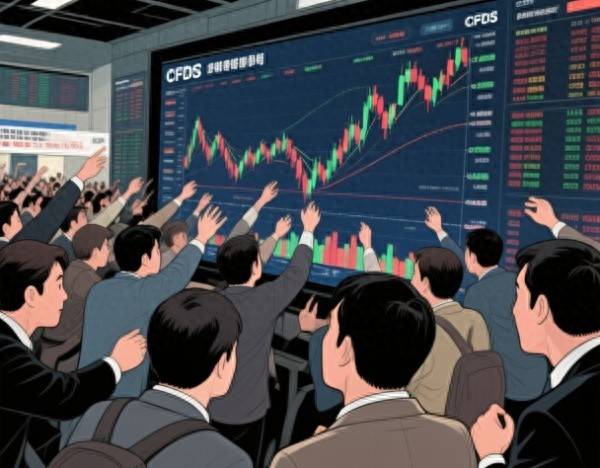
Xinhua reported on October 22 that the underlying infrastructure for China's digital yuan has been comprehensively upgraded, with a clarified infrastructure service system, a central bank digital yuan system and a smart contract ecosystem service framework. Industry participants discussed the changes and where digital yuan applications are heading at the Digital RMB Annual Meeting of the 2026 Financial Street Forum held on October 21.
Since January 1 this year, the digital yuan has formally entered its 2.0 stage, moving from "digital cash" to "digital deposit money," with interest now paid on verified wallet balances. People's Bank of China Deputy Governor Lu Lei said the infrastructure has been upgraded into the first comprehensive central bank payment and settlement platform integrating issuance management, retail, wholesale, blockchain, cross-border payments and smart contracts. The central bank-end system (DCEPS) serves domestic business, while the "Shubi Da" cross-border settlement platform (CBETS) handles overseas business and was unveiled in June.
There are now 30 digital yuan operating institutions, covering all systemically important banks, with 121 participants in the central bank-end system. After signing with its first 26 direct participants in June, CBETS has reached signing intentions with another 42 domestic and foreign banks. As of the end of September, regions running digital yuan business had processed 4.3 billion transactions worth about 31 trillion yuan in total; in September alone, transactions totaled 99.67 million worth about 1.87 trillion yuan, up 12% and 123% year on year respectively.
8. Oil Surges as US Crude Tops $100 a Barrel
Source: 21st Century Business Herald
International oil prices kept climbing on the afternoon of October 22. As of 3:55 pm, New York crude was up 2.95% and above the $100 mark, while Brent crude rose 3.42% to $112.54 a barrel.
Precious metals fell sharply the same day, with spot gold down 1.34% at $4,085.63 an ounce and spot silver down more than 3.62% at $55.85 an ounce.
Citing Xinhua, Moscow Mayor Sergei Sobyanin said on social media on October 22 that 630 drones attacked the Moscow region overnight from October 21 to 22, with the vast majority destroyed at long range by air defense systems and another 163 intercepted as they approached the city.
9. AI Bubble Fears Hit Global Stocks as Nvidia Funds Upstream Expansion
Source: Sohu
Fears of an AI demand bubble are hitting global equity markets, with tech stocks broadly entering a correction in October and semiconductors, memory chips and AI infrastructure providers leading declines. Nvidia announced a major capacity expansion in an attempt to shore up industry confidence.
On October 21 local time, Nvidia CEO Jensen Huang said on the opening day of the 2026 Nvidia GTC Berlin conference that the company is working with six suppliers including Unimicron and Samsung Electro-Mechanics to expand capacity across substrates, advanced packaging, testing and optical engines.
Under the plan, Nvidia will expand product substrate capacity to 2.5 times current levels within three years, double semiconductor testing capacity by 2027 versus this year, and increase purchases of co-packaged optics (CPO) optical engines from SPIL, a unit of the world's largest chip assembler ASE Technology Holding, to 15 times current levels by mid-2027.

10. Jensen Huang: Neocloud Demand Is 'Off the Charts' but Cash Is Tight
Source: Sina Finance
Nvidia CEO Jensen Huang said in an interview on Thursday that demand from neocloud companies is "off the charts," but a shortage of capital is constraining their growth. Speaking to reporters on the sidelines of the GTC conference in Berlin, he said demand is extremely strong on fundamentals and these companies are highly capable, with the bottleneck being the working capital needed to support growth, which has tightened capital supply across many AI segments.
Huang noted that power is a major constraint on AI expansion, especially in Europe where electricity prices are higher. Allocating scarce power to companies such as Nebius and Mistral is crucial to their development, he said, adding that investment can be brought into Europe but only after its own infrastructure is built; once local neoclouds establish infrastructure, an AI ecosystem and AI economy can be built on top.
Huang has given a series of interviews to European media this month. The chip giant plans to increase investment in European AI and has pledged nearly $10 billion for local companies, universities and research institutions. During a visit to London last week, Nvidia announced more than $1 billion in combined investment in five British startups and is also backing several French AI startups.

More News
- Global Express | October 22, 2026: Two Killed at Saudi Arabia's Dammam Airport as U.S. Orders Diplomats Out
- Tech Express | October 22, 2026 — Japan Launches MMX Probe in First Attempt to Land on Phobos
- Sports Express | October 22, 2026 — Forge FC Win Canadian Championship on Penalties, a First for the CPL
- Maple Express | October 22, 2026 — Final Toronto mayoral debate tonight, with nearly 30% of voters open to switching
- Finance Evening: Meta Posts Record Revenue With 2-for-1 Split; Musk Pledges SpaceX Shares to US Children
Comments (0)
View More
 -34%
Samsung Odyssey G73H 32" 4K OLED Gaming Monitor — 165Hz, 0.03ms, G-Sync & FreeSync Premium Pro! $999.99 CAD (33% Off)
 -41%
Segway Ninebot E2 Pro E-Scooter — 35 km Range, Puncture-Proof Tyres! $399.99 CAD (40% Off)
 -35%
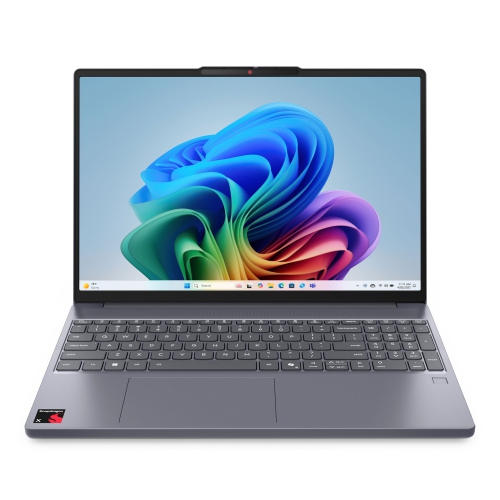
Lenovo IdeaPad Slim 3x 15.3" Laptop — Snapdragon X, 16GB LPDDR5X, Copilot+ PC! $1,099.99 CAD (34% Off)
 -26%
TerraMaster D1 NVMe Enclosure — 1.2-Ton Crush-Proof, IP67, 10Gbps! $44.09 CAD (25% Off)
 Finance Evening
: Meta Posts Record Revenue With 2-for-1 Split; Musk Pledges SpaceX Shares to US Children
 Global Express
 | October 22, 2026: Two Killed at Saudi Arabia's Dammam Airport as U.S. Orders Diplomats Out
-34%Samsung Odyssey G73H 32" 4K OLED Gaming Monitor — 165Hz, 0.03ms, G-Sync & FreeSync Premium Pro! $999.99 CAD (33% Off)
Best Buy
-41%Segway Ninebot E2 Pro E-Scooter — 35 km Range, Puncture-Proof Tyres! $399.99 CAD (40% Off)
Amazon
-35%Lenovo IdeaPad Slim 3x 15.3" Laptop — Snapdragon X, 16GB LPDDR5X, Copilot+ PC! $1,099.99 CAD (34% Off)
Best Buy
-26%TerraMaster D1 NVMe Enclosure — 1.2-Ton Crush-Proof, IP67, 10Gbps! $44.09 CAD (25% Off)
Amazon
Finance EveningFinance Evening: Meta Posts Record Revenue With 2-for-1 Split; Musk Pledges SpaceX Shares to US Children
Global Express