
Tech Express | August 10, 2026 — OpenAI's GPT-6 with 10 Trillion Parameters to Launch This Month
OpenAI to launch 10T-parameter GPT-6 in August; Anthropic Sonnet 5.5 leaked with 2M-token context; Chrome/Edge download 20GB AI models; Apple tests China's CXMT chips; Samsung HBM4 hits 80% yield; Apple Watch eyeing round displays; Pixel 11 launch Aug 12; total solar eclipse in 2 days; Chinese humanoid robots capture 97% global share; Loongson 3A6000 hits 1M shipments.
1. OpenAI GPT-6 with 10 Trillion Parameters to Launch This Month
OpenAI's next-generation large model GPT-6 (codenamed Astra) is reportedly launching this month. According to insider ChrisGPT, despite government security review pressure, OpenAI still plans to release this 10-trillion-parameter model in August. Compared to GPT-4's estimated 1.8 trillion parameters, GPT-6 represents a nearly fivefold scale leap, expected to deliver unprecedented logical reasoning and generalization capabilities.
Beyond GPT-6, OpenAI has prepared an end-of-year ultimate weapon — a model codenamed Doug, described as an "epic behemoth." Doug is reportedly trained using NVIDIA's next-generation Vera Rubin chips, with a pre-training scale that makes Anthropic's Fable look primitive. The strategy is clear: use GPT-6 to dominate headlines in August, then unleash Doug by year-end to secure the undisputed number one position.
Meanwhile, Anthropic isn't standing still, preparing an August release of Fable 5.1 at the same price point, directly targeting Astra. August 2026 may be the most intense month yet in the AI arms race.
2. Anthropic Sonnet 5.5 Leaked: 2M Token Context Takes Aim at DeepSeek
Anthropic's latest model Sonnet 5.5 has reportedly entered its final development stage, internally codenamed "Fennec," with a likely release next month. Leaks suggest it will support an impressive 2 million token context window — double that of Sonnet 5 — along with faster inference, lower latency, and significantly enhanced browser and terminal tool-use capabilities.
What's particularly noteworthy is the pricing strategy: performance approaching Fable 5 levels, but kept at the Sonnet price tier. Since DeepSeek V4 Flash entered the market with its exceptional cost-performance ratio, major Western AI labs have been scrambling to adjust. Anthropic appears to be positioning Sonnet to directly take over Haiku's value-conscious slot, offering higher performance at competitive pricing.
If the leaks hold true, Sonnet 5.5 could become a formidable contender in the increasingly crowded mid-to-high-end AI model market, potentially setting a new benchmark for intelligence-per-dollar.

3. Chrome and Edge Quietly Download AI Models, Eating Up to 20GB of Storage
Google Chrome and Microsoft Edge have been found to automatically download on-device AI models in the background, consuming up to 20GB of disk space. According to Google's official help documentation, Chrome requires approximately 20GB of free space before it can download the models, along with an unmetered network connection and sufficient device performance. Edge has followed suit, additionally requiring at least 5.5GB of VRAM.
What does this mean for PC users? Many people's system drives are already tight on space, and now their browsers are eating up another 20GB behind their backs. The good news is users can manually block these automatic downloads, but the opt-out approach has sparked widespread debate about user consent and resource consumption. Browsers are quietly transforming from web tools into AI application platforms — but at whose expense?
4. Apple Tests China's CXMT Chips to Combat AI-Driven DRAM Shortage
According to the Wall Street Journal, Apple is testing DRAM chips from China's ChangXin Memory Technologies (CXMT) for use across iPhone and MacBook product lines. The AI boom has sent memory demand soaring, creating a supply crunch that has forced Apple to explore alternative suppliers.
However, the path forward isn't straightforward. U.S. export controls restrict Apple from sharing technical specifications with CXMT, meaning Apple can only purchase off-the-shelf components, potentially requiring product redesigns. CXMT's 2026 production capacity is also already maxed out, raising questions about actual supply availability. This situation highlights the geopolitical tensions in the AI-era semiconductor supply chain as tech giants walk a tightrope between supply security and regulatory compliance.

5. Samsung HBM4 Yield Breaks 80% "Golden Line," Accelerating NVIDIA Supply
Samsung Electronics has announced its HBM4 high-bandwidth memory yield has surpassed the 80% industry "golden line," about four months ahead of its year-end target. When mass production began in February, yields were below 60%; the leap to 80% in just six months represents a dramatic improvement, positioning Samsung to rapidly close the gap with SK Hynix in the AI DRAM race.
HBM4 is a critical memory component for NVIDIA's next-generation GPUs, including Vera Rubin, and its supply directly affects the deployment speed of AI training clusters. Samsung's yield breakthrough will significantly ease HBM4 supply bottlenecks. Meanwhile, Samsung's HBM4E (enhanced fifth-generation HBM) yield has also reached around 70%, giving it solid footing in the next-generation AI chip competition.

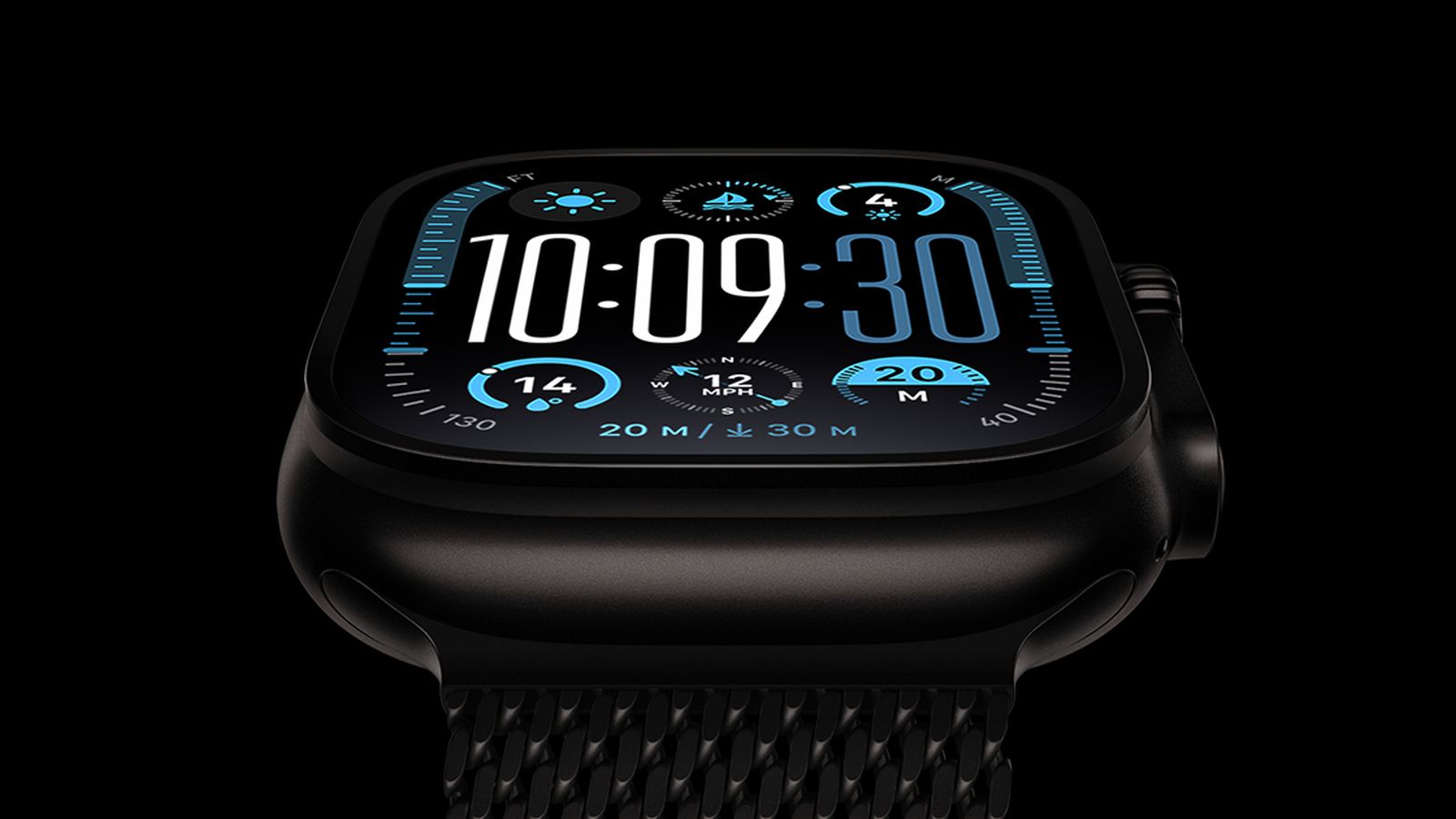
6. Apple Watch's Biggest Overhaul Ever: Round Displays, Screenless Bands Under Consideration
According to Bloomberg's Mark Gurman, Apple is re-evaluating its entire Apple Watch lineup with several radical new designs in the works. These include a round-display Apple Watch — which would break from the iconic square design that has defined the product since its debut — and a screenless, sensor-only fitness band similar to Whoop and Oura wearable devices.
Additionally, the ceramic Apple Watch case could return as early as September. Apple is also exploring both low-end and high-end expansions simultaneously, considering more affordable and more premium models. These changes reflect growing competitive pressure from Oura, Garmin, and other rivals in the wearables market. Over a decade after its launch, the Apple Watch is finally poised for its most dramatic reinvention.
7. Google Pixel 11 Launch Set for August 12, Pixel Watch 5 Also Expected
Google has officially confirmed that its Made by Google hardware event will take place on August 12 at 6:00 PM ET in New York City. The showcase will feature the Pixel 11 series, including the standard Pixel 11, Pixel 11 Pro, Pixel 11 Pro XL, and the second-generation foldable Pixel 11 Pro Fold.
Joining the phones will be the Pixel Watch 5 smartwatch and new Gemini AI capabilities. This year's event comes eight days earlier than last year's Pixel 10 unveiling, signaling Google's intent to capture the spotlight before Apple's September event. Deep AI-hardware integration will be the central theme — what cross-device intelligence can Gemini deliver this time?

8. 2026's Only Total Solar Eclipse Arrives in Two Days, Spanning Greenland to Spain
On August 12, the only total solar eclipse of 2026 will sweep across the Northern Hemisphere. The path of totality begins in eastern Greenland, crosses western Iceland, and traverses northern Spain and the northeastern corner of Portugal. Cities like Bilbao in northern Spain will offer prime viewing, while Madrid will see over 90% obscuration and Barcelona roughly 70%.
Major European cities like Paris, London, and Brussels will experience 40%-55% partial eclipses. This celestial event coincides with the active Perseid meteor shower period, making it a double treat for astronomy enthusiasts. The next total solar eclipse crossing densely populated regions won't come until August 2027, so grab your eclipse glasses and don't miss the spectacle just two days away!

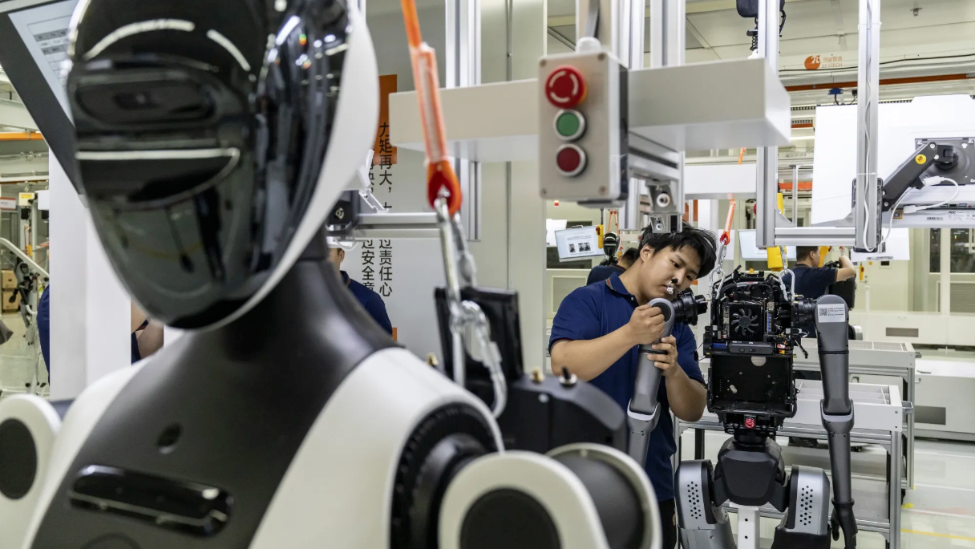
9. Chinese Humanoid Robots Capture Over 97% of Global Shipments
Bloomberg reports, citing data from research firm Smart Analytics Global, that global humanoid robot shipments reached approximately 19,100 units in the first half of 2026, more than triple the 5,100 units a year earlier — and Chinese manufacturers accounted for over 97% of that total. Shanghai-based Agibot led with 8,400 units (44% global share), followed by Hangzhou's Unitree with 5,900 units.
The dominance of Chinese companies far outpaces U.S. competitors like Tesla, Figure AI, and Agility Robotics. Strong government policy support and funding in China are accelerating the industrialization of humanoids, with industrial and commercial applications now accounting for over 70% of shipments. Analysts project global humanoid robot shipments will reach 60,000 units this year and surge to 500,000 by 2030.
10. Loongson 3A6000 Surpasses 1 Million Shipments, China's Homegrown CPU Goes Mainstream
Loongson Technology's latest desktop processor, the 3A6000, has officially surpassed 1 million units in mainstream industry shipments. This marks the most significant milestone for China's homegrown CPUs since the original Loongson 1 chip first booted up on August 10, 2002 — exactly 24 years ago. The 3A6000 uses the fully independent LoongArch architecture with proprietary IP cores, leading domestic competitors in performance.
The chip is now deployed at scale across government offices, tax systems, and education sectors, representing a qualitative leap for Chinese CPUs from "usable" to "good." Loongson's founder Hu Weiwu once nicknamed the early chips "Gousheng" (a humble rural name meaning "leftover dog") — a name that embodied China's stubborn determination to build chips from scratch. Twenty-four years later, the one-million milestone is the best tribute to that persistence.

More News
- Maple Express | September 24, 2026 — Muslim woman punched while exiting a TTC bus in Scarborough
- Global Express | September 24, 2026 Ethiopia and Tigray Accuse Each Other of Offensives as Fears of New War Grow
- Finance Morning | Xi Arrives in Washington for State Visit; China, U.S. Reach Consensus in 8th Trade Talks
- Tech Express | September 24, 2026: Meta Unveils $1,299 VR Glasses in AI Agent Push
- Sports Express | September 24, 2026: US Senate Advances Controversial Protect College Sports Act
Comments (0)
View More
 0
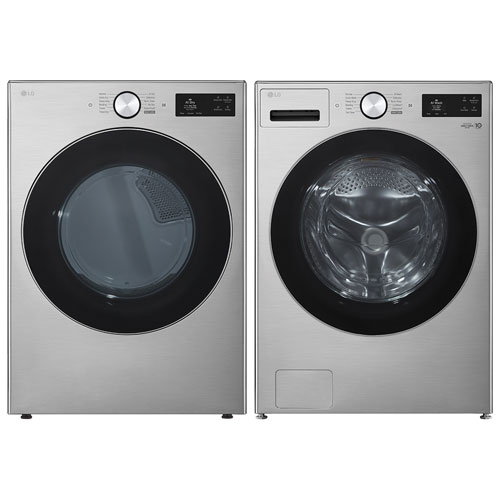
0LG 5.8 cu. ft. High-Efficiency Front-Load Steam Washer + 7.4 cu. ft. Electric Steam Dryer (Graphite Steel) — Big-Capacity Matching Laundry Pair! $2,599.98 CAD
 -23%
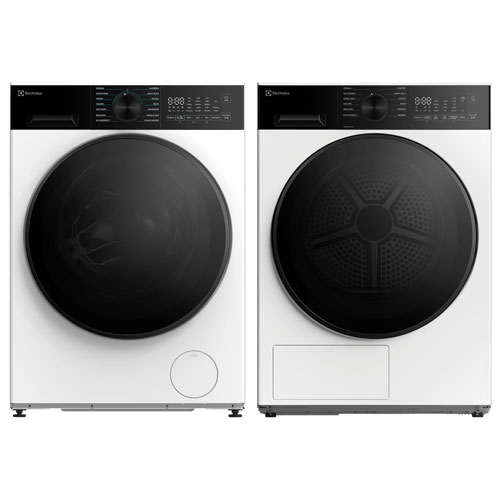
-23%Electrolux Washer & Dryer Set (3.1 cu.ft Steam Washer + 4.4 cu.ft Heat Pump Dryer) — White! $2399.98 CAD (23% Off)
 -22%
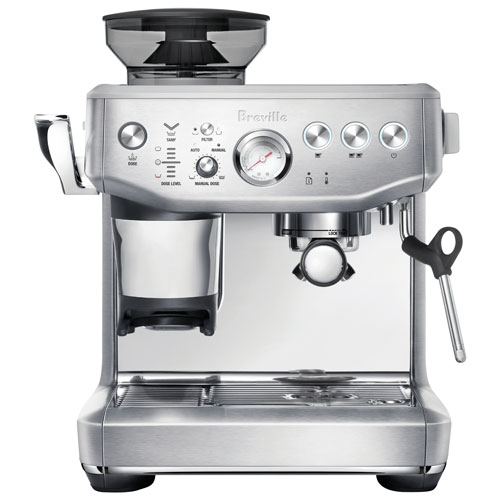
-22%Breville Barista Express Impress Semi-Automatic Espresso Machine (Brushed Stainless Steel) — Built-In Grinder & Steam Wand! $899.99 CAD (22% Off)
 -46%
-46%Bedsure Queen Duvet Insert — All-Season Comfort, 65,000+ Reviews! $43.99 CAD (45% Off)
 Sports Express
Sports Express | September 24, 2026: US Senate Advances Controversial Protect College Sports Act
 Maple Express
Maple Express | September 24, 2026 — Muslim woman punched while exiting a TTC bus in Scarborough
0LG 5.8 cu. ft. High-Efficiency Front-Load Steam Washer + 7.4 cu. ft. Electric Steam Dryer (Graphite Steel) — Big-Capacity Matching Laundry Pair! $2,599.98 CAD
Best Buy
-23%Electrolux Washer & Dryer Set (3.1 cu.ft Steam Washer + 4.4 cu.ft Heat Pump Dryer) — White! $2399.98 CAD (23% Off)
Best Buy
-22%Breville Barista Express Impress Semi-Automatic Espresso Machine (Brushed Stainless Steel) — Built-In Grinder & Steam Wand! $899.99 CAD (22% Off)
Best Buy
-46%Bedsure Queen Duvet Insert — All-Season Comfort, 65,000+ Reviews! $43.99 CAD (45% Off)
Amazon
Sports ExpressSports Express | September 24, 2026: US Senate Advances Controversial Protect College Sports Act
Maple Express