
Tech Express | November 3, 2026 Apple's foldable iPhone Duo sells out as restock timing stays unclear
Nov 3: Apple's foldable iPhone Duo sold out a week after launch, with no restock date and "unprecedented" memory costs. Deng Yu accused OpenAI of double standards. MIT let GPT-6 Astra rewrite Qwen weights, lifting MATH-500 from 7.9% to 48.1%. Apple set an 18+ floor for AI companion apps. DeepSeek V5 may pretrain on Ascend 950. Nvidia asked cloud customers to cap China business at 49%. Honor tests 15,000mAh batteries. Voyager 1 went briefly silent. Li Jiaqi sold 2 trillion tokens in half an hour.
Source: BBC, Mydrivers, ifanr, Lianhe Zaobao, Gizmodo
1. Apple's foldable iPhone Duo sells out, and Apple can't say when it will restock
Apple said on November 3 that it does not know when it will get more of its new foldable iPhones back in stock, as the company heads into the key Christmas trading period. The iPhone Duo, Apple's most expensive smartphone at nearly $2,000, sold out just over a week after its launch.
Apple warned of "constraints" in sourcing key components and admitted it was "really hard to predict when supply and demand will be in balance." New chief executive John Ternus, who took over from Tim Cook in September and launched the Duo afterwards, said the firm was seeing an "unprecedented" price rise in memory costs, including chips, as the artificial intelligence industry keeps investing billions of dollars in data centres. It is the phone's first major design change in almost 20 years.
Apple's results for the three months to September 26 did not mention any problems with the Duo and did not include Duo sales. iPhone revenue for the quarter rose 17% to $57bn, Mac sales grew 27% to a record $10.7bn, and overall sales rose from $102bn to $114bn. Sales of iPad and wearables fell 10% and 7% respectively, and the company's share price dropped 1.8% in after-hours trading.
2. Fields Medalist Deng Yu accuses OpenAI of double standards on distillation
Mydrivers reported on November 3 that Deng Yu, a Fields Medalist, has joined fellow mathematician Terence Tao in criticising OpenAI, accusing the company of double standards: it distils all human knowledge to train its AI while refusing to disclose details on the grounds of preventing distillation.
Deng argued that large model training relies on massive amounts of web text, academic papers and human knowledge bases, which is essentially the distillation of human knowledge; yet when academics want to examine a model's reasoning logic and chain of thought, vendors encrypt everything and refuse to open it up. "You can't distil all of humanity's online literature and knowledge so freely, and then, when someone wants to understand the chain of thought, start saying this is not allowed and that is not allowed," he said.
He also criticised closed-source companies for rushing out partial mathematical proofs for hype before sufficient formal verification and rigorous checks, only for errors to be found and papers to be withdrawn. Mathematicians pay for AI services and feed in exclusive professional ideas, he noted, and companies use that high-quality input to iterate the next generation of models, which then solve open mathematical problems. Asking "what do we, as users, get?", he called for traceability mechanisms. On September 11 this year, 25 Fields Medalists including Terence Tao, Deng Yu and Peter Scholze issued a joint statement titled "Serious Misalignment of AI in Mathematics".

3. GPT-6 Astra rewrites Qwen's weights, lifting MATH-500 from 7.9% to 48.1%
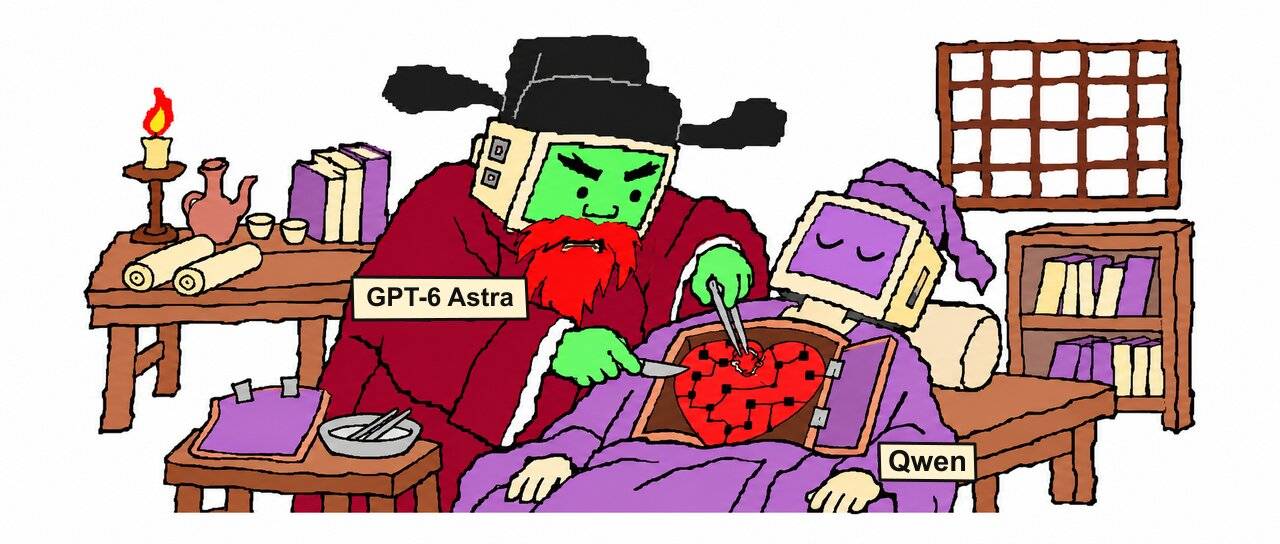
A research team at MIT CSAIL has demonstrated a method called "Weight-Space Programming": GPT-6 Astra reads and edits a neural network's weights the way a programmer reads and modifies code, locating problems and rewriting parameters without any conventional gradient training. By changing only 131,072 parameters of Qwen3.5-0.8B, the team lifted its MATH-500 score from 7.9% to 48.1%, GSM8K from 13.8% to 67.1% and IFEval instruction following from 21.0% to 62.3%.
Those parameters account for just 0.016% of the model's weights. Working through a Python environment that let it read and write weights, test the model and inspect hidden states, Astra found the model was stuck in repetitive reasoning: of the first 96 practice answers it checked, 85 ran to the 32,768-token cap without producing a final answer. Astra traced the problem to a specific direction written by some MLP layers and deleted it to suppress the loop; on MATH-500, the share of answers hitting the token limit fell from 93.0% to 33.1%.
The team also ran a control: on Gemma 3 270M, which rarely loops, Astra's edits produced no clear gain, with MATH-500 moving only from 6.8% to 7.0%. The research blog said Astra mainly removed obstacles preventing the model from finishing answers rather than injecting new mathematical knowledge. Some commenters argued the gains came largely from fixing the looping bug and called for comparisons against normal gradient training and simply switching off thinking mode.
4. Apple sets an 18+ floor for apps with AI companions
Apple announced on November 3 that from November 16 it will adjust App Store age-rating rules to tighten management of dating, romance and location-sharing apps.
According to a notice on Apple's developer website, developers filling in the age-rating questionnaire in App Store Connect must explicitly declare whether an app includes location sharing, dating or romantic-relationship features. Dating and romance apps now cover not only services between real people but also AI virtual companions that can interact with users romantically or sexually; any app with such features will be rated 18+ at minimum.
For location-sharing apps, Apple said the feature may not affect the minimum age rating in some regions, depending on local laws. Apple also requires developers to complete the new feature declarations when submitting app updates or modifying the age-rating questionnaire, with all apps required to finish by January 12, 2027.

5. DeepSeek V5 reportedly to pretrain on Huawei Ascend 950
Mydrivers reported on November 3 that DeepSeek's next-generation model, V5, is planned to be pretrained on Huawei Ascend chips. Ascend has so far mainly handled inference for DeepSeek models; V5 would be the first model trained natively on Ascend 950.
The Ascend 950 family includes the 950PR and 950DT, both based on the third-generation Da Vinci architecture and aimed at large-model training and inference. The 950DT is designed for training and inference decode, with 144GB of in-house HBM, 4TB/s memory access bandwidth, 2TB/s interconnect bandwidth and native support for FP8, MXFP8 and MXFP4, with MXFP4 compute 4x that of the previous generation's BF16. The 950PR targets inference prefill, with 128GB of on-chip memory, 1.6TB/s bandwidth and 1,784 TFLOPS of FP4 compute.
Cooperation between the two sides dates back to around the Chinese New Year in 2025, when Huawei and DeepSeek deployed and validated more than 3,000 Ascend chips and ran DeepSeek-V3/R1 at Huawei Cloud's Gui'an data centre. After V4 launched in April 2026, the full Ascend SuperNode lineup supported it, and on September 30 DeepSeek open-sourced Ascend-oriented infrastructure components including the TileLang compiler, compute libraries and communication libraries. A team had previously completed full-parameter post-training of V4-Pro on Ascend 910C, but not foundational pretraining. People familiar with the matter said V5 plans to use Ascend 950 as its core training compute, with the project timeline pointing to a launch next year.

6. Nvidia asks cloud customers to curb China business, with 51% sold outside
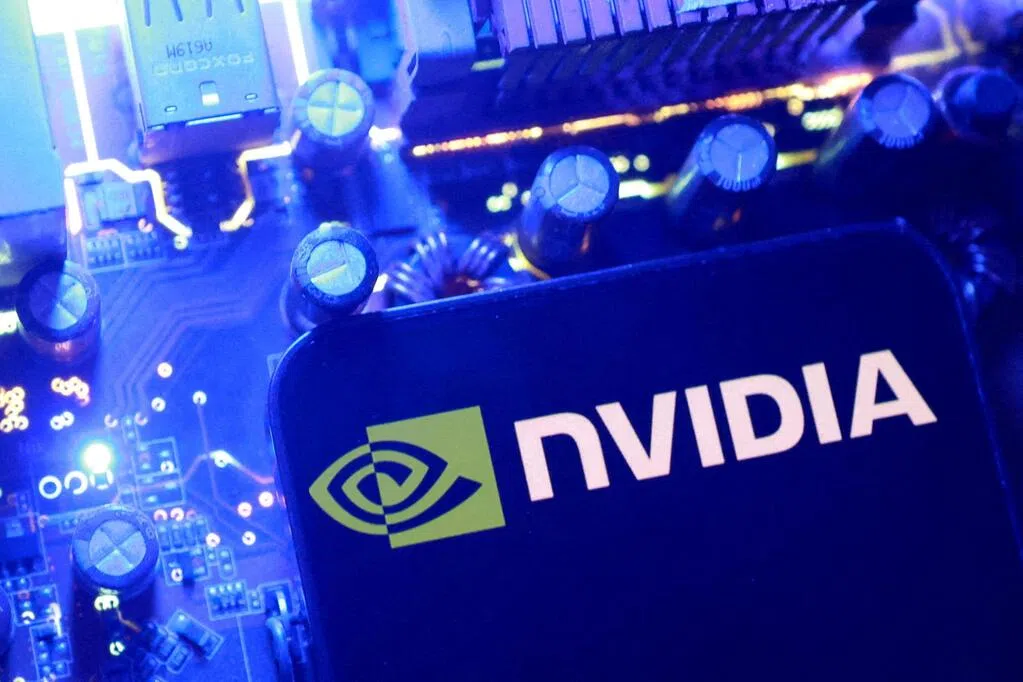
Nvidia has asked its cloud computing customers to scale back business with Chinese companies and to ensure at least 51% of their services are sold to firms outside China, the Financial Times reported, citing people familiar with the matter.
The new compliance rule will apply to customers worldwide but only affects contracts signed in future; existing leasing agreements are unaffected. Nvidia said in response: "Data centres and cloud platforms built with US chips are the foundation needed for US model and application developers to compete globally."
For years Washington has sought, on national security grounds, to restrict Nvidia's sales of the most advanced AI chips to China and to crack down on gangs smuggling those chips into the country.
7. Honor is testing 15,000mAh phone batteries for "one charge a week"
Mydrivers reported on November 3 that Honor is testing phone batteries in the 14,000mAh to 15,000mAh range, with the product direction built around "one charge a week," according to tipster Digital Chat Station. If such a capacity reaches mass production, the habit of always carrying a power bank could change.
Honor has been aggressive on battery capacity: last year its Honor WIN debuted a 10,000mAh Qinghai Lake battery, bringing phones into the five-figure mAh era; in June this year the Honor X80 Pro Max launched with an 11,000mAh battery and set a Guinness World Record for the "longest phone test livestream" at 26 hours, 8 minutes and 34 seconds; the latest Honor WIN RT2 debuted a 12,070mAh battery. Going from 10,000mAh to 12,000mAh took Honor less than a year.
The most direct value of a huge battery is relief from charging anxiety, especially for delivery riders, outdoor workers and long-distance travellers. But bigger capacity also brings new challenges in weight, thickness and heat dissipation, and whether it reaches mass production remains to be seen.

8. Voyager 1 briefly goes silent ahead of its light-day milestone
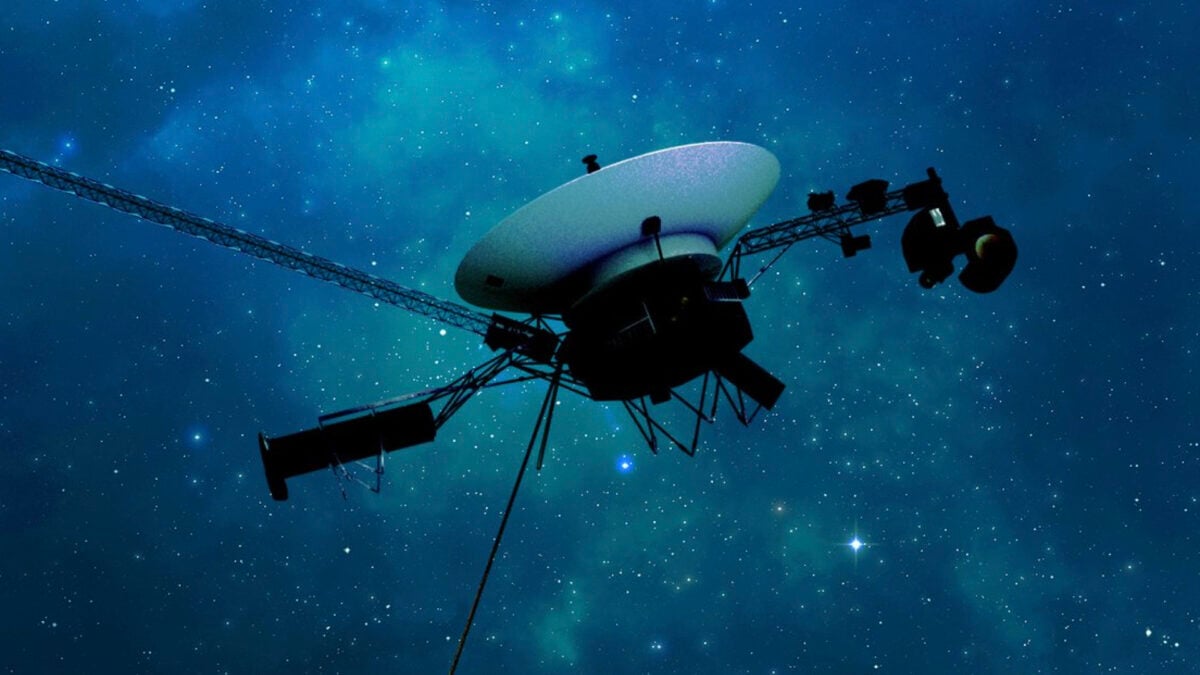
NASA's Voyager 1 is on the verge of making history, but the aging spacecraft briefly lost contact with home just weeks before becoming the first human-made object to travel a full light-day from Earth. According to NASA, the Deep Space Network failed to detect Voyager 1's radio signal during two scheduled attempts 24 hours apart on October 18 and 19; the signal returned on October 20 and contact has been maintained since, while engineers investigate the cause.
The team determined that one group of Voyager 1's thrusters went offline during the outage, prompting its backup thrusters to turn on automatically. That is a programmed response when onboard computers detect a potential problem with the thrusters, putting the spacecraft into a stable, safe configuration and pausing normal operations to give engineers time to investigate. "This is the first time we've seen the spacecraft do something like this, but we are also at a point in the mission where we have to expect the unexpected," said Kareem Badaruddin, Voyager mission manager at NASA's Jet Propulsion Laboratory.
Launched in 1977, Voyager 1 is about 16 billion miles (26 billion kilometers) from Earth and is expected to reach one light-day away on November 18, at roughly 16.09 billion miles (25.89 billion kilometers), when signals will take 24 hours each way. Project manager Suzanne Dodd put it this way: if you want to say hello to Voyager, you send your message, go home and wait two days for a reply. The mission launched with 10 science instruments, some of which have been switched off to save power, and the probe runs on heat from decaying plutonium; the team recently completed a key power-saving maneuver to keep it operating longer.
9. Li Jiaqi sells about 2 trillion tokens in half an hour in livestream debut
Ahead of China's Singles' Day shopping festival, Chinese livestreamer Li Jiaqi, known as the "lipstick king", put an invisible product on sale for the first time on November 2: AI tokens. Nearly 100,000 monthly Qwen Office individual membership cards were sold in half an hour, corresponding to about 2 trillion tokens, Lianhe Zaobao reported.
The card normally costs 28 yuan, but the livestream offered a discounted price. Li said the 500 universal credits included can generate 50 slide decks, 160 written weekly reports, 250 Excel sheets, 80 research reports, or 60 data analyses or 20 high-resolution images.
Zhang Yi, CEO and chief analyst at iiMedia Research, described the sale as a consumer-side "market education" for the token economy, bringing the enterprise narrative of AI commercialisation into mass consumer language. Alibaba data shows sales of AI token packages jumped 450% month-on-month between October 1 and 20, while CAICT data shows China consumed about 500 trillion tokens a day in June, nearly four times the level in December last year, with the average price rising from 6.8 yuan in the second half of last year to 13.46 yuan.

10. German scholar praises DeepSeek as nearly half of German SMEs use Chinese open models
Speaking at the 2026 World Internet Conference Wuzhen Summit, Bernd Holznagel, a professor at Germany's University of Münster, said many Silicon Valley companies and 40% to 50% of German SMEs are now using Chinese open-source large models. "I have also used DeepSeek, it works very well," he said, adding that US protectionist measures against Chinese AI would instead push Chinese firms to speed up research and development, Mydrivers reported on November 3.
Usage data from overseas aggregators backs up the growth of Chinese models. In OpenRouter's latest weekly statistics published on October 26, DeepSeek's new model version debuted at number one, DeepSeek models have now topped the platform's weekly chart for three straight weeks, and MiniMax, Zhipu and Tencent also ranked highly, with Chinese models taking the top five places.
In the week of October 19 to 25, total model calls on the platform reached 188 trillion tokens, up 14.6% week-on-week. Among the top nine models, Chinese models were called 93.54 trillion tokens, up 18.1%, versus close to 22.5 trillion tokens for US models. It marks 26 consecutive weeks in which Chinese models have out-consumed US models on OpenRouter. The figures cover only API traffic relayed through the platform and exclude vendors' own APIs, cloud services and private deployments.

More News
- Global Express | November 3, 2026 — US Votes in Midterms as Democrats Chase Congress
- Finance Morning | Report Says China Told Banks to Pause IPOs, $14bn Swap Facility Kicks In, but A-Shares Still Fall; Taiwan and Korea Plunge Over 3.5%
- Sports Express | November 3, 2026: Kucherov Seeks $20M AAV and a Trade Out of Tampa Bay
- Maple Express | November 3, 2026: Weapons call at U of T Mississauga dorm resolved, no injuries
- Finance Evening: Apple's New CEO Posts 12% Revenue Growth but Soft Margin Guidance; AI Selloff Drags Nasdaq Down 1%
Comments (0)
View More
 -38%
Oral-B Pro Limited Electric Toothbrush — No App, Just the Good Motor! $74.99 CAD (38% Off)
 -31%
Herschel Standard Issue Luggage Belt — Spot Your Black Suitcase Instantly! $20.99 CAD (30% Off)
 -42%
🎉 史新低!Philips Sonicare 2100 Electric Toothbrush — Two Weeks Per Charge for $24.96! (42% Off)
 -20%
Razer Huntsman V3 Pro Full-Size Optical Keyboard — Analog Switches and Rapid Trigger React Before You Do! $289.99 CAD (19% Off)
 Finance Evening
: Apple's New CEO Posts 12% Revenue Growth but Soft Margin Guidance; AI Selloff Drags Nasdaq Down 1%
Tech ExpressTech Express | November 3, 2026 Apple's foldable iPhone Duo sells out as restock timing stays unclear
-38%Oral-B Pro Limited Electric Toothbrush — No App, Just the Good Motor! $74.99 CAD (38% Off)
Amazon
-31%Herschel Standard Issue Luggage Belt — Spot Your Black Suitcase Instantly! $20.99 CAD (30% Off)
Amazon
-42%🎉 史新低!Philips Sonicare 2100 Electric Toothbrush — Two Weeks Per Charge for $24.96! (42% Off)
Amazon
-20%Razer Huntsman V3 Pro Full-Size Optical Keyboard — Analog Switches and Rapid Trigger React Before You Do! $289.99 CAD (19% Off)
Best Buy
Finance EveningFinance Evening: Apple's New CEO Posts 12% Revenue Growth but Soft Margin Guidance; AI Selloff Drags Nasdaq Down 1%
Tech Express