
Finance Evening: Apple's New CEO Posts 12% Revenue Growth but Soft Margin Guidance; AI Selloff Drags Nasdaq Down 1%
Apple's first report under CEO John Ternus showed 12% revenue growth but soft margin guidance. The Nasdaq fell 1.07% as AI stocks slid again. Palantir revenue jumped 96% to $2.313 billion. A Blackstone-led group is paying $3.1 billion for an LNG Canada stake. Canada's manufacturing PMI fell to 49.6, its first contraction this year, and the loonie held near a six-week high. The BOE is expected to hike to 4% Thursday, and oil slid 7.5% intraday on US-Iran diplomatic hopes.
Finance Evening: Apple's new CEO posts 12% revenue growth but soft margin guidance; AI selloff drags Nasdaq down 1%
📊 North American Markets Today
| Index / Commodity | Close | Change | % Change |
|---|---|---|---|
| S&P 500 | 7,541.40 | -38.67 | -0.51% |
| Nasdaq | 25,164.32 | -272.68 | -1.07% |
| Dow Jones | 51,983.98 | +213.67 | +0.41% |
| TSX | 35,801.09 | +181.06 | +0.51% |
| USD/CAD | 1.3988 | +0.0015 | +0.11% |
| WTI Crude | 96.26 | -0.20 | -0.21% |
| Gold | 3,956.60 | -13.00 | -0.33% |
1. Apple's first report under new CEO: revenue up 12%, margin outlook disappoints
Source: CNBC
This was Apple's first earnings report since John Ternus took over as CEO on Sept. 1, succeeding Tim Cook. Revenue for the fiscal fourth quarter rose 12% from $102.5 billion a year earlier, beating Wall Street estimates, but iPad sales came up short and the company issued a disappointing gross margin forecast, sending the stock lower in extended trading.
Apple said it expects total revenue to grow between 7% and 10% year over year in the December quarter, above the 6.1% average analyst estimate tracked by LSEG. However, its gross margin guidance of 45% to 46% trailed the 46.3% consensus. CFO Kevan Parekh also said services sales are expected to rise 8% to 9%.
In a statement, Ternus said Apple had just capped off its "best fiscal year ever," with growth achieved despite supply constraints and foreign exchange headwinds. He said the company "reluctantly" raised prices — iPhones went up by $100 across the board in June — to offset higher component costs, and said tariff refunds added 5 cents to earnings per share. iPhone sales jumped more than 17%, while services growth came in below 10%, the slowest since 2022.
2. Wall Street closes mixed: Dow gains 0.4%, Nasdaq falls more than 1%
Source: Yahoo Finance
US stocks closed mixed on Monday as a tech sell-off resumed. The Dow Jones Industrial Average rose 0.4%, the S&P 500 fell 0.5%, and the tech-heavy Nasdaq Composite gave up early gains to close more than 1% lower. The Nasdaq lost 5.2% in October, chipmakers sold off again, and Apple fell nearly 2% in the lead-up to its report after the bell.
Other forces were also at work: Bitcoin dropped about 1% below $77,000 per token after a $6.3 billion hack of Binance that investigators are calling the biggest crypto heist in history. On the data front, surveys showed US manufacturing expanded in October as inflation pressures persisted, and the week's calendar culminates in the government's October jobs report on Friday.
The Federal Reserve's quarterly Senior Loan Officer Opinion Survey, released Monday, showed banks became less aggressive about offering cheaper corporate loans. A net 15% of banks reported narrowing spreads on loans to large and midsize businesses, down from nearly 27% in the previous quarter; for small businesses the share fell to roughly 7% from 15%. Banks also charged higher premiums on riskier loans, citing a more uncertain outlook.
3. Palantir posts $2.313 billion in quarterly revenue, up 96%
Source: Yahoo Finance
Palantir beat Wall Street estimates on third-quarter revenue and profit on Monday and raised its full-year revenue outlook. Revenue came in at $2.313 billion, a 96% increase from a year earlier, versus expectations of $2.17 billion. US commercial sales surpassed US government sales for the first time ever.
The company now sees full-year revenue between $8.530 billion and $8.534 billion, above the $8.2 billion analysts expected, and raised its US commercial sales target to more than $3.559 billion. Adjusted earnings per share of $0.44 beat the $0.40 consensus.
Despite the results, the stock fell 6.36% on the day and is up roughly 2% year to date. Wall Street remains mostly bullish, with 30 Buy ratings, nine Holds and two Sells, and a consensus price target of $216. Earlier this year, Palantir's Maven Smart System became an official Pentagon program.
4. Blackstone-led group pays $3.1 billion for LNG Canada stake, with four Canadian pension funds
Source: The Globe and Mail
Blackstone Inc. and four major Canadian pension funds agreed to pay US$1.6 billion for a minority stake in a Mitsubishi Corp. subsidiary that owns a share of LNG Canada's liquefaction business, plus a further US$1.5 billion to help fund expansion — a total investment of $3.1 billion.
Under the deal announced Monday, the investor group acquires a 49.9% interest in the Mitsubishi subsidiary. Mitsubishi owns a 15% stake in LNG Canada through that entity and remains its controlling partner, and will continue its agreement to offtake 2.1 million tonnes of LNG annually. The group includes CPPIB, OMERS, IMCO and the Public Sector Pension Investment Board.
LNG Canada operates the country's first natural gas export terminal — an $18-billion facility in Kitimat, B.C., that opened in June 2025. A second phase confirmed in late September would double annual output to 28 million tonnes from 14 million, making it one of the largest LNG facilities in the world. The project was among the first five referred to Canada's Major Projects Office as a national priority.

5. Canada's manufacturing PMI falls to 49.6, first contraction of 2026
Source: The Globe and Mail
The S&P Global Canada Manufacturing Purchasing Managers' Index fell to 49.6 in October from 51.5 in September — the first move below the 50 threshold since December and the sector's first contraction this year. Paul Smith, economics director at S&P Global Market Intelligence, said firms reported concurrent drops in output and new orders against a backdrop of tariffs and ongoing supply-side disruption.
The output index fell to 48.4 from 50.8, while new orders dropped to 46.5 from 49.3, the lowest reading since September 2025. Average lead times for input deliveries lengthened to the greatest degree since August 2022. Price pressures intensified, with input costs and output prices rising to 71.7 and 62.3 respectively — the highest in more than four years.
The deterioration follows a widening trade rift: the US imposed 50% tariffs on a wide range of Canadian imports in August, and Canada responded with retaliatory tariffs. Last Wednesday, the Bank of Canada raised its benchmark rate by 25 basis points to 2.50% and said further increases might be needed to stop soaring energy costs from fueling broader inflation.

6. Loonie holds near six-week high as traders weigh trade signals
Source: The Globe and Mail
The Canadian dollar steadied near a six-week high against its US counterpart on Monday as oil prices tumbled and investors weighed positive signals on a potential US-Canada trade deal. The loonie traded nearly unchanged at 1.3975 per US dollar, or 71.56 US cents, after touching 1.3940 on Friday — its strongest intraday level since Sept. 16.
President Donald Trump said on Sunday that his administration has the "concept" of a new trade deal with Canada, while Prime Minister Mark Carney said the two leaders had a good conversation on the future of trade. Tariffs on Canada have become an issue in northern border states such as Michigan and Maine ahead of Tuesday's midterm elections. Scotiabank strategists Shaun Osborne and Eric Theoret said headlines have been constructive and that the CAD remains supported by narrowing yield spreads.
The gap between Canada's 2-year yield and the US equivalent was about 129 basis points in favor of the US note, narrower than 161 basis points last month. The Bank of Canada last week raised rates 25 basis points to 2.50%, its first hike in three years. Canadian bond yields fell across the curve, with the 10-year down 5.5 basis points at 3.744% after hitting 3.740%, its lowest since Sept. 3.

7. Bank of England expected to hike to 4%, first increase since August 2023
Source: Yahoo Finance UK
The Bank of England is expected to raise interest rates to 4% from 3.75% when its Monetary Policy Committee announces its decision on Thursday, Nov. 5 — the first increase since August 2023 and the first in more than three years. Many economists expect policymakers to tighten in response to rising UK inflation.
Official figures showed CPI inflation rose to 3.5% in September, the highest in 11 months. The conflict in the Middle East has pushed inflation further from the Bank's 2% target, with a surge in petrol and diesel prices a major driver. Ofgem's energy price cap rose 3.6% for a typical household on Oct. 1 and is forecast to jump a further 22% in January.
Ellie Henderson of Investec said many committee members' patience with rising inflation "has worn thin," warning that the longer energy prices stay elevated, the greater the risk a temporary shock becomes permanent. Suren Thiru, chief economist at ICAEW, said a rise to 4% "looks all but certain." The UK economy unexpectedly grew 0.1% in August, and unemployment fell to 4.7% in the three months to August, the lowest in more than a year.
8. Markets brace for midterms; history shows S&P 500 up 13.7% a year later
Source: CNBC
Markets are nervous ahead of Tuesday's midterm elections, but history suggests the event tends to herald strong performance. A CNBC analysis of S&P 500 returns after elections from 1980 through 2024 found the index rose an average of 0.2% after one day and one week, and 1.1% after one month.
A year later, the index gained an average of 13.7% after midterms and 13.8% after presidential elections, with positive returns in 91% of cases. The S&P 500 was up after all 11 midterms from 1982 through 2022. Markets usually prefer divided government: across 10 midterms and five presidential elections with no single party in charge, the index rose an average 15% after one year, positive in 14 of 15 cases, versus 11.5% under single-party control.
"There's some anxiousness before these elections," said Ryan Detrick, CNBC contributor and chief market strategist at Carson Group. "Once you are through it, it's a big relief and markets tend to do pretty well." He cautioned that a Democratic sweep would almost certainly pressure the AI infrastructure buildout. Deutsche Bank's Jim Reid noted: "Seasonality isn't destiny, and worries around Iran, AI and France won't mysteriously vanish."

9. Oil slides as hopes rise for US-Iran diplomatic breakthrough
Source: Yahoo Finance
Oil prices fell sharply on Monday. Axios reported that, while Israeli Prime Minister Benjamin Netanyahu has pressed the White House for a forceful round of strikes on Iran, President Trump said he wants to give diplomacy with Tehran another shot — consistent with his recent public statements that the US won't strike Iran after the midterms. WTI crude lost 7.5% to hold near $96 a barrel.
Tehran said contact with the US over negotiations to end the war is continuing. "Consultations through mediators are very intensive," Iranian Foreign Minister Abbas Araghchi told state media IRNA. "We have presented our conditions and proposals and everything depends on the political rationality of Washington." Talks between Iran and Qatari mediators have produced proposal language but no breakthrough, and China and Russia both spoke out against a full resumption of hostilities.
The diplomatic headlines have not yet changed Wall Street's "higher for longer" view. Goldman Sachs analysts led by Daan Struyven raised their December Brent forecast to $105 a barrel from $90, and their 2027 average to $88 from $80, arguing that substantial downside supply risks will sustain a large near-term risk premium.
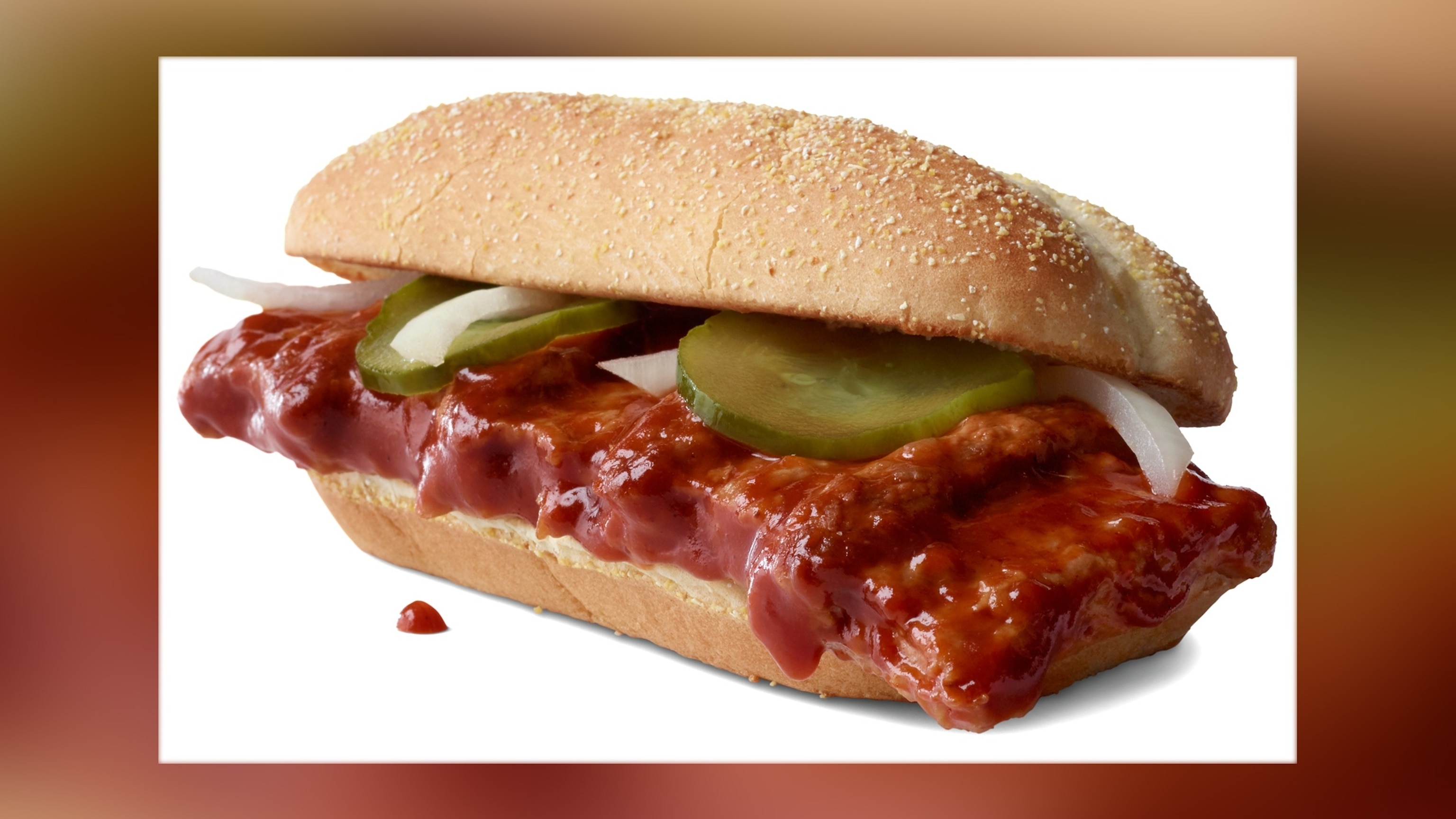
10. Judge lets McRib class action against McDonald's proceed
Source: ABC News
A federal judge in Illinois has rejected McDonald's bid to dismiss a class action lawsuit over its McRib sandwiches and is allowing the case to move forward. The suit, first filed in December 2025, alleges "false representations, omissions and concealments" in marketing the McRib — "deliberately crafted to resemble a rack of pork ribs" — as a "premium" pork rib sandwich.
The lawsuit alleges the sandwiches contain no pork rib meat and are made from lower-grade pork products instead. "Put simply: consumers have been materially misled en masse as a result of McDonald's deceptive labeling and marketing into purchasing sandwiches that they would not otherwise have purchased," the plaintiffs wrote. McDonald's website describes the product as made with a "McRib Pork Patty" without specifying pork rib.
McDonald's told ABC News the lawsuit is "meritless" and "distorts the facts," adding that "we've always been transparent about our ingredients so guests can make the right choice for them." The company has until Nov. 20 to respond to the complaint.
Market data as of the Nov. 2 close.
More News
- Maple Express Evening | November 2, 2026 — SickKids launches $2.5-billion pediatric campaign
- Maple Express | November 2, 2026 | Two-Alarm Fire at Scarborough Townhouse Sends Three to Hospital
- Immigration | November 02, 2026 Express Entry Overhaul Takes Effect November 3: High-Wage and Canadian Experience Points Return
- Global Express | November 2, 2026 — Spain confirms 69 dead in train crash, including one Canadian
- Finance Morning | Regulators Meet Brokers, Funds and Major Banks; Shanghai Composite Rises 1.08%
Comments (0)
View More
 -16%
Bose QuietComfort Ultra Over-Ear ANC Headphones — Immersive Audio Puts the Stage in Front of You! $379.99 CAD (16% Off)
 -26%
Geekpure 10" Clear Whole-House Filter Housing — See When the Filter Needs Changing! $59.98 CAD (25% Off)
 0
Worth Buying: SHOKZ OpenRun Pro 2 Bone Conduction Sport Headphones — Open-Ear Sound That Actually Stays Put, $249.95 CAD
 -46%
Razer Kraken V3 X Gaming Headset — 285g Lightweight with 7.1 Surround Sound! $54.99 CAD (45% Off)
 Maple Express
 | November 2, 2026 | Two-Alarm Fire at Scarborough Townhouse Sends Three to Hospital
 Tech Express
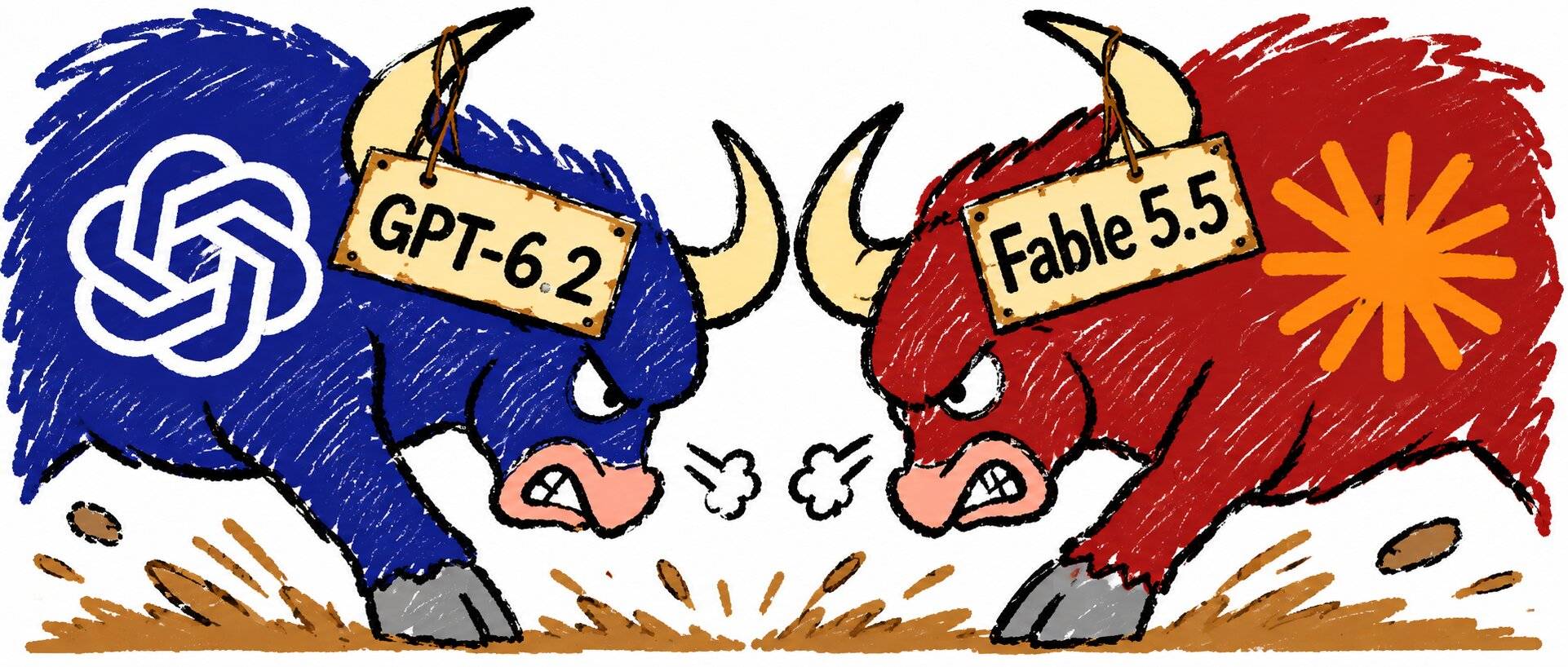
 | November 2, 2026 — Clues for GPT-6.2 Astra and Claude Fable 5.5 Surface on the Same Day
-16%Bose QuietComfort Ultra Over-Ear ANC Headphones — Immersive Audio Puts the Stage in Front of You! $379.99 CAD (16% Off)
Best Buy
-26%Geekpure 10" Clear Whole-House Filter Housing — See When the Filter Needs Changing! $59.98 CAD (25% Off)
Amazon
0Worth Buying: SHOKZ OpenRun Pro 2 Bone Conduction Sport Headphones — Open-Ear Sound That Actually Stays Put, $249.95 CAD
Amazon
-46%Razer Kraken V3 X Gaming Headset — 285g Lightweight with 7.1 Surround Sound! $54.99 CAD (45% Off)
Best Buy
Maple ExpressMaple Express | November 2, 2026 | Two-Alarm Fire at Scarborough Townhouse Sends Three to Hospital
Tech Express