
Tech Express | September 25, 2026 — Google's Gemini 3.8 Live Debuts a Real-Time 'Live Avatar'
Today's Tech Express: Gemini 3.8 Live adds a real-time 'Live Avatar' in 97 languages; Anthropic signs an $11.6B seven-year compute deal with Akamai; Google's Pixel 11 launches Call for Me; ASML sold no machines in Europe in 2026; Intel's CEO apologizes over a CPU shortage; Xiaomi 18 Pro stores packed; Qualcomm's Elite chip embeds Wi-Fi 6E; scientists detect exoplanet radio signals for the first time; Tencent's Marvis adds four AI butlers; China's robot installations outpace Germany 14 to 1.
Tech Express | September 25, 2026
1. Google's Gemini 3.8 Live Debuts a Real-Time 'Live Avatar' with Lip-Sync in 97 Languages
Source: The Verge
Google's new Gemini 3.8 Live update lets users hold conversations with the model while watching an animated AI persona respond in real time. The “Live Avatar” lip-syncs and shows different facial expressions during conversations, but it is currently available only to Gemini Enterprise customers.
According to Google, Live Avatar can switch between the 97 languages it supports “without degrading video fidelity or introducing visual drift.” In a video shared by Google, the avatar's mouth animation lines up with what it is saying in both English and Japanese, and it can also pull up information on-screen while it talks. The launch comes about a week after Google revealed its Gemini 3.8 Live model, which the company says “processes visual inputs in near real-time.”
Google will offer a library of preset avatars for customers to choose from, and will also let organizations create their own. Google says output from Live Avatar comes with its invisible SynthID watermark alongside safeguards to “respect identity.”
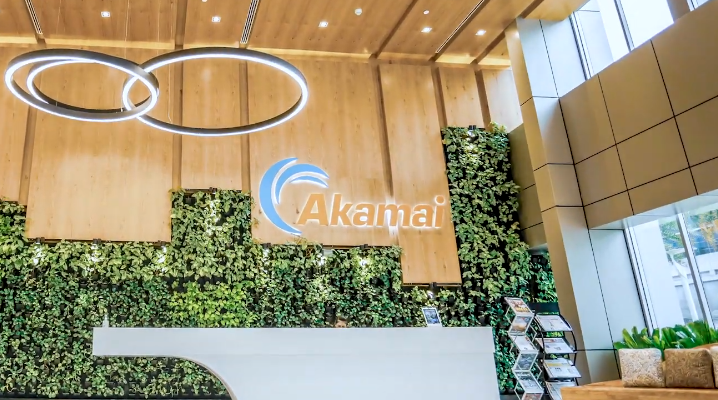
2. Anthropic Signs $11.6 Billion, Seven-Year Compute Deal With Akamai
Source: SiliconANGLE
Cloud and cybersecurity company Akamai announced an $11.6 billion, seven-year deal to supply computing capacity to artificial intelligence developer Anthropic, sending Akamai shares up more than 20% in after-hours trading. The agreement is built around CPU workloads, with Akamai Cloud providing the capacity from a distributed network running to thousands of points of presence.
Under the terms, Anthropic can add as much as $9 billion in further commitments, for a potential total of about $20 billion. Akamai also issued Anthropic a warrant covering nonvoting convertible Series B preferred stock that would convert into up to about 5% of Akamai's common shares, with an exercise price of $111.33. About 2% vests with the current commitment, and each further $3 billion Anthropic commits to cloud services over the seven-year term vests roughly another 1%.
Akamai said the deal will not change its 2026 revenue guidance. Capital spending tied to the $11.6 billion commitment is estimated at about $5.5 billion in total, and the company is raising its 2026 capital expenditures by about $1.7 billion to secure and prepurchase supply chain components. Chief Executive Tom Leighton said Anthropic chose Akamai for its ability to build and operate AI infrastructure at scale.
3. Google's Pixel 11 Launches 'Call for Me' So Gemini Can Phone Businesses for You
Source: WIRED
On Thursday, Google announced Call for Me, an experimental beta feature exclusive to its latest Pixel 11 smartphones in the US (and in English). Pixel 11 owners need a Gemini subscription and must enroll in the Phone by Google app's public beta. The feature is designed to let Gemini call businesses on your behalf, such as asking a local hardware store whether it stocks a specific tool, or scheduling a haircut with a barber.
Users simply tell Gemini to make the call; it may ask follow-up questions for more context, then introduces itself and holds a back-and-forth conversation to handle the request. If it reaches an automated phone menu, it can navigate it and even wait on hold. Users can view a live transcript on the Pixel and take over at any point. Google says it works best with businesses and will not call emergency services, though users can ask it to call specific numbers.
The feature expands on Google's suite of smart calling tools on Pixels and Android, including call screening, Hold for Me, Direct My Call and real-time Scam Detection. Google says it is continuing to test and wants user feedback across many cases to improve the feature for accents and noisy environments; if a business cannot accommodate your needs, Gemini will “politely” hang up.

4. ASML Blasts Europe's Chip Stagnation: 'We Sold Nothing' There in 2026
Source: MyDrivers
According to a Sept. 25 report by Kuai Technology, ASML, the world's only supplier of EUV lithography machines, said at a symposium that it did not sell a single machine in Europe in 2026, and called on the EU to create chip demand. Frank Heemskerk, ASML's executive vice president for public affairs, put it bluntly: “We sold nothing in Europe. Because there is no investment in Europe, no fabs under construction. That is really worrying.”
Heemskerk said Europe's share of revenue has fallen to 0%, down from 1% in 2025. ASML investor materials show the decline year by year: 2% in 2022, 4% in 2023, 5% in 2024, 1% in 2025, and zero in the first two quarters of 2026. With a market value of about $660 billion, ASML is Europe's most valuable company and the world's only EUV supplier, yet it has sold nothing at home.
Heemskerk argued the problem lies on the demand side, not supply. The EU has been subsidizing fab construction, he said, but factories without orders are useless. ASML is in talks with the European Commission president and is urging the EU to aggregate Europe's market power so that the continent's big chip customers reconnect with local manufacturers. The report notes that none of the fabs under construction in Europe is an advanced-node plant, and none will use EUV or High-NA EUV.

5. Intel Can Fill Only About Half of CPU Orders as CEO Lip-Bu Tan Apologizes
Source: MyDrivers
According to a Sept. 24 report by Kuai Technology, Intel CEO Lip-Bu Tan revealed at the Splunk .conf26 conference in Denver that the company can currently meet only about half of its customers' CPU demand, and that several big-company CEOs called demanding more chips, forcing him to apologize. The shortage is not caused by an Intel production problem but by demand far exceeding expectations.
Intel's second-quarter 2026 revenue reached $16.1 billion, up 25% year over year — its strongest quarterly growth in nearly 15 years and about $2 billion above analyst expectations. Tan attributed the growth to an explosion in AI inference demand: unlike the training phase, which relies on GPUs, AI agents need large numbers of CPUs to coordinate workflows, call tools and manage data. TrendForce estimates that in the agent era, CPU cores needed per gigawatt of data center capacity will jump from 30 million to 120 million.
The Data Center and AI group was the biggest beneficiary, with second-quarter revenue of $6.3 billion, up 59% year over year — more than double the total revenue growth rate — while average server CPU selling prices rose about 22% quarter over quarter. Tan previously said the world faces one of the worst supply chain constraints in history, with long-term shortages in advanced logic chips, wafers, memory and substrates that cannot be eased in the short term. Intel expects the shortage to last into 2027.

6. First Snapdragon 2nm Flagship: Xiaomi 18 Pro Stores Packed on Day Two of Sales
Source: MyDrivers
According to a Sept. 25 report by Kuai Technology, Xiaomi Group president Lu Weibing and Xiaomi's phone account both posted photos from Mi Home stores across China during the Mid-Autumn holiday. On the second day of first sales for the Xiaomi 18 Pro series, stores nationwide stayed packed, with many users lining up to try the phones. The photos showed sharply higher foot traffic at Mi Home stores in Henan, Shandong, Jiangsu and elsewhere, with many users eager to try the series' signature rear display and 200-megapixel camera system.
The Xiaomi 18 Pro series was officially launched on the evening of Sept. 23 and went on sale at the same time, in three tiers: Xiaomi 18 Pro, Xiaomi 18 Pro Max and a transparent special edition. The Xiaomi 18 Pro starts at 5,999 yuan for 12GB+256GB and 8,999 yuan for the top 16GB+1TB model; the 18 Pro Max starts at 6,999 yuan and tops out at 9,999 yuan; the transparent special edition starts at 9,999 yuan, with the Pro Max transparent edition at 10,999 yuan.
In terms of specs, the Xiaomi 18 Pro series is the world's first to debut Qualcomm's new-generation 2nm flagship mobile platform, with the Pro using the sixth-generation Snapdragon 8 Elite and the Pro Max using the sixth-generation Snapdragon 8 Extreme Elite. Both chips are made with TSMC's 2nm GAA process and use Qualcomm's third-generation Oryon CPU architecture, making it the industry's first mobile platform with a CPU clock speed above 5GHz. The Pro packs a 7,000mAh battery and the Pro Max steps up to 8,500mAh, both supporting 100W wired and 50W wireless fast charging.

7. Qualcomm's New 'Elite' Sound Chip Puts Wi-Fi 6E Inside Earbuds
Source: The Verge
Qualcomm has introduced its new Snapdragon Sound Elite Gen 2 audio chip, the first to integrate “micro-power Wi-Fi 6E” right into the chip, so wireless earbuds or audio glasses can connect directly to a home Wi-Fi network and, from there, to the cloud. That means high-quality lossless audio can keep playing even if your phone is left on the bedside charger or buried in the couch.
It echoes Qualcomm's 2023 “S7 Pro sound platform” and its XPAN technology, which also promised earbuds capable of 24-bit 96kHz lossless audio that Bluetooth alone cannot carry. But that older 7-series platform needed a separate Wi-Fi chip, and in the end only Xiaomi's 2025 Buds 5 Pro adopted it, without a global release. Qualcomm says that now that Wi-Fi no longer requires an extra chip, the idea may finally take off.
Qualcomm says the Elite chip is 30% smaller, consumes up to 40% less power and has twice the AI processing capability of the previous generation. So far, Qualcomm says it is working with HP on one unnamed product, is “working closely with Bose,” and is “pioneering a new category of intelligent hearables” together with Cleer.

8. Scientists Detect Radio Signals From an Exoplanet for the First Time
Source: WIRED
About 63 light-years from Earth lies a planetary system so young that it is less than 1 percent as old as our solar system: Beta Pictoris. As far as astronomers have confirmed, it consists of a star more massive than the sun, three giant planets and a huge disk of dust and debris. The middle planet, Beta Pictoris b, is a gas giant several times more massive than Jupiter and only tens of millions of years old — a newborn in astronomical terms, and one of the most extensively studied exoplanets through direct observation.
A new study by researchers at Harvard and the University of Oregon claims Beta Pictoris b is the source of radio emissions never before unequivocally detected on another world. The signal was recorded by the MeerKAT radio telescope in South Africa and is likely of natural origin — the authors stress at the outset that it is not aliens. The study has not yet been peer-reviewed.
The researchers say the radio waves' characteristics match theoretical predictions for magnetic fields generated by young, massive planets: charged particles become trapped in the planet's powerful magnetic field, and as the planet rotates, they accelerate and release energy as radio waves — a phenomenon known as auroral radio emission. The team detected several such signals and, for the first time, pinpointed their origin directly to an exoplanet.

9. Tencent's Marvis Launches a New AI Butler Version Divided Into Four Assistants
Source: MyDrivers
According to a Sept. 25 report by Kuai Technology, Tencent's Marvis officially released a new AI butler version, splitting the various capabilities that were once crammed into a single session into a team of assistants each with their own role, positioning itself as a 24-hour AI butler. Opening the new Marvis reveals four roles — file butler, PC butler, browser butler and software butler — each with its own homepage and capability cards, so users can learn each butler's specialty before handing over the matching task.
The file butler is the “star” of this major release, with its local knowledge-base feature fully opened up: it can search files by content within authorized folders, so users no longer need to remember file names — just describe the content to locate it. Newly saved files are automatically recognized and suggested for classification into the relevant topic knowledge base, supporting PDF, Word, Markdown, WPS, Excel, PPT, images and Tencent Docs cloud documents. It asks for user confirmation before cleaning up or deleting, and can share knowledge bases with teammates for collaboration.
The PC butler acts as 24-hour IT support, able to check startup items, diagnose lag, free up C-drive space and troubleshoot driver and runtime issues; the browser butler handles web automation, reading any webpage and independently completing clicks, form-filling, scraping, downloads and logins, with support for scheduled tasks; and the software butler covers the installation, updating and management of apps across categories, automatically watching for free games on Steam and Epic and claiming and downloading them in one click. Marvis also supports cross-device remote control.

10. In a Decade, China's Robot Installations Have Gone From 3x Germany to 14x
Source: Guancha
Ten years ago, China's new robot installations outnumbered Germany's by 3 to 1; today that ratio has widened to 14 to 1. According to The New York Times, nearly three-fifths of the robots newly deployed worldwide in 2025 came from China, with more than 350,000 new units installed, while Germany's new installations fell to about 25,000 and are expected to keep declining this year. Data from the industry group International Federation of Robotics shows German factory robot installations are expected to fall for a third consecutive year, while China's deployment scale keeps expanding.
Rebecca Arcesati, an expert on technology and innovation policy at the Mercator Institute for China Studies in Brussels, said China's robotics industry is “developing astonishingly fast.” She said that although China still needs to buy some high-end components from Japan and Europe, local self-sufficiency is rising, with domestic suppliers now accounting for more than half of China's total robot installations, up from just one-third a decade ago.
Arnaud Robert, president of Zurich-based Hexagon Robotics, said: “Looking back over the past decade or so, China's development has been astonishing. What they did extremely well was scale up, which no one else managed to achieve.” The Mercator Institute argues that, backed by state policy support, China could outperform Europe in the fusion of AI and robotics the way it did with electric vehicles.
More News
- Global Express | September 25, 2026 — Danish Intelligence Warns Russia Could Strike a NATO Country Within Months
- Finance Morning: PBOC Maps Next Monetary Policy Steps; Hong Kong Tech Stocks Slide
- Sports Express | September 25, 2026 — Scheffler, Burns Win First Match Together as U.S. Takes 3-2 Presidents Cup Lead
- Maple Express | September 25, 2026: Two rushed to trauma centre after King West assault in Toronto
- Finance Evening | MGM Shares Sink 11% as Takeover Bid Collapses; Starbucks to Close 250 Stores
Comments (0)
View More
 0
0Worth Buying: Roku Streaming Stick 2025 — Turn Any Old TV Smart, One Remote Does It All! $39.36 CAD
 -25%
-25%Travelpro Versapack+ Underseat Travel Tote Bag — Fits Under Most Airline Seats! $172.50 CAD (25% Off)
 -31%
-31%Samsung 98" U9000H 4K UHD HDR Vision AI Tizen TV — 98" Big Screen, 144Hz Gaming! $2,099.99 CAD (30% Off)
 -47%
-47%Rubbermaid INSTAMAT Bath Mat — Hang-to-Dry & Mildew-Resistant Grip! $26.04 CAD (47% Off)
 Global Express
Global Express | September 25, 2026 — Danish Intelligence Warns Russia Could Strike a NATO Country Within Months
 Maple Express
Maple Express | September 25, 2026: Two rushed to trauma centre after King West assault in Toronto
0Worth Buying: Roku Streaming Stick 2025 — Turn Any Old TV Smart, One Remote Does It All! $39.36 CAD
Amazon
-25%Travelpro Versapack+ Underseat Travel Tote Bag — Fits Under Most Airline Seats! $172.50 CAD (25% Off)
Amazon
-31%Samsung 98" U9000H 4K UHD HDR Vision AI Tizen TV — 98" Big Screen, 144Hz Gaming! $2,099.99 CAD (30% Off)
Best Buy
-47%Rubbermaid INSTAMAT Bath Mat — Hang-to-Dry & Mildew-Resistant Grip! $26.04 CAD (47% Off)
Amazon
Global ExpressGlobal Express | September 25, 2026 — Danish Intelligence Warns Russia Could Strike a NATO Country Within Months
Maple Express