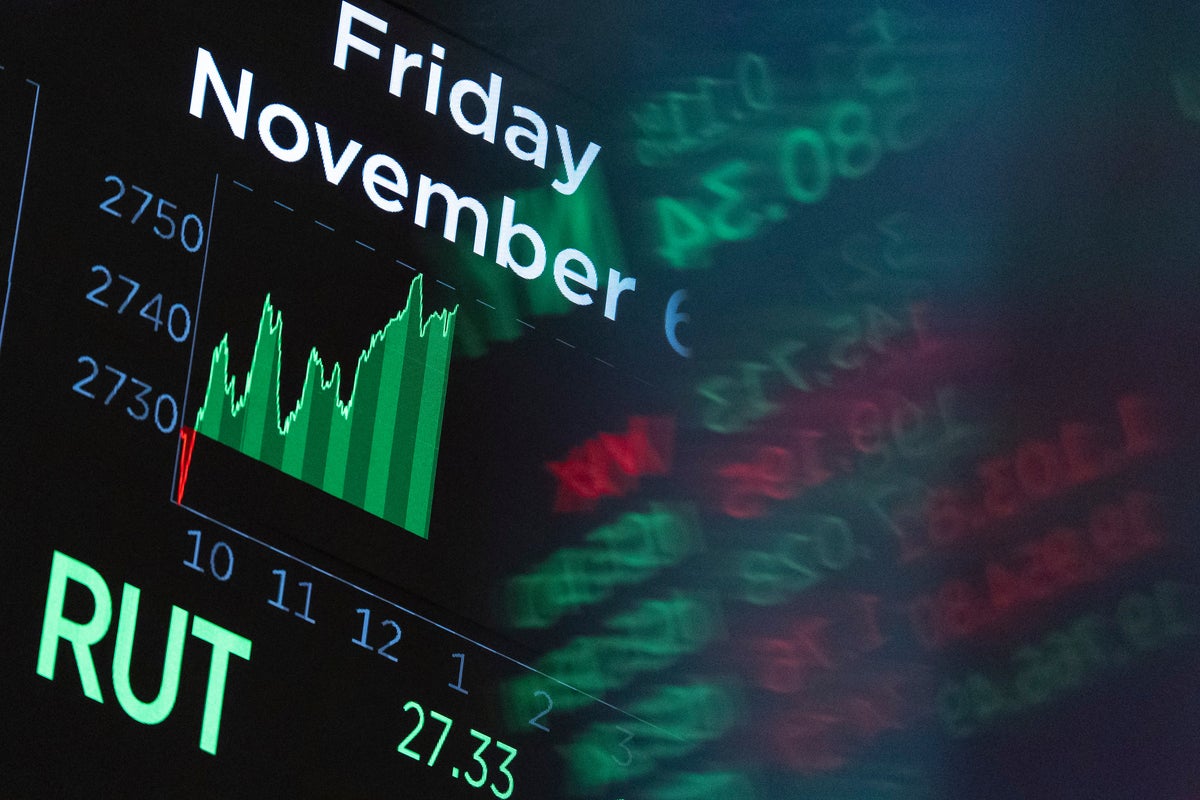
Finance Morning | Nov 9: Nvidia Probes CEO Jensen Huang as Taiwan Leads Asia
Nvidia's board opened an internal investigation into reports that CEO Jensen Huang was a target of foreign intelligence activity; he remains chief executive. China's October CPI rose 0.7% year on year and FX reserves reached $3.4052 trillion. The State Council set out plans to refine the market-stabilisation mechanism. Taiwan's TAIEX closed up 4.94% to lead Asia, the Nikkei rebounded 2.33% and Korean shares slipped. Citi cut U.S. and global tech stocks to neutral.
Source: The Independent, Al Jazeera, Kyodo News, 21st Century Business Herald, Xinhua, Phoenix Shenzhen, Sina, China Fund News, Guandian
📊 Asia Markets Today
| Index | Close | Change | % Change |
|---|---|---|---|
| Shanghai Composite | 3,660.79 | +11.61 | +0.32% |
| Shenzhen Component | 11,145.49 | -30.29 | -0.27% |
| ChiNext | 2,458.56 | -6.67 | -0.27% |
| Hang Seng | 24,448.95 | -32.91 | -0.13% |
| Nikkei 225 | 58,775.50 | +1,340.73 | +2.33% |
| KOSPI | 5,018.85 | -40.84 | -0.81% |
| TAIEX | 41,661.70 | +1,960.06 | +4.94% |
Asian benchmarks diverged on Monday: Taiwan and Japan rebounded sharply after a steep slide, the Shanghai Composite edged higher, while Shenzhen, Hong Kong and Seoul finished lower.
1. Nvidia opens internal probe into CEO Jensen Huang over spy claims
Source: The Independent, Source
Nvidia said on Sunday it was opening an investigation into reports that chief executive Jensen Huang was the target of a foreign intelligence effort. According to The New York Times, Huang acknowledged he had been intimate with a business executive whom U.S. intelligence determined was gathering information for Beijing. The news added another layer of uncertainty to a market that has just been through a heavy selloff in AI stocks.
In a statement, Nvidia's board said it had confidence in Huang and no reason to believe that national security or company secrets had been compromised, but that an independent inquiry would examine "all available information." The board said Huang supported the investigation and had pledged his full cooperation, adding that "the Board prioritises US national and economic security, which is paramount to the interests of NVIDIA and its shareholders." Huang remains chief executive.
"The scrutiny surrounding Jensen Huang reaches far beyond a personal scandal, touching the increasingly sensitive intersection of US technology leadership, China and national security," Stephen Innes of SPI Asset Management wrote in a commentary. Friday's market reaction was a drop followed by a recovery: Nvidia shares rose 2.8 per cent on Friday after falling 9.3 per cent and 3.2 per cent in the two previous sessions. The S&P 500 is now only 5.7 per cent below the all-time high it set last month.
2. China's State Council sets out plan to refine market-stabilisation mechanism
Source: 21st Century Business Herald, Source
A State Council executive meeting on November 6 said China will improve the capital market's stabilisation mechanism, strengthen the stock market's internal stability and promote the steady and healthy development of the capital market. The report said that from two multi-department symposia on November 2 to this top-level guidance, the stabilisation mechanism is shifting from temporary, emergency intervention towards predictable and sustainable institutional arrangements.
The policy is summarised as "two funding tools plus three institutional supplies." On the funding side, the third operation of the swap facility has been implemented, with 100 billion yuan deployed so far to ease institutional liquidity through bond-for-bond swaps; the relending rate for share buybacks and increased holdings has been cut to 1 per cent, turning a short-term measure into a long-term institution that gives listed companies a stable channel for low-cost buybacks.
The three institutional supplies include: an expansion of "supportive" buybacks, with share prices falling below net asset value added as a trigger and part of excess fundraising required to be used for buybacks and cancellation; a richer set of investment tools, with 18 active ETFs accelerating their build-up and multi-asset index funds with constant stock-bond ratios and floating-rate funds rolled out faster; and counter-cyclical adjustment of margin trading, with flexibility retained for margin and collateral ratios going forward. Several brokerages concluded that the policy floor is being solidified into an institutional floor.
3. China's October CPI rises 0.7%, FX reserves reach $3.4052 trillion
Source: Phoenix Shenzhen, Source
Data from the National Bureau of Statistics showed China's consumer price index rose 0.7 per cent year on year in October 2026, with urban prices up 0.7 per cent and rural prices up 0.7 per cent. Food prices fell 2.9 per cent while non-food prices rose 1.5 per cent; consumer goods prices rose 0.8 per cent and services prices rose 0.7 per cent. For January-October, the CPI was up 0.9 per cent from a year earlier. On a monthly basis, October CPI was flat, with urban prices unchanged and rural prices down 0.1 per cent.
Data from the State Administration of Foreign Exchange showed China's foreign exchange reserves stood at $3.4052 trillion at the end of October 2026, up $4.9 billion, or 0.14 per cent, from the end of September. The regulator said that in October, affected by global macroeconomic data and major economies' monetary policy and expectations, the dollar index rose and major global financial asset prices moved in mixed directions; the combined effect of exchange-rate translation and asset price changes lifted the reserves for the month.
On the funding side, margin financing balances stood at 1.168837 trillion yuan on the Shanghai Stock Exchange as of November 6, down 11.961 billion yuan from the previous trading day, and 1.078631 trillion yuan on the Shenzhen Stock Exchange, down 11.548 billion yuan; the two markets combined stood at 2.247468 trillion yuan, down 23.509 billion yuan. Separately, IMF Managing Director Kristalina Georgieva said central banks assessing their inflation-fighting measures need to factor in a possible slowdown in AI-driven growth.

4. Instant departure tax refunds lift inbound consumption
Source: Xinhua, Source
At a central departure tax refund point in Huaqiangbei, Shenzhen, a tourist from Morocco received an 18 yuan refund in just two minutes, with the money landing directly in his WeChat wallet. "Very convenient. Now I can use this money to buy things upstairs," he said. The outlet is among Shenzhen's first "three-in-one" service points, combining payment facilitation, departure tax refunds and currency exchange.
Zhang Sha, head of the Huaqiangbei central refund point at Industrial and Commercial Bank of China's Shenzhen branch, said the outlet handles about 50 refunds on a normal day and 80 to 90 at peak; tourists can show an encrypted refund service code on their phone, scan it and complete the whole process in as little as one minute, without paper refund forms or invoices. Huang Tao, deputy director of the second tax bureau of the Shenzhen tax service, said the city now has more than 3,000 tax-refund stores and 25 central refund points covering all key commercial districts; in the first three quarters of this year, tax-refunded sales in the city reached 1.53 billion yuan, up 75.1 per cent year on year.
The service has also moved from shopping malls to exhibition halls. Self-service refund machines newly deployed at the 140th Canton Fair support 15 languages including Chinese, English, Japanese, Korean and French, allow multiple application forms to be selected at once and accept five major credit card types. In January-October 2026, the number of departure tax refund applications in Guangzhou rose 422 per cent year on year and sales rose 124 per cent; during the 140th Canton Fair, held from October 15 to November 4, the number of refund invoices issued in Guangzhou rose 116.76 per cent and the value rose 75.22 per cent.
5. iFlytek: technology delivered, business still waiting
Source: 21st Century Business Herald, Source
In its third-quarter report released after the close on October 19, iFlytek reported revenue of 6.564 billion yuan for the quarter, up 7.99 per cent year on year, and net profit attributable to shareholders of 226 million yuan, up 31.05 per cent. Net profit for the first three quarters totalled 21.8872 million yuan, turning around from a loss a year earlier. But after excluding non-recurring items, the third quarter still lost 126 million yuan and the first three quarters lost 763 million yuan. The company's market value has fallen to 87.8 billion yuan, more than 40 per cent below its early-year peak.
Progress on the technology side has not been slow. At its 1024 Developer Day on October 22, chairman Liu Qingfeng unveiled the device-cloud Spark X2.6, which for the first time ran million-level ultra-long-context code and agent training on domestic chips, lifting ultra-long-context training efficiency by about four times. The cost is that for every mainstream international algorithm, iFlytek must first spend three to six months adapting and running it on domestic cards, and that time ends up in research spending: the company's R&D expense ratio has been around 25 per cent for several consecutive quarters, against 15-20 per cent for A-share software companies generally.
The commercial side is much harder. Revenue in 2025 was 27.105 billion yuan, double the level five years earlier, but still far from its "100 billion yuan revenue" target; net profit that year was 839 million yuan, but only 264 million yuan after excluding non-recurring items, with government subsidies booked to profit accounting for 636 million yuan. Accounts receivable stood at 16.296 billion yuan at the end of 2025, equivalent to 60 per cent of annual revenue, of which 5.6 billion yuan was more than two years old. At its August results briefing, the company acknowledged a gap of about five times versus Nvidia's H200 in ultra-long context above 256K, complex agents and code training.
6. Apple squeezed by its own supply chain as memory pricing power slips
Source: Sina, Source
Just as the foldable iPhone Duo went on sale, screen failures became the focus of public discussion: multiple users reported abnormal noises as the device unfolded, followed by cracks and white lines near the crease, with some units even going black. At the same time, reports that ChangXin Memory Technologies rejected an Apple order spread online, scuppering Apple's plan to secure memory chips at low prices.
The report described a shift in bargaining power along the supply chain. In 2023, flash memory prices fell to historic lows and Bernstein Research estimated the industry's operating loss that year at $19 billion, while Apple booked about $14 billion in gross profit from storage upgrades alone. Apple once dictated terms with its enormous purchasing volume; now memory makers have no trouble selling their output and Apple is the one queuing. TechInsights estimates that two years ago Apple bought almost twice as much flash capacity as Microsoft, Amazon, Meta and Google combined; today hyperscale cloud providers buy twice as much as Apple.
Industry estimates suggest memory demand from global AI servers will account for 35 per cent of the overall memory market in 2026 and exceed 50 per cent by 2028. Pressure is already visible on the consumer side: IDC data show China's smartphone shipments were about 57.9 million units in the third quarter of 2026, down 15.4 per cent year on year. Capital markets took a different view, however: at Friday's U.S. close, Apple's market value stood at $5.03 trillion, reclaiming the title of the world's most valuable company from Nvidia.

7. Nikkei rebounds 2.33% as investors buy back oversold stocks
Source: Kyodo News, Source
Tokyo stocks opened the new week higher on November 9, with the Nikkei index rising across the board for its first rebound in six trading days. The benchmark closed at 58,775.50, up 1,340.73 points or 2.33 per cent from Friday, having risen more than 2,000 points at one stage and briefly topped the 59,000 mark. The broader TOPIX gained 110.17 points to 3,818.16, up 2.97 per cent, with trading volume of 2.99581 billion shares.
The rebound followed a steep slide. The Nikkei had fallen more than 7,000 points over the five trading days through Friday, and bargain hunting took the upper hand from the morning session on November 9. Fears that Democrats, who won big in the U.S. midterm elections, will tighten regulation of artificial intelligence had sent the market tumbling on Friday, prompting investors to buy back oversold shares.
Gains in U.S. technology stocks on Friday also helped, with high-priced semiconductor shares in demand. The report said this was an important support for the Nikkei's intraday return above 59,000.

8. Taiwan leads Asia as TAIEX closes up 4.94%
Source: Al Jazeera, Source
Asian stock markets rebounded on Monday after last week's tech rout, with Taipei leading the gains. Taiwan's TAIEX closed up 4.94 per cent, Tokyo's Nikkei 225 rose 2.33 per cent and Sydney's S&P/ASX 200 edged up 0.099 per cent. Seoul's KOSPI fell 0.8 per cent after rising about 1.7 per cent earlier, and Hong Kong's Hang Seng Index slipped 0.22 per cent.
Cameron Chui, Asia equity strategist at JP Morgan Private Bank in Hong Kong, told Al Jazeera: "We view the recent drawdown in AI infrastructure names as a function of tighter financial conditions, growing scrutiny over credit availability for neocloud companies, and uncertainty over potential delays to the AI build-out post the US midterm election results." He added: "That being said, AI demand and adoption remain strong, 2027 capex visibility remains high, and a meaningful valuation reset has already taken place that at least partly factors in these concerns."
"In Asia, we see attractive upside potential in both Taiwan and South Korea, while acknowledging that earnings downside risks have materially risen for 2028, widening the range of potential outcomes," Chui said. The report noted that the rebound followed a $2.5 trillion sell-off on Wall Street triggered by the U.S. midterm results; on Friday, the Nikkei 225 and KOSPI plunged about 6 per cent and 9 per cent respectively, while the Hang Seng dropped more than 1 per cent.

9. Korean stocks hit circuit breaker last week as ETF money shifts to A-share broad indices
Source: China Fund News, Source
In the week of November 2-6, the Democrats' landslide in the U.S. midterms fuelled concerns about tighter AI regulation and slower data-centre expansion, triggering a sharp correction in U.S. tech stocks, with the Nasdaq Composite falling more than 10 per cent from its recent high. Asia diverged sharply: Japan and Korea, which carry heavy semiconductor weightings, slumped, with the Nikkei 225 posting its biggest weekly drop since March 2020, while Korea's KOSPI triggered a first-level circuit breaker shortly after the open on November 6 and closed down 6.02 per cent.
Measured from the October 30 close to November 6, the Shanghai Composite rose 1.39 per cent and the Hang Seng gained 5.10 per cent, while the Nikkei 225 fell 9.25 per cent, the KOSPI dropped 11.71 per cent and India's SENSEX rose 8.82 per cent. Over the week, the top 20 Asian ETFs by gain rose between 19.45 per cent and 45.19 per cent, with inverse (short) products taking most of the places.
Fund flows pointed in another direction. The top 20 Asian ETFs by net inflow drew 228.182 billion yuan combined, of which 13 A-share ETFs took in 175.819 billion yuan, or 77.05 per cent; the Huatai-PineBridge CSI 300 ETF led with a weekly net inflow of 31.958 billion yuan. In Hong Kong, the Tracker Fund of Hong Kong and the CSOP Hang Seng TECH ETF recorded net inflows of 9.003 billion yuan and 3.321 billion yuan respectively.
10. Citi cuts U.S. and global tech stocks to neutral
Source: Guandian, Source
Citi's strategist team made a tactical adjustment, downgrading U.S. equities, global tech stocks and European tech stocks from overweight to neutral. The team led by Beata Manthey said the reasons were crowded positioning, elevated valuations and slowing earnings-per-share growth, leaving these assets more exposed to pressure.
At the same time, Citi raised European equities excluding the UK to overweight from neutral. That market is less dependent on the tech sector and has greater weightings in cyclicals and defensives, making it relatively better placed as tech volatility rises.
Citi argued that crowded trades, slowing earnings growth and uncertain prospects for AI spending make the market prone to further short-term swings, hence the shift to a more defensive stance.
This content is compiled from public reports and does not constitute investment advice.
More News
- Global Express | November 9, 2026: Kraków Shooting Suspect Dies in Hospital, Polish Police Say
- Tech Express | November 9, 2026: Apple Unveils HALO Humanoid Robot Research With 91% Success in Unseen Homes
- Sports Express | November 9, 2026 — Leafs blanked 4-0 by Devils, winless in six
- Maple Express | November 9, 2026 - Man in his 20s shot in Toronto's east end
- Maple Express Evening | Nov. 8, 2026 — York University confirms data breach affecting online forms since 2007
Comments (0)
View More
 -25%
Scotts 26-Inch Push Lawn Sweeper — Skip the Bending and Bagging This Fall! $210.99 CAD (25% Off)
 -51%
Ring Battery Doorbell 2K (Newest Model) — Wide-Angle Video & 6x Zoom! $69.99 CAD (50% Off)
 -36%
LEGO Minecraft Wither Battle 21590 — 494 Pieces, 7 Characters! $54.97 CAD (35% Off)
 -49%
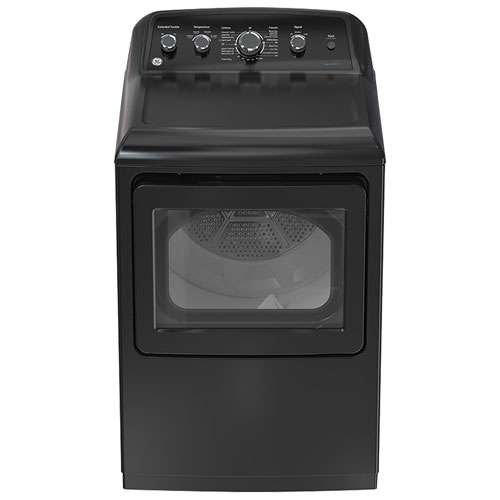
GE 7.2 Cu. Ft. Electric Dryer — Moisture Sensing and 7 Cycles at Nearly Half Off! $699.99 CAD (48% Off)
 Maple Express
 | November 8, 2026 — Thornhill restaurant fire probed as suspected arson
Finance MorningFinance Morning | Nov 9: Nvidia Probes CEO Jensen Huang as Taiwan Leads Asia
-25%Scotts 26-Inch Push Lawn Sweeper — Skip the Bending and Bagging This Fall! $210.99 CAD (25% Off)
Amazon
-51%Ring Battery Doorbell 2K (Newest Model) — Wide-Angle Video & 6x Zoom! $69.99 CAD (50% Off)
Amazon
-36%LEGO Minecraft Wither Battle 21590 — 494 Pieces, 7 Characters! $54.97 CAD (35% Off)
Amazon
-49%GE 7.2 Cu. Ft. Electric Dryer — Moisture Sensing and 7 Cycles at Nearly Half Off! $699.99 CAD (48% Off)
Best Buy
Maple ExpressMaple Express | November 8, 2026 — Thornhill restaurant fire probed as suspected arson
Finance Morning