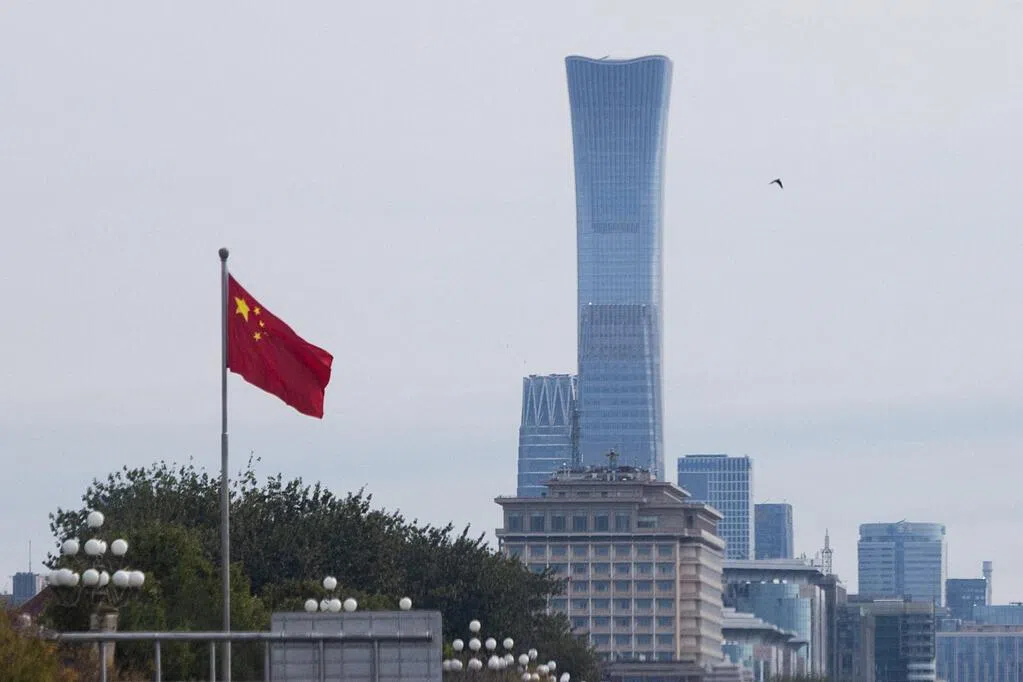
Finance Morning | Report Says China Told Banks to Pause IPOs, $14bn Swap Facility Kicks In, but A-Shares Still Fall; Taiwan and Korea Plunge Over 3.5%
Regulators reportedly told investment banks to pause IPOs and halted large share sales, while a 100 billion yuan swap facility began operating; A-shares still fell, with the Shanghai Composite down 0.82%. AI scepticism sent Korea's KOSPI and Taiwan's index down 3.59%; the Hang Seng rose 0.57% and Japan was shut for a holiday. The PBOC raised the FX deposit reserve ratio to 6%; China's six big state banks are back in large-denomination CDs; central banks bought 321 tonnes of gold in Q3.
Source: Lianhe Zaobao, 21st Century Business Herald, Southern Finance, Sina Finance, National Business Daily, China.com Finance
📊 Asia Market Close
| Index | Close | Change | % Change |
|---|---|---|---|
| Shanghai Composite | 3608.10 | -29.93 | -0.82% |
| Shenzhen Component | 10876.99 | -133.69 | -1.21% |
| ChiNext | 2391.65 | -67.05 | -2.73% |
| Hang Seng | 23525.97 | +132.65 | +0.57% |
| Nikkei 225 | 63081.86 | -208.24 | -0.33% |
| KOSPI | 5648.79 | -210.29 | -3.59% |
| Taiwan Weighted | 43307.54 | -1612.60 | -3.59% |
Japan's stock market was closed today for a public holiday; the Nikkei 225 figure is the previous session's close.
1. Regulators said to have told investment banks to pause IPOs, large share sales halted
Source: Lianhe Zaobao
Citing people familiar with the matter, the Financial Times reported on Tuesday (Nov 3) that China's securities regulator met with several investment banks over the past few days and issued informal "window guidance" telling them to pause initial public offerings. Large shareholder selldowns have also been halted until the market recovers, the people said.
The regulator also issued other guidance aimed at stabilising the market, including encouraging faster share buybacks and asking investors to limit share reductions, the report said. During previous slumps, Chinese policymakers slowed the pace of IPOs to preserve market liquidity, but the move risks slowing fundraising in a market that had only just begun to recover. Bloomberg data show IPO fundraising in China has already exceeded 292 billion yuan (S$56.2 billion) this year, the highest since 2023; chipmaker YMTC had been expected to list this year but has yet to do so.
A-shares have been mired in a slump since the summer amid domestic macroeconomic pressure and growing doubts over the value of artificial intelligence investments, making China the world's worst-performing major stock market this year. A tax crackdown on offshore trusts has also prompted some billionaires to sell shares to pay tax bills. On Monday (Nov 2), the CSRC, the central bank and the National Financial Regulatory Administration held a symposium with brokerages, fund companies and banks and announced a new round of securities, fund and insurance company swap facility operations, cutting the relending rate for share buybacks and stake increases to 1% from 1.25%. The measures lifted the market briefly, but the three main A-share benchmarks fell again on Tuesday: the Shanghai Composite lost 0.82%, the Shenzhen Component 1.21% and ChiNext 2.73%, while the tech-heavy STAR 50 dropped 3.81%.
2. 100 billion yuan swap facility starts operating today
Source: 21st Century Business Herald
On Nov 2, the People's Bank of China, the CSRC and the NFRA jointly convened a symposium and rolled out a package of measures to steady the market and expectations. The effects are already showing: Chinese ADR indices rose more than 3% on the evening of Nov 2, while Hang Seng Index futures gained 1% and Hang Seng Tech futures nearly 2% in Hong Kong's night session.
The securities, fund and insurance swap facility began operating on Nov 3, with 31 brokerages and fund companies taking part and declared quotas exceeding 100 billion yuan. Financial institutions pledge bonds, ETFs and blue-chip stocks to the central bank in exchange for highly liquid assets such as government bonds and central bank bills, and the money can only be invested in the capital market.
The other main tool is the relending facility for share buybacks and stake increases, whose rate was cut to 1% from 1.25%. Banks borrow cheap funds from the central bank and lend them to listed companies or major shareholders for buybacks and stake purchases; the cumulative quota has reached nearly 440 billion yuan. The report noted the policy was previously temporary and is now permanent. Rules on buybacks to support share prices were also optimised, allowing buybacks when a stock trades below its IPO price, and 18 new active ETFs have been approved for listing, with fundraising completed and construction of positions accelerated. This is the third launch of the swap facility since 2024.
3. All six major state banks back in large-denomination CDs as PSBC fills the last gap
Source: Southern Finance
Postal Savings Bank of China has issued new large-denomination certificates of deposit, filling the last gap among the six major state-owned banks. PSBC launched three products covering 3-month and 6-month tenors, all with a 200,000 yuan threshold: the two 6-month products carry an annualised rate of 1.05% and are transferable, while the 3-month product pays 0.85% and is not transferable.
The wave began on July 1 this year, when Bank of China published a notice on its website for new large-denomination CDs with rates of up to 1.60%. Agricultural Bank of China followed in mid-July and ICBC restarted issuance in August. On Nov 3, Bank of China's app showed four products with tenors of three years or more: three-year rates of 1.50% and 1.55%, and five-year rates of 1.55% and 1.60%, all with a 200,000 yuan minimum. Agricultural Bank's app listed 19 products with rates ranging from 0.75% to 1.60%.
The trend has spread from the big state banks to joint-stock, city, rural and even foreign banks: Hengfeng Bank launched seven personal products on Oct 20, including a five-year product at 1.75%; China CITIC Bank offered 1.70% for three years; Bank of Tibet went as high as 1.85% for three years; among foreign banks, Bank of Yongfeng (China) offered 1.92% for three years and Bank of East Asia (China) 1.90%. The market broadly views the return as a defensive move to capture maturing deposits and lengthen liability duration amid low net interest margins, not an aggressive push for deposits at high rates. Data from Zhongtai Securities show the 42 A-share listed banks reported an industry net interest margin of 1.38% in the first three quarters, roughly unchanged since the third quarter of last year.
4. Stabilisation steps seen as too weak, A-share slump continues
Source: Lianhe Zaobao
China's latest stock-market stabilisation measures failed to lift the market, with artificial intelligence-related shares leading losses on Tuesday (Nov 3). The blue-chip CSI 300 and the Shanghai Composite both fell more than 1% in early trade before paring losses; by 1:40 pm on Tuesday they were down 0.57% and 1.21% respectively. The tech-heavy STAR 50 fell as much as 4%, while ChiNext dropped more than 2%.
China is the world's weakest major stock market this year, with the CSI 300 down 13.5% since January, and the index posted its biggest monthly decline in a decade in October as AI concept stocks sold off. Reuters quoted Chen Jiande, general manager of Fuzhou Tianlang Private Fund Management, as saying the measures, including the central bank's relending and swap operations, were "below market expectations" and that the positive factors had already been priced in during Monday's rebound. "Many investors holding hard-hit tech stocks are rushing to exit on any rebound," he said.
Wang Yapei, general manager of Shanghai Zijie Private Fund, said the benefits of the new policies were already reflected in yesterday's brief respite. He argued the government is pushing market participants to put up money rather than providing funds directly, adding that "major shareholders may not have a strong incentive to borrow money to buy falling stocks because they must bear the risk themselves". JPMorgan said in a note that the announcement "clearly signals policymakers' intent to support the stock market" and "may help establish a floor for Chinese equities".
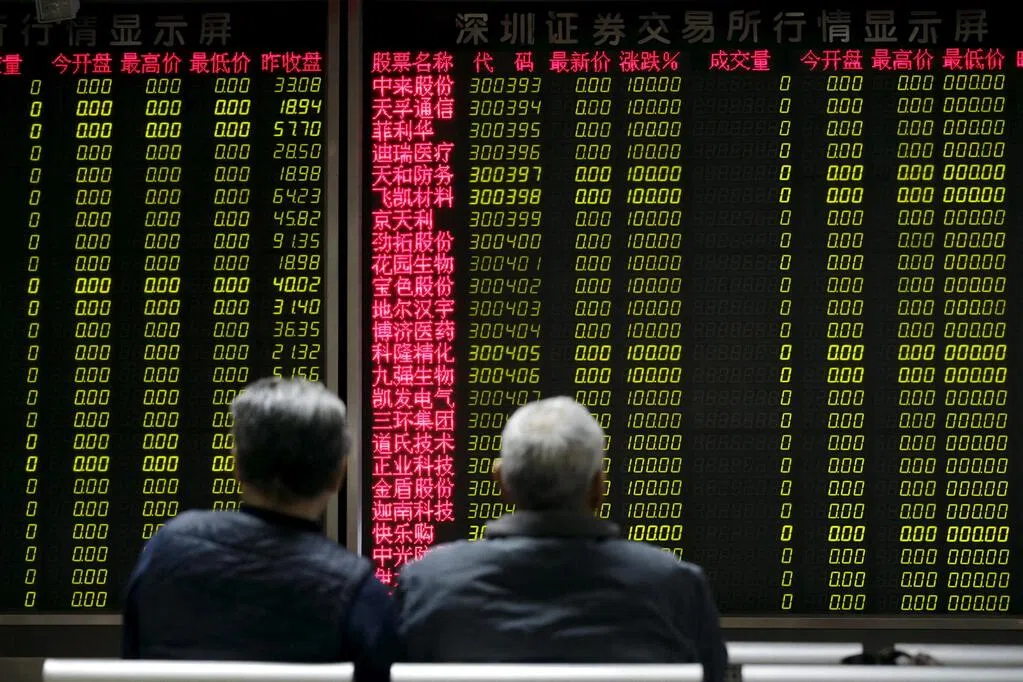
5. CSRC vice chairman Li Chao vows deeper mainland-Hong Kong market coordination
Source: Sina Finance
Speaking at the Global Financial Leaders' Investment Summit on Nov 3, CSRC Vice Chairman Li Chao said the world is undergoing profound changes and a new round of technological revolution and industrial transformation led by artificial intelligence is accelerating, presenting new challenges for high-quality capital market development. The CSRC will work with relevant parties to advance coordinated development of the mainland and Hong Kong capital markets.
On market stability, Li said that in the face of multiple unexpected external risks this year, regulators have focused on both symptoms and root causes and on institution building, further improving the ecosystem for long-term investment and long-term assessment, deepening mutual fund reform and encouraging social security, annuity and insurance funds to raise their equity allocations. In the first three quarters, listed companies carried out nearly 2,000 mergers and acquisitions worth almost 1.5 trillion yuan, while A-share company revenue and profits grew steadily and dividends and buybacks far exceeded IPO and refinancing volumes.
On opening up, more than 130 companies completed overseas listings in the first three quarters of 2026, five-year Chinese government bond futures were supported in listing smoothly in Hong Kong, QFIIs were allowed to trade domestic treasury bond futures, and Citigroup Securities China was recently approved for establishment, bringing the number of foreign-invested securities firms to seven. Li said consolidating Hong Kong's status as an international financial centre is a major national strategy and that he was glad to see Hong Kong publish its first-ever five-year plan. The CSRC will follow the "five coordinations" cooperation model set out by CSRC Chairman Wu Qing in Hong Kong in August, including accelerating the inclusion of the RMB counter in Stock Connect and supporting mainland companies with international expansion needs to list in Hong Kong.

6. Japan's markets shut for holiday, Asia trading thins out
Source: National Business Daily, FX168 Finance
Japan's stock market was closed on Nov 3 for a public holiday, with Japanese financial markets shut for the day. According to FX168 Finance, because of the Japanese holiday, trading in US Treasury cash bonds was suspended during the Asian session.
In the previous session on Nov 2, the Nikkei 225 closed at 63,081.86, down 208.24 points or 0.33%. With Japan absent, major Asia-Pacific benchmarks traded mostly lower, with the MSCI Asia-Pacific index down nearly 1% and semiconductor-heavy KOSPI leading losses. Attention now turns to US jobs data this week: job openings are due Tuesday, weekly jobless claims on Thursday, and economists expect Friday's October nonfarm payrolls report to show 65,000 new jobs, with the unemployment rate holding at 4.2%.

7. KOSPI tumbles 3.59% as Samsung, SK Hynix slide
Source: China.com Finance, FX168 Finance
South Korea's KOSPI opened sharply lower on Nov 3, falling 2.46% to 5,715.19 at the open, before closing at 5,648.79, down 210.29 points or 3.59% — among the worst performers in Asia-Pacific. Chip giants Samsung Electronics and SK Hynix both fell more than 4%, with SK Hynix down more than 5% at one point.
FX168 Finance noted the selloff follows a third straight session of losses in US chip stocks, with a US semiconductor share index extending its cumulative decline to 12%; the Nasdaq 100 is now 10% below its previous high, entering correction territory. Hebe Chen, a market analyst at Vantage Global Prime, said: "Korea, a market heavily dependent on semiconductors, is once again at the front line of the global repricing of the AI trade."
She added that Wall Street is showing a clear split: tech giants keep weakening while the number of rising stocks across the broader market expands, suggesting investors are exiting overcrowded AI trades rather than abandoning equities altogether.
8. Taiwan Weighted index drops 3.59%, TSMC off 1.50%
Source: Lianhe Zaobao
Taiwan's weighted index closed at 43,307.54 on Nov 3, down 1,612.60 points or 3.59%, the second-biggest decline in Asia-Pacific after Seoul. Foundry leader TSMC fell 1.50%.
Asia-Pacific markets fell broadly on Tuesday as doubts grew over the scale of artificial intelligence spending, Lianhe Zaobao reported. Oracle's financing plan and the IPO filing of AI company Anthropic further fuelled investor concerns about tech valuations and the costs of pursuing growth in related fields.
"AI scepticism" is spreading globally, with markets increasingly worried that tech giants' AI capital spending will not generate commensurate returns, the report said.
9. PBOC raises FX deposit reserve ratio to 6% to ease yuan strength
Source: 21st Century Business Herald
On Nov 3, to strengthen foreign exchange liquidity management at financial institutions, the People's Bank of China said it will raise the FX deposit reserve ratio by 2 percentage points from Nov 15, 2026, lifting it to 6% from the current 4%.
The offshore yuan fell against the dollar after the announcement, trading at 6.6597 as of 9:06 am, while the daily midpoint was fixed at 6.7150, 4 pips weaker. The FX deposit reserve ratio refers to the share of foreign currency deposits that financial institutions must hold with the central bank. The PBOC last adjusted the ratio on Sept 15, 2023, when it cut it by 2 percentage points to 4% from 6%.
Zhao Qingming, chief economist at Beijing Longhe Investment, told Yicai that raising the ratio freezes more foreign currency funds in the banking system, helping balance FX supply and demand and keep the yuan relatively stable. Last week all three major yuan exchange rate indices rose: CFETS index at 103.77, up 0.36 on the week and the highest since July 2022; the BIS currency basket index at 111.57, up 0.55 to a record high; and the SDR basket index at 98.85, up 0.29. From Oct 26 to 30, the yuan gained about 0.77% against the dollar, with the midpoint at 6.7138, up 42 pips for the week.
10. Central banks bought 321 tonnes of gold in Q3, up 42% year on year
Source: 21st Century Business Herald
The World Gold Council published its Gold Demand Trends report for the third quarter of 2026 on Nov 3. Global gold demand including over-the-counter trading was 1,369 tonnes in Q3, down 1% year on year, while the value of demand rose 22% to US$188 billion. Year to date, total demand reached 3,881 tonnes and US$566 billion, a record high in value terms.
Central banks and other official institutions added a net 321 tonnes to reserves in Q3, up 42% year on year and the highest quarterly total since the fourth quarter of 2024, well above the five-year quarterly average. Reserve diversification and risk management remain the main drivers. Year to date, central banks have bought 675 tonnes, up 6% year on year.
Physical gold ETFs reversed second-quarter outflows, attracting net inflows of 211 tonnes worth US$31 billion — a quarterly record — lifting global holdings to an all-time high of 4,256 tonnes. Bar and coin investment fell 19% year on year to 268 tonnes, the lowest quarterly level in four years; jewellery demand fell 17% to 313 tonnes, the weakest on record for the period; technology demand rose 3% to 85 tonnes, the highest since the fourth quarter of 2021. Senior market analyst Louise Street said that in the fourth quarter, higher rates and diverging inflation expectations may weigh on gold prices, but geopolitical risk combined with financial market stress could keep prompting market participants to turn to gold for stability.
More News
- Global Express | November 3, 2026 — US Votes in Midterms as Democrats Chase Congress
- Tech Express | November 3, 2026 Apple's foldable iPhone Duo sells out as restock timing stays unclear
- Sports Express | November 3, 2026: Kucherov Seeks $20M AAV and a Trade Out of Tampa Bay
- Maple Express | November 3, 2026: Weapons call at U of T Mississauga dorm resolved, no injuries
- Finance Evening: Apple's New CEO Posts 12% Revenue Growth but Soft Margin Guidance; AI Selloff Drags Nasdaq Down 1%
Comments (0)
View More
 -41%
🎉 史新低!AEGTEST HOUND-1011 Portable Radon Detector — First Reading in 6 Hours! $59.99 CAD (40% Off)
 -37%
Nintendo Switch Carrying Case — Zelda: Tears of the Kingdom Edition, Official, with Screen Protectors! $20.99 CAD (36% Off)
 -21%
🎉 史新低!Hill's Science Diet Small & Mini Adult Dog Food 2.04kg — Small Kibble, Easy Digestion! $31.99 CAD (20% Off)
 -53%
Sony WH-CH720N Noise Cancelling Headphones — Sony's Lightest ANC Headband with 35-Hour Battery! $118.99 CAD (52% Off)
Finance MorningFinance Morning | Report Says China Told Banks to Pause IPOs, $14bn Swap Facility Kicks In, but A-Shares Still Fall; Taiwan and Korea Plunge Over 3.5%
 Maple Express
 | November 2, 2026 | Two-Alarm Fire at Scarborough Townhouse Sends Three to Hospital
-41%🎉 史新低!AEGTEST HOUND-1011 Portable Radon Detector — First Reading in 6 Hours! $59.99 CAD (40% Off)
Amazon
-37%Nintendo Switch Carrying Case — Zelda: Tears of the Kingdom Edition, Official, with Screen Protectors! $20.99 CAD (36% Off)
Amazon
-21%🎉 史新低!Hill's Science Diet Small & Mini Adult Dog Food 2.04kg — Small Kibble, Easy Digestion! $31.99 CAD (20% Off)
Amazon
-53%Sony WH-CH720N Noise Cancelling Headphones — Sony's Lightest ANC Headband with 35-Hour Battery! $118.99 CAD (52% Off)
Best Buy
Finance MorningFinance Morning | Report Says China Told Banks to Pause IPOs, $14bn Swap Facility Kicks In, but A-Shares Still Fall; Taiwan and Korea Plunge Over 3.5%
Maple Express