
Global Express | August 10, 2026 Ukrainian Drone Strike Kills 13 Inside Russia
Global Express: Ukrainian drone kills 13 in Russia's deadliest attack in 2 years; Netanyahu rejects Trump Gaza plan; UAE accuses Iran of missile strike on ADNOC tanker; Syria-Russia base deal reached; oil climbs, stocks dip on Iran stalemate; Houthis hit Saudi refinery, 7 dead; Typhoon Dolphin evacuates 1M+ in China; BC wildfires force 20,000 to flee; Europe launches own satellite constellation; U.S.-China tech war engulfs universities.
1. Ukrainian Drone Strike Kills 13 Inside Russia — Deadliest Attack in Two Years
A Ukrainian drone struck deep inside Russian territory, hitting the city of Nizhnekamsk in the Republic of Tatarstan, killing at least 13 people and injuring 39 others. Local authorities confirmed the toll on Monday, making it the deadliest attack on Russian soil in more than two years. The strike reportedly targeted critical petrochemical infrastructure in the region.
Tatarstan lies approximately 800 kilometers east of Moscow and serves as a major hub for Russia's oil refining and petrochemical industries. Ukraine has increasingly targeted deep Russian logistics and industrial sites in a bid to degrade Moscow's war-fighting capacity. Russia's Investigative Committee has opened a terrorism investigation into the incident.
The strike comes amid fierce fighting on multiple fronts. Ukrainian President Zelenskyy recently warned that up to 50,000 North Korean troops could be deployed inside Russia to support Moscow's war effort, underscoring the escalating scale of the conflict.
2. Netanyahu Rejects Trump-Backed Gaza Peace Plan, Demands Hamas Disarmament First
Israeli Prime Minister Benjamin Netanyahu has publicly rejected President Trump's 15-point peace plan for Gaza, declaring that Israeli forces will not withdraw from the territory until Hamas is "genuinely disarmed." Netanyahu emphasized that this means clearing "heavy weapons, light weapons, all weapons" from the militant group.
The Trump administration had touted the plan as a key step toward a lasting settlement, with provisions including Hamas disarmament, a phased Israeli withdrawal, and international participation in Gaza's reconstruction. Netanyahu's rejection represents a major setback for U.S. diplomatic efforts in the region.
Analysts note that Netanyahu's hardline stance reflects domestic political realities — far-right members of his governing coalition staunchly oppose any form of compromise. The prospects for renewed ceasefire negotiations in Gaza now face renewed uncertainty.
3. UAE Accuses Iran of Missile Strike on ADNOC Tanker in Strait of Hormuz
The United Arab Emirates has formally accused Iran of striking a tanker owned by the Abu Dhabi National Oil Company (ADNOC) with a missile as it transited the Strait of Hormuz, denouncing the act as "piracy." No casualties were reported, but the incident drew swift condemnation from Gulf and Arab governments.
The attack occurred in the world's most critical oil transit chokepoint — the Strait of Hormuz carries roughly one-fifth of global petroleum shipments. The ADNOC tanker incident has further inflamed already tense U.S.-Iran relations and heightened international concerns over energy supply security.
The strike comes amid a deadlock in U.S.-Iran negotiations over freedom of navigation in the strait, while concurrent Houthi attacks on Saudi and Red Sea targets have added further complexity to the volatile regional picture. Analysts warn that a continued escalation could trigger even greater volatility in global oil markets.
4. Syria and Russia Reach Deal on Future of Tartus and Hmeimim Bases
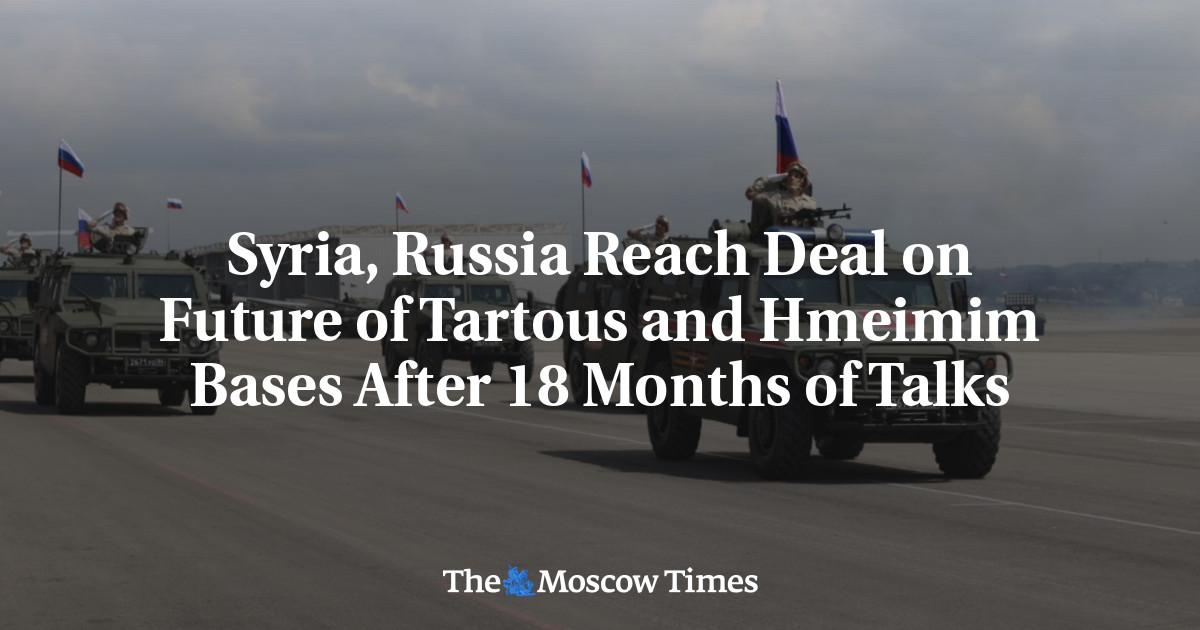
After 18 months of intensive negotiations, Syria and Russia have reached a memorandum of understanding settling the future of Russia's two major military bases in the country — the Tartus naval facility and the Hmeimim airbase. Under the agreement, both sites will be transformed into joint training and capacity-building centers.
The Syrian Foreign Ministry confirmed the deal via the state news agency, marking a significant recalibration of bilateral military ties. Since the outbreak of the Syrian civil war, Russia's military presence at Tartus and Hmeimim has been a cornerstone of Moscow's power projection in the Middle East.
The agreement arrives at a moment of intense geopolitical flux in the region. Russia's heavy commitments in the Ukraine war and the escalating Iran crisis have forced Moscow to rebalance its global military footprint, while Syria seeks to maximize its strategic autonomy among competing great powers.
5. Oil Prices Climb, Stocks Dip as Iran War Stalemate Rattles Markets
Global oil prices continued their upward climb Monday while major stock markets declined, as the stalemate in U.S.-Iran negotiations over the Strait of Hormuz weighed heavily on investor sentiment. Fears of a wider Middle Eastern conflict overshadowed earlier optimism about a potential ceasefire breakthrough.
The New York Times reported that weekend hopes for a diplomatic breakthrough on Strait of Hormuz navigation were dashed, replaced by news of the UAE tanker attack and sustained Houthi strikes. Market risk aversion surged, with energy stocks gaining while technology and financial shares came under pressure.
Analysts warn that if the U.S.-Iran conflict escalates and disrupts shipping through the strait, Brent crude could breach the $100-per-barrel threshold — unwelcome news for central banks already grappling with persistent inflation.

6. Houthis Strike Saudi Oil Facility and Red Sea Port, Killing Seven
Yemen's Houthi rebels launched attacks on an oil facility in southwestern Saudi Arabia on Sunday while simultaneously shelling a government-held port on Yemen's Red Sea coast, killing at least seven people. The strikes have deepened international alarm over the security of strategic Middle Eastern shipping lanes.
The Houthis claimed the attacks were a response to the Saudi-led coalition's operations in Yemen. The escalation comes at a time of heightened U.S.-Iran tensions, further compounding security risks along the Red Sea and the Bab el-Mandeb Strait.
The Bab el-Mandeb, connecting the Red Sea to the Indian Ocean, is a vital chokepoint for global oil transportation. The Houthis have repeatedly threatened and targeted vessels transiting the waterway. Analysts caution that any sustained disruption to this route would deal a severe blow to global maritime trade and energy supply chains.
7. Typhoon Dolphin Makes Landfall in Eastern China, Over One Million Evacuated
Typhoon Dolphin made landfall in densely populated eastern China on Sunday, prompting authorities to evacuate more than one million residents — including in the financial hub of Shanghai. The storm brought heavy rain and powerful winds, causing widespread transportation disruption with nearly 1,000 flights cancelled in Shanghai alone.
Chinese meteorological authorities had earlier issued the highest-level red alert before downgrading Dolphin to a tropical storm. However, they continue to warn of torrential rains, severe flooding, and landslide risks through Wednesday as the storm tracks northward.
Shanghai's status as China's financial center means the mass flight cancellations and evacuations have had a significant economic impact. BBC meteorologists report that Dolphin ranks among the strongest typhoons to strike China this year, with rainfall totals that could set local records.

8. British Columbia Wildfires Force 20,000 to Flee as State of Emergency Declared
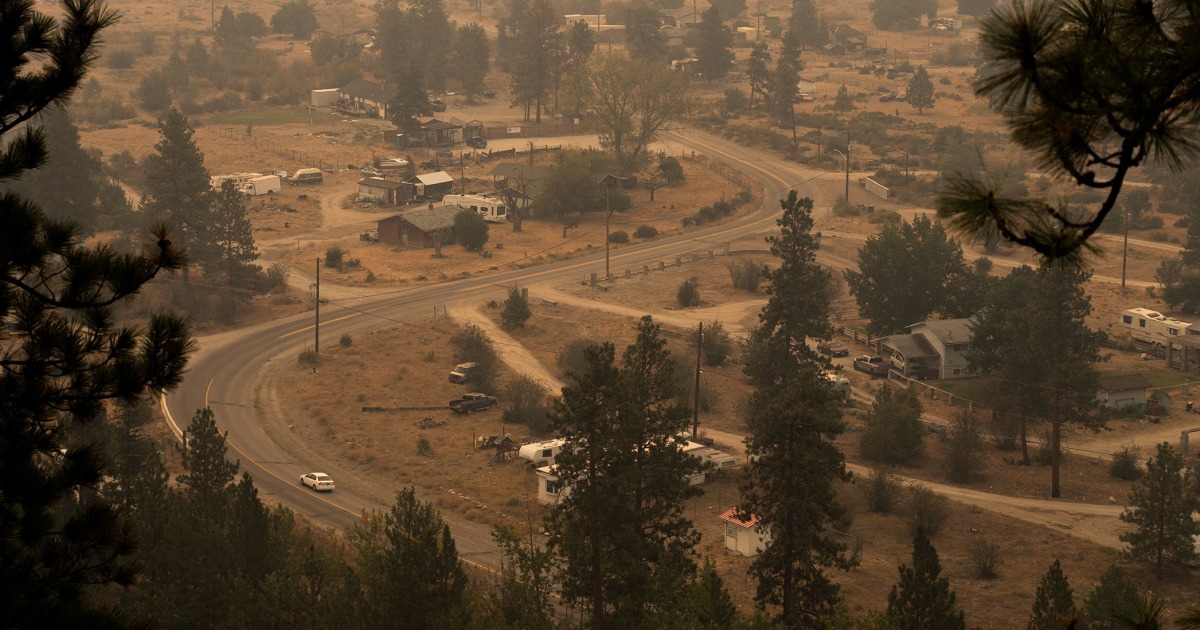
Fast-moving wildfires in British Columbia, Canada, have forced more than 20,000 residents to evacuate their homes. The entire community of Summerland, home to approximately 12,000 people, was ordered to evacuate overnight, along with about 8,000 residents in and around nearby Peachland.
The speed of the fire's advance was so extreme that even emergency officials had to flee. Erick Thompson, an emergency official with the Regional District of Okanagan-Similkameen, reported that he was forced to abandon the emergency operations center and evacuate his own family. The Royal Canadian Mounted Police have been deployed to assist evacuation efforts.
British Columbia has declared a provincial state of emergency. Prolonged heat and drought conditions across western Canada have created ideal conditions for rapid fire spread. Fire officials say strong winds and dry vegetation are making containment efforts extremely challenging, with the situation expected to remain critical in the coming days.
9. Europe Launches Its Own Satellite Constellation, Accelerating Decoupling from America
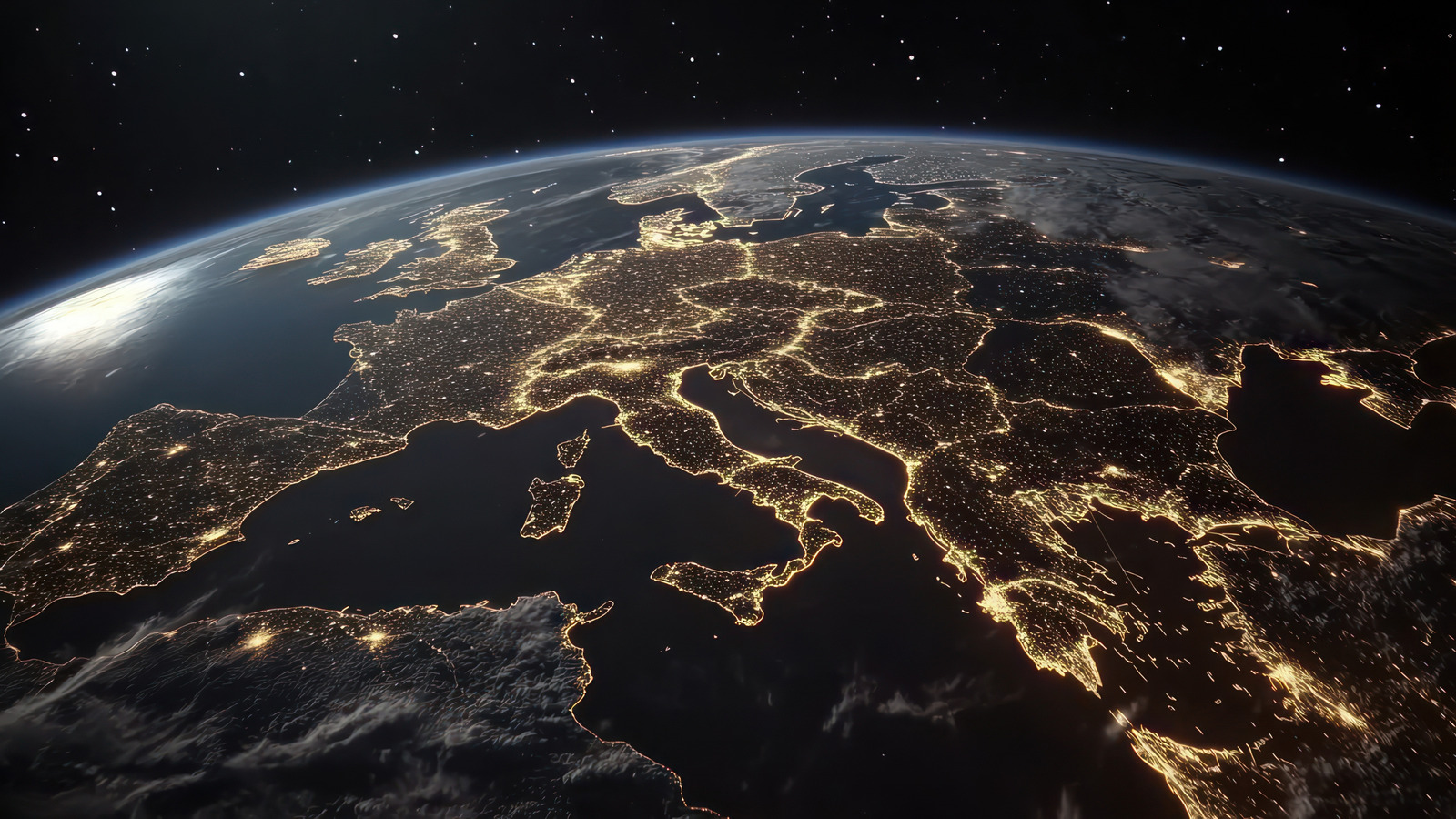
The European Commission has announced plans to add 66 new low-Earth orbit satellites through its IRIS² program, bringing the total constellation to 348 spacecraft. The satellite network is designed to provide EU member states' governments and militaries with independent, America-free redundancy for critical communications.
The decision is widely seen as the latest step in Europe's accelerating technological and defense decoupling from the United States. The first phase of IRIS² is scheduled to launch in 2029, with a total investment of approximately €10.6 billion. While modest compared to SpaceX's roughly 10,000-satellite Starlink constellation, it is sufficient to meet Europe's core communications needs.
The European Space Agency had previously warned of a looming rocket launcher shortage by 2030. The advancement of the IRIS² program signals that, despite technical bottlenecks, Europe's strategic determination to build autonomous space capabilities remains unwavering.
10. U.S.-China Tech Rivalry Spills Over, Universities Pushed to National Security Frontlines
The U.S. Department of Defense has, for the first time, added two top Chinese comprehensive universities without military backgrounds — Fudan University and Shanghai Jiao Tong University — to its national security restriction list. China retaliated within 24 hours by placing a European civilian university on its own export control list, pushing elite academic institutions onto the frontlines of great-power technological competition.
Analysis points to the increasingly blurred line between civilian and military technologies. Fields such as AI, quantum computing, semiconductors, and biotechnology — predominantly originating from universities and research institutions — are all dual-use in nature. Bonnie Glaser of the German Marshall Fund argues that bringing academic institutions into national security restriction frameworks is likely to become a "persistent feature, not a temporary phenomenon" of great-power strategic competition.
The U.S. has added dozens of Chinese universities to various restriction lists in recent years, expanding from the original "Seven National Defense Universities" to elite civilian institutions. China's reciprocal measures signal that knowledge, data, and frontier research have become the newest battlegrounds in national security competition.

More News
- Global Express | September 24, 2026 Ethiopia and Tigray Accuse Each Other of Offensives as Fears of New War Grow
- Finance Morning | Xi Arrives in Washington for State Visit; China, U.S. Reach Consensus in 8th Trade Talks
- Tech Express | September 24, 2026: Meta Unveils $1,299 VR Glasses in AI Agent Push
- Sports Express | September 24, 2026: US Senate Advances Controversial Protect College Sports Act
- Maple Express | September 24, 2026 — Kenneth Law Sentencing Hearing Continues as More Victims' Families Speak
Comments (0)
View More
 -31%
-31%Samsung M70H 65" 4K UHD HDR Mini-LED Smart TV (2026) — Mini-LED Bright-Room Picture with Tizen OS & Vision AI! $699.99 CAD (30% Off)
 -15%
-15%Seagate Portable 2TB External Hard Drive — Plug & Play for PC, Mac & Consoles! $179.99 CAD (14% Off)
 -17%
-17%Rust-Oleum Rust Reformer 8 oz — Converts Rust to a Paintable Finish, No Sanding! $31.49 CAD (16% Off)
 -16%
-16%Dreame Aero Ultra Steam Vacuum & Mop — 392℉ Steam + 30kPa Suction! $849.99 CAD (15% Off)
 Sports Express
Sports Express | September 24, 2026: US Senate Advances Controversial Protect College Sports Act
 University Guide
Is UofT Worth It: Pros, Cons, Who It Suits, and a Comparison with McGill/UBC
-31%Samsung M70H 65" 4K UHD HDR Mini-LED Smart TV (2026) — Mini-LED Bright-Room Picture with Tizen OS & Vision AI! $699.99 CAD (30% Off)
Best Buy
-15%Seagate Portable 2TB External Hard Drive — Plug & Play for PC, Mac & Consoles! $179.99 CAD (14% Off)
Amazon
-17%Rust-Oleum Rust Reformer 8 oz — Converts Rust to a Paintable Finish, No Sanding! $31.49 CAD (16% Off)
Amazon
-16%Dreame Aero Ultra Steam Vacuum & Mop — 392℉ Steam + 30kPa Suction! $849.99 CAD (15% Off)
Amazon
Sports ExpressSports Express | September 24, 2026: US Senate Advances Controversial Protect College Sports Act
University Guide