Finance Weekly | Inflation Rebounds as the AI Trade Unwinds, Markets Rethink the Rate Path
US September CPI rebounded to 3.7% as energy prices jumped 5.2%, briefly pushing October hike odds above 50%. AI debt fears triggered a tech sellout, giving the Nasdaq its worst week since June. Treasury yields and oil rose together, while the ECB and Bank of Canada warned of tighter financial conditions and higher inflation. China's central bank backed multilateralism at the IMF, and social financing rose 27.46 trillion yuan in the first nine months.
The global market's keyword this week was “repricing.” US September CPI rebounded to 3.7% year on year, with energy prices up 5.2% month on month, putting a Fed hike back on the table for October. At the same time, concerns about AI debt and returns on computing investment triggered a tech selloff, giving the Nasdaq its worst week since June. Treasury yields rose, Brent crude topped $100, and both the ECB and the Bank of Canada confronted a renewed inflation impulse. In China, the central bank used the IMF meetings to argue for multilateralism and against protectionism, while social financing rose 27.46 trillion yuan in the first nine months as financing shifted from loans toward bonds and equities.
1. US September CPI rebounds to 3.7%, October hike odds briefly top 50%
Source: Beijing Daily
US Labor Department data released on October 14 showed the consumer price index rose 0.6% month on month in September, above August's 0.4%, and 3.7% year on year, up from 3.4%. The energy index rose 5.2% month on month, compared with 2.1% in August; gasoline jumped 9.1% and accounted for more than half of the monthly CPI increase. Food prices rose 0.1%, unchanged from August. Core CPI, excluding food and energy, rose 0.3% for a third straight month, while the annual rate climbed to 2.6% from 2.4%. Shelter costs rose 0.4%, faster than August's 0.3%, with recreation, used cars, education, airfares, medical care and apparel also higher; communication prices fell.
After the release, expectations for a hike at the Fed's late-October meeting rose sharply. The CME FedWatch tool showed the probability of a 25 basis point increase briefly above 50%, before easing to 27.1% as of 10:40 a.m. Beijing time on Thursday, still 5 percentage points higher than the previous day. The Fed raised its target range by 25 basis points to 3.75%-4.00% in September, its first increase in more than three years, and signaled that borrowing costs could rise further in the coming months.
Impact and trend: The rebound was led by an energy shock, but core inflation has now run at 0.3% month on month for three consecutive months, with price increases spreading from energy into shelter, services and goods. CICC argued that the Fed has only received one payrolls report and one CPI report since its September meeting, leaving officials divided on whether to hike at consecutive meetings. At the same time, higher long-end Treasury yields and a stronger dollar have already tightened financial conditions, with rate-sensitive sectors such as housing under pressure — meaning the market has done part of the central bank's tightening for it.
Outlook and risks: Most market participants expect the Fed to hold in October, with the next hike possibly in December. Officials' comments point to “further hikes may be needed, but not urgently”: Waller said increases need not be consecutive, Williams called one more hike this year appropriate, and Bowman stressed the need to assess all the data. The risk is that if energy costs keep feeding into core prices, the Fed's patience could again be overturned by data. Even without a hike, a longer period of high rates would continue to weigh on valuations and housing.
2. AI debt fears spark tech selloff, Nasdaq posts worst week since June
Source: CNN
Tech stocks endured a turbulent week. The Nasdaq Composite fell 2.14% on October 16, bringing its weekly loss to about 4.5%, its worst week since June. The S&P 500 fell 1.09% on the day and almost 2% on the week, also its worst since June. Just 10 days earlier, both indexes had closed at record highs.
At the center of the anxiety is a niche group called neoclouds, which rent computing power to companies riding the AI boom. CoreWeave, which went public in 2025 with Nvidia's backing, carries tens of billions of dollars of debt on its balance sheet, borrowing to fund growth. Its bond yields have recently surged to levels that signal distress and a higher risk of default. Gil Luria, head of technology research at D.A. Davidson, said it is unclear whether CoreWeave will earn a sufficient return to pay down its debt. “As people get concerned about the trajectory of the buildout, they are the subprime tranche of the AI trade, and that's why they're selling off first,” he told CNN. Nvidia CEO Jensen Huang publicly voiced optimism about CoreWeave on Thursday, helping the stock rally that day, but it fell almost 12% on Friday, lost a quarter of its value over the week and is down more than 65% from its post-IPO peak in March 2025.
Impact and trend: The selling was not confined to one company. A closely watched semiconductor index fell 3.8% on Friday, its eighth straight daily decline, and 11.4% for the week — its worst weekly performance since April 2025. News that Chinese memory chipmaker CXMT had made headway on advanced memory chips added to valuation pressure on chip stocks. Meanwhile, Brent crude touched $110 a barrel on Friday for the first time since May, so higher rates and higher energy costs are hitting high-valuation growth shares from both sides.
Outlook and risks: Demand for AI is still growing, but the “debt-funded growth” model is highly sensitive to interest rates. Two signals matter next: whether refinancing costs and bond yields at CoreWeave and other neoclouds stabilize, and whether major cloud providers cut capital expenditure guidance. If financing tightens while revenue arrives more slowly than expected, the correction could spread from the “subprime tranche” to the wider AI supply chain.

3. Weak small-business sales and stalled hiring raise fears the US economy is more fragile than it looks
Source: Fortune
In this week's National Federation of Independent Business survey, Bespoke Investment Group spotted an unwelcome signal: more small businesses are citing poor sales as their number one problem. Bespoke noted that during previous economic contractions, this reading rose sharply; it remains relatively low but has begun to tick up recently. The NFIB optimism index fell to 97.9 in September from 98.7 in August. Pantheon Macroeconomics' Samuel Tombs and Oliver Allen also noted that other major business surveys suggest activity lost some momentum toward the end of the third quarter, likely weighed down by the rebound in global energy prices; only 411 companies responded to the survey, down from about 1,200 a decade ago.
Mark Zandi of Moody's Analytics thinks the US economy is “vulnerable,” especially the labor market: monthly payroll growth has averaged around 40,000 over the past year and has been essentially zero excluding health care; hiring is moribund, hours worked are very low, and the low unemployment rate partly reflects declining labor-force participation as retirements rise and immigration slows. He is also concerned that higher rates demanded by the Fed and the bond market could derail AI capital expenditure: higher financing costs and lower valuations make it harder to raise the capital needed to sustain the buildout. “If rates remain at these levels or higher for longer than a quarter or two, AI could become the part of the economy that breaks,” he said.
Impact and trend: This contrasts with official data showing steady expansion. September CPI came in at 3.7%, up from 3.4% and above expectations, potentially forcing the Fed to hike further. Jamie Cox of Harris Financial Group said “inflation is cooking with gas” and that relief requires two wars to end; Pimco's Tiffany Wilding said the report was “not a good data point” for a Fed that had signaled no rush to move this month, and markets briefly priced a 50% chance of an October hike after the release.
Outlook and risks: The problem is not an abrupt collapse in aggregate demand but a widening split: large companies and services consumption remain resilient, while small businesses, low-income households and rate-sensitive sectors feel the strain first. If high rates persist, small-business layoffs, slower AI capex and a weak housing market could reinforce one another. For investors, payrolls deserve more attention than GDP, because once hiring turns negative, consumption and credit quality tend to deteriorate quickly.

4. Canada's Treasury holdings rise to $464.6 billion, closing in on China as third-largest foreign holder
Source: Philippine Canadian Inquirer
A report published on October 18 says Canada is emerging as one of the largest foreign holders of US government debt and could become one of the three largest before 2028. US Treasury data released on October 16 showed Canada held $464.6 billion of Treasuries in August 2026, up from $426.3 billion in July. China held $590.7 billion in August, down from $618 billion in July, leaving a gap of about $126.1 billion. Japan and the United Kingdom remained the two largest foreign holders at $1.068 trillion and $1.010 trillion; China ranked third, followed by Belgium and Canada.
Canada's holdings have grown markedly from about $106 billion in 2021. The report notes that the increase has attracted attention because it comes as China's reported holdings have declined in recent years. Whether Canada enters the top three is not guaranteed, however; rankings depend on future investment activity, market moves and changes in other countries' holdings. US Treasuries are instruments issued by the US government to borrow money, bought by investors for interest payments or returns at maturity and widely used by central banks, pension funds, financial institutions and individuals seeking dollar-denominated assets. Higher yields make them more attractive, but prices fall when yields rise.
Impact and trend: The statistical caveat matters. US Treasury data classify foreign holdings partly by where securities are held in custody, rather than identifying every investor's ultimate nationality. That means foreign investors, including those outside Canada, can hold US debt through Canadian financial accounts. Some market observers have raised the possibility that Chinese investors are using Canadian intermediaries to maintain Treasury exposure, but there is no conclusive public evidence on how much, if any, of Canada's reported holdings is beneficially owned by Chinese entities; the Treasury itself cautions that its data cannot always identify true owners.
Outlook and risks: Canada's rising holdings reflect its role as a North American financial and custody hub, as well as demand for dollar assets in a high-yield environment. If China keeps reducing and Canada keeps adding, the ranking could shift quickly, but a change at the top of the creditor table is more a result of custody and allocation than a strategic turn. The risk is that Treasury prices move inversely with yields: if yields keep rising, institutions with long duration will face valuation losses, while greater custody concentration makes Canada's financial system more sensitive to US rate swings.

5. Macklem warns high oil prices will lift Canada's inflation outlook as October 28 decision looms
Source: Toronto Star
Bank of Canada Governor Tiff Macklem said on October 17 that persistently high global energy prices will drive up Canada's inflation outlook. Speaking to reporters in Bangkok on the sidelines of the International Monetary Fund meetings, he said the global economy has held up better than expected despite the wars in Iran and Ukraine, trade disruptions and higher borrowing costs from rising bond yields, but that resilience is increasingly “under strain.” He also warned that buffers such as releasing strategic oil reserves are being depleted: “You can only release strategic energy, oil reserves so many times, but that has helped contain this energy price shock.”
Macklem said the Middle East war is widening through Houthi attacks on Saudi Arabia, and that combined with damage to refining capacity in the Gulf and the closure of the Strait of Hormuz, there is “no relief in sight” for global oil prices. Those forces feed into the gasoline, diesel and heating oil prices Canadians pay. The Bank of Canada will release updated economic and inflation forecasts alongside its rate decision on October 28. Canadian inflation has held at 3% for two consecutive months. Macklem expects the new inflation outlook to be “quite a bit higher” than the July forecast, which projected inflation cooling to around 2.5% in the second half of this year.
Impact and trend: Macklem's comments suggest the Bank is shifting from looking through short-term war effects to preparing to act. He said the question policymakers will ask is whether inflation is likely to return to target on its own, or whether they will have to raise rates to influence its path. Statistics Canada releases September inflation data on Monday, the key missing piece before the October 28 decision. If CPI remains above 3%, market pricing for a hike will rise quickly.
Outlook and risks: Canada faces a dilemma of oil-driven inflation and trade-related growth weakness. A hike would anchor inflation expectations and support the Canadian dollar, but would further weigh on an already weak housing market and heavily indebted households; holding rates could let the energy shock spread into wages and services. For households, October 28 will shape the cost of variable-rate loans and the pricing of fixed-rate mortgages. Over the next two weeks, the loonie, September CPI and the Bank's new forecasts will together determine whether the meeting ends in a hold or a turn.

6. Pan Gongsheng at IMF meetings: oppose protectionism, sharpen surveillance of advanced-economy fiscal risks
Source: Phoenix News
The International Monetary Fund held its 54th International Monetary and Financial Committee meeting in Bangkok on October 16-17 to discuss the global economy and the Fund's work. People's Bank of China Governor Pan Gongsheng attended and spoke. The meeting judged that the global economy has performed better than expected despite geopolitical shocks, but that rising trade tensions add uncertainty, rapid AI development widens divergence and downside risks remain; members should focus on macroeconomic and financial stability and respond through international cooperation.
Pan stressed that the IMF, as the world's leading multilateral financial institution, should clearly oppose protectionism, defend multilateralism and promote international cooperation and policy communication, using surveillance, lending and technical assistance to help members manage rising risks. He said a stronger global financial safety net is crucial as geopolitics fragments and trade tensions persist, and that continued quota and governance reform is essential to the IMF's legitimacy, effectiveness and representativeness. China welcomes the comprehensive surveillance review and wants clearer priorities, better quality and methods, and fairer, more effective and influential surveillance.
Impact and trend: Pan's remarks concentrated China's position on three lines: defending the multilateral trading system, pushing IMF governance reform, and strengthening surveillance of major advanced economies' fiscal risks and spillovers. He noted rising global inflation pressure, financial-market volatility and concerns about fiscal sustainability in major economies. Addressing global imbalances, he said, requires structural reforms: deficit countries should cut fiscal deficits and raise savings, surplus countries should boost consumption and investment, and all should adopt medium- and long-term plans and implement them firmly rather than “flipping the pancake” back and forth.
Outlook and risks: On monetary policy, Pan said the PBoC will continue to implement a moderately loose stance, use a mix of tools according to the macroeconomic, price and policy environment, keep liquidity ample, guide interest rates and give rate-based adjustment a greater role. China also plans “six networks” of new infrastructure, combining investment in physical assets with investment in people, and an “AI+” initiative. The external risk is that if major economies keep expanding fiscally and raising trade barriers, the global financial safety net and capital flows to emerging markets will come under greater strain.
7. Tao Ling outlines RMB internationalization across payments, investment and reserves
Source: Sina Finance
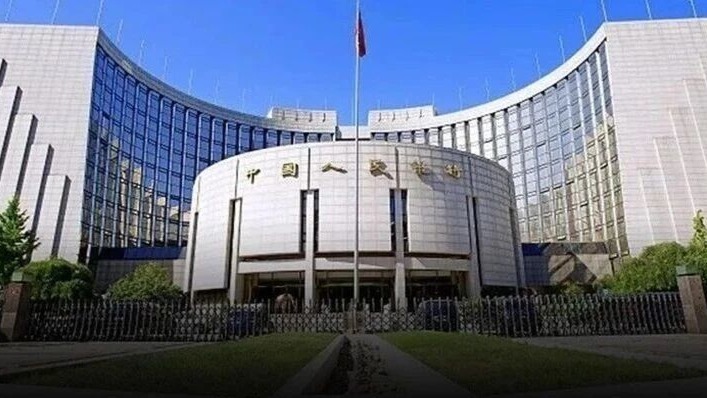
People's Bank of China Deputy Governor Tao Ling spoke on October 16 at the Global Wealth Management Forum in Shanghai on advancing RMB internationalization and smoothing the international use of the currency. She said China's political, economic and social stability, its position as the world's second-largest economy, its comprehensive industrial base and its role as a major trading partner of more than 160 countries and regions, together with a basically stable RMB exchange rate at a reasonable equilibrium, create favorable conditions for internationalization.
Tao offered a set of markers of the RMB's global standing: on a full-scope basis it is the world's third-largest payment currency; it has ranked in the top three for global trade finance for five years, with its share rising from about 2% to about 7%; outstanding dim sum and panda bonds exceed 2 trillion yuan; it is the fifth-most-traded currency and the fastest-growing among major currencies; and according to the IMF, at the end of the second quarter of 2026 both the size and share of RMB reserves rose, ranking seventh among reserve currencies, with a 12.28% weight in the SDR basket behind the dollar and euro.
Impact and trend: Tao acknowledged that dominant international currencies have strong network effects and path dependence. Although the RMB's share in trade settlement has risen, a smooth international circulation — from “available” to “easy to use” to “held long term” — has not yet formed. The central bank will build a chain linking receiving, using, investing and hedging RMB: first, providing offshore liquidity by supporting overseas RMB loans and cross-border trade finance, encouraging more foreign institutions to issue panda bonds and supporting Hong Kong's dim sum bond market; second, broadening RMB asset allocation — by the end of June 2026, 1,200 foreign institutions had entered the onshore interbank bond market, holding 3.2 trillion yuan of onshore bonds, while foreign entities held 4.7 trillion yuan of onshore equities; third, raising capital-account openness.
Outlook and risks: The next stage of RMB internationalization is less about rankings than about filling gaps in “use” and “hedging.” The PBoC proposes allowing more foreign investors to invest in onshore equities, equity, bonds, gold derivatives and commodity futures, enriching FX derivatives and making RMB bonds widely accepted as eligible collateral. That path can raise the appeal of RMB assets, but it also places greater demands on cross-border capital-flow management, market depth and risk prevention. Balancing openness and security remains a long-term challenge.
8. China's social financing rises 27.46 trillion yuan in first nine months as bond and equity share nears half
Source: CCTV
Data released by the People's Bank of China on October 14 showed that M2 and social financing growth remained at reasonable levels at the end of September. Outstanding social financing stood at 468.17 trillion yuan, up 7.1% year on year, with RMB loans to the real economy at 279.9 trillion yuan, up 4.8%. In the first nine months, social financing increased by 27.46 trillion yuan, 2.63 trillion yuan less than a year earlier. By structure, bond and equity financing remained a major share, with financing channels becoming more diversified.
According to Yicai, bonds and equities accounted for 49.48% of the social financing increase in January-September, about 7 percentage points more than loans. Corporate bonds grew rapidly, with 2.75 trillion yuan of net issuance, 1.75 times the increase a year earlier. RMB loans rose 11.52 trillion yuan in the first three quarters; corporate loans rose 12.55 trillion yuan, including 6.53 trillion yuan of medium- and long-term loans and 4.64 trillion yuan of short-term loans. Household loans fell 1.03 trillion yuan, with short-term loans down 1.14 trillion yuan and medium- and long-term loans up 106.2 billion yuan. The weighted average rate on new corporate loans in September was slightly below 3%, about 0.2 percentage points lower than a year earlier; the rate on new personal housing loans was about 3.1%, roughly flat.
Impact and trend: The key change is a shift in the structure of credit creation: bank lending is slowing while direct financing through bonds and equities is accelerating. Social financing and M2 growth are at the normal-to-high end, suggesting overall credit is not weak; but monetary and financial conditions can no longer be judged by bank loans alone, and should be read through broader measures such as social financing and M2. Credit allocation is also changing: inclusive small and micro loans stood at 38.50 trillion yuan at end-September, up 6.7%; medium- and long-term loans to services excluding real estate reached 62.81 trillion yuan, up 9.2%; loans under the “five major articles” grew at double-digit rates and accounted for more than 70% of new loans.
Outlook and risks: The September manufacturing PMI was 50.1, up 0.3 points from August, with production at 51.7 and new orders at 50.5, both in expansion. Goods trade totaled 39.9 trillion yuan in the first nine months, up 18.8%, and September trade exceeded 5 trillion yuan for the first time, up 27.5%. September CPI rose 0.9% year on year and core CPI 1.0%, a moderate pace. On policy, the PBoC adjusted four structural tools on September 29 and introduced a mortgage interest subsidy for first-time buyers. The risk is that household loans are contracting and property-related financing remains weak; if household and business expectations do not improve sustainably, the increase in direct financing may not fully translate into real demand.
9. Lagarde warns bond selloff is tightening financial conditions as eurozone growth and French finances strain
Source: EU Today
European Central Bank President Christine Lagarde warned on October 17, during the IMF annual meetings, that a sharp selloff in government bonds is tightening financial conditions across the eurozone and could weaken growth already burdened by debt and high energy prices. She said rising bond yields were adding pressure to the European economy, potentially reducing demand and helping to bring inflation down. Investors are demanding higher returns on government debt amid concerns about persistent inflation, widening budget deficits and the large borrowing needs associated with artificial-intelligence investment.
The situation complicates the ECB's task. The central bank has already raised its key interest rate twice this year in response to renewed inflationary pressure after the Middle East conflict. Higher government bond yields tighten monetary conditions even without a further official rate increase. Lagarde said financial conditions had become tighter than assumed in the ECB's September economic forecasts. The latest selloff has pushed borrowing costs higher across Europe, with pressure particularly acute in countries with high public debt and persistent deficits.
Impact and trend: The ECB's September projections forecast eurozone growth of 0.9% in 2026, 1.4% in 2027 and 1.5% in 2028; inflation was expected to average 3.0% this year before falling to 2.5% in 2027 and 2.1% in 2028. Those forecasts were based on assumptions about financial conditions and energy prices that may no longer fully reflect markets. Lagarde argued that slower demand could help moderate inflation, but would also add pressure to an economy whose growth prospects are already limited.
Outlook and risks: France has emerged as one of the most vulnerable major eurozone economies because of high public debt, persistent deficits and political disagreement over fiscal consolidation. French government bond yields have risen sharply as investors question whether Paris can deliver the spending cuts needed to stabilize its finances, and the premium demanded on French debt relative to German bunds has widened. The IMF has warned that continued increases in borrowing costs could eventually force more substantial fiscal adjustment, though immediate pressures remain manageable thanks partly to deep debt markets and relatively long maturities. Watch the 2027 French budget, peripheral spreads and whether the ECB is forced to choose again between fighting inflation and supporting growth.

10. South Korea pledges tighter stock-market monitoring after KOSPI's intraday plunge
Source: Guandian
South Korea pledged to strengthen monitoring of stock-market volatility, media reported on October 18. The move follows sharp swings this month: on October 13, the KOSPI fell more than 7% at one point intraday, prompting the Korea Exchange to trigger a sidecar mechanism and pause program selling; the index still closed down 3.65%. Heavyweights came under pressure, with SK Hynix down 10.09% and Samsung Electronics down 7.39%. On the same day, Japanese semiconductor-related shares including Kioxia, SoftBank and Tokyo Electron also fell, and the Nikkei 225 closed down 1.82%.
South Korea's market has long been seen as the “canary” of global risk assets: exports are a large share of the economy and semiconductors account for a large share of exports, so small changes in global demand, chip prices and capital spending often show up first in Korean stocks and export data. This time the trigger was again concentrated in semiconductors and the AI supply chain: a global tech valuation correction, concerns about AI infrastructure financing and a rebound in US inflation that pushed rate expectations higher all prompted money to leave high-beta growth sectors.
Impact and trend: The authorities' pledge to strengthen monitoring shows that volatility has drawn regulatory attention to market stability. A sidecar can only briefly interrupt program selling; it cannot change foreign flows or fundamental expectations. Real stability still depends on the semiconductor inventory cycle, returns on AI investment and the global rate environment. For Asia, the sharp swings in Korean stocks carry warning value: if the KOSPI keeps falling, it could transmit to other emerging markets through risk appetite, exchange rates and foreign allocation.
Outlook and risks: In the near term, the market will watch whether Korean regulators introduce further stabilization measures and whether foreign net selling slows. The medium-term risk is that the semiconductor cycle is tightly bound to AI capital spending; if global cloud providers cut investment guidance, Korean exports and stocks would come under pressure together. For investors, a sustainable rebound would need three signals: trading volume stabilizing, foreign investors turning net buyers and chip prices finding a floor. Verbal support alone is unlikely to reverse the trend.
More News
- Global Express | October 18, 2026 — Limoges Town Hall Spire Collapses After Protest Arson
- Tech Express | October 18, 2026 — Japan to Attempt World's First Sample Return from a Martian Moon
- Sports Express | October 18, 2026 — Auburn Stun No. 1 Georgia 27-24 on Last-Gasp Field Goal
- Maple Express | October 18, 2026 — Explosion and fire at CFB Wainwright leave fatalities and injuries
- Maple Express | Oct. 17, 2026: Ontario OSAP pause forces Trillium College to suspend classes
Comments (0)
View More
 -19%
-19%Samsung 3-Piece Kitchen Suite — French Door Fridge, Electric Range & Dishwasher, $891.98 Bundle Savings! $3,997.99 CAD (18% Off)
 -53%
-53%GoveeLife 3L Smart Humidifier — Top-Fill, Diffuser & Night Light! $42.99 CAD (52% Off)
 0
0Fancy Feast Seafood Pâté + Florentine Medleys 24-Pack — Under $0.90 a Can! $21.48 CAD
 -15%
-15%Seagate Portable 2TB External HDD — Plug and Play for PC, Mac and PS4! $179.99 CAD (14% Off)
Finance WeeklyFinance Weekly | Inflation Rebounds as the AI Trade Unwinds, Markets Rethink the Rate Path
 Sports Express
Sports Express | October 18, 2026 — Auburn Stun No. 1 Georgia 27-24 on Last-Gasp Field Goal
-19%Samsung 3-Piece Kitchen Suite — French Door Fridge, Electric Range & Dishwasher, $891.98 Bundle Savings! $3,997.99 CAD (18% Off)
Best Buy
-53%GoveeLife 3L Smart Humidifier — Top-Fill, Diffuser & Night Light! $42.99 CAD (52% Off)
Amazon
0Fancy Feast Seafood Pâté + Florentine Medleys 24-Pack — Under $0.90 a Can! $21.48 CAD
Amazon
-15%Seagate Portable 2TB External HDD — Plug and Play for PC, Mac and PS4! $179.99 CAD (14% Off)
Amazon
Finance WeeklyFinance Weekly | Inflation Rebounds as the AI Trade Unwinds, Markets Rethink the Rate Path
Sports Express