
Tech Express | August 8, 2026 Cloudflare Launches Kitesurf, a Browser Built for AI Agents
Cloudflare launches Kitesurf browser for AI agents; Fei-Fei Li, Hinton and Andrew Ng share stage at AI4 2026; Wang Feng's AI cuts 700 jobs; Trump imposes polysilicon tariffs; U.S. Congress pushes to block Chinese connected cars; iPhone 17 rumored price hike; Sony 115-inch RGB LED TV at ¥149,999; Chinese satellite records SpaceX debris on moon; Unitree targets $900M IPO; China adds 116,000 humanoid robot firms in H1.
1. Cloudflare Launches Kitesurf: A Browser Built Exclusively for AI Agents
Cloudflare has unveiled Kitesurf, a new browser designed not for humans but for AI agents. Hosted on Cloudflare's Workers serverless platform, Kitesurf enables AI software to navigate websites, fill out forms, and complete browser-based tasks without developers needing to build their own browser infrastructure.
Unlike traditional browsers, Kitesurf doesn't care about themes, tabs, or extensions—it focuses on context window management, performance optimization, and token cost control. Cloudflare claims Kitesurf uses 3-7x less CPU and memory than Chromium and is currently free in beta.
As AI evolves from chatbots to autonomous agents capable of completing real-world tasks, purpose-built browsers like Kitesurf represent critical infrastructure for the next wave of AI applications.
2. AI Titans Fei-Fei Li, Geoffrey Hinton, and Andrew Ng Share Stage at AI4 2026
The AI4 2026 conference in Las Vegas brought together three of the most influential figures in artificial intelligence for an unprecedented joint appearance. Fei-Fei Li, Geoffrey Hinton, and Andrew Ng appeared on stage together for the first time at a commercial conference, marking a historic moment for the AI community.
Hinton, a pioneer of deep learning, has long been focused on fundamental research and AI safety concerns. Li straddles academia and entrepreneurship, advancing spatial intelligence and embodied AI. Ng, co-founder of Coursera and DeepLearning.AI, has introduced over 8 million learners to AI through his educational initiatives.
Their discussion covered AI's future direction, governance frameworks, and the democratization of AI education, with each bringing distinct perspectives shaped by decades at the frontier of machine learning research.
3. Chinese Musician Wang Feng Reveals AI Cut His Company from 1,100 to 400 Employees
Chinese rock musician Wang Feng disclosed in a recent podcast that his company reduced its workforce from 1,100 to 400 employees after adopting AI technology, sparking widespread debate about AI's impact on employment. The 700 eliminated positions were primarily in operations, promotion, basic content review, and other standardized backend roles.
Core creative functions—songwriting, live performances, and customized artistic planning requiring emotional depth and unique expression—were fully preserved. Wang maintains an open attitude toward AI, arguing that while AI can mass-produce music in any style, original works infused with life experience retain irreplaceable value.
The revelation has intensified public anxiety about AI displacing workers, though analysts note the cuts targeted routine, automatable tasks rather than creative talent.
4. Trump Signs Executive Order Imposing Tariffs on Polysilicon, Targeting Chinese Chip and Solar Supply Chains
President Trump signed an executive order on August 6 under Section 232 of the Trade Expansion Act, imposing a minimum import price and additional tariffs on polysilicon and its derivatives—a critical material for solar panels and semiconductors. China accounts for roughly 80% of global solar manufacturing capacity.
The plan combines a minimum import price with a 15% tariff, aimed at protecting U.S. polysilicon producers Hemlock Semiconductor and Wacker Chemie. Importers investing in American silicon wafer and solar cell production may offset these trade protection costs.
China's embassy in Washington urged the U.S. to halt Section 232 measures and resolve concerns through dialogue. The move marks another escalation in the technology decoupling between the world's two largest economies.

5. U.S. Congress Pushes to Completely Block Chinese Connected Vehicles
The U.S. Senate Commerce Committee passed the Connected Vehicle Security Act on July 22, proposing to ban the import, sale, and use of vehicles manufactured by China and other "foreign adversary" nations, while restricting Chinese-developed automotive software, hardware, and data systems.
Senator Bernie Moreno, the bill's sponsor, characterized Chinese vehicles as an "auto fentanyl" threatening both the industrial base and national security. The legislation would even bar visitors from Canada or Mexico from driving restricted Chinese connected vehicles into the United States.
However, automotive experts argue Chinese EVs represent lower prices, more advanced software, and faster development cycles that American consumers have yet to access. Journalist Kevin Williams noted, "If they entered the U.S. market, I can absolutely imagine consumers would love them."
6. Rumor: iPhone 17 Prices Could Rise as Early as Monday
According to Chinese leaker "Fixed Focus Digital," the iPhone 17 lineup may see a price increase as soon as August 10. Apple already raised prices on Macs and iPads by 15-20% earlier this summer, but iPhones were spared at the time.
The market had widely expected Apple to adjust iPhone pricing alongside the iPhone 18 Pro launch in September. If the rumor proves true, the increase would arrive weeks ahead of schedule. It remains unclear whether all iPhone 17 models would be affected or only select variants.
Apple CEO Tim Cook has previously described price increases as "inevitable," and amid ongoing global trade tensions, higher iPhone prices may simply be a matter of time.

7. Sony Launches 115-Inch Flagship RGB LED TV at ¥149,999
Sony has officially listed the 115-inch version of its flagship BRAVIA 9 II RGB LED TV in China, priced at ¥149,999 (approximately $20,700 USD) and set to go on sale August 10. Smaller sizes in the same series launched in June.
The TV features Sony's proprietary True RGB technology, using independently packaged red, green, and blue LED backlights with 15,000 local dimming zones, peak brightness approaching 4,000 nits, and 100% BT.2020 color gamut coverage—technology previously reserved for professional broadcast monitors costing hundreds of thousands of dollars.
The set is deeply optimized for PlayStation 5 Pro, supports 4K 120fps VRR gaming, and runs Android TV 2026 with a Tencent Hunyuan + DeepSeek dual AI voice assistant—with no boot-up ads.

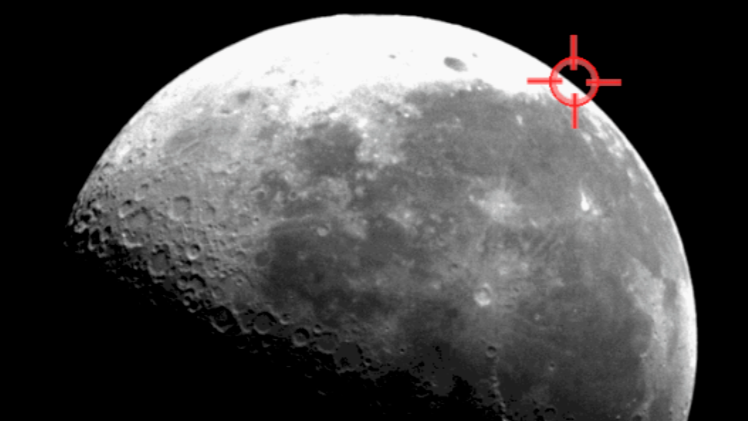
8. Chinese Satellite Captures SpaceX Falcon 9 Debris Crashing into the Moon
At approximately 14:35 Beijing time on August 5, a SpaceX Falcon 9 upper stage—weighing roughly 4 tons—slammed into the lunar surface at 2.42 km/s, and China's first commercial space debris monitoring satellite "Gande-1 01" successfully tracked and recorded the impact.
Developed by Aotian Technology and launched on July 24, Gande-1 01 began searching for the debris on August 1. With assistance from the Purple Mountain Observatory of the Chinese Academy of Sciences, the team precisely calculated the orbit and predicted the impact near the Einstein crater on the moon.
Scientists estimate the collision created a new crater 20-30 meters in diameter, providing valuable data for studying lunar impact processes and ejecta dynamics. The event served as a real-world validation of China's space situational awareness capabilities.
9. Unitree Robotics Targets $900 Million IPO on China's STAR Market
Unitree Robotics, China's humanoid robot darling known for backflipping, obstacle-jumping machines, is accelerating toward an IPO on the Shanghai STAR Market, seeking to raise approximately $900 million (¥4.2 billion). The listing application was approved by the SSE review committee on June 1.
While Unitree's robots have captivated global audiences, The New York Times notes that humanoid robots have yet to prove their commercial viability at scale, making the IPO a significant test of market appetite for frontier robotics investment.
The company's ten-year journey from startup to soon-to-be-public marks a milestone for China's robotics industry, which saw 116,000 new enterprises registered in the first half of 2026 alone.
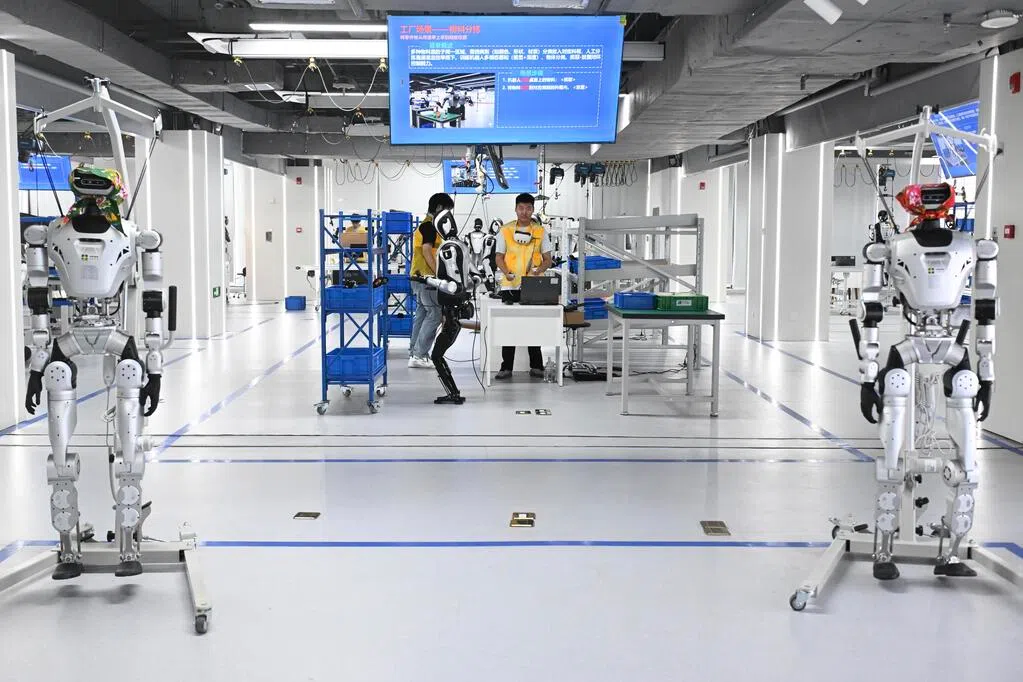
10. China Registers 116,000 New Humanoid Robot Enterprises in H1 2026
China's State Administration for Market Regulation reported on August 8 that 116,000 new enterprises were registered in the humanoid robot sector in the first half of 2026, up 9.5% year-over-year. Generative AI saw 55,000 new registrations, surging 28%.
Overall, China registered 561,000 new enterprises across its eight strategic emerging industries and nine future industries in H1. Information services and software added 322,000 new firms, while high-end equipment manufacturing added 28,000.
The data signals that China's frontier technology sectors are rapidly becoming new engines of economic growth, with the silver economy (+16%) and cultural tourism (1.475 million new registrations) also showing strong momentum.
More News
- Global Express | September 22, 2026 Trump to Address UN General Assembly as Iran War Looms
- Finance Morning | Xi to Make State Visit to U.S.; Deutsche Bank Warns Global Rate-Hike Wave May Beat Expectations
- Tech Express | September 22, 2026 — DeepSeek Appoints Its First CFO as Yan Wentao Joins
- Sports Express | September 22, 2026 — Stafford Throws Four TDs as Rams Rout Giants 28-6
- Maple Express | September 22, 2026: After the Belleville Synagogue Shooting, a Look at Recent Violence Near Canadian Jewish Institutions
Comments (0)
View More
 -33%
-33%OneBeat Outlet Extender — 6 AC + 4 USB, 180° Rotating Plug! $16.88 CAD (32% Off)
 -16%
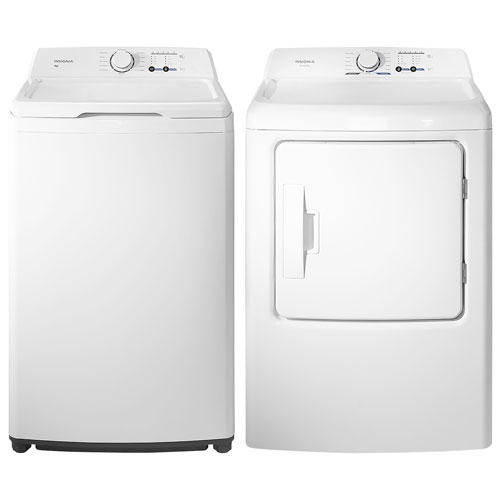
-16%Insignia 4.3 cu ft Top Load Washer + 6.7 cu ft Electric Dryer — White, Only at Best Buy! $849.98 CAD (15% Off)
 -67%
-67%Amazon Fire TV Stick 4K Select — Turn Any TV Into a 4K Smart TV! $24.99 CAD (67% Off)
 -38%
-38%LEGO Lucky Cat 40813 — Waving Paw, 280 Pieces! $25 CAD (37% Off)
 Tech Express
Tech Express | September 22, 2026 — DeepSeek Appoints Its First CFO as Yan Wentao Joins
 Maple Express
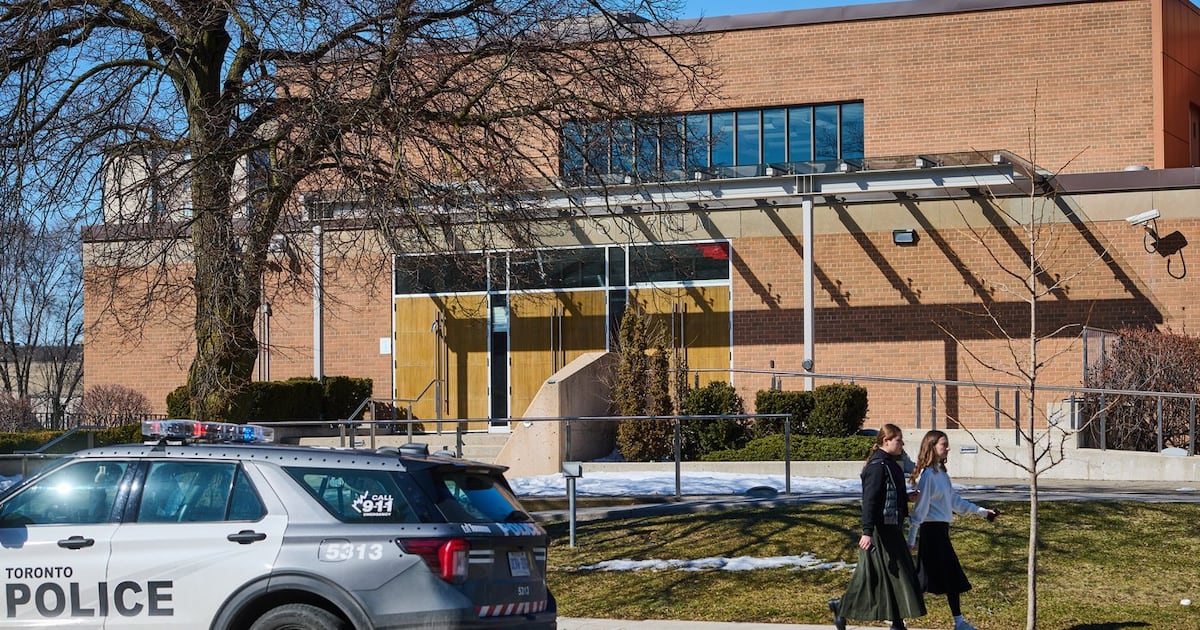
Maple Express | September 22, 2026: After the Belleville Synagogue Shooting, a Look at Recent Violence Near Canadian Jewish Institutions
-33%OneBeat Outlet Extender — 6 AC + 4 USB, 180° Rotating Plug! $16.88 CAD (32% Off)
Amazon
-16%Insignia 4.3 cu ft Top Load Washer + 6.7 cu ft Electric Dryer — White, Only at Best Buy! $849.98 CAD (15% Off)
Best Buy
-67%Amazon Fire TV Stick 4K Select — Turn Any TV Into a 4K Smart TV! $24.99 CAD (67% Off)
Amazon
-38%LEGO Lucky Cat 40813 — Waving Paw, 280 Pieces! $25 CAD (37% Off)
Amazon
Tech ExpressTech Express | September 22, 2026 — DeepSeek Appoints Its First CFO as Yan Wentao Joins
Maple Express