Global Express | October 31, 2026 — Tanker Catches Fire After Limpet Mine Attack in Strait of Hormuz
Today's Global Express: a tanker caught fire after a limpet-mine attack in the Strait of Hormuz; the G20 scrapped its group photo over Lavrov; Serbia's student movement demanded top resignations; Italy saw mass cost-of-living protests; Saudi Arabia reported downing a Houthi drone aimed at Mecca; Big Oil refining profits surged; Anthropic expects a junk rating after IPO; Australia's mushroom killer lost her appeal; nature talks reached a deal; IEEE retracted 1,417 papers.
1. Tanker Catches Fire After Limpet Mine Attack in Strait of Hormuz
Source: Huanqiu (Global Times)
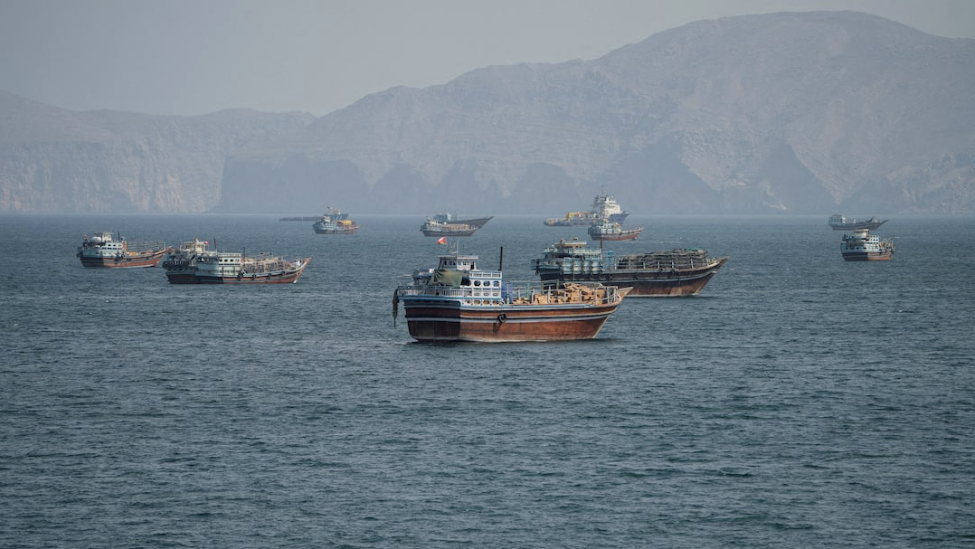
A tanker in the Strait of Hormuz was attacked when two limpet mines attached to its hull detonated, setting the engine room on fire and briefly leaving the vessel unable to sail, Reuters reported on October 30, citing sources. Reuters said it was the first known attack in the region using limpet mines that actually worked since the US-Iran war began in February.
Three maritime security sources assessed that the targeted vessel was the Panama-flagged "Louis I," according to the report. The Times of India said the tanker was carrying 27 Indian seafarers. Britain's Maritime Trade Operations office said the attack happened on October 29, 25 nautical miles (46 km) northeast of Khasab in Oman. The crew was safe, the fire has been extinguished, and the tanker will continue to its next port of call.
A Greece-based maritime risk management group said limpet mines are cheap and easy to obtain, were first used in the region in 2017, and have been deployed against tankers in the strait in the years since. After the US-Iran conflict erupted, a similar attempt was made in the area in September but the devices failed to detonate.
2. G20 Scraps Foreign Ministers' Group Photo as Europeans Refuse to Stand With Lavrov
Source: Al Jazeera
The United States scrapped the traditional group photo of G20 foreign ministers after European officials refused to be pictured alongside Russian Foreign Minister Sergey Lavrov. The move exposed deep rifts inside the group, whose ministers are meeting in Atlanta against the backdrop of the wars in Ukraine and Iran. "There will be no family photo featuring our European partners together with Mr Lavrov," German Foreign Minister Johann Wadephul said, according to the dpa news agency.
Lavrov remains under Western sanctions imposed after Russia's full-scale invasion of Ukraine in 2022. Russian state media said he arrived in Atlanta ahead of the talks, and Moscow said he would use his speech to argue against international sanctions. Ukraine was not invited, according to The National. A diplomatic source told AFP that Russia's presence "in no way legitimises its actions."
EU foreign policy chief Kaja Kallas pledged on Thursday to press G20 partners to step up support for Ukraine and pursue accountability through a special tribunal and claims commission, after a Russian strike on a Ukrainian railway station killed at least 14 people. The meeting comes weeks after President Donald Trump issued sanctions waivers allowing Russia to export diesel to ease fuel prices before the November 3 midterm elections. Secretary of State Marco Rubio opened the talks by urging members to cooperate on trade, energy, food supplies and freedom of navigation. No joint statement is expected; Washington will instead publish a chair's summary. China sent Executive Vice Foreign Minister Ma Zhaoxu instead of Foreign Minister Wang Yi, and South Africa was excluded by Washington. Atlanta is the last ministerial meeting of the US G20 presidency before leaders meet in Miami on December 14 and 15.

3. Serbia's Student Movement Demands Resignations at Police, Intelligence and Judiciary
Source: BBC
Serbia's victorious student-led movement has called for top figures in the police, intelligence and judiciary to stand down, days after ousting former president Aleksandar Vucic's party from power. Newly elected MPs from the Student List, standing in Pioneers' Park opposite parliament, demanded the immediate dismissal of all police officers who had broken the law and singled out the heads of the police, the BIA security agency and the anti-terror unit.
Serbians handed the task of fully resetting their political system to a group of novice politicians made up of intellectuals, professors, artists, athletes and as many as 12 medical doctors and surgeons. All 141 successful candidates were chosen by students from universities across the country through a lengthy and carefully crafted process. But the handover of power will take weeks, and the movement fears evidence of possible wrongdoing could be destroyed in the meantime.
The movement emerged from protests after the fatal collapse of a railway station canopy in Novi Sad in November 2024, which killed 16 people. The students promise to "halt the plunder, return stolen goods to the state budget, and invest directly in education and the economy." The director of state broadcaster RTS, Manja Grcic, has already stepped down, and the new MPs have also set their sights on the head of Telekom Srbija, Vladimir Lucic. Acting president Ana Brnabic accused her opponents of choosing "revolutionary justice, not rule of law." Dejan Soskic, an economist and former central bank governor now serving as an MP, said he wants to see the media scene liberated, corruption fought, institutions operating as the law prescribes and a lustration law introduced within the first six months. Presidential elections are due in December; Vucic is legally barred from a third term.

4. Italy Protests Cost of Living as 500 Troops Head to Milan
Source: NBC News
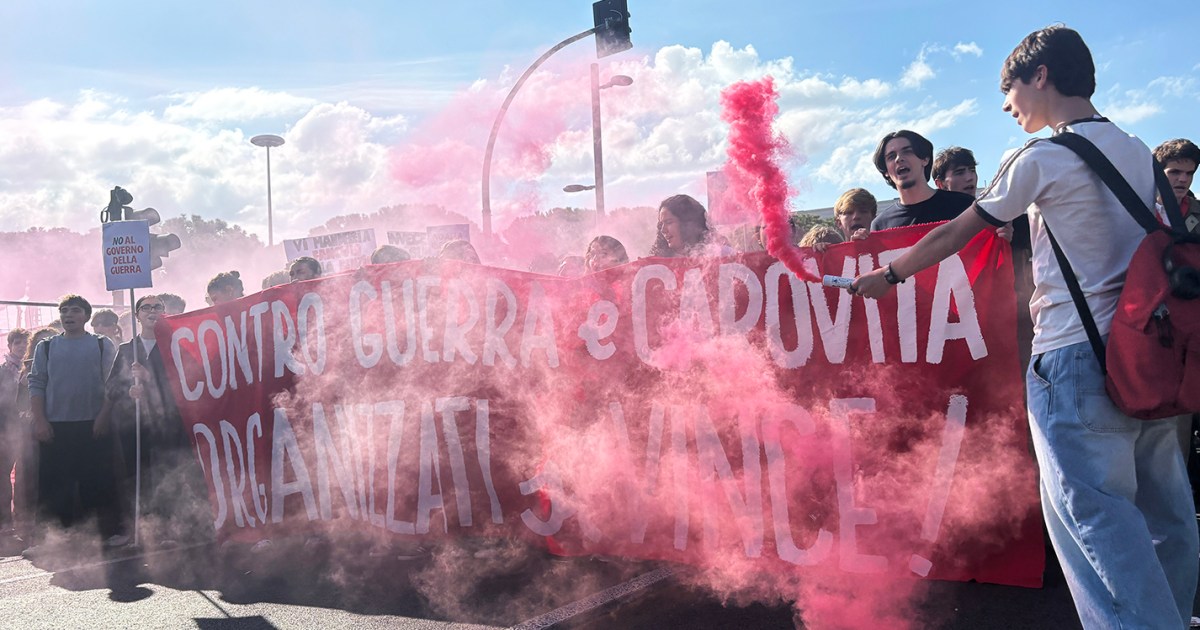
Tens of thousands of people took to the streets of Rome, Milan and other Italian cities on Friday, October 30, in nationwide demonstrations against the cost of living and high military spending. The protests were largely peaceful, but an NBC News crew saw police use a water cannon and groups of officers charge to disperse demonstrators in Rome that night.
After several weeks of violent protests across Italy, the grassroots USB union and other trade unions called on public and private sector workers to strike and protest, with more disruption expected. The Italian demonstrations appear partly inspired by France, where student protests over education evolved into wider action over the cost of living and social security and some of the worst rioting in decades erupted. A large tent encampment has occupied a square in Madrid since late September, thousands have marched in Lisbon, and police used tear gas and water cannon on black-clad protesters in Brussels.
In Rome, many demonstrators waved communist and Palestinian flags and carried signs against the Iran war. Giovanna Di Matteo, of the left-wing Potere al Popolo party, said she was protesting a government that "did nothing for the people of this country," spending on the military "while they cut on welfare, they cut on services." Luca, a 20-year-old medical student, said protesters felt "still not being heard" and that wages do not keep up with inflation and the cost of living. Prime Minister Giorgia Meloni said earlier this month she had "great respect" for peaceful protesters, but her right-wing government has since introduced tougher penalties for rioters, including financial liability for parents whose children take part in vandalism and looting. The government also said it would deploy 500 army troops alongside police in Milan until the end of the year. Farmers and truckers have blockaded highways and ports over fuel prices that have risen since the US and Israel launched the war against Iran.
5. Saudi Coalition Says It Intercepted Houthi Drone Aimed at Mecca Region
Source: Al Jazeera
The Saudi-led coalition in Yemen said it intercepted a drone launched by the Houthis towards Saudi Arabia's Mecca region. Coalition spokesman Turki al-Malki said on social media that the drone was "intercepted and destroyed" on Friday morning. A missile aimed at western Saudi Arabia was also brought down earlier, as hostilities between the Riyadh-backed Yemeni government and the Iran-backed Houthis continue to escalate.
A Houthi spokesman denied targeting the Muslim holy city or the surrounding region, reiterating that the group's cross-border attacks remain strictly focused on Saudi energy and military infrastructure. "Our operations target [Saudi] oil facilities and military bases," he said. The Saudi-led coalition has previously accused the Houthis of launching drones towards Mecca and Medina, Islam's two holiest cities.
On Thursday, the coalition said it destroyed a ballistic missile fired towards the kingdom's eastern region, and later said two ballistic missiles launched towards Riyadh were also intercepted and destroyed. Al-Malki reported early on Friday that air defences had intercepted a Houthi cruise missile targeting western Saudi Arabia. Houthi-affiliated media reported that coalition air strikes hit the Mahliyah district in Marib, Haifan in Taiz and Huwaishan in al-Jawf. Al Jazeera's correspondent in Taiz reported that fighting along the front lines was persisting, and the city's governor said residential neighbourhoods were being hit by heavy shelling. Aircraft could be heard frequently over the city, which remains under a suffocating siege with no medical supplies, water or fuel getting in, the correspondent said. Humanitarian agencies warn that conditions for civilians are worsening.

6. Trump Once Chided Big Oil for Making 'Too Much Money.' Refining Profits Keep Surging
Source: CNBC
President Donald Trump scolded Big Oil in August, saying ExxonMobil and Chevron were making "too much money based on a shortage" as profits surged after the US-Israeli war with Iran. Corporate results published this week show the majors are still reaping a windfall from tight fuel supplies and elevated refining margins amid global conflict.
Shell, BP, TotalEnergies and Exxon all reported sharply higher margins in their refined-products businesses, a gauge of what they earn from turning crude into gasoline, diesel and jet fuel. Chevron does not report a comparable standalone refining margin, but said on Friday that downstream earnings more than quadrupled from a year earlier to $4.9 billion, citing higher margins on refined-product sales. The companies say they are running refineries near capacity to meet demand, yet supplies of refined fuels remain tight and refinery output is under pressure globally.
Key factors include Ukrainian drone strikes on Russian refineries and disruptions to Middle East energy infrastructure and supply chains linked to the Iran war and Houthi attacks on Saudi Arabia. European Commissioner for Energy and Housing Dan Jorgensen said this week that around a quarter of refineries in the European Union have shut over the past two decades, warning of an energy security "crisis." Raphael Portela of consultancy Wood Mackenzie told CNBC that crude barrels are still "getting out of the Gulf," but "at a steep freight premium," while "the diesel and jet fuel those barrels would have become largely aren't." Russia's refinery outages and export ban, he said, "have taken a second slug out of the global pool." He listed what would end the crunch: product supply returning, Gulf refineries restarting and Russian exports coming back. "A Hormuz settlement would hit margins quickly on sentiment, but with inventories this depleted, the physical tightness carries well into 2027."

7. Anthropic Expected to Get High 'Junk' Rating After IPO, Report Says
Source: TechCrunch
Anthropic is expected to receive a high "junk" rating from credit rating agencies after its initial public offering, according to a Financial Times report. The FT said Blackstone, the anchor investor in a recent $63 billion deal to finance Anthropic's chips, told investors in that deal it expects the AI lab to receive a "high" junk rating after its IPO.
Previously, the FT noted, Blackstone had said the opposite: that the maker of Claude would receive an investment-grade rating, indicating low risk for lenders, before 2027. It now expects a double-B range rating, the top tier of speculative "junk" grade, according to the report.
TechCrunch contacted Anthropic and Blackstone; both declined to comment. Blackstone's forecast is only a prediction, but a high junk rating would make it harder and more costly for Anthropic to raise the money needed to fund the massive spending underpinning its business. The lab has spent heavily on compute deals over the past 12 months, worrying investors. Anthropic officially filed to go public earlier this week, setting off speculation about how the huge IPO will affect the wider AI industry.

8. Australia's 'Mushroom Killer' Loses Appeal and Will Never Be Released
Source: BBC
Australia's "mushroom killer" has failed to overturn her murder convictions, and the court ruled she must never be released from prison. Erin Patterson, 52, was found guilty of murdering three relatives and attempting to kill another by serving them a toxic mushroom-laced meal in 2023. Her life sentence included a non-parole period of 33 years.
In Victoria's Court of Appeal on Friday, three judges threw out her appeal against the convictions and agreed with the prosecution that her sentence was inadequate because it allowed for the possibility of freedom. The crimes were "extraordinarily cold and calculated" and had to be "denounced in the strongest terms," the judges said. "We have concluded that the case involved such shocking criminality that it is inappropriate to fix a non-parole period," Justice Stephen McLeish told the court on the panel's behalf.
After a high-profile trial last year, a jury found Patterson guilty of murdering her in-laws Don and Gail Patterson and Gail's sister Heather Wilkinson by serving individual portions of beef Wellington containing death cap mushrooms. She was also found guilty of the attempted murder of Heather's husband, local pastor Ian Wilkinson, who survived after weeks in hospital but has ongoing health issues from the poisoning. The appeal judges dismissed all seven grounds, including claims that a hotel booking mishap that put the jury in the same place as the prosecution was "catastrophic" and that some evidence was irrelevant and prejudicial. Patterson has 28 days to decide whether to seek a further appeal to the High Court of Australia.

9. Global Nature Talks Reach a Deal, but Money Remains Unresolved
Source: BBC
Delegates from nearly 200 countries spent almost two weeks negotiating and arguing in Armenia's capital, Yerevan, over a new agreement on nature. Early on Saturday morning, hours after talks were due to finish, they finally agreed the key parts of a new action plan. "And that's it. Perfect," said the meeting president, Hambardzum Matevosyan.
Four years earlier, the same countries signed the Global Biodiversity Framework, a landmark deal committing to "halt and reverse" the decline of nature, with 24 targets including putting 30% of the world's land and seas under protection by the end of the decade. But the UN said this week that the world is on track to meet just one of those two dozen targets. Scientists say the world is in a sixth mass extinction event, with species becoming extinct at 100 times the natural rate because of human activities. Under this week's deal, countries acknowledged they are falling behind.
Money is seen as the main barrier to faster action. In 2022, nations agreed to put $30 billion towards nature recovery by the end of the decade and to mobilise a further $170 billion from private sources, but many have since redirected international aid to defence budgets and to repeated energy shocks, leaving pledges short of the pace required. More than $1 billion was pledged at this meeting, half of it from philanthropists including Leonardo DiCaprio's Re:wild organisation. Some 252 million hectares of degraded land have been put into protection, an area bigger than Greenland. A small group of countries including Saudi Arabia and Russia were reported to have frustrated the approval of scientific reports. Countries meet next month for the COP31 climate summit.

10. IEEE Retracts 1,417 Conference Papers at Once in Record Bulk Pullback
Source: Nature
One of the world's top professional societies for scientists and engineers has retracted 1,417 conference papers in one go. The move was announced in an October 28 statement by the Institute of Electrical and Electronics Engineers in New York City. Research-integrity specialists told Nature it is the largest single bulk retraction issued by any scholarly publisher.
IEEE's announcement did not identify the affected papers, but Nature's news team verified that the publisher retracted at least 1,417 conference papers on October 23. All had been identified by a study of research works traceable to social-media advertisements by paper mills. That study was posted as a preprint in April and published this month in the journal Accountability in Research; it listed 2,062 papers published in 366 IEEE conference proceedings between 2021 and 2026. IEEE said that after the irregularities were identified via an external study it conducted a comprehensive review and found the papers violated its publication principles. The retraction notices state the articles "may have been offered for sale."
The study found that prices for authorship ranged from $43 to $400 for a first-author slot and $11 to $200 for a last-author slot. Of 109 IEEE-sponsored conferences that published five or more papers matching paper-mill adverts, 95 took place in India. "It is unbelievable. They're so fast," said research-integrity sleuth Anna Abalkina of the Free University of Berlin, a co-author of the study. Nature's analysis also found that 1,622 of the 2,062 flagged articles have now been retracted by IEEE, and that IEEE has retracted nearly 3,000 papers so far in 2026. IEEE said the latest batch represents less than 0.06% of its conference publications over the six-year period.

More News
- Tech Express | October 31, 2026: Intel Plunges 29% in Its Worst Day Since the 1970s
- Sports Express | October 31, 2026: Kucherov requests trade, Lightning say no
- Maple Express | October 31, 2026: Motorcyclist seriously hurt in Mississauga crash
- Finance Evening: AI Spending Fears Trigger Tech Rout, Nasdaq Falls 2.86%; Canada’s Economy Stalls in August
- Maple Express | October 30, 2026 — Family speaks out after violent Bridle Path home invasion
Comments (0)
View More
 -34%
BISSELL CrossWave EdgeFind 4163B — Vacuum and Mop in One Pass, Tangle-Free! $199.99 CAD (33% Off)
 -54%
Dawn Platinum Dish Soap Refill Jug 1.52L — A Little Goes a Long Way! $9.98 CAD (53% Off)
 -31%
Acer Chromebook Tab 311 Detachable — Keyboard + Stylus Included, All-Day Battery! $349.99 CAD (30% Off)
 0
「Worth Buying」Apple Magic Mouse — Trackpad Gestures in a Mouse, If Your Hand Can Take It
 Maple Express
 | October 30, 2026 — Ontario transport minister confirms Bloor Street West bike lane removal is complete, says lanes caused congestion
Global ExpressGlobal Express | October 31, 2026 — Tanker Catches Fire After Limpet Mine Attack in Strait of Hormuz
-34%BISSELL CrossWave EdgeFind 4163B — Vacuum and Mop in One Pass, Tangle-Free! $199.99 CAD (33% Off)
Amazon
-54%Dawn Platinum Dish Soap Refill Jug 1.52L — A Little Goes a Long Way! $9.98 CAD (53% Off)
Amazon
-31%Acer Chromebook Tab 311 Detachable — Keyboard + Stylus Included, All-Day Battery! $349.99 CAD (30% Off)
Amazon
0「Worth Buying」Apple Magic Mouse — Trackpad Gestures in a Mouse, If Your Hand Can Take It
Amazon
Maple ExpressMaple Express | October 30, 2026 — Ontario transport minister confirms Bloor Street West bike lane removal is complete, says lanes caused congestion
Global Express