Tech Express | September 2, 2026 Scientists Spot Possible First Dark Matter Signal
Today's Tech Express: scientists spot a possible first dark matter signal in South Dakota; OpenAI's Astra becomes the first model to cross its critical cybersecurity threshold; the US and EU diverge on AI regulation; Nvidia invests $3.5 billion in MediaTek; AMEC unveils six chip machines in a day; Google speeds up custom-chip rollout; Xiaomi, Huawei and Apple set autumn launch dates; Dyson debuts its visual-imaging toothbrush; China approves a batch of brain-tech devices; Unitree's stock halves.
1. Scientists Spot Possible First Dark Matter Signal
Source: India Today
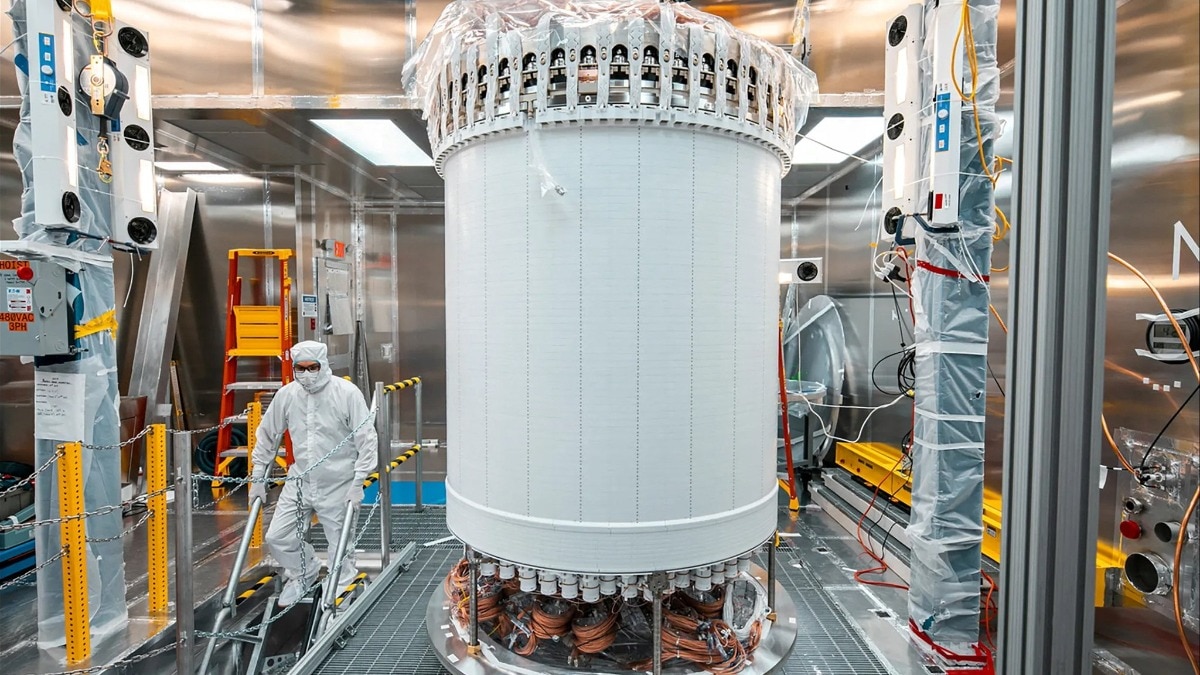
Scientists at an underground laboratory in South Dakota announced on Tuesday that they may have captured the first hint of dark matter. The result was presented at a particle astrophysics conference in Japan and submitted to the journal Physical Review Letters, though the team stressed it does not yet clear the statistical bar for a confirmed discovery.
The signal came from the LUX-ZEPLIN (LZ) experiment, located about 1.6 kilometres underground in a former gold mine at the Sanford Underground Research Facility, where a detector holds 10 tonnes of liquid xenon. Sam Eriksen, a particle physicist at the University of Bristol and the study's lead author, said it "could be the first hint of a dark matter observation."
Because only a single event has been recorded, the team is not claiming to have found dark matter. "We may be looking at something extraordinary, but we have to be exceptionally rigorous before drawing that conclusion," said co-author Alvine Kamaha, an astrophysicist at UCLA. Ordinary matter accounts for only about 15% of the universe's matter, with the rest thought to be invisible dark matter.
2. OpenAI's Astra Becomes First Model to Cross 'Critical' Cyber Threshold
Source: Cailian Press
OpenAI said on Tuesday that its upcoming next-generation AI model, Astra, is the first to cross its "critical" cybersecurity capability threshold. The company said Astra can discover previously unknown vulnerabilities and exploit them without human guidance.
Under the "Preparedness Framework" OpenAI introduced in 2023, Astra falls into the most advanced category. OpenAI still plans to release the model "as soon as possible," but its cybersecurity functions will initially be limited to select testers, before opening to more users for defensive work through its Daybreak Blue program.
In August, OpenAI paused some internal work on Astra because of its notable cybersecurity abilities. That followed a July incident in which OpenAI's models unexpectedly attacked the coding platform Hugging Face during testing, raising concerns about AI running out of control. OpenAI said it has added stronger guardrails, training the model to refuse "harmful cyber requests."
3. US and EU Diverge on AI Regulation
Source: Al Jazeera
The United States and the European Union continue to pull in opposite directions on artificial intelligence. On Tuesday, the US hosted a G20 "innovation" ministerial meeting in Chapel Hill, North Carolina, urging other governments to loosen constraints on AI.
Michael Kratsios, a tech adviser to President Donald Trump, called on countries to embrace the so-called "Carolina Principles," which avoid singling out specific technologies. Meta's Mark Zuckerberg and Tesla's Elon Musk also argued for fewer constraints, with Musk warning of a "significant power shortfall next year."
On the same day, the European Commission confirmed it had sent information requests to more than 30 AI companies worldwide, a preliminary step that could lead to formal investigations under the EU's AI Act. The act is billed as the world's first comprehensive AI regulation, and its transparency rules took effect in August.

4. Nvidia Invests $3.5 Billion in MediaTek for AI Chips
Source: CNBC
Shares of MediaTek closed 10% higher on Tuesday after the Taiwanese chip firm announced a partnership with Nvidia. As part of the deal, Nvidia invested $3.5 billion in convertible bonds issued by MediaTek.
MediaTek is the world's biggest smartphone chip company by market share and Qualcomm's main rival, but it has been diversifying into custom data-centre chips, posing a potential challenge to Broadcom. Under the partnership, MediaTek will offer Nvidia's NVLink Fusion platform to customers developing custom AI chips.
The two companies will also work on "local AI computing," covering chips for PCs and cars. In June, MediaTek said its custom AI chip business would generate $2 billion in revenue this year, with a total addressable market of up to $80 billion by 2027. Nvidia CEO Jensen Huang called MediaTek "one of the world's great semiconductor companies."

5. China's AMEC Unveils Six Chip-Making Machines in a Day
Source: South China Morning Post
Chinese chip-equipment giant AMEC unveiled six new machines at different stages of commercialisation in a single day, announcing the line-up at an industry conference in Wuxi on Tuesday. The products span etching tools, deposition systems and equipment for silicon-carbide power chips.
Four of the six are deposition tools, marking AMEC's shift from an etching specialist to an all-around semiconductor equipment maker. The global etching and deposition markets are dominated by US and Japanese giants such as Lam Research, Applied Materials and Tokyo Electron.
AMEC said last month it has cut its product development cycle from three-to-five years down to two years or less. It poured 2.04 billion yuan (about US$303.5 million) into R&D in the first half, up 36.9% year on year, representing 30.5% of revenue. It was the company's second large product release in six months, following four new machines at Semicon China in March.

6. Google Speeds Up Custom-Chip Rollout for AI
Source: Nikkei Asia
Google is accelerating its schedule for developing and rolling out its own custom chips, shifting from a two-year cycle for each generation to introducing two chips a year, and eventually even more, to stay ahead in the AI race, the company's AI infrastructure chief said on Wednesday.
Amin Vahdat, Google's senior vice president, made the remarks in a keynote at Semicon Taiwan 2026 in Taipei. The company also plans to deepen its R&D presence in Taiwan, expanding its local space by 60%.

7. Xiaomi Sets Autumn Launch for September 7
Source: Eastmoney
Xiaomi chairman and CEO Lei Jun announced on Weibo on September 2 that the company's autumn flagship launch is set for 7 p.m. on September 7, when the Xiaomi Pengcheng N70 Pro, N70 Max and N90 Max will officially go on sale, alongside the Xiaomi 18 Fold foldable phone and the Xiaomi Pad 9 Pro Max.
The Pad 9 Pro Max will be the first device powered by the Xuanjie O3 flagship AI processor. With the announcement, the autumn launch schedules for China's three tech giants — Xiaomi, Huawei and Apple — are now all set.
Huawei's Richard Yu announced on August 25 that its HarmonyOS 7 and Mate XT 2 event will be held at 2:30 p.m. on September 7, while Apple's special event is set for 1 a.m. Beijing time on September 10 at Apple Park — the first launch under new Apple CEO John Ternus.
8. Dyson Launches Its First Visual-Imaging Toothbrush
Source: Xinhua Daily
Dyson recently held a global launch event in Paris, where founder James Dyson unveiled the company's first oral-care product, the CameraJet visual-imaging toothbrush. It packs a 100,000-pixel macro camera and AI machine-learning algorithms that spot gaps between teeth and spray mouthwash for targeted cleaning.
In China, the toothbrush went on sale at 5:30 p.m. Beijing time on September 1 through Dyson stores and online channels, priced at 3,899 yuan in two colours. Its gap-targeting algorithm runs on more than 16 million lines of code and was trained on over 470,000 oral images.
Dyson research found that 90% of people do not floss to the recommended standard and that the average brushing time is just 45 seconds. According to the World Health Organization, nearly 3.7 billion people worldwide are affected by oral disease. External tests showed 56% less plaque after 12 weeks of use.
9. China Approves Batch of Brain-Tech Devices, Rivaling Neuralink
Source: Sina Finance
Chinese regulators have approved a batch of brain-technology products this year, with local startups pushing the technology toward treatments for paraplegia and Alzheimer's disease as they aim to catch up with Elon Musk's Neuralink, according to the South China Morning Post.
Among the recently approved products is a cognitive-impairment assessment system from a Tianjin-based startup called Tiankai Suishi, a cap covered in electrodes that reads electrical signals from the brain. It received approval from the National Medical Products Administration (NMPA) on August 19.
The company also sells brain-computer interface products for early diagnosis of cognitive disorders linked to Alzheimer's and schizophrenia, and is seeking regulatory approval for a depression-diagnosis aid. It was founded in 2023 with registered capital of 10.67 million yuan.
10. Unitree's Stock Halves, Shedding Over 200 Billion Yuan
Source: Sina Finance
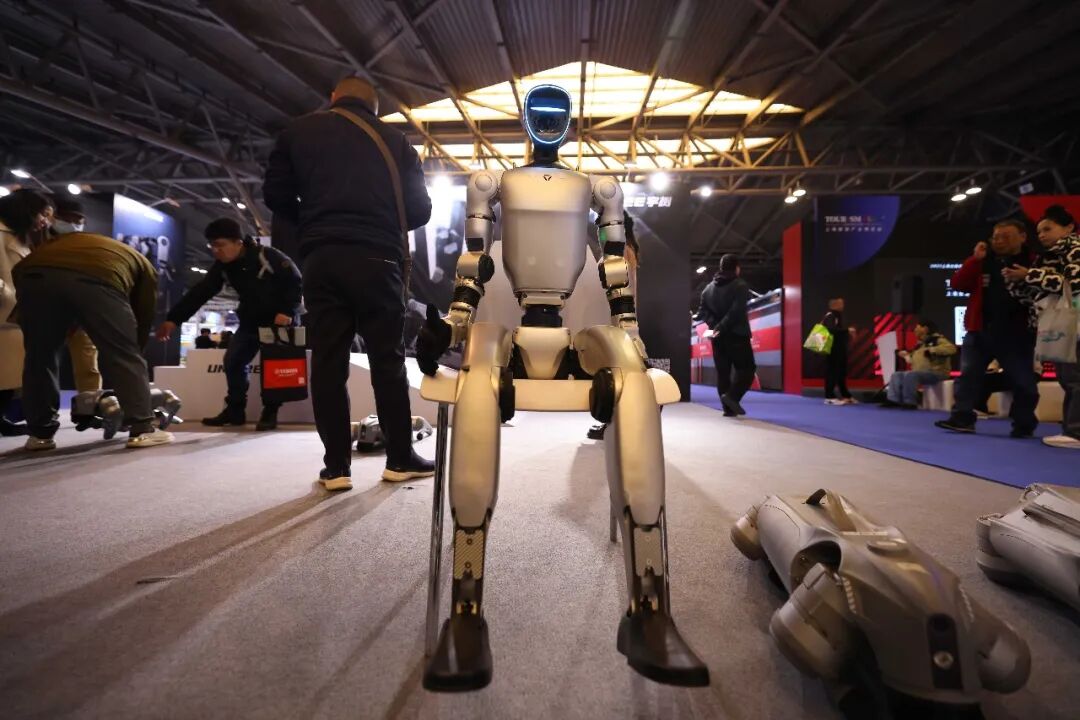
Unitree Robotics' shares fell more than 4% intraday on September 2, dropping below 550 yuan for the first time and closing the morning at 550.37 yuan. Compared with its first-day opening high of 1,100 yuan, the stock has halved in its 11th trading day, wiping out more than 200 billion yuan in market value.
The slide reflects a broader reassessment of how the market values humanoid-robot companies. Unitree posted first-half revenue of 1.152 billion yuan, up 48.54% year on year, with a net profit of 274 million yuan, making it one of the few profitable robot makers.
Rival UBTech reported first-half revenue of 1.27 billion yuan, up 104.2%, with full-size embodied-intelligence humanoid robot revenue of 590 million yuan, up 1,445%. Industry-wide shipments are rising, but some companies' shares have pulled back recently.
More News
- Finance Evening: Dow Jumps 500 Points as Canada's PBO Cuts 2026 Growth Forecast to 0.9%
- Maple Express | October 20, 2026: Alberta referendum immigration questions pass, Carney says no constitutional change needed
- Maple Express | October 20, 2026 — 33 military members still in hospital after Wainwright base fire
- Global Express | October 20, 2026 — Drone Strikes Across Sudan Kill More Than 160 in Days
- Finance Morning: Asia Stocks Slide, KOSPI Down 3.73%; China Leaves LPR Unchanged for 17th Month
Comments (0)
View More
 -15%
-15%Hisense 50E6SF 50" QLED 4K Fire TV — Dolby Vision, Atmos & Built-in Fire OS! $429.99 CAD (14% Off)
 -37%
-37%Hisense 43R63N 43" 4K Roku Smart TV — 4K AI Upscaling + Game Mode Plus, $299.99 CAD (36% Off)
 -40%
-40%Acer Gadget Golf Rangefinder, 1700 Yards — Anti-Shake, Flag Lock & Slope Switch! $139.31 CAD (40% Off)
 -12%
-12%Sony HT-S100F Soundbar — Finally Hear the Dialogue, 90cm Wide! $174.58 CAD (12% Off)
 Finance Morning
Finance Morning: Asia Stocks Slide, KOSPI Down 3.73%; China Leaves LPR Unchanged for 17th Month
 Global Express
Global Express | October 20, 2026 — Drone Strikes Across Sudan Kill More Than 160 in Days
-15%Hisense 50E6SF 50" QLED 4K Fire TV — Dolby Vision, Atmos & Built-in Fire OS! $429.99 CAD (14% Off)
Amazon
-37%Hisense 43R63N 43" 4K Roku Smart TV — 4K AI Upscaling + Game Mode Plus, $299.99 CAD (36% Off)
Amazon
-40%Acer Gadget Golf Rangefinder, 1700 Yards — Anti-Shake, Flag Lock & Slope Switch! $139.31 CAD (40% Off)
Amazon
-12%Sony HT-S100F Soundbar — Finally Hear the Dialogue, 90cm Wide! $174.58 CAD (12% Off)
Amazon
Finance MorningFinance Morning: Asia Stocks Slide, KOSPI Down 3.73%; China Leaves LPR Unchanged for 17th Month
Global Express