Global Express | August 7, 2026 Thailand School Shooting Kills 7 · Iran Hormuz Deal Falls Short
Top stories: Thailand school shooting kills 7; Iran says Hormuz deal won't fully reopen strait; Ukraine strikes Russian oil facilities; Houthi attacks kill 30+ Yemeni troops; China's export surplus tops $112B for third straight month; US adds nearly 100K jobs in July; Europe heat wave triggers Italy red alert, Austria heat record; Nigeria rescues 308 abductees in single day; Google AI leadership shakeup; six global seas become war zones.
Global Express | August 7, 2026 Thailand School Shooting Kills 7 · Iran Says Hormuz Deal Won't Fully Reopen Strait
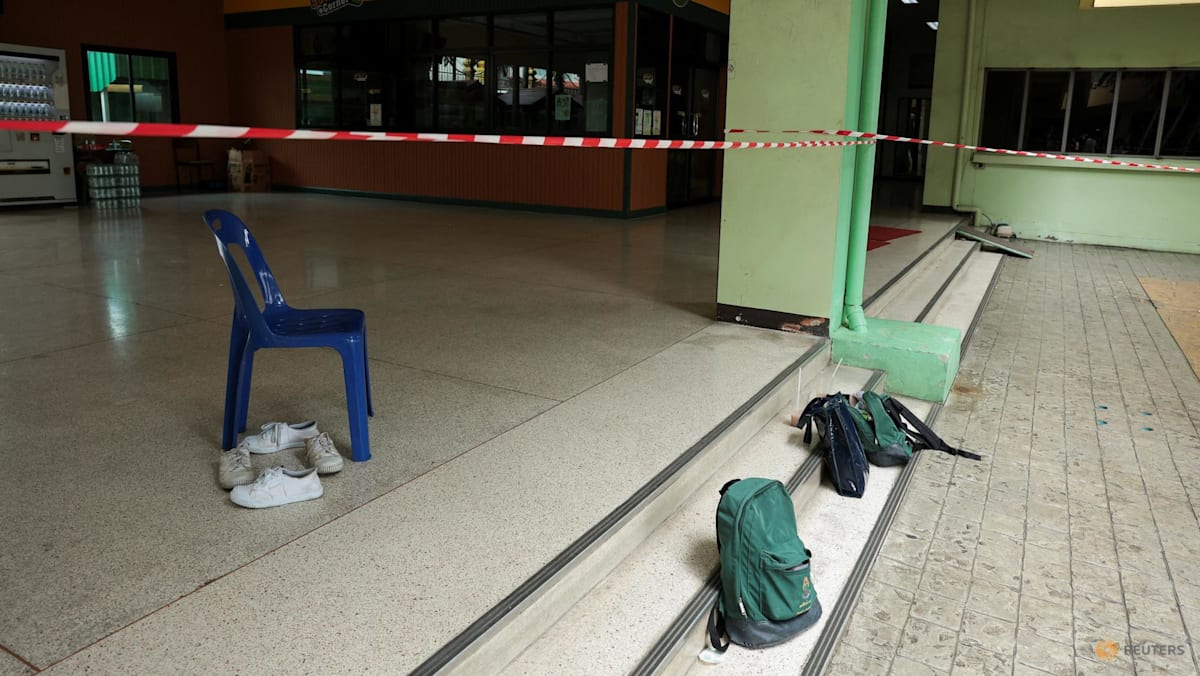
1. Thailand School Shooting Leaves 7 Dead, Teen Gunman Kills Self
A devastating school shooting unfolded on the morning of August 7 near Bangkok, Thailand, when a teenager shot his grandparents at home before storming a school and opening fire, killing at least seven people and injuring many more before taking his own life. It marks the deadliest mass shooting in Thailand since 2022.
According to police, the attacker first killed two relatives at home, then carried firearms to the school where he shot students and teachers. The victims include at least three students and three teachers, with about ten others hospitalized. Thailand's Prime Minister has expressed condolences and ordered a thorough investigation into how the gunman obtained his weapons.
Gun violence in Thailand has been a recurring issue, with the 2022 nursery massacre that claimed 37 lives still fresh in the nation's memory. This latest tragedy has reignited public debate over gun control and mental health services in the country.

2. Iran Says Hormuz Deal with Oman Won't Fully Reopen Strait
Iran and Oman are nearing a framework agreement on managing traffic through the Strait of Hormuz, but Iranian Deputy Foreign Minister Kazem Gharibabadi has made clear that the deal will not automatically lead to a full reopening of the strategic waterway — a reality check that has disappointed global shipping and energy markets.
The Strait of Hormuz is the world's most critical oil chokepoint, with roughly one-fifth of global oil passing through daily. Since the US-Israeli military campaign against Iran began, passage through the strait has been significantly disrupted, sending oil prices soaring. While Oman has been mediating efforts to establish transit arrangements, Iran insists any agreement must respect its sovereignty.
Analysts note that negotiations are complicated by competing interests: the United States opposes an Iran-dominated strait management scheme, while the shipping industry, facing skyrocketing insurance premiums, is pushing for a swift restoration of safe passage. Tensions in the strait are expected to persist in the near term.

3. Ukraine Strikes More Oil Facilities Deep Inside Russia
Ukrainian President Volodymyr Zelenskyy confirmed on August 6 that Ukrainian forces struck additional oil facilities deep inside Russian territory in overnight attacks, continuing their campaign to cripple Moscow's wartime economy. The strikes represent the latest in a series of long-range operations by Kyiv.
The targets included refineries and oil storage facilities in Russia's interior, aimed at disrupting fuel supply lines for Russian forces and cutting into Moscow's export revenues. In his nightly address, Zelenskyy praised the precision strike capabilities of Ukraine's military and vowed to expand attacks on strategic targets behind Russian lines.
Military analysts note that Ukraine's drone and missile capabilities have improved significantly over the past year, enabling strikes on targets hundreds or even thousands of kilometers from its borders. However, Russia has also been bolstering air defenses around critical infrastructure, and the back-and-forth between attack and defense continues to escalate.

4. Houthi Strikes Kill Dozens of Yemeni Troops, Saudi Arabia Warns of Further Attacks
Houthi forces launched large-scale attacks on multiple Yemeni government military camps on August 7, killing at least 30 government troops according to official sources. Saudi Arabia immediately warned that the Houthis could launch further attacks on Saudi ports and airports.
Government sources cautioned that the death toll could rise significantly, with some reports suggesting the actual figure may be as high as 58. The Houthis have intensified strikes on Yemeni government forces and Saudi targets in retaliation for the US-Israeli campaign against Iran. Saudi military forces are now on high alert.
Meanwhile, Iraqi militias are reportedly coordinating with Iran-backed Houthis to prepare coordinated strikes on Saudi ports and airports. CNN reports that Saudi Arabia is urgently deploying additional air defense systems. The proxy war across the Middle East is showing signs of a full-scale escalation.

5. China's Export Boom Rolls On Despite Global Trade Backlash
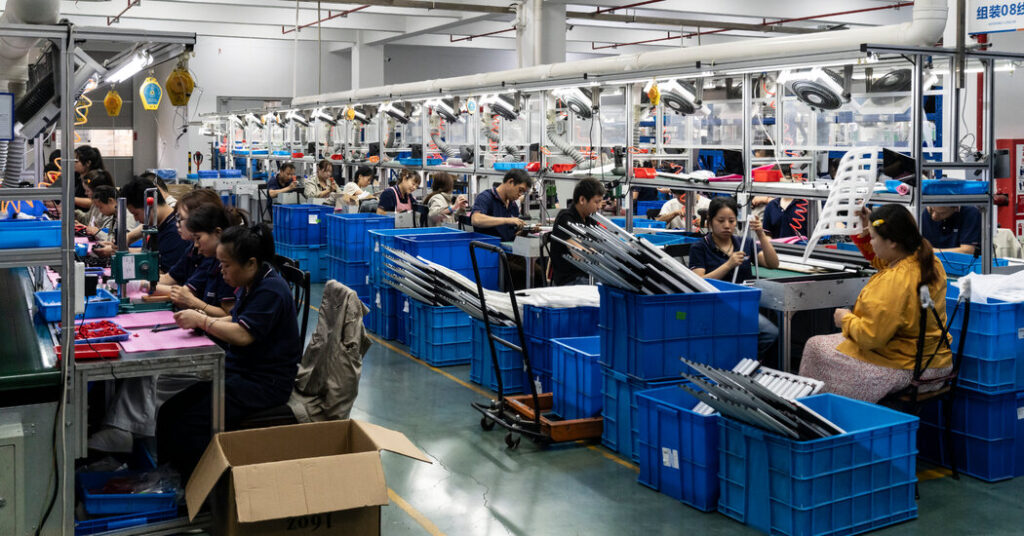
China's export machine continues to run at full speed despite mounting tariffs from countries around the world. According to customs data released on August 7, China posted a trade surplus of $112.5 billion in July — the third consecutive month exceeding $100 billion. Exports denominated in US dollars rose 23.9% year-on-year.
Analysts point out that the disruption of energy supplies caused by the Iran war has actually boosted demand for Chinese electric vehicles and renewable energy products. At the same time, Chinese manufacturers grappling with domestic overcapacity and fierce price competition are flooding overseas markets with low-cost goods. Notably, Chinese exports to the United States still grew 17% in July.
The EU has already imposed tariffs on Chinese electric vehicles, arguing that state subsidies give Chinese manufacturers an unfair advantage. Yet the global AI spending spree is driving a surge in Chinese semiconductor and data center equipment exports, adding a new engine to China's export growth.
6. US Added Nearly 100,000 Jobs in July, but Young Workers Still Struggle
The US Labor Department is expected to report nearly 100,000 new jobs added in July, extending a 2026 trend of roughly 92,000 monthly gains. While historically unremarkable, slower population growth means the US now needs fewer new jobs to keep unemployment stable.
For young job seekers, however, the labor market remains challenging. Many businesses have scaled back entry-level hiring in favor of experienced workers. The unemployment rate for those aged 20 to 24 remains notably higher than the national average — a structural challenge unlikely to ease in the near term.
Economists characterize the current cooling as a normalization rather than a full-blown downturn. The Federal Reserve is closely watching employment data to guide its next interest rate decision, and the upcoming July report will be a critical indicator for markets assessing the economy's trajectory.
7. Europe Heat Wave: Italy Under Red Alert, Austria Sets National Record
A blistering heat wave is gripping Europe. On August 6, Italy placed all its major cities under the highest-level red heat alert, while Austria recorded its highest-ever national temperature. Wildfires are raging across southern France, and the Danube River has dropped to historic lows.
In Hungary, the relentless heat has forced the Paks nuclear power plant to cut output to roughly 10% of normal capacity. The government has declared emergency conservation measures, banning freight trains during peak electricity hours and asking major industrial users and households to cut consumption. Decorative lighting on Budapest's landmarks has also been switched off.
Climate experts warn that Europe is facing increasingly frequent extreme heat events that threaten public health, energy infrastructure, agricultural production, and ecosystems. Scientists attribute the current heat wave to global climate change and are urging countries to accelerate emissions reductions.
8. Nigeria's Record Rescue: 308 Abductees Freed in Single Day
Nigerian President Bola Tinubu has announced that security forces successfully rescued 308 Nigerian citizens kidnapped in Niger and Kwara states in a massive operation — the largest single-day hostage rescue in the country's history. Tinubu hailed the operation as a "historic achievement."
Northern Nigeria has been plagued by frequent attacks from armed gangs in recent years, with large numbers of civilians abducted for ransom. Earlier this month, militants launched multiple raids on villages, seizing hundreds of residents. Acting on intelligence, the Nigerian military mounted a coordinated rescue operation that freed all captives.
President Tinubu praised the bravery and professionalism of the security forces in a statement, reaffirming the government's commitment to combating terrorism and organized crime. However, humanitarian organizations warn that without addressing root causes such as poverty and regional inequality, the kidnap-for-ransom crisis will be difficult to eradicate.

9. Google AI Shake-Up: DeepMind CEO Hassabis Steps Aside
Demis Hassabis, CEO of Google DeepMind, has announced he is stepping down from day-to-day management to become chairman of the unit and chief scientist at parent company Alphabet. The move is the latest in a string of high-profile personnel departures from Google's AI division.
Hassabis, a co-founder of DeepMind who maintained a key leadership role after Google's acquisition, wrote in an internal memo that artificial general intelligence (AGI) is "close at hand" and that he needs to focus on "big picture" work. Meanwhile, co-founder Sergey Brin has become increasingly involved in Google's AI affairs.
Several senior scientists have left DeepMind in recent months, reflecting the fierce competition for AI talent. Analysts view Hassabis's role transition as potentially marking a new phase in Google's AI strategy, with AGI as the central objective.

10. Six Global Seas Engulfed in Conflict, Caspian Becomes New Flashpoint
"All the seas — the Persian Gulf, the Red Sea, the Mediterranean, the Black Sea, the Baltic Sea, and the Caspian Sea — have become arenas in an oil war," warned Daniel Yergin, vice chairman of S&P Global and renowned energy expert. It is the first time since the Cold War that six major bodies of water are simultaneously enmeshed in geopolitical conflict.
The Caspian Sea is a particularly striking case. The world's largest inland lake, situated between Iran and Russia, is becoming the intersection point of the Iran and Ukraine wars. Recent Ukrainian attacks on Russian vessels in the Caspian, combined with Iran's use of the sea as a corridor for Russian military support, have transformed a previously quiet region into a new powder keg.
Analysts note that the Iran and Ukraine conflicts are intensifying and spreading, with signs of convergence. Countries that sought to remain neutral are being drawn in. The question facing governments worldwide: where will the next flashpoint emerge, and could the two battlefields ultimately merge into a single super-conflict?

More News
- Global Express | September 21, 2026 Trump threatens to 'blow up' Iran as Tehran warns of 'painful strikes'
- Finance Morning | September 21, 2026: Asia Stocks Rise on US-China Talks Optimism; ByteDance Buys Beijing Land for 8.7 Billion Yuan
- Tech Express | September 21, 2026 — Nvidia's Jensen Huang Rejects "AI Doom" Warnings
- Sports Express | September 21, 2026 — Blue Jays rout Rangers 7-2 to avoid series sweep
- Maple Express | September 21, 2026 — Officer shot near Belleville synagogue; SIU investigating
Comments (0)
View More
 -23%
-23%Dyson Hushjet Compact Air Purifier — Whisper-Quiet 24dB Sleep Mode! $339.99 CAD (23% Off)
 -42%
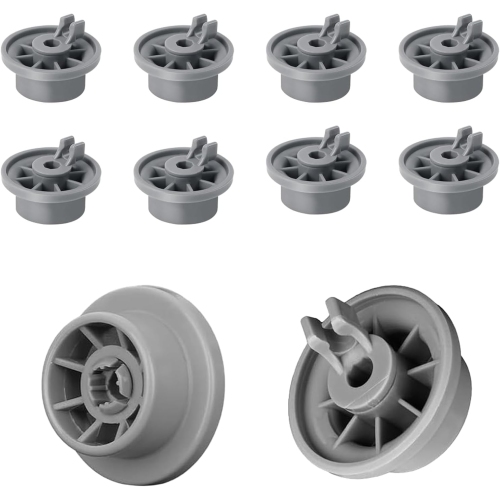
-42%SYMLIS Dishwasher Lower Rack Roller Wheels — 8-Piece Universal Replacement for Bosch/Siemens/Neff/Beko! $34.13 CAD (41% Off)
 -48%
-48%WD_BLACK SN850P 2TB NVMe SSD with Heatsink (Officially Licensed for PS5) — 7,000MB/s Reads to Expand Your Console! $529.99 CAD (48% Off)
 -21%
-21%Xbox Wireless Controller (Storm Breaker Special Edition) — Series X|S/One/PC, Up to 40H Battery! $79.99 CAD (20% Off)
 Sports Express
Sports Express | September 21, 2026 — Blue Jays rout Rangers 7-2 to avoid series sweep
 Maple Express
Maple Express | September 20, 2026 Man charged with second-degree murder after Toronto shooting victim dies
-23%Dyson Hushjet Compact Air Purifier — Whisper-Quiet 24dB Sleep Mode! $339.99 CAD (23% Off)
Amazon
-42%SYMLIS Dishwasher Lower Rack Roller Wheels — 8-Piece Universal Replacement for Bosch/Siemens/Neff/Beko! $34.13 CAD (41% Off)
Best Buy
-48%WD_BLACK SN850P 2TB NVMe SSD with Heatsink (Officially Licensed for PS5) — 7,000MB/s Reads to Expand Your Console! $529.99 CAD (48% Off)
Best Buy
-21%Xbox Wireless Controller (Storm Breaker Special Edition) — Series X|S/One/PC, Up to 40H Battery! $79.99 CAD (20% Off)
Best Buy
Sports ExpressSports Express | September 21, 2026 — Blue Jays rout Rangers 7-2 to avoid series sweep
Maple Express