
Tech Express | July 14, 2026 OpenAI Launches GPT-5.6 Family as Apple Sues Over Trade Secrets
OpenAI launches GPT-5.6 (Sol/Terra/Luna), Apple sues OpenAI over hardware trade secrets, Samsung starts 2nm production for Tesla AI5 chip, Huawei Atlas 950 SuperPoD debuts at WAIC, China's first 3D AI chip DF1000 launches, Helsing raises $1.8B at $18B valuation, and TSMC AI revenue on track to exceed $40B.
Tech Express | July 14, 2026 OpenAI Launches GPT-5.6 Family as Apple Sues Over Trade Secrets
📰 OpenAI Launches GPT-5.6 Model Family: Sol, Terra, and Luna
OpenAI has officially released its next-generation GPT-5.6 model family, comprising the flagship GPT-5.6 Sol, the everyday general-purpose GPT-5.6 Terra, and the budget-friendly GPT-5.6 Luna. Sol leads the lineup with superior performance in coding, scientific research, and cybersecurity tasks, while reducing token usage to lower inference costs. OpenAI also introduced Ultra mode, which leverages multi-agent collaboration to tackle complex tasks more efficiently. The rollout follows a US government-mandated staggered customer-by-customer review process, marking a new equilibrium between frontier model capabilities and regulatory oversight.
Pricing starts at $1.00/$6.00 per million tokens (input/output) for Luna, $2.50/$15 for Terra, and $5.00/$30 for Sol. Developers can now access the models via API, and enterprise customers are already testing them for complex reasoning and automation workflows. GPT-5.6 further compresses the cost barrier for frontier AI models.
Meanwhile, OpenAI announced that GPT-5.2 models have been retired from ChatGPT, with existing conversations automatically migrating to the corresponding GPT-5.5 versions. This rapid iteration cycle signals OpenAI's determination to push frontier capabilities downstream at an accelerated pace.
📰 Apple Sues OpenAI, Alleges Systematic Theft of Hardware Talent and Trade Secrets
Apple has filed a lawsuit against OpenAI and two former Apple employees, accusing the ChatGPT maker of systematically obtaining and exploiting confidential Apple information to accelerate its push into consumer AI hardware. The suit centers on Tang Tan, a former Apple product-design executive who became OpenAI's chief hardware officer, and engineer Chang Liu. Apple alleges that proprietary product designs, supplier details, hardware components, and manufacturing know-how were transferred or solicited during OpenAI's assembly of its consumer-device team.
The lawsuit marks a dramatic breakdown between two companies that were once partners—Apple integrated ChatGPT into its device ecosystem—and are now on a collision course. OpenAI is working with former Apple design chief Jony Ive on a new generation of AI-native consumer devices that could challenge the smartphone as the primary interface for personal computing. If the legal battle continues, OpenAI's hardware roadmap, Apple's internal development practices, and the flow of elite engineering talent across Silicon Valley will all be exposed to judicial scrutiny.
The dispute unfolds against a backdrop of OpenAI's ongoing copyright litigation with The New York Times and a very public Musk-Altman feud, underscoring how the AI industry is entering an era defined by simultaneous legal, reputational, and technological pressure.

📰 Samsung's Texas 2nm Fab Begins Production for Tesla AI5 Chip
Samsung Foundry chief engineer James Kim confirmed on LinkedIn that Tesla's AI5 chip, fabricated on Samsung's cutting-edge 2-nanometer process, has completed tape-out and will enter mass production at Samsung's Taylor, Texas facility. This marks the first confirmed deployment of 2nm technology for a Tesla chip—industry observers had previously expected the 2nm node to debut with Tesla's AI6 generation.
The news, first spotted by tech blogger Sawyer Merritt, signals Samsung's aggressive push to compete with TSMC in advanced foundry processes. The AI5 chip serves as the core computing platform for Tesla's next-generation autonomous driving and smart cabin systems. The shift to 2nm promises significant gains in both performance and energy efficiency.
Samsung's Taylor fab, under construction since 2024, is accelerating toward operational readiness, with AI5 production set to be its first major customer engagement. For Tesla, pairing in-house chip design with the most advanced manufacturing node is a critical step in maintaining its self-driving technology lead.

— Electrek
📰 Huawei Ascend Atlas 950 SuperPoD to Debut at WAIC 2026 This Week
Huawei has announced that its next-generation Ascend Atlas 950 SuperPoD will make its public debut at the 2026 World Artificial Intelligence Conference (WAIC 2026) from July 17-20 in Shanghai. Billed as the industry's largest commercial-scale AI supernode, a single cabinet packs 64 NPU cards and can scale up to 8,192 cards, representing a critical leap in China's domestic AI computing capabilities from individual chips to system-level infrastructure.
First unveiled by rotating chairman Xu Zhijun at Huawei Connect 2025, the Atlas 950 SuperPoD is designed for large-scale model training at hyperscale. Its live hardware debut will showcase real-world performance in multi-thousand-card clusters, with the industry watching closely for how it stacks up against Nvidia's equivalent offerings in training efficiency.
WAIC 2026 will also feature the MiniMax M3 multimodal model, the StepFun Agent operating system, near-memory 3D computing chips, the world's first AI agent smartphone, and multiple humanoid robots, demonstrating the breadth of China's full-stack AI innovation ecosystem.
📰 China's Dongfang Suanxin Unveils World's First High-Performance 3D AI Chip DF1000
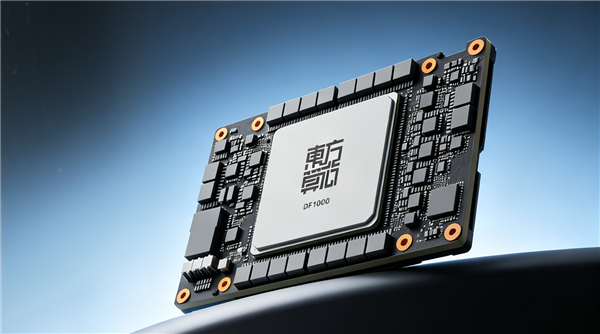
Shanghai-based Dongfang Suanxin Technology officially launched the DF1000 on July 13—the world's first software-defined near-memory-computing 3D AI chip. Fabricated on a domestic 14nm process, the DF1000 delivers 520 TFLOPS of BF16 compute using a near-memory architecture that dramatically reduces data movement energy by performing computations adjacent to memory, breaking through the memory-wall bottleneck of conventional von Neumann architectures.
The DF1000's launch marks a major breakthrough for China in 3D chip stacking and near-memory computing. Built entirely on domestic supply chains without reliance on foreign advanced nodes, the chip demonstrates architectural innovation under process constraints. VP Guo Wei revealed that the next-generation DF2000 is expected in Q4 2026, with DF3000 planned for Q4 2027.
Software-Defined Compute is the DF1000's core philosophy, allowing developers to flexibly configure compute modes for different AI scenarios. This approach gives the chip differentiated competitiveness in China's domestic AI chip landscape, with early deployment expected in inference and edge computing applications.
📰 G7 Yiliu Debuts Wearable AI Hardware 'Paipaido' for Logistics Industry
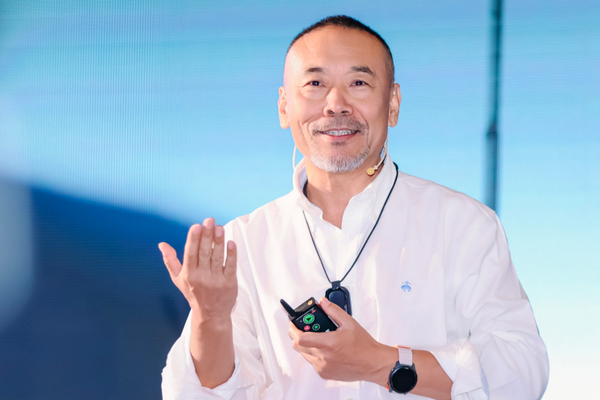
Logistics technology company G7 Yiliu has unveiled Paipaido, the freight industry's first wearable AI hardware device, designed to close the digital blind spot in the "last two meters" of delivery. Using AI vision recognition and voice interaction, the device helps drivers automatically capture delivery evidence photos, detect cargo damage, and use voice to record delivery confirmations—dramatically reducing reliance on paper documents and manual verification.
According to the China Federation of Logistics and Purchasing, the global logistics and supply chain AI market exceeded $34 billion in 2025 and is projected to reach $47.92 billion in 2026, with a compound annual growth rate of 40.8%. In China, AI penetration in logistics supply chains has already surpassed 37%. G7 Yiliu's wearable AI reflects precisely this trend.
Paipaido's design prioritizes frontline driver experience: lightweight, wearable, and hands-free during high-frequency tasks like unloading, counting, and signing. This product philosophy illustrates the broader trend of AI extending from cloud computing power into the physical world—where innovation in deploying AI to real operational scenarios matters just as much as the large-model arms race.
— 36Kr
📰 Canada's Nord Quantique Achieves New Quantum Error Correction Milestone
Sherbrooke, Québec-based quantum computing company Nord Quantique has published new research demonstrating that it has reduced "bookend" errors on a single-mode, grid-state qubit to below 0.1 percent. This means the two critical phases of quantum computation—initializing qubits to the correct starting state and reading out an accurate answer—now perform at a level comparable to hardware from industry leaders like IBM and Google.
CEO Julien Camirand Lemyre explained that every quantum computer must set qubits correctly before calculation and extract accurate results afterward; if errors in either step are too high, the entire computation is meaningless. Nord Quantique's achievement brings its platform into the global top tier on this crucial metric.
Valued at $1.4 billion USD ($1.9 billion CAD) last year, Nord Quantique is one of Canada's most closely watched deep-tech startups. Quantum error correction has long been considered the single largest obstacle to practical quantum computing, and this advance adds a significant technical asset to Canada's position in the global quantum race.

— BetaKit
📰 European Defense AI Firm Helsing Raises $1.8 Billion at $18 Billion Valuation
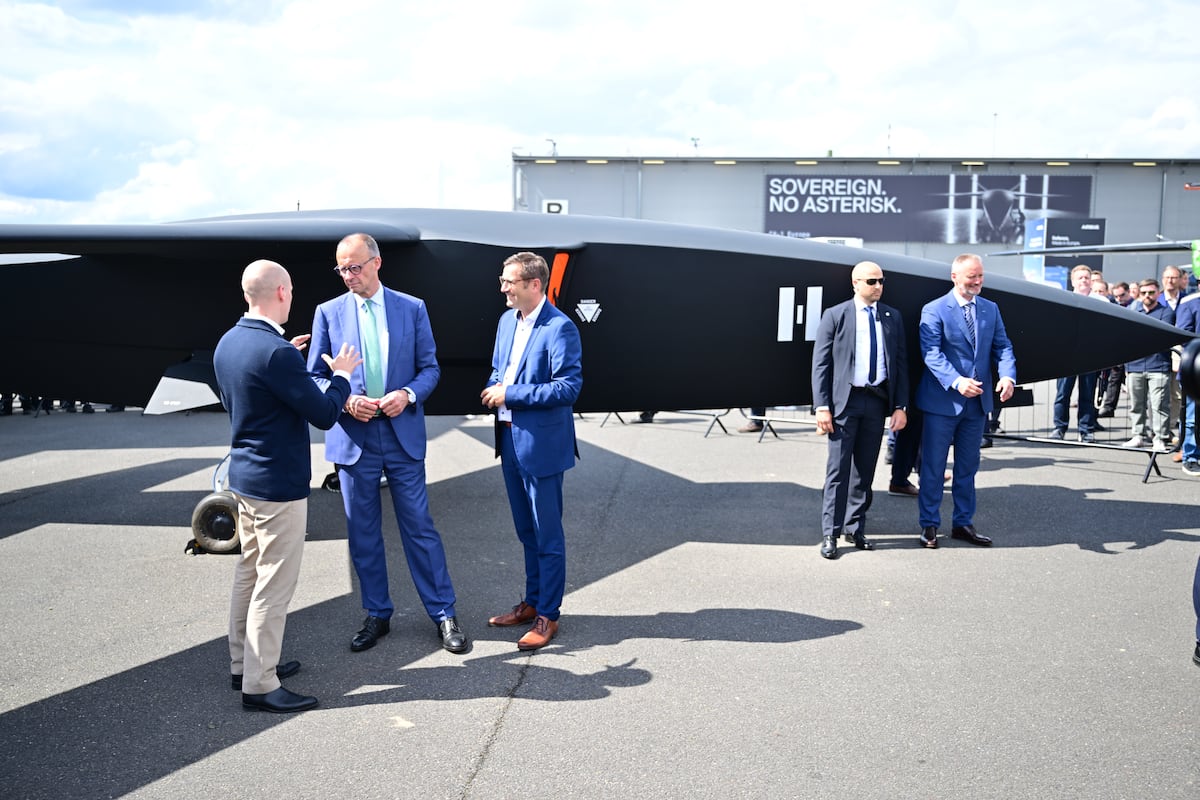
Munich-based Helsing, Europe's leading AI defense startup, has closed a $1.8 billion Series E funding round at an $18 billion valuation—the largest-ever funding round for a European defense-technology company. Investors include Goldman Sachs Alternatives, Dragoneer, Iconiq, Canada Pension Plan Investment Board (CPPIB), and JPMorgan.
Helsing specializes in integrating computer vision, autonomous decision-making, and real-time data fusion for military drone and battlefield intelligence applications. Against the backdrop of the ongoing Russia-Ukraine conflict and surging European defense spending, Helsing's meteoric rise reflects both the deepening penetration of AI into defense and strong capital-market appetite for dual-use AI technologies.
The round makes Helsing the most valuable startup in mainland Europe and underscores the continent's strategic determination to build sovereign AI capabilities. The new capital will accelerate product development and international expansion, particularly across NATO allied nations.
📰 TSMC June Revenue Surges 68%, AI Chip Revenue on Track to Exceed $40 Billion
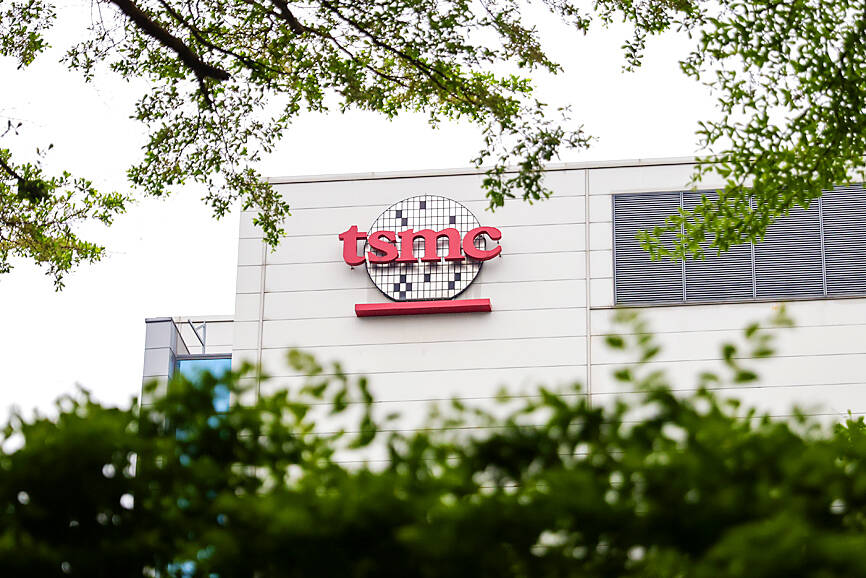
Taiwan Semiconductor Manufacturing Co. (TSMC), the world's largest contract chipmaker, reported a 68% year-over-year surge in June revenue, propelling Q2 to a record high. Analysts estimate that TSMC's AI chip revenue could exceed $40 billion in 2026, accounting for roughly one-quarter of the company's total annual revenue. Key clients include Nvidia, Apple, and AMD.
TSMC's earnings once again confirm the overwhelming demand driving AI infrastructure. Although global semiconductor stocks slumped Monday amid energy price volatility triggered by geopolitical tensions, TSMC's data reinforces that the underlying demand for AI computing power remains undiminished. What investors are questioning is valuation multiples and financing costs, not the sustainability of AI demand.
TSMC's capacity expansion continues to accelerate, with its monopoly position in advanced process nodes (3nm and below) only strengthening. As tech giants escalate AI capital expenditures, TSMC's utilization rates are expected to remain fully loaded through the second half of the year.
📰 SpaceX Stock Slides for Second Straight Day, Nearing $135 IPO Price
SpaceX (SPCX) shares fell another 4.24% on Monday, following Friday's 4.51% decline, reaching a new all-time low and approaching the $135 IPO price. The stock debuted at $150 on June 12 and has since shed roughly 7% from its first trade, erasing early gains despite the company's recent addition to the Nasdaq-100 index—a move that theoretically should have brought passive fund inflows.
The continued slide reflects growing investor scrutiny over whether SpaceX's revenue structure—primarily launch services and Starlink—can justify its trillion-dollar-plus valuation. The BBC reported that some analysts expect the stock could fall further to around $115 per share.
Elon Musk briefly became the world's first trillionaire on IPO day, but the market is now reassessing the aerospace giant's commercial fundamentals. Meanwhile, attention is turning to the impending IPOs of OpenAI and Anthropic—both have confidentially filed prospectuses but have yet to announce timetables. SpaceX's post-IPO performance may offer important lessons for the next wave of AI public offerings.

— BBC News
More News
- Immigration | October 26, 2026 Express Entry's new scoring takes effect November 3: high-wage job offers worth up to 100 points
- Global Express | October 26, 2026 - Serbia's Vucic Concedes Defeat, Ending 14 Years in Power
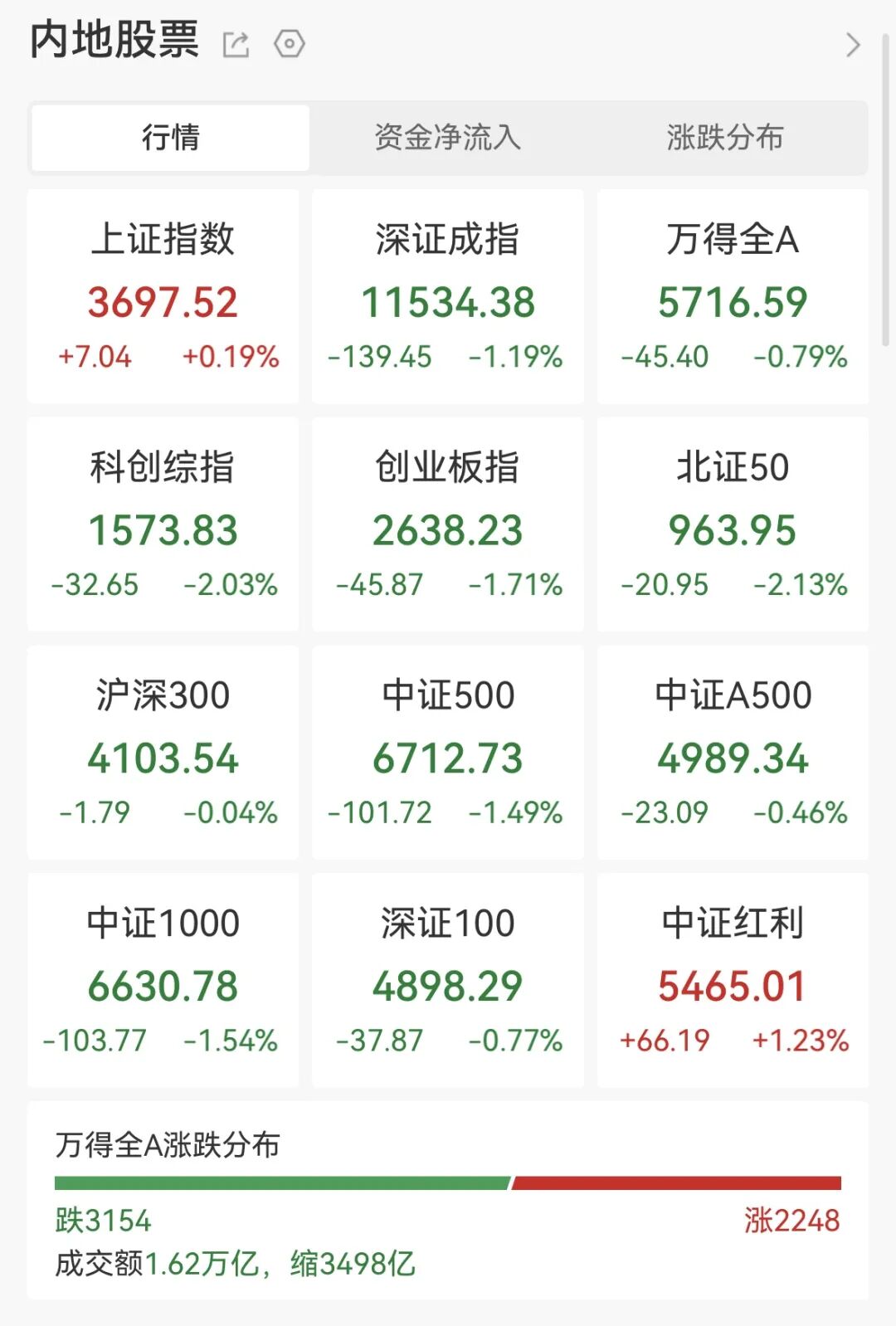
- Finance Morning | October 26, 2026 — Shanghai Edges Up 0.19% as Banks and Oil Lead, Asia Mostly Lower
- Tech Express | October 26, 2026 - Huawei's Kirin Chips Return to Public View as Mate 90 Lights Up Landmarks
- Sports Express | October 26, 2026: Seahawks Hand Chiefs First Loss of Season
Comments (0)
View More
 -28%
-28%Dell 27 Plus QHD Monitor S2725DSM — 27-inch 1440p at 144Hz! $219.99 CAD (28% Off)
 -40%
-40%ASUS Vivobook 16 Laptop — Ryzen AI 7 445 & 16" 16:10 Display, $650 Off! $999 CAD (39% Off)
 -29%
-29%Acer Nitro EDA270U 27" WQHD 1500R Curved Gaming Monitor — 170Hz, 1ms, FreeSync Premium! $179.99 CAD (28% Off)
 -28%
-28%LEGO Creator 3-in-1 Fierce Dinosaur 31379 — One Set, Three Dinosaurs! $18.03 CAD (28% Off)
 Global Express
Global Express | October 26, 2026 - Serbia's Vucic Concedes Defeat, Ending 14 Years in Power
 Finance Morning
Finance Morning | October 26, 2026 — Shanghai Edges Up 0.19% as Banks and Oil Lead, Asia Mostly Lower
-28%Dell 27 Plus QHD Monitor S2725DSM — 27-inch 1440p at 144Hz! $219.99 CAD (28% Off)
Amazon
-40%ASUS Vivobook 16 Laptop — Ryzen AI 7 445 & 16" 16:10 Display, $650 Off! $999 CAD (39% Off)
Best Buy
-29%Acer Nitro EDA270U 27" WQHD 1500R Curved Gaming Monitor — 170Hz, 1ms, FreeSync Premium! $179.99 CAD (28% Off)
Amazon
-28%LEGO Creator 3-in-1 Fierce Dinosaur 31379 — One Set, Three Dinosaurs! $18.03 CAD (28% Off)
Amazon
Global ExpressGlobal Express | October 26, 2026 - Serbia's Vucic Concedes Defeat, Ending 14 Years in Power
Finance Morning