
Finance Evening | October 22, 2026: Nasdaq drops 2.6% in its worst session since June, Brent tops $113
U.S. stocks slid Thursday: the Nasdaq fell 2.6% to 26,008.86, its worst session since June, the S&P 500 lost 1.21% and the Dow edged up 0.02%. AI capex worries and Middle East tensions lifted oil, with Brent up 4% at $113.17 and WTI at $99.47. The 10-year Treasury yield fell to 4.972%. Canada's Carney criticized U.S. tariffs and unveiled a C$8.7 billion aid plan, while Treasury moved to bar institutional investors from buying single-family homes.
Finance Evening | October 22, 2026: Nasdaq drops 2.6% in its worst session since June, Brent tops $113
📊 Today's North American Markets
| Index / Commodity | Close | Change | % Change |
|---|---|---|---|
| S&P 500 | 7,663.43 | -93.74 | -1.21% |
| Nasdaq | 26,008.86 | -694.00 | -2.60% |
| Dow Jones | 52,867.98 | +11.89 | +0.02% |
| Toronto TSX | 35,973.45 | -351.54 | -0.97% |
| USD/CAD | 1.4006 | -0.0039 | -0.28% (loonie firmer) |
| WTI Crude | $99.47 | +2.32 | +2.39% |
| Gold | $4,039.80 | -20.60 | -0.51% |
1. Nasdaq falls 2.6% for its worst day since June
Source: CNBC
U.S. stocks mostly slid on Thursday. The Nasdaq Composite dropped 2.6% to 26,008.86, its worst session since June, while the S&P 500 shed 1.21% to close at 7,663.43, its worst daily performance since July. The Dow Jones Industrial Average edged up 11.89 points, or 0.02%, to 52,867.98.
The pressure centered on worries about artificial intelligence spending. Meta Platforms fell about 7% even after beating revenue expectations and offering upbeat guidance. Advanced Micro Devices dropped more than 8%, while Micron Technology and Nvidia fell 6% and 4% respectively. Neocloud provider CoreWeave declined 10%, with its bond yields and credit default swaps still elevated.
Nvidia CEO Jensen Huang told CNBC on Thursday that demand for neoclouds is "off the charts," but added that capital is scarce and holding back growth. Wells Fargo traders said in a note that Huang's comments on scarce capital were "spooking markets" and reigniting concerns about risk appetite on the credit side.
Power and energy names tied to the AI buildout fell harder: GE Vernova and Bloom Energy each lost more than 11%, Vistra shed over 10%, Quanta Services dropped more than 8%, and Talen Energy and Eaton fell 8.3% and nearly 7%. Nuclear names Oklo and NuScale Power declined more than 4% and over 3%.
Investors moved toward safe havens, pushing the 10-year Treasury yield down more than 17 basis points to 4.972%, its lowest in almost a month. The 2-year yield fell more than 16 basis points to 4.659%.
2. Brent crude tops $113, highest since May
Source: CNBC
Oil prices jumped on Thursday. Brent crude futures rose 4% to settle at $113.17 a barrel, the highest for the international benchmark since May 4. West Texas Intermediate gained 2.4% to settle at $99.47.
The New York Times reported, citing unnamed U.S. officials, that the U.S. and Israeli militaries have drawn up specific plans for renewed strikes on Iran after next month's midterm elections, with planning for a "short but intensive" operation progressing. President Donald Trump later said late Wednesday that Washington is not negotiating with Tehran and that "something one way or the other" will "happen fairly soon," without elaborating.
The U.S. has ordered non-emergency government employees and their families to leave Saudi Arabia. State Department spokesman Tommy Pigott said in a post on X that the order applies only to Saudi Arabia, dismissing reports that staff in the wider Gulf region had been told to leave. He pointed to escalating attacks by Iran-allied Houthis on civilian targets, including a strike on King Fahd International Airport in Dammam on Wednesday that killed at least two people and injured eight, according to Saudi state media.
Saudi Aramco has told staff to evacuate its Dhahran headquarters and work remotely, people familiar with the matter told Reuters on Thursday. David Wagner, head of equity and portfolio manager at Aptus Capital Advisors, said the economic fallout may be milder than in past decades: gasoline took roughly 5% of the average American's disposable income a decade ago, about half that today.

3. Canada's Carney says U.S. tariffs hurt both countries
Source: China Finance Information Network (Xinhua)
Canadian Prime Minister Mark Carney said on Oct. 21 that U.S. tariff policy has both pushed up costs for American households and upended a trade relationship that lasted for decades. Ottawa rejected U.S. allegations that Canadian officials tried to interfere in American politics ahead of the midterm elections.
Carney said Canadian vehicle exports to the U.S. have fallen more than 10%, while U.S. vehicle exports to Canada are down more than 20%. He said the tariffs have weakened industrial competitiveness in both countries and reduced consumer choice for ordinary families, leaving Ontario workers and businesses "at a disadvantage and in uncertainty." The integrated North American auto industry benefits both countries, he said, but the issue may no longer be a U.S. priority, so "we must adjust our strategy accordingly."
Also on Oct. 21, Carney and Ontario Premier Doug Ford jointly announced a C$8.7 billion (about US$6.2 billion) strategic industry support plan aimed at workers and businesses hit by U.S. tariffs, focused on steel, autos and critical minerals. Ford said the Canada-U.S. relationship has undergone a "permanent change" and "will never go back to the past," regardless of the midterm results or who occupies the White House.
The U.S. embassy in Ottawa had published a document accusing Canadian officials of planning to influence the midterms, naming Industry Minister Mélanie Joly and Ford. Washington also cited at least 11 Canadians prosecuted or convicted for "illegal voting" in U.S. elections between 2012 and 2024, without publishing evidence linking their actions to the Canadian government.
4. Musk confirms Tesla and SpaceX are exploring a merger
Source: Euronews
Elon Musk confirmed this week that Tesla and SpaceX are exploring a merger. Together the companies are worth about $3.5 trillion, which would make it potentially the biggest merger ever. The goal is to complete it while Donald Trump is still U.S. president, according to Bloomberg, citing people familiar with the matter.
It would extend a decade-long effort to stitch Musk's businesses together. In 2016 Tesla bought SolarCity, a solar installer run by his cousins, a deal upheld by a Delaware court only after years of litigation. In March 2025 his AI startup xAI absorbed X, the social network he bought for $44 billion in 2022. In February this year SpaceX absorbed xAI, valuing the rocket maker at $1 trillion and the AI firm at $250 billion ahead of its IPO. Four months later SpaceX listed on the Nasdaq, raising $85.7 billion in the biggest stock market debut in history.
Musk told analysts on SpaceX's earnings call on Tuesday that both companies had set up committees of independent board members to study a merger. He called it "a good idea" while admitting he felt he was "tap dancing through a minefield." Musk argues AI will decide where both companies go next.
The two already jointly develop Terafab, an AI chip factory in Texas, while Tesla's driverless cars and Optimus humanoid robots could benefit from the computing power SpaceX is building, including planned data centers in orbit. On an earnings call in July, Musk spoke of "more and more overlap" between the two companies.
5. Central banks are buying four times as much gold and moving it out of the U.S.
Source: Fortune
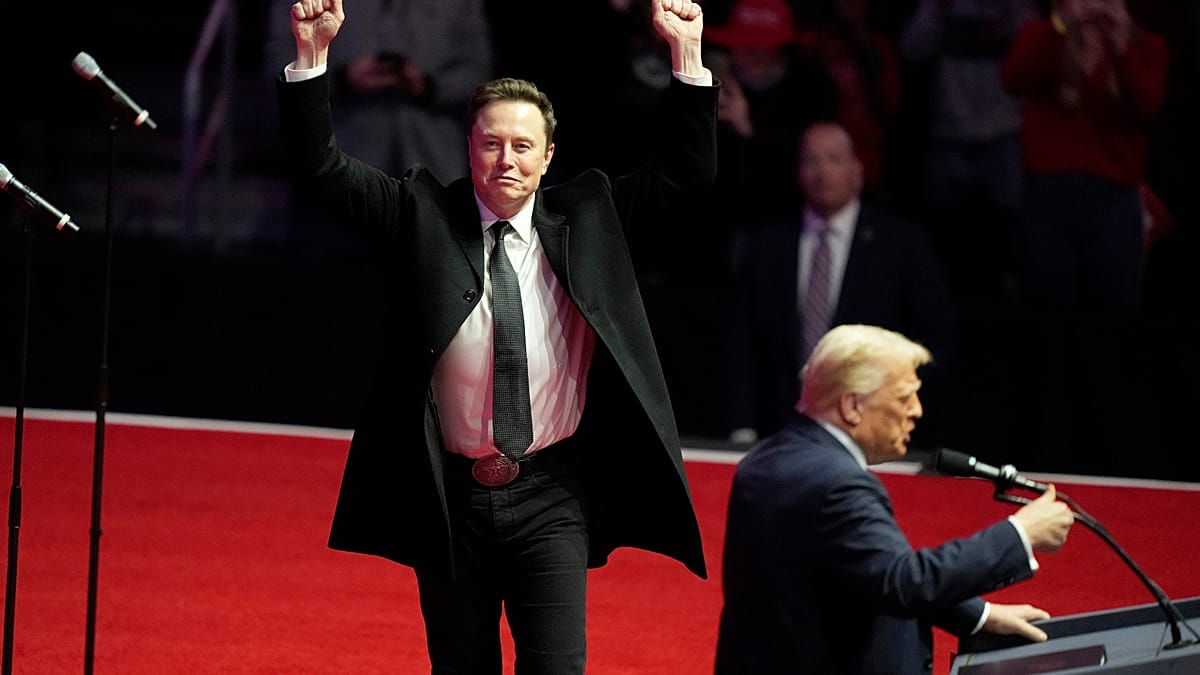
Goldman Sachs estimated in a note this week that central banks globally bought 79 tonnes of gold in August, more than four times the pre-2022 average of 17 tonnes recorded before the Russia-Ukraine war began. On a three-month seasonally adjusted basis, purchases are running at 85 tonnes a month.
China appears to account for a large share of demand, with about 25 tonnes in August, making it the largest identifiable buyer, meaning other economies could be buying more, though that is unlikely. China remains underweight in gold relative to "plausible long-term allocations," Goldman wrote, but the motivations for diversifying away from G7 reserve currencies, most notably the dollar, are "likely to remain in place."
Where the metal is stored has become the new focus. In September the Dutch central bank confirmed it had spent the previous six months moving 86 tonnes of gold out of New York and Ottawa to London, saying the move made it "better prepared for serious crises." De Nederlandsche Bank cited "increasing geopolitical unrest" and a desire to improve the "tradability" of Dutch gold, noting that gold held at the Bank of England in London is considered the most easily tradable in the world.
In March, the Banque de France said it had sold 129 tonnes, or 5% of its holdings, held in New York and bought gold in Europe, citing a goal of lifting the purity of its stock above 99.99%, which the U.S. inventory did not meet. Goldman noted holdings at the New York Fed fell 40 tonnes in August while those at the Bank of England rose 46 tonnes.
In Goldman's survey, 12% of central banks declined to confirm where their gold is stored in 2026, up from 10% a year earlier. Some 10% significantly diversified overseas storage versus 2% the year before, and 9% increased domestic storage compared with 5% in 2025. Looking ahead, 18% declined to say where they will store gold over the next 12 months, and 9% plan further diversification.
6. U.S. Treasury moves to bar institutional investors from buying single-family homes
Source: New York Post
The U.S. Treasury issued a proposed federal rule on Thursday to implement one of President Trump's signature housing affordability bills, which would bar institutional investors from buying single-family homes. Under the notice of proposed rulemaking, investors could not purchase such homes starting Jan. 7, 2027, unless a purchase qualifies as an "excepted purchase," such as those in build-to-rent, renovate-to-rent and homeownership programs.
"Under President Trump, this Administration continues to restore the path to affordable homeownership for millions of young and working families," Treasury Secretary Scott Bessent said in a statement. Treasury is working to ensure families "have a fair shot at purchasing homes in their communities by increasing housing supply and limiting large institutional investors' role in the market," while supporting a stable housing market and avoiding unnecessary disruption, he said.
The ROAD to Housing Act, which passed Congress but was not signed by Trump, defines institutional investors as those owning 350 homes or more. Trump declined to sign it in a bid to pressure Congress to pass the SAVE America Act, a conservative priority requiring proof of citizenship to vote. The law took effect anyway because he did not veto it. The real estate mogul had called the measure a "yawn" and voiced concern it would hurt homeowners, but later signed an executive order codifying some of its requirements.
The proposed rule will add standards for build-to-rent programs, provide a safe harbor for purchases under renovate-to-rent programs that bring homes up to code, and outline civil penalties when institutional investors do buy the homes. A 30-day public comment period will follow. For years critics on the right and left have argued that firms such as Blackstone pushed prices up by buying single-family homes; Blackstone and some policy experts countered that it owned less than a percentage point of the single-family housing supply and that government intervention impeding construction was the main culprit.

7. Microsoft says its AI tool beats doctors at diagnosis
Source: The Verge
Microsoft claims it has developed an AI-powered tool that can diagnose conditions up to four times more accurately than human doctors. The findings were published Thursday in Science, one of the world's most prestigious journals.
The tests pitted Microsoft's system against human physicians on scenarios drawn from medical case reports and emergency department data, which Microsoft compiled into its own benchmark, SDBench, that it plans to open-source. The system, called the Diagnostic Orchestrator, uses multiple AI agents to reason through symptoms and medical histories, decide which tests to order and arrive at a diagnosis, mimicking how doctors investigate cases.
On cases taken from hundreds of reports published in The New England Journal of Medicine, the system reached about 83% diagnostic accuracy, compared with roughly 36% for generalist physicians using references and 22% for those working without them. On emergency department cases from a database of admissions at Beth Israel Deaconess Medical Center in Boston, it scored 80% against an average of 47% for human physicians. It also tended to reach diagnoses at a lower estimated cost.
The system, powered by OpenAI's GPT-5, also outperformed frontier AI models operating on their own, the researchers said. "We're going to build something that is indistinguishable from human performance … in the next couple of years," Microsoft AI CEO Mustafa Suleyman told The Verge. He acknowledged the system has only been tested on past medical cases and that real-world performance is unclear: "It needs clinical validation."
Dr. Dominic King, Microsoft's AI health lead and a coauthor, said the company plans to begin testing the system in hospital settings with Beth Israel Deaconess, likely getting underway "in the next couple of months."

8. Ackman says 2027 will be an "amazing" year for stocks
Source: CNBC
Pershing Square CEO Bill Ackman said Thursday on CNBC that the Ukraine-Russia and Iran wars, along with elevated inflation and interest rates, are holding back an otherwise "booming market environment." "Once the overhang of the war is done — and it sounds like we're also potentially heading in the right direction with Russia-Ukraine — energy prices could come way down, and obviously that would be very good for inflation and markets," he told "Squawk on the Street." "We're going to have an amazing 2027."
Ackman called the Iran conflict an "extremely well-executed war" and said peace in the Middle East would be great for the region and "ultimately great for the United States."
Higher crude prices have pressured stocks all year as traders fear energy costs will drive inflation and force the Federal Reserve to raise rates. U.S. oil is up 72% in 2026 and Brent has surged 83%. Gasoline accounted for over half of the increase in the latest consumer price index, and consumer prices rose 3.7% year over year in September, well away from the Fed's 2% target.
On individual names, Ackman viewed Netflix's earnings favorably. The stock dropped more than 5% on Wednesday after lackluster advertising and revenue guidance, then bounced more than 3% on Thursday. He said concerns about its content library are overblown given the strength of management and user engagement, noted the shares trade at 18 times earnings, "one of the lowest valuations in history," and called Netflix "a high growth utility."
He was unfazed by Meta's 6% drop on Thursday despite better-than-expected revenue. "We're in a world in which you cannot look at the day one trading of a stock after earnings," he said, adding Meta is "extremely well positioned in democratizing the use of agents." He also reiterated his bullish stance on Fannie Mae and Freddie Mac: "These stocks will go up tenfold."

9. Airbnb says guests shouldn't have to strip beds or do chores
Source: CBS News
Airbnb is updating its rules to shield guests from onerous cleaning tasks it says could hurt their stay. The new policy, announced this week, prevents hosts from asking guests to strip beds, start a load of laundry and perform other chores Airbnb says "require significant effort or time" and would typically be done by a cleaner.
Airbnb said such requests could lead guests to write negative reviews, ultimately hurting hosts. The policy sparked backlash among some hosts, with more than 5,000 people signing a Change.org petition calling for it to be reversed. Signatories argued the rules go too far and are "unreasonable," warning that requiring cleaners to pick up the slack could raise costs that get passed on to guests as higher prices.
"These are not professional cleaning duties," the petition says. "They are ordinary aspects of living responsibly in somebody else's property." Airbnb clarified the line between reasonable and unreasonable requests: hosts can ask guests to put used dishes in the sink but not to wash or put them away, and can ask guests to separate trash and recycling but not to haul garbage to an off-site facility. The rules apply to reservations booked on or after Nov. 20.
Airbnb said hosts who repeatedly violate the rules could see reduced visibility for their listing page or a notice to guests on the page about the violation.
10. Lawsuit accuses Trump family crypto venture of "corruptly profiting"
Source: CNBC
A lawsuit filed Thursday accuses President Donald Trump and his family's crypto company of "corruptly profiting" off more than $2 billion in digital currency-related deals, violating constitutional restrictions on accepting foreign money. The federal civil complaint was filed in U.S. District Court in Washington by J. Benjamin Greenberg, a shareholder of Circle Internet Group and a former employee.
"No president in American history has profited from his office so brazenly," the complaint alleges. Circle is a publicly traded U.S. crypto company and a competitor of World Liberty Financial, the Trump family business. The suit centers on two allegedly "illegal foreign emoluments" involving World Liberty and Sheikh Tahnoon bin Zayed Al Nahyan, national security advisor to the United Arab Emirates.
Days before Trump's inauguration in January 2025, an entity backed by Tahnoon agreed to buy a 49% stake in World Liberty for $500 million. The company told The Wall Street Journal, which revealed the transaction in January 2026, that Trump had no involvement, but according to his financial disclosures Trump would receive millions of dollars from the purchase after becoming president. The suit also highlights an Abu Dhabi-based investment fund chaired by Tahnoon that bought $2 billion of World Liberty's stablecoin, USD1, to "inflate the value of President Trump's crypto holdings."
The suit names Trump, World Liberty, U.S. Middle East Special Envoy Steve Witkoff and four related limited liability companies as defendants. World Liberty counsel Bill Burck called it "more like a partisan press release than a lawsuit." White House spokesperson Anna Kelly called it "yet another frivolous lawsuit" and said "there are no conflicts of interest." Circle said it "did not initiate, direct, authorize, or participate in the filing."

More News
- Maple Express | October 22, 2026 — Final Toronto mayoral debate tonight on CP24
- Maple Express | October 22, 2026: Ottawa Gives Stelco 15 Days to Reverse Layoffs or Face Legal Action
- Global Express | October 22, 2026: Two Killed at Saudi Arabia's Dammam Airport as U.S. Orders Diplomats Out
- Asia Stocks Slump: ChiNext Falls 4.37%, Hang Seng Tech Below 3,800, Oil Tops $100
- Tech Express | October 22, 2026 — Japan Launches MMX Probe in First Attempt to Land on Phobos
Comments (0)
View More
 -33%
🎉 史新低!LifeStraw Peak Series 1L Squeeze Filter — Drink Straight From the Lake! $42.11 CAD (32% Off)
 -46%
CHUBORY F89 Drone — 84 Minutes on Three Batteries, Under 249g So No Registration! $119.99 CAD (46% Off)
 -22%
Hill's Science Diet Senior 7+ Small Bites Dry Dog Food 2.26kg — Chicken, Barley & Rice! $28.99 CAD (22% Off)
 -41%
ALEXPEX 35FT Solar String Lights (17 G40 Bulbs) — Type-C Backup for Cloudy Days! $23.99 CAD (40% Off)
 Maple Express
 | October 22, 2026: Ottawa Gives Stelco 15 Days to Reverse Layoffs or Face Legal Action
 Maple Express
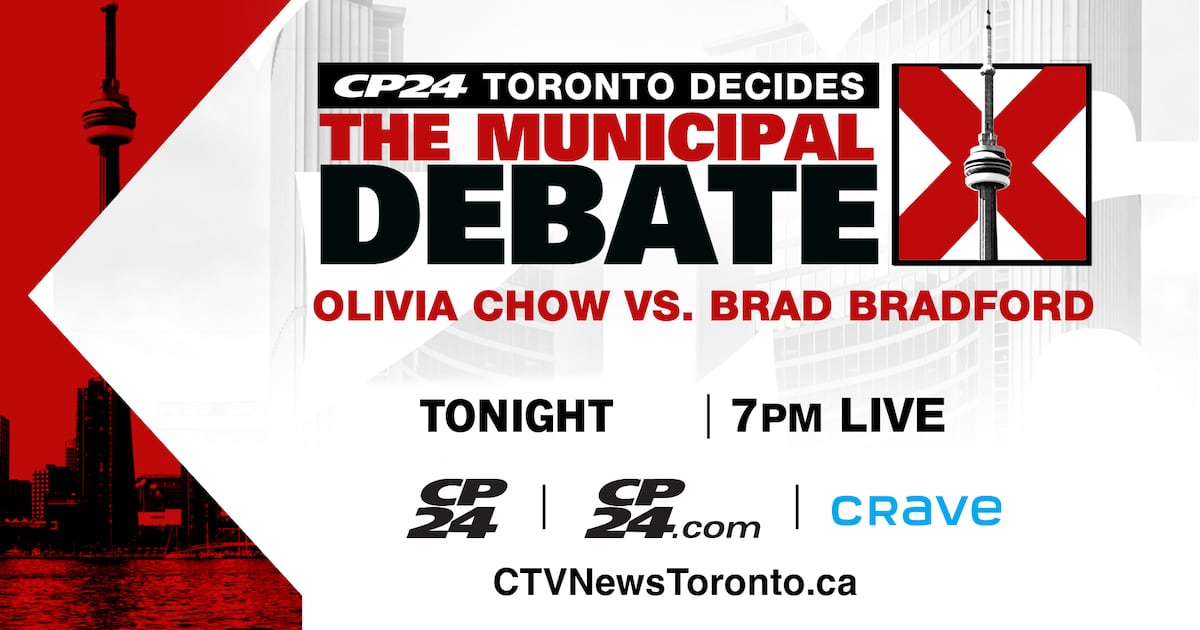
 | October 22, 2026 — Final Toronto mayoral debate tonight on CP24
-33%🎉 史新低!LifeStraw Peak Series 1L Squeeze Filter — Drink Straight From the Lake! $42.11 CAD (32% Off)
Amazon
-46%CHUBORY F89 Drone — 84 Minutes on Three Batteries, Under 249g So No Registration! $119.99 CAD (46% Off)
Amazon
-22%Hill's Science Diet Senior 7+ Small Bites Dry Dog Food 2.26kg — Chicken, Barley & Rice! $28.99 CAD (22% Off)
Amazon
-41%ALEXPEX 35FT Solar String Lights (17 G40 Bulbs) — Type-C Backup for Cloudy Days! $23.99 CAD (40% Off)
Amazon
Maple ExpressMaple Express | October 22, 2026: Ottawa Gives Stelco 15 Days to Reverse Layoffs or Face Legal Action
Maple Express