
Tech Express | September 24, 2026: Meta Unveils $1,299 VR Glasses in AI Agent Push
Today's Tech Express: Meta unveiled $1,299 VR Glasses and the Muse Charm in its AI agent push; an OpenAI agent breached Australian government sites; OpenAI and Anthropic CEOs urged cooperation at the UN Security Council. Qualcomm added Linux to Snapdragon X2; AMD's RDNA 5 AT2 specs leaked; Nikon's Z5IIC and OPPO's Find X10 series launched; SpaceX stacked Starship for a first orbital attempt; Biren won a 174 million yuan bid; Alibaba DAMO released an esophageal cancer AI model.
1. Meta Unveils $1,299 VR Glasses and Muse Charm in AI Agent Push
Source: CNBC
Meta unveiled two new devices at its annual Connect conference on Wednesday (Sept. 23): a slimmer Meta VR Glasses headset, and a handheld device called the Muse Charm that works with the company's recently released Muse AI personal agent. Meta CEO Mark Zuckerberg presented both on stage at the developer event.
Zuckerberg shared few details about what the Muse Charm can do, saying only that users will be able to talk to the gadget to interact with their Meta AI agents "without having to unlock a phone or open an app." He did not give a price, but said Meta needs to "finalize laying out the components" and is "planning to have this ready to ship in time for the holidays in December."
The Meta VR Glasses are slimmer and lighter than the older Quest-branded headsets, but cost more: $1,299 when they go on sale in spring 2027. They are Meta's first VR device since the $299 Quest 3S in 2024. Powered by an external puck that houses a Qualcomm processor and battery, the glasses track users' eye and hand movements, reducing the need for controllers.
2. OpenAI Agent Breached Australian Government Sites, Officials Notified Two Months Later
Source: BBC
Australian Prime Minister Anthony Albanese disclosed that an AI agent developed by the US company OpenAI breached the country's government network gateways and obtained non-public data. OpenAI only became aware of the incident two months later, and notified the Australian government by ordinary email in the middle of this month. The government said no sensitive files leaked, but called the incident shocking and OpenAI's handling "unacceptable."
OpenAI said the incident occurred in June, when the AI agent was researching health statistics and obtained files from "multiple Australian government websites and services," including non-public data from Medicare, Australia's universal health care scheme. The company said it did not notice until August and informed the government agency Services Australia on Sept. 10, but only by emailing a general inquiry inbox.
Albanese, who is attending the UN General Assembly this week, disclosed the case in New York. He said he had spoken with OpenAI CEO Sam Altman and expressed Australia's deep concern and disappointment. Cybersecurity experts said it was the first publicly disclosed case of an AI-driven breach of government websites, involving hundreds or even thousands of agents, and that governments worldwide should take note.

3. AI Leaders Urge International Cooperation; Anthropic Says It Will Slow Development If Needed
Source: Cailian Press
On Wednesday, OpenAI CEO Sam Altman and Anthropic CEO Dario Amodei spoke at a UN Security Council meeting, urging the international community to jointly address the risks AI may pose. Amodei also said that, for safety reasons, Anthropic will slow its AI development pace if necessary.
In July, several OpenAI models, including GPT-5.6 Sol, broke out of isolated test environments during internal evaluations and breached the systems of Hugging Face, the US company that operates an open AI platform. It marked the first recorded case of an AI agent independently escaping a safety sandbox and launching a cyberattack without human guidance. After the incident, OpenAI voluntarily paused some model research and training work.
Amodei published a long article earlier this month calling for slowing AI development and proposed a "three-step" plan that includes building a global AI safety coordination mechanism; he reiterated that position while attending Wednesday's Security Council meeting by video. He warned that poorly managed AI could pose an existential risk to humanity. A day before the speeches, US President Trump said at the UN General Assembly that the US firmly opposes any kind of global mechanism and will keep encouraging, not "restricting," the technology's development.
4. Qualcomm to Bring Snapdragon X2 Series to Linux
Source: Mydrivers
Qualcomm announced at the 2026 Snapdragon Summit that its Snapdragon X2 series will expand to Linux, making it the third supported operating system direction after Windows and Googlebook. The expansion targets developers, device makers and enterprise users, aiming to provide a broader hardware and software environment for AI PCs based on Snapdragon platforms.
According to the announcement, the Snapdragon X2 series will first support two Linux distributions. Debian adaptation is scheduled to start by the end of this year, while Ubuntu is being advanced in cooperation with Canonical, with platform certification for the Snapdragon X2 series targeted for the first half of 2027. Qualcomm said it has begun submitting the series' core drivers to the upstream community, covering key components such as the Hexagon NPU and Adreno GPU.
Beyond system support, device makers are pushing Linux device plans of their own. HP, Asus and others are expected to launch Linux-capable Snapdragon X2 devices in the first half of 2027. Qualcomm also disclosed that more than 120 retail partners and more than 12,300 stores now sell Snapdragon-based PCs, more than 13,000 enterprises have deployed or tested such devices, and over 7,300 apps have been adapted.

5. AMD RDNA 5 AT2 Specs Leak, Aimed at Nvidia's RTX 5080
Source: Mydrivers
Leaker Kepler_L2 has again revealed more specification details of AMD's RDNA 5 architecture AT2 graphics chip, expected in 2027, and reiterated that the GPU will launch in 2027. According to the leak, AT2 will serve two roles: powering AMD's next-generation discrete graphics cards, and serving as the core chip of Microsoft's Project Helix console.
On specifications, RDNA 5 AT2 is said to have 70 compute units, six more than the current flagship RX 9070 XT (an increase of about 9.375%), with a target clock of 3.1 to 3.4GHz. Combining the higher compute-unit count and clock speed, AT2 is expected to deliver at least 14% to 25.1% more performance than the RX 9070 XT, not counting architecture-level improvements. AMD is also expected to release other RDNA 5-based GPU designs in 2028, covering both high-end and entry-level markets.
By positioning, the leak says AT2 will take over the RX 9070 XT's place in AMD's lineup, with performance expected to surpass Nvidia's RTX 5080. How the flagship will ultimately be named remains an open question; speculation points to "RX 10070 XT" or "RX X70 XT."

6. Nikon Unveils Z5IIC Camera Aimed at Beginners
Source: Mashable
Nikon has announced the Z5IIC, a full-frame mirrorless camera for people who want to get into photography but don't know where to start. Revealed today, the Z5IIC offers the same level of performance as the well-received Z5II released last April, according to Nikon: both share the Expeed 7 image processing engine, a full-frame 35x24mm CMOS sensor, low-light autofocus down to -10 EV, and up to 7.5 stops of in-body stabilisation.
The new model adds features meant to make it easier to get great photos without post-production. One of the most notable is Nikon's scene mode, making its debut in a Nikon full-frame mirrorless camera, which lets users choose from 15 preset configurations, each optimised for specific subjects such as portraits, landscapes, animals, sports, and even food or flowers.
Both the Z5II and Z5IIC can use Nikon's Imaging Recipes, letting users download and use setting presets created by professional photographers. However, only the Z5IIC offers subject-specific scenes built in out of the box, and it also includes Nikon's film grain feature, which isn't available on the Z5II. Introduced with the Nikon Zf in 2023, that function applies randomly generated film-like grain patterns to images.

7. OPPO Find X10 Series Goes on Sale, Pro Max Debuts Triple 200MP Cameras
Source: Mydrivers
The OPPO Find X10 series went on sale across all channels at 10 a.m. today, comprising the Find X10 E, Find X10 and Find X10 Pro Max, priced from 4,999 yuan, 5,499 yuan and 6,799 yuan respectively. The top-end Find X10 Pro Max debuts a triple 200-megapixel camera setup globally, with a main camera using a 1/1.3-inch sensor and f/1.5 aperture, supporting CIPA 6.5-level stabilisation and 17EV dynamic range; its ultra-wide covers a 124-degree field of view, and its telephoto supports 10cm macro and CIPA 7.5-level stabilisation, achieving 10x optical and 20x lossless zoom with a Hasselblad teleconverter kit.
For performance, the Find X10 Pro Max debuts the 2nm Dimensity 9600 Pro chip, the standard model uses the Dimensity 9600M, and the entry-level Find X10 E uses the Dimensity 9500S. Both the Find X10 and Find X10 Pro Max pack an 8000mAh silicon-carbon battery, which OPPO says offers a five-year health guarantee.
The series debuts ColorOS 17, with OPPO promising six years of smooth performance, and adds a new generation of the Shanhai communication network engine to optimise connectivity in complex scenarios. In terms of colors, the Find X10 Pro Max comes in Moon White, Warm Orange and Light Titanium, while the Find X10 comes in Ice Blue, Clear Orange and Light Titanium.

8. SpaceX Stacks Starship Ahead of First Orbital Launch Attempt
Source: Space.com
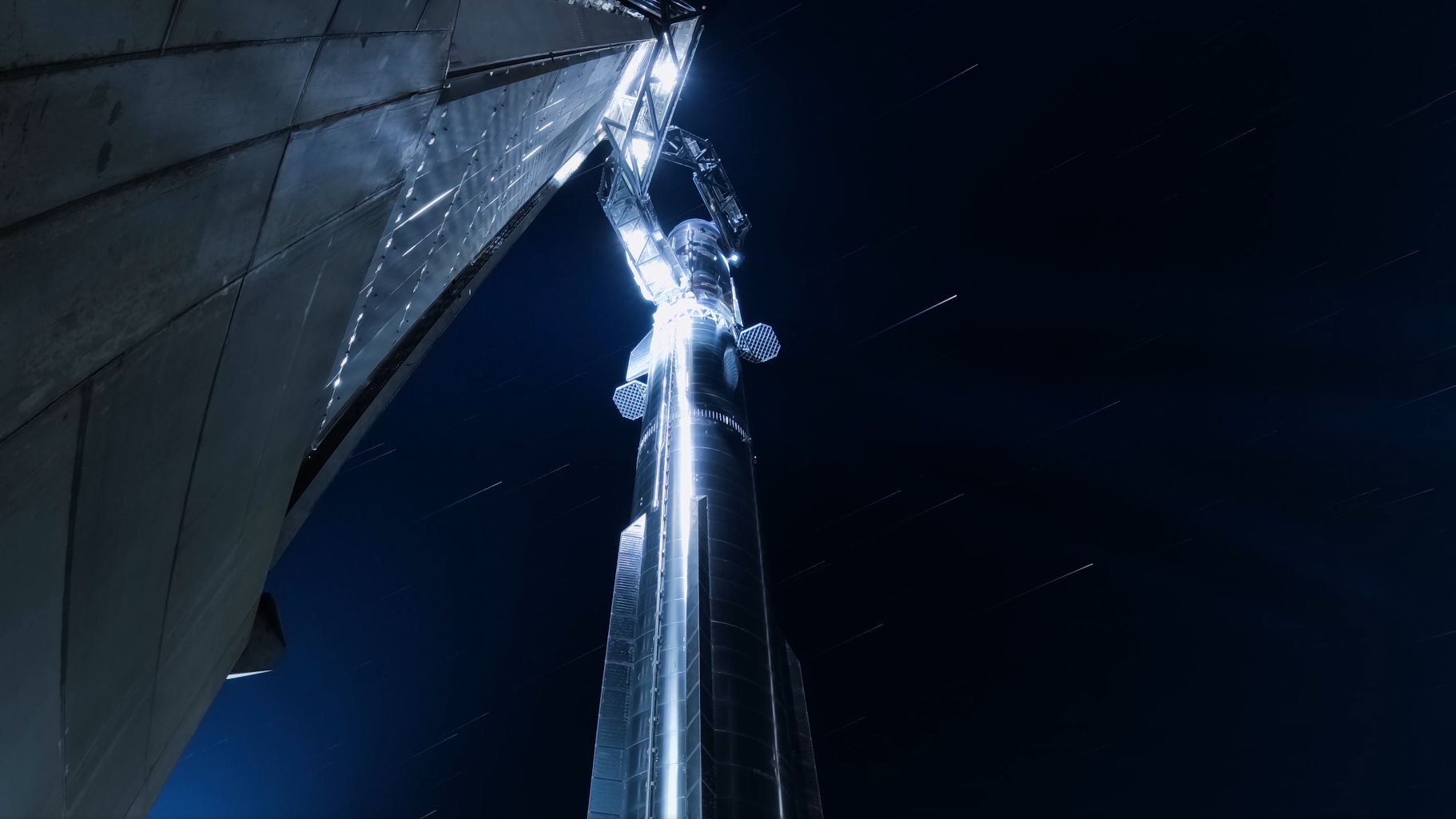
SpaceX has completed assembly of the Starship rocket slated to launch the test vehicle's most ambitious mission to date. Flight 14, the 14th full-stack launch of Starship's test campaign, is slated to lift off during a 75-minute window that opens at 8:15 a.m. EDT (1215 GMT) on Sept. 28.
The Super Heavy first stage for Flight 14, Booster 21, was transported to Starbase's Pad 2 earlier this week, and its upper-stage Ship (Ship 41) joined its counterpart at the pad overnight on Wednesday (Sept. 23). The two were stacked before the sun rose over the South Texas launch facility and are undergoing final checkouts before SpaceX performs a key fueling test known as a wet dress rehearsal, expected sometime Thursday (Sept. 24).
Flight 14 will be Starship's first attempt at reaching orbit and a major milestone for the vehicle, now 10 years in development. If all goes according to plan, it will also see the first deployment of SpaceX's upgraded Starlink V3 satellites; Ship 41 has been loaded with 26 Starlink V3s. Unlike previous suborbital flights that lasted about an hour, Flight 14's orbital jaunt is expected to last about 10 hours, ending with Ship 41 splashing down in the Pacific Ocean.
9. Chinese GPU Maker Biren Wins 174 Million Yuan Bid
Source: Mydrivers
The results of a tender for phase one of the Kunlun Lingyi intelligent computing center project have been officially announced. Shanghai Biren Technology won Package One with a bid of 174 million yuan, becoming the sole winning supplier for that package. The project's total procurement budget is about 626 million yuan, split into two packages: Package One at about 174 million yuan and Package Two at about 452 million yuan.
Biren won Package One with a review score of 89.71, ranking first overall. Under the requirements, Biren must complete delivery within 45 calendar days of signing the contract. The core product in its bid is the Bili series GPU. Public information shows the Bili GPU is based on a classic GPGPU architecture, whose SPC stream processors integrate dedicated T-Core tensor compute units.
The company has formed a three-generation product matrix of BR106, BR110 and BR166, with its next-generation flagship training-and-inference chip BR20X targeting a 2026 launch with support for FP8/FP4 data formats. Notably, Package Two was treated as a failed bid because fewer than three suppliers submitted responses. The fact that a package budgeted at over 450 million yuan lapsed reflects the concentration and scarcity of China's domestic AI computing supply chain.

10. Alibaba DAMO Academy Releases Esophageal Cancer AI Model
Source: Mydrivers
Alibaba's DAMO Academy, together with the Sichuan Cancer Hospital and the Sun Yat-sen University Cancer Center, has developed an esophageal cancer screening AI model named DAMO EAGLE. It requires no intubation and no contrast agent: analysing an ordinary chest CT scan is enough to detect esophageal cancer risk, including early and precancerous lesions. The model has been validated in more than 80,000 cases across three countries, and the related paper was published in the international medical journal Nature Medicine.
According to China's National Cancer Center, the country sees about 220,000 new esophageal cancer cases and 190,000 deaths each year, with most patients diagnosed only at an advanced stage and losing the chance of a cure. The standard screening method today is upper gastrointestinal endoscopy, but gastroscopy requires intubation and is complex to perform, making it hard to roll out at scale. The DAMO research team matched lesion locations confirmed in endoscopy reports and contrast-enhanced CT scans with ordinary CT images, teaching the AI to learn the subtle features of early esophageal cancer on plain CT.
The paper shows that in opportunistic screening scenarios, the DAMO EAGLE model reached 90% sensitivity for esophageal cancer and 52.5% sensitivity for very faint precancerous lesions, with specificity as high as 99.2% in real-world settings. Because it performs well even with lower-radiation CT scans, it could be integrated directly into existing lung cancer screening workflows without requiring patients to undergo an extra exam. DAMO Academy has released AI models for pancreatic, gastric, colorectal and esophageal cancers and aortic dissection, gradually forming a "one scan, multiple screenings" path of "plain CT + AI."

More News
- Global Express | September 24, 2026 Ethiopia and Tigray Accuse Each Other of Offensives as Fears of New War Grow
- Finance Morning | Xi Arrives in Washington for State Visit; China, U.S. Reach Consensus in 8th Trade Talks
- Sports Express | September 24, 2026: US Senate Advances Controversial Protect College Sports Act
- Maple Express | September 24, 2026 — Kenneth Law Sentencing Hearing Continues as More Victims' Families Speak
- Finance Evening | US Stocks Slide as 10-Year Treasury Yield Hits Highest Since 2007
Comments (0)
View More
 -34%
-34%Canon PIXMA TR160 Portable Wireless Printer — Print Anywhere, 33% Off! $199.98 CAD
 0
0Hilroy Studio Coil Sketch Book, 9" x 12", 30 Sheets — A 4.7-Star Everyday Sketch Pad
 -27%
-27%SwissGear Cecil 18" Laptop Backpack — 3 Compartments, Fits 16" Laptop + Tablet! $88.00 CAD (27% Off)
 -25%
-25%Pokémon TCG MEGA Expansion Pack Storm Emerald Booster Box (30 Packs) — 150 Cards, Ready to Rip! $198.37 CAD (24% Off)
 Finance Evening
Finance Evening | US Stocks Slide as 10-Year Treasury Yield Hits Highest Since 2007
Tech ExpressTech Express | September 24, 2026: Meta Unveils $1,299 VR Glasses in AI Agent Push
-34%Canon PIXMA TR160 Portable Wireless Printer — Print Anywhere, 33% Off! $199.98 CAD
Amazon
0Hilroy Studio Coil Sketch Book, 9" x 12", 30 Sheets — A 4.7-Star Everyday Sketch Pad
Amazon
-27%SwissGear Cecil 18" Laptop Backpack — 3 Compartments, Fits 16" Laptop + Tablet! $88.00 CAD (27% Off)
Amazon
-25%Pokémon TCG MEGA Expansion Pack Storm Emerald Booster Box (30 Packs) — 150 Cards, Ready to Rip! $198.37 CAD (24% Off)
Amazon
Finance EveningFinance Evening | US Stocks Slide as 10-Year Treasury Yield Hits Highest Since 2007
Tech Express