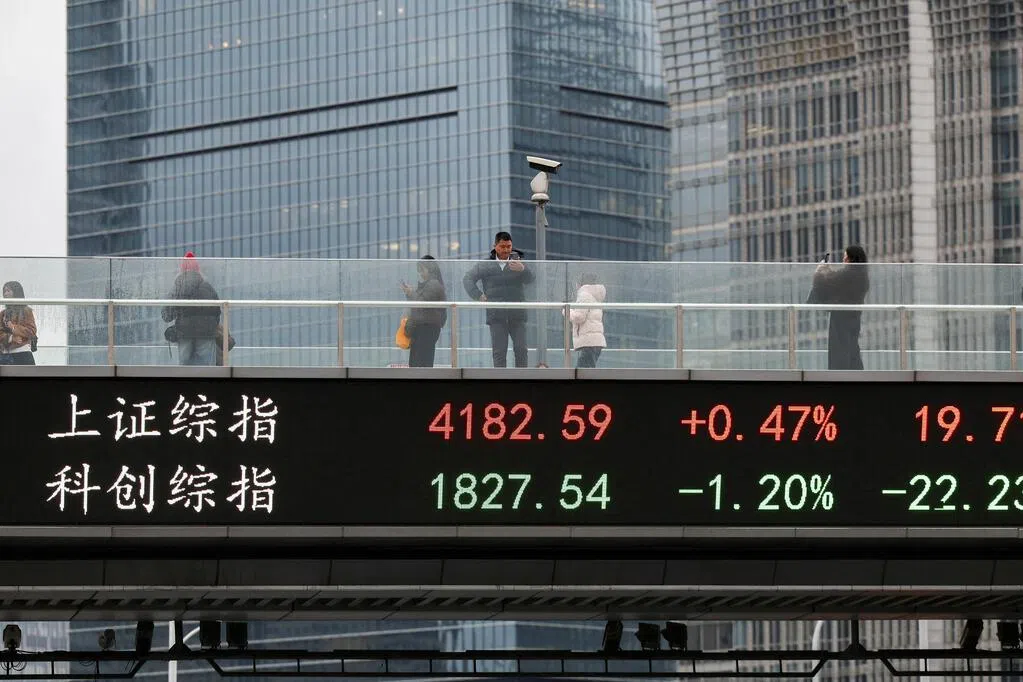
Finance Morning | Regulators Meet Brokers, Funds and Major Banks; Shanghai Composite Rises 1.08%
On Nov 2, China's central bank, financial regulator and securities regulator met brokerages, fund firms and major banks on capital-market support tools and the buyback relending policy. The Shanghai Composite rose 1.08% and ChiNext 1.87%. Hong Kong's Hang Seng added 0.42% and Hang Seng Tech 2.25%. The Nikkei fell 0.33% as Kioxia slid 15.77% on results; Korea's KOSPI rose 2.24% as October exports nearly doubled; Taiwan's TAIEX lost 291.69 points. New York crude slipped below $100.
Sources: Lianhe Zaobao, 21st Century Business Herald, Xinhua Finance, Sing Tao, Kyodo News, The Star (Reuters), Economic Daily News (Taiwan), 10jqka, IFeng
📊 Asia Market Close
| Index | Close | Change | Change % |
|---|---|---|---|
| Shanghai Composite | 3638.03 | +39.01 | +1.08% |
| Shenzhen Component | 11010.68 | +176.89 | +1.63% |
| ChiNext | 2458.70 | +45.07 | +1.87% |
| Hang Seng | 23393.32 | +98.90 | +0.42% |
| Nikkei 225 | 63081.86 | -208.25 | -0.33% |
| KOSPI | 5859.08 | +128.34 | +2.24% |
| TAIEX | 44920.14 | -291.69 | -0.65% |
1. Three regulators call in brokers, funds and major banks
Source: Lianhe Zaobao
Reuters reported that China's central bank, the National Financial Regulatory Administration and the securities regulator summoned some securities firms and fund companies for a meeting on Monday (Nov 2) to study ways to promote the use of tools supporting the capital market. On the same day, the three bodies were also due to meet major banks to study optimising the relending policy for share buybacks and stake purchases.
The news lifted sentiment. The CSI 300 rose about 0.5% in early trade and the Shanghai Composite gained 0.3%, after the blue-chip index had tumbled 8.5% in October — its biggest monthly drop in more than a decade — as a tech selloff hit sentiment. By the close, the Shanghai Composite was up 1.08% at 3638.03 points.
Risks have not disappeared. Shares linked to Huafa Group, Zhuhai's largest state-owned property developer whose businesses span real estate and investment, kept falling, and its bond funds remained under selling pressure. Reports last week said Huafa failed to repay two maturing trust products on time and is seeking to extend repayment deadlines on some bank loans. Exchange-traded bond funds also stayed under pressure after signs of large-scale redemptions on Oct 30.
2. State bank to add 100 billion yuan each for Guoxin, Chengtong buyback loans
Source: 21st Century Business Herald
A large state-owned bank plans to add 100 billion yuan-scale special loan quotas for share buybacks and stake purchases to China Guoxin and China Chengtong, with each new quota potentially reaching 100 billion yuan, 21st Century Business Herald reported, citing market information. The scale could exceed the first quotas the bank extended to the two entities when the policy tool was set up in 2024.
The backdrop is the A-share retreat from a mid-May peak. The Shanghai Composite has fallen as much as 15% from its mid-May high of 4258 points, breaking below the 3600-point mark and touching a low of 3574 points, while the ChiNext and STAR 50 have dropped nearly 50% at their worst. As of Oct 30, the average price-earnings ratio was 15.81 times in Shanghai (13.38 times on the main board) and 24.70 times in Shenzhen (20.99 times on the main board), with ChiNext at 34.58 times.
The two state capital operating platforms have stepped in at low points before: on April 8, 2025, China Chengtong used 100 billion yuan of special buyback and stake-purchase loans to add shares, and on July 19, 2026, Guoxin and Chengtong together invested about 60 billion yuan in Chinese equities. The report said the two platforms added again on Nov 1, at a larger scale.
3. Listed banks' Q3 reports: net interest margin stabilises at a low level
Source: Xinhua Finance
The 42 A-share listed banks reported combined revenue of 4.66 trillion yuan for the first nine months, up 7.81% year on year, and net profit attributable to shareholders of 1.75 trillion yuan, up 3.78%, according to Xinhua Finance statistics. Both growth rates improved from the first half.
Net interest margin was the keyword in these results. Net interest income rose 8.3% year on year, with the margin broadly flat; the industry's cumulative annualised net interest margin stood at 1.38%, a level largely maintained since the third quarter of 2025. Both asset yields and funding costs fell 2 basis points from the previous quarter, with the declines narrowing. Du Chunye, vice president of Postal Savings Bank of China, said the industry's margin has stabilised and is recovering, mainly thanks to lower funding costs.
Balance sheet expansion slowed slightly but stayed steady. At the end of the third quarter, the 42 banks held total assets of 351.16 trillion yuan, up more than 5.5% from the start of the year; total assets grew 7.6% year on year in the first nine months, with large state banks up 8.3%, joint-stock banks up 5.2%, city commercial banks up 8.0% and rural commercial banks up 6.8%.
4. Hong Kong close: Hang Seng up 0.42%, Hang Seng Tech up 2.25%
Source: Sing Tao
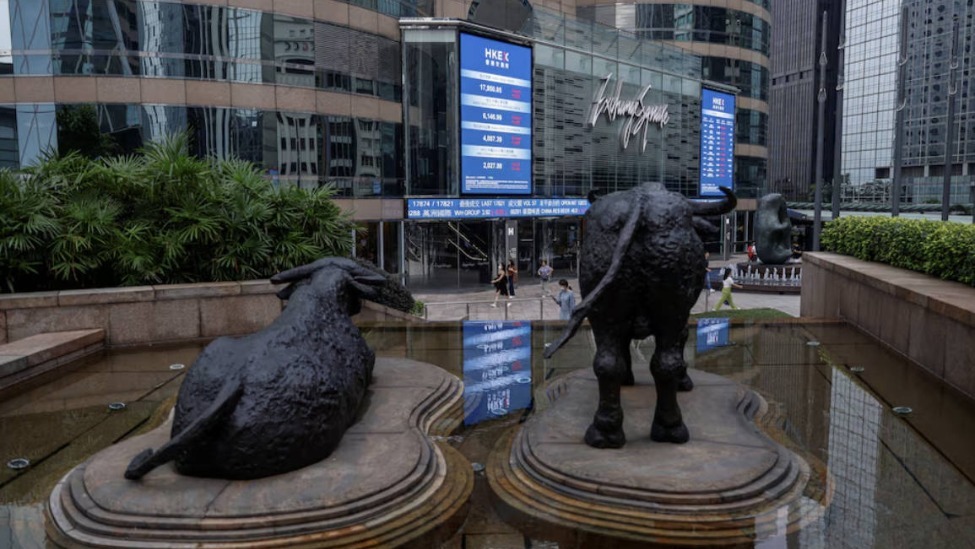
Hong Kong's three main indices all rose on Nov 2. The Hang Seng Index gained 0.42% to 23393.32 points, the Hang Seng Tech Index rose 2.25% to 3839.74 points and the China Enterprises Index added 0.56%. Internet shares rose broadly, with Xiaomi up more than 6% and Bilibili and Kuaishou each up more than 3%.
Lithium battery stocks led the gains, with CATL up more than 6%. According to market media reports, after more than three and a half years of litigation, CATL's Debrecen site saw a major development: on Oct 29, 2026, the Debrecen court rejected local residents' lawsuit over the environmental permit for CATL's battery plant, ruling that the government approval process was not unlawful and that the decision cannot be appealed. The plant started production at the end of September; it is planned for 100GWh with total investment of 7.34 billion euros, and cumulative module output has reached 537,000 units.
Chinese brokerage shares were strong all session, with CICC up more than 8%. CICC said in a filing late on Oct 26 that its share-swap absorption of Dongxing Securities and Xinda Securities had completed settlement, and it later announced a change of the investment banking entity, with 81 existing investment banking projects from Dongxing and 12 from Xinda formally transferred to CICC. Dairy stocks also climbed, with Youran Dairy up more than 6%.
5. Nikkei falls 0.33% as Kioxia results trigger selling
Source: Kyodo News
Tokyo stocks extended losses on Nov 2, with the Nikkei finishing at 63081.86, down 208.25 points or 0.33% from Friday. The broader TOPIX fell 34.79 points to 3930.28, down 0.88%, with trading volume of 2.32819 billion shares.
The drag came mainly from chip giant Kioxia Holdings. After the close on Oct 30, the company forecast consolidated net profit of 3.5578 trillion yen (about 150 billion yuan) for April-December 2026, roughly 24 times the year-earlier level. Despite the strong forecast, it fell short of market expectations, and the stock closed down 15.77%. Kioxia's market value is about 18 trillion yen, slipping below 20 trillion yen for the first time in half a year since May 1.
On the other side, chip equipment maker Tokyo Electron said on Oct 30 that it expects consolidated net profit of 865 billion yen for the fiscal year, up 50.6% from a year earlier and above market expectations, drawing heavy buying shortly after the open and supporting the market. With US midterm elections approaching, buying appetite was weak, selling widened across sectors and more than 60% of Prime Market stocks fell.

6. Korean stocks rebound 2.2% as October exports post biggest jump in over 50 years
Source: The Star (Reuters)
South Korean shares rose 2.2% on Monday, with dip-buying in technology stocks helping the market look past the AI-driven selloff on Wall Street on Friday after weak results from Intel and Amazon, Reuters reported. The KOSPI closed up 2.24% at 5859.08.
Economic data underpinned the move: South Korean exports nearly doubled in October, marking their sharpest increase in more than five decades, as strong global demand for AI investment boosted chip shipments.
The currency stayed weak. The won weakened to 1,346.90 per US dollar, its lowest since mid-October. Analysts at MUFG said the won continues to be underpinned by favourable macroeconomic conditions, though persistent foreign selling of equities has diluted support for the currency. Elsewhere in the region, Singapore's benchmark stock index slid 1.4%, Indonesian stocks fell as much as 1.5% before reversing to trade up 0.9%, and the rupiah weakened to 18,165, not far above its record low of 18,190 touched in early June.
7. Taiwan stocks lose 45000 level, TAIEX down 291.69 points
Source: Economic Daily News
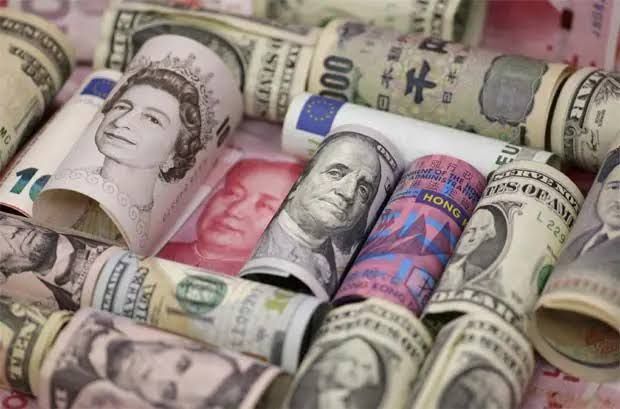
Taiwan stocks swung lower on Nov 2. The weighted index opened at 45,034.53, hit a high of 45,156.17 and a low of 44,399.1, and closed at 44,920.14, down 291.69 points or 0.64%, with turnover of 758.9 billion Taiwan dollars. Among listed stocks, 529 rose and 534 fell, with 10 limit-up and 5 limit-down.
Heavyweight TSMC closed at 2,330 Taiwan dollars, down 40 dollars or 1.68%, after trading between 2,345 and 2,310. By sector, semiconductors fell 1.26%, financials 0.99%, computer peripherals 0.36% and networking 0.06%, while electronic components rose 0.27%, other electronics 1.07%, plastics 1.47%, optoelectronics 1.26% and shipping 0.68%.
Individual stocks diverged: Delta Electronics rose 1.49%, MediaTek 1.4%, ASE Technology Holding 0.89% and Hon Hai 2.24%.

8. Oil accelerates its slide as New York crude drops below $100
Source: 21st Century Business Herald
International crude prices fell sharply on Nov 2. As of 17:16, New York crude was down more than 4%, breaking below the $100 mark to $99.73 a barrel, while Brent slid more than 4% to $108.85 a barrel.
Over the same period, gold and silver strengthened. Spot gold rose 0.66% to above $3,900 an ounce, and silver jumped nearly 3% to $50.44 an ounce.
9. Gold's "ATM-style selling" as payrolls and midterms loom
Source: 10jqka
The ugliest move in global markets on Friday was not gold's slide but the collapse of faith in tech stocks. Intel's disastrous quarter and Amazon's disappointing guidance sent the Nasdaq down 2.86% in a single day, its worst session since early June and 7.8% below October's record high. Intel plunged 28.6%, AMD fell 10.9%, and the Philadelphia Semiconductor Index lost 7.2% in a day and more than 15% over the month.
Gold was hit at the same time. Spot gold tumbled more than 3.5% on Friday, touching a one-year low of $3,869.97 and sitting about 30% below its record high for the year. By the textbook, a stock market crash should send gold soaring; this time it was the opposite. Commerzbank argues this is not a failure of the safe-haven logic but "ATM-style selling" in an extreme market: when a tech rout triggers fund drawdowns and margin calls, gold is often the first asset sold because it is the most liquid.
Two risk events loom this week: the US midterm elections on Nov 3 and October nonfarm payrolls. In Asian trading on Monday, spot gold edged back to around $3,900, up about 0.6%, a rebound after the selloff.
10. Goldman Sachs: AI capex could reach $1.2 trillion next year
Source: IFeng
Goldman Sachs estimates that AI capital spending by the world's largest hyperscale technology companies could climb to $1.2 trillion next year, Reuters reported on Nov 2. The money keeps flowing, but the market's patience is clearly thinner than it was a few months ago, and while earnings are still growing, the pace is slowing.
Goldman expects S&P 500 earnings per share to grow nearly 30% this year before slowing to 18% next year. Ben Snider, the bank's US equity strategist, said corporate earnings remain strong but are no longer accelerating, and AI capex will keep rising, though its growth rate may be near a peak.
The worry already erupted in the US market first: the Nasdaq fell nearly 7% in October, its worst month since April 2025, and Intel plunged almost 29% on Friday alone. Apple, AMD and Palantir report this week, and the market will keep asking the same question — when will all the money spent on AI actually turn into profit.
More News
- Global Express | November 2, 2026 — Spain confirms 69 dead in train crash, including one Canadian
- Tech Express | November 2, 2026 — Clues for GPT-6.2 Astra and Claude Fable 5.5 Surface on the Same Day
- Sports Express | November 2, 2026 — Antonelli, 20, becomes F1's youngest world champion
- Maple Express | November 2, 2026 — Trump says Canada, U.S. 'very close' to a trade deal
- Maple Express | November 1, 2026: Carney Says He Had a 'Good Conversation' With Trump as Trade Deal Nears
Comments (0)
View More
 -29%
SHW 40" Mobile Electric Standing Desk, Maple — One-Piece Top, Drawer and Locking Casters! $199.87 CAD (29% Off)
 -26%
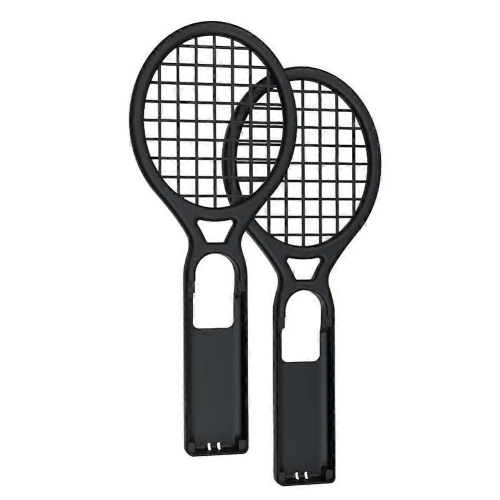
Switch 2 Tennis Racket Controller Grips (2-Pack) — A More Secure Hold for Your Joy-Con! $29.99 CAD (25% Off)
 -41%
AMBOR 17.3" Anti-Theft Laptop Backpack — Combo Lock and USB Port, Fits Under the Seat! $39.99 CAD (40% Off)
 -21%
Bose QuietComfort Ultra Headphones — Immersive Audio Puts the Stage in Front of You! $379.99 CAD (21% Off)
 Sports Express
 | November 2, 2026 — Antonelli, 20, becomes F1's youngest world champion
 Maple Express
 | November 1, 2026: Carney Says He Had a 'Good Conversation' With Trump as Trade Deal Nears
-29%SHW 40" Mobile Electric Standing Desk, Maple — One-Piece Top, Drawer and Locking Casters! $199.87 CAD (29% Off)
Amazon
-26%Switch 2 Tennis Racket Controller Grips (2-Pack) — A More Secure Hold for Your Joy-Con! $29.99 CAD (25% Off)
Best Buy
-41%AMBOR 17.3" Anti-Theft Laptop Backpack — Combo Lock and USB Port, Fits Under the Seat! $39.99 CAD (40% Off)
Amazon
-21%Bose QuietComfort Ultra Headphones — Immersive Audio Puts the Stage in Front of You! $379.99 CAD (21% Off)
Best Buy
Sports ExpressSports Express | November 2, 2026 — Antonelli, 20, becomes F1's youngest world champion
Maple Express