
Tech Express | October 14, 2026 — China's First Domestic EUV Light Source Prototype Debuts, 90% Localized
Today's Tech Express covers ten stories: China's first domestic EUV light source prototype, 90% localized; Anthropic drops Git for its own Scion; AI-designed chips humans can't fully understand; Epic Games confirms a huge pivot to AI; three CPU giants raise prices by up to 20%; Samsung's first Android XR glasses; Apple's 4th-gen Apple TV 4K; Perseverance sets an otherworldly driving record; ByteDance sets up an AI safety and alignment unit; and WeChat launches Lvpaopao Short Drama.
1. China's First Domestic EUV Light Source Prototype Debuts, 90% Localized
Source: Mydrivers
According to a Mydrivers report on October 14, at the 26th China International Industry Fair being held at the National Exhibition and Convention Center (Shanghai), Langdao Suiyan publicly displayed an EUV light source system prototype for the first time. It is the most advanced domestic EUV light source prototype shown publicly to date and is called the "heart" of high-end lithography machines, marking a key step for China's EUV light sources from the lab toward industrialization.
Extreme ultraviolet (EUV) light sources are one of the three core components for manufacturing chips at 7nm and below, and have long been subject to overseas technological monopolies and export bans. On-site staff said the displayed system is 90% localized, with the vast majority of core components independently developed and a technical route consistent with leading international manufacturers; it can be used for chip exposure testing, though it will still take 3 to 5 years to reach mass production.
Langdao Suiyan's website shows its low-power EUV light source system, FlintNano LPP-OXXO, is already in the productization stage, with a drive laser power of 1000W, a laser frequency of 1 to 20kHz, conversion efficiency above 2%, EUV energy above 15W, and over 100 hours of continuous operation. Langdao Technology was founded in 2024, and founder Dr. Wang Hao's team built on research from Tsinghua University's gas discharge plasma laboratory, focusing on LPP-EUV lithography light source technology.
2. Anthropic Drops Git and Builds Its Own Version Control System, Scion
Source: ifanr
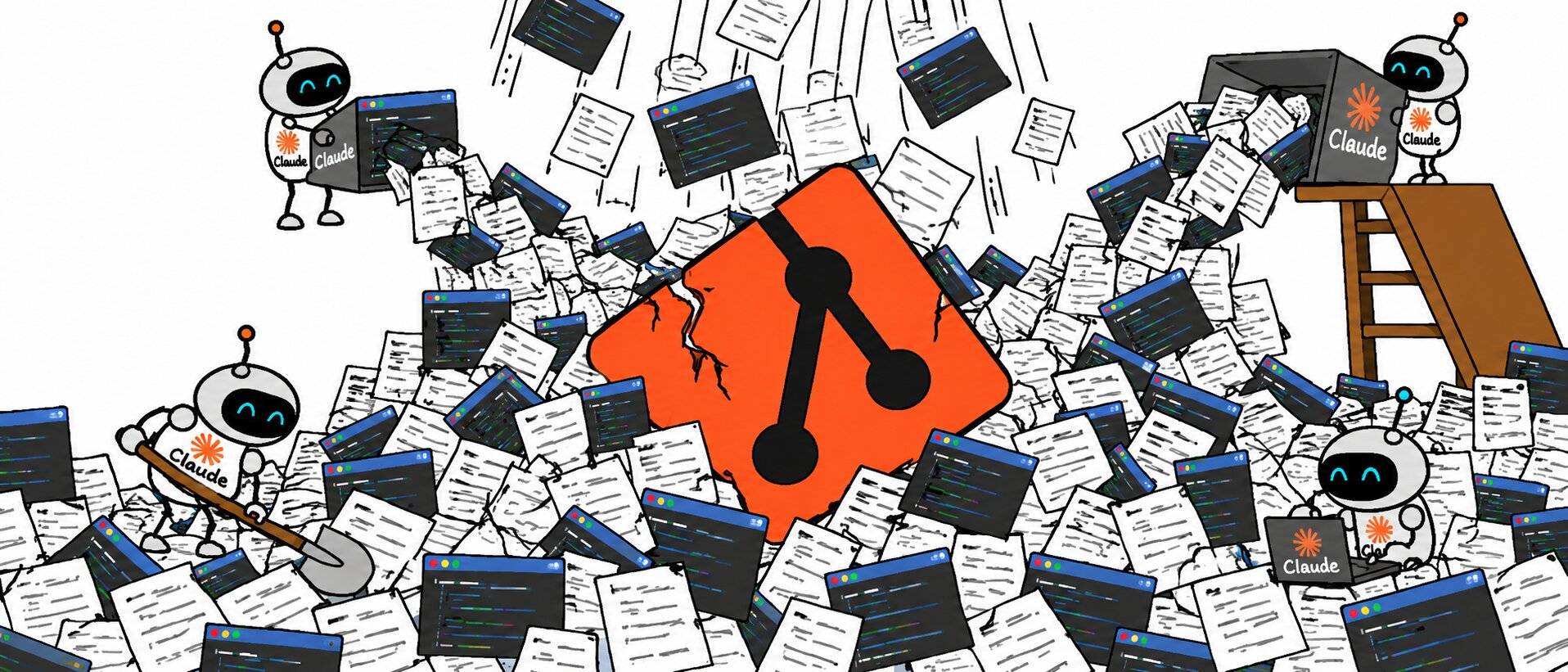
While the AI world debates whether programmers will be replaced, Anthropic offered an unexpected answer: before programmers are replaced, it first replaced the tool programmers have used for twenty years. Because Claude writes code so fast, the real bottleneck inside the company became the software tools that had been in use for decades. With a team of just seven people and relying on Claude, Anthropic built an entirely new code version control system from scratch in five months and migrated its entire large repository onto it.
Data shows that in May this year Anthropic merged about 2,500 code changes per day company-wide; by September that number had surged 12-fold to 30,000 per day — the equivalent of around-the-clock work in which a tested and reviewed new piece of code enters the core repository roughly every 2.8 seconds. Git was created in 2005, and its "decentralized, everyone-holds-a-full-copy" design was made for offline humans; at Anthropic the full history approaches 100GB, and roughly 25 million checkouts a day pull the massive code package, which without optimization would generate over 600PB of traffic daily.
So instead of patching Git, Anthropic built Scion: it supports virtualized checkouts, pulling only the folder an AI edits, and streaming data from an in-memory cache only when a program actually reads a given line. Compared with the hundreds of Git mirror servers it previously ran, Scion cuts CPU and memory usage 200-fold, with cache hit rates above 99%, shrinking code fetches for AI and test tasks from minutes to seconds — saving 25% of the CI system's compute on that alone. Anthropic also built its own code review tool Antique plus code search and permissions systems, with the entire project done by just seven engineers over five months.
3. AI Designs Computer Chips We Can't Understand, Yet They Work Remarkably Well
Source: ZME Science
According to ZME Science, researchers at Princeton University and IIT Madras demonstrated an "inverse design" method: starting from the desired properties and using AI to derive the circuit and component designs. The approach trains convolutional neural networks to understand the complex relationship between a circuit's geometry and its electromagnetic behavior, then optimization algorithms search for layouts that meet the engineers' specifications. As a result, the AI produced weird-looking chips that work very well — but no one really knows why they perform so well.
"Humans cannot understand them, but they can work better," said lead researcher Kaushik Sengupta, a professor of electrical and computer engineering at Princeton. The team did not simply accept the AI's output; it checked designs with conventional electromagnetic simulations, fabricated physical components, and measured their performance. The work spanned use cases from simple one-port antennas to complex multi-port RF structures such as filters and power dividers; AI-designed compact antennas function across two distinct frequencies, improving multi-band devices, and tasks that once took days or weeks are now synthesized in minutes.
The studies also exposed concerns: the AI-designed chips are largely a "black box," and while their behavior follows the laws of electromagnetism and can be tested, engineers struggle to understand why a particular arrangement of metal traces produces a particular result — which could lead to unforeseen failures or vulnerabilities in critical applications like medical devices and autonomous vehicles. The work also ran into a real-world obstacle: a Princeton-led effort to develop AI design tools for wireless chips, after receiving a nearly $10 million award in 2025, received a stop-work order later that year, and the team struggled to find alternative funding.

4. Epic Games Confirms a "Huge Pivot" Toward AI in Game Development
Source: BBC
According to the BBC, Fortnite-maker Epic Games has confirmed it is making a "huge pivot" toward using artificial intelligence in its video game development. CEO Tim Sweeney announced the move on social media, saying developers are being moved to "retool for maximum AI acceleration." It follows a Bloomberg report that Epic delayed a collaboration with Disney featuring Star Wars and Marvel characters — developers were reportedly asked to use AI tools to finish it, and directors told staff "no more hand-written code" and said all of the game's art would be "generated with full AI workflows."
Sweeney didn't publicly comment on the Disney collab's delay, but confirmed further details about the company's expanded use of AI in a series of posts on X. He said the purpose wasn't "to do the same stuff with fewer people" but to give developers the tools to build "more" and "better" things, something he called "empowering" for creators. One reply on Sweeney's thread, which received 14,000 likes, accused him of not being able to read the room; Sweeney responded, "much of the room wants it to be 2016, but it's not."
Sweeney said ramping up AI use was a "modest aim to survive the AI revolution" and to end up "making better code and content faster." The news comes six months after Epic confirmed it was laying off more than 1,000 employees, when Sweeney attributed the cuts to a "downturn" in Fortnite engagement rather than AI. The announcement also rekindled the long-running debate about AI's role in the creative and arts sector.

5. Three CPU Giants Raise Prices Together, Up to 20%, With TSMC Behind It
Source: Mydrivers
According to a Mydrivers report on October 14, the CPU market is entering a new round of price hikes, with Intel, Qualcomm, and AMD raising prices in turn, pushing cost pressure from wafer manufacturing all the way to PCs, servers, and finished devices. Intel was first, raising prices from September 1 — its third round since late last year — adjusting by product line: high-end Panther Lake models saw the largest increases of 15% to 20%; Meteor Lake and Arrow Lake rose 5% to 10%; and entry-level Alder Lake and Twin Lake rose 10% to 20%.
Qualcomm followed, raising shipment prices for PC processors such as Snapdragon X and Snapdragon X2 Elite by about 10% starting October 1. AMD has also notified several partner customers that it plans to raise prices across its entire chip lineup by about 10% starting in the fourth quarter of 2026, covering AI accelerator chips, consumer GPUs, and motherboard chipsets; Ryzen CPUs were not explicitly listed, but given their heavy reliance on TSMC foundry, the upside price risk cannot be ignored.
The root of the successive increases points to the same driving force: TSMC has notified customers that it is raising foundry prices by about 10% due to rising manufacturing costs. The report noted that Intel's Panther Lake high-end GPU tile, Qualcomm's Snapdragon X series, and AMD's Ryzen and EPYC processors all depend heavily on TSMC's advanced processes. Sustained AI chip orders have kept advanced-node capacity fully booked, shifting foundry from a buyer's market to one where suppliers set prices.

6. Samsung's First Android XR Glasses Leak: Up to 25 Styles, 9-Hour Battery
Source: 9to5Google
According to 9to5Google, Samsung's first Android XR glasses are right around the corner, and a new leak reveals every style you'll be able to buy. According to details uncovered by SammyGuru this week, Samsung's glasses weigh as little as 41g — over 10g lighter than the nearest camera-equipped Ray-Ban Meta glasses, and still a couple of grams lighter than the new audio-only styles. Battery life and cameras match the latest generation of Ray-Ban Meta glasses.
On compatibility, Samsung's Android XR glasses will have basic functionality across Android phones and iPhone, but certain Galaxy-only features require One UI 9 (Android 17) on your phone and Wear OS 7 on Galaxy Watch. On styles, Samsung's partnerships with Gentle Monster and Warby Parker will deliver plenty of choices: Warby Parker has three frame styles — Alden (rounded), Reid (square-ish), and Wren (cateye-ish); Gentle Monster has six, ranging from rectangular to a slim oval.
Both brands offer different frame and lens color options: Warby Parker has black, brown, and green, while Gentle Monster offers more, including gray, purple, burgundy, and brown. Pricing and a firm release date remain unclear, but this latest leak also mentions that Gentle Monster, at least, will offer its glasses with prescription lenses. Other reports have pinned a November 2026 release date.

7. Apple Launches Fourth-Generation Apple TV 4K: $299, A19 Chip and Siri AI
Source: Mydrivers
According to a Mydrivers report on October 13, Apple officially launched the fourth-generation Apple TV 4K, priced at $299 in the US, with pre-orders opening today and an official release on November 13. In terms of performance, the new A19 chip delivers up to 50% better CPU performance and up to 2x better GPU performance than the previous generation, with smoother system navigation and interface animations and faster response. The chip includes a dedicated AV1 decoder, cutting bandwidth usage while outputting higher-quality streaming content.
The new model includes three far-field microphones for the first time, paired with advanced echo cancellation to precisely isolate voices during audio playback and clearly recognize "Hey Siri" commands for fully hands-free control. It features a new Siri AI powered by Apple Intelligence, supporting full-screen immersive search that can directly show movie posters and related recommendations; during playback you can ask follow-up questions about filming locations or age ratings, with information shown in a floating window that doesn't interrupt the viewing experience. Paired with an Apple Intelligence-capable iPhone or iPad, it can also call on the user's personal context to carry out personalized commands like playing a friend's recommended shows.
For audio and the home, the new model for the first time supports a four-speaker surround system with HomePod mini 2 or second-generation HomePod, intelligently recognizing each speaker's spatial position and automatically calibrating audio timing and volume. Its smart home hub capabilities are also upgraded: with a compatible smart doorbell, visitor notifications appear directly on the TV screen, letting you talk to visitors and unlock remotely without interrupting playback; HomeKit Secure Video adds Apple Intelligence-generated activity descriptions and summary notifications. It includes Wi-Fi and Thread, stably connecting and managing whole-home HomeKit and Matter devices. The new Siri Remote keeps its classic design and adds Find My precision finding.

8. Perseverance Rover Sets an Otherworldly Driving Record, 28.1 Miles So Far
Source: CBS News
According to CBS News (updated October 13), NASA's Perseverance rover set an otherworldly driving record this week: it has become the farthest-traveling vehicle ever on the surface of another planet. NASA said its rover, which has explored Mars since 2021, had driven 28.1 miles as of Sunday, exceeding the previous record set by NASA's Opportunity rover, which drove 28.06 miles during its 15-year exploration of Mars from 2004 to 2018.
Perseverance reached the milestone while traveling along the western rim of Mars' Jezero Crater, where it is tasked with investigating what scientists believe may be some of the oldest terrain in the solar system, hoping to find traces of ancient hydrothermal systems — underground networks that heat water. Since landing on Mars in February 2021, Perseverance has made important discoveries at Jezero Crater: several years into its mission, it had collected enough data for scientists to build a timeline of the crater's formation, dividing its history into "three major periods" after water first entered it. In 2023, NASA said it was possible that microbial life once existed there.
Compared with its predecessors, Perseverance has been able to cover so much ground in a relatively short time thanks to its self-driving capabilities. It carries an autonomous navigation system called AutoNav that lets it collect images of surrounding terrain, map hazards, and plan its own route as it rolls along — a skill scientists have dubbed "thinking while driving." Steven Lee, project manager of the Curiosity and Perseverance rovers at NASA's Jet Propulsion Laboratory, said it is "an honor to be working on Perseverance at a moment when the technology has evolved to the point that drives like these are routine," and said the rover has "blown well past" the 12.4 miles initially expected and will likely "keep adding to this record for many years to come." NASA said it recently extended the Perseverance mission to explore the rim of Jezero Crater until the end of 2028.

9. ByteDance Sets Up an AI Safety and Alignment Unit to Guard Against AI Agent Risks
Source: Lianhe Zaobao
According to Lianhe Zaobao, citing Science and Technology Daily and Huanqiu on October 13, Chinese tech giant ByteDance's AI research team Seed announced it will establish an independent model safety and alignment unit, focusing on improving the safety capabilities of AI agents and guarding against risks that advanced models could pose in the chemical, biological, radiological, and nuclear fields. Seed recently announced via internal email that it will set up a unit called "Seed Model-Alignment & Preparedness," led by Yan Lin and reporting directly to Seed head Wu Yonghui.
The existing Responsible AI team, along with some members of the Chat model team, will move into the new unit. The unit aims to strengthen investment in AI model safety and alignment — "alignment" refers to keeping a model's behavior consistent with human intent and safety constraints. Besides improving the safety capabilities of agent models, the new unit will also focus on guarding against the potential risks that advanced AI models may pose in the chemical, biological, radiological, and nuclear (CBRN) fields.
Going forward, the new unit will keep investing in areas including model behavior standards, safety evaluation systems, alignment training, safeguard systems, and risk monitoring, while strengthening cooperation with external research institutions and third-party evaluation agencies so that frontier models can effectively complete tasks within safety and authorization constraints. The report noted that Chinese large-model teams have mostly folded safety and alignment work into their overall corporate security and compliance systems, and Seed is China's first frontier AI lab to set up a dedicated unit of this kind. Internally, the Seed team believes that as AI models' capabilities and autonomy grow, safety and alignment are no longer just risk prevention but a core capability that determines whether a model can be scaled.
10. WeChat Launches "Lvpaopao Short Drama," Stepping Up Its Short-Drama Push
Source: Mydrivers
According to a Mydrivers report on October 14, Tencent quietly launched "Lvpaopao Short Drama" inside WeChat, a strong rival to ByteDance's Hongguo Short Drama. The interface is divided into three sections — Free Theater, Swipe, and Me — with the Free Theater featuring categories such as AI dramas, live-action dramas, daily new releases, animated dramas, must-sees this week, and million-view titles. A highlight is its support for floating picture-in-picture playback: when a WeChat message arrives while watching, you don't need to exit the playback page — the window shrinks and floats so you can watch and reply at the same time. Tapping the middle "Swipe" entry lets you scroll up and down for an immersive feed recommendation experience. All titles on the platform are free to watch, monetized through mid-roll ads.
Compared with Hongguo Short Drama, Lvpaopao Short Drama places more emphasis on social features. Besides regular rankings, the home page has a "Friends are watching" recommendation slot and a regional trending chart labeled "friends in your area are all watching." Tencent said the platform collects users' browsing, viewing, sharing, liking, commenting, and favoriting records, as well as information about which titles friends watch, to generate personalized recommendations, with friends' viewing behavior directly affecting what you're pushed. Per the "Short Drama Mini-Program User Agreement," the service operator is Shenzhen Tencent Computer Systems Company Limited; the agreement also states that short-drama content is provided by third parties, and Tencent only holds broadcast and display authorization.
This is not Tencent's first move into short dramas. In December 2021, Tencent Video launched the industry's first micro-drama brand, "Shifen Theater"; in January 2025, Tencent's first standalone short-drama product, "Mars Short Drama Club," arrived on WeChat and was later renamed "Mars Drama Viewing"; in June of the same year, WeChat launched an official "Short Drama" mini-program, and by October 2026 that mini-program's entry had been taken offline, replaced by Lvpaopao Short Drama. The rival it faces is formidable: QuestMobile data shows that as of July 2026, the Hongguo Short Drama standalone app reached 168 million daily active users, up 107% year on year, surpassing the combined daily active users of Tencent Video, iQiyi, Youku, and Mango TV (about 155 million).

More News
- AI Weekly | Anthropic Warns Models Are 'Months Away' From Self-Replication as AI Safety and Bubble Alarms Sound
- Global Express | October 14, 2026 — Houthi Missiles and Drones Pound Saudi Arabia as US Air Defenses Struggle
- Finance Morning | Huang Qifan Under Investigation; Sept Social Financing Up 7.1%; Chinese Automakers Welcome EU-China Consensus
- Sports Express | October 14, 2026 — Tkachuk Brothers Make NHL History as Brady's Hat Trick Is All Assisted by Matthew
- Maple Express | October 14, 2026 — Key Figure to Resume Testimony in Pearson Gold Heist Trial
Comments (0)
View More
 -17%
-17%Lenovo IdeaPad Duet 3 Chromebook — 11" 2K Touchscreen 2-in-1! $399.99 CAD (17% Off)
 -30%
-30%Frigidaire 30" 18.7 Cu. Ft. Bottom Freezer Refrigerator (FRBE1925AW, White) — Narrow 30" Fit for Small Kitchens, ENERGY STAR Certified! $1199.99 CAD (29% Off)
 -41%
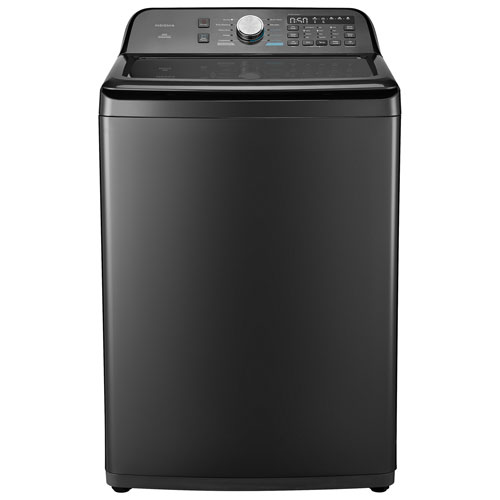
-41%Insignia 4.7 Cu. Ft. High Efficiency Top Load Washer — Big Capacity with 10 Wash Cycles! $599.99 CAD (40% Off)
 -42%
-42%AstroAI 27" 2-in-1 Snow Brush & Ice Scraper — #1 in Snow Brushes! $16.99 CAD (41% Off)
 Maple Express
Maple Express | October 13, 2026 Toronto mayoral race tightens as Bradford cuts Chow's lead to about 3.5 points
Tech ExpressTech Express | October 14, 2026 — China's First Domestic EUV Light Source Prototype Debuts, 90% Localized
-17%Lenovo IdeaPad Duet 3 Chromebook — 11" 2K Touchscreen 2-in-1! $399.99 CAD (17% Off)
Amazon
-30%Frigidaire 30" 18.7 Cu. Ft. Bottom Freezer Refrigerator (FRBE1925AW, White) — Narrow 30" Fit for Small Kitchens, ENERGY STAR Certified! $1199.99 CAD (29% Off)
Best Buy
-41%Insignia 4.7 Cu. Ft. High Efficiency Top Load Washer — Big Capacity with 10 Wash Cycles! $599.99 CAD (40% Off)
Best Buy
-42%AstroAI 27" 2-in-1 Snow Brush & Ice Scraper — #1 in Snow Brushes! $16.99 CAD (41% Off)
Amazon
Maple ExpressMaple Express | October 13, 2026 Toronto mayoral race tightens as Bradford cuts Chow's lead to about 3.5 points
Tech Express