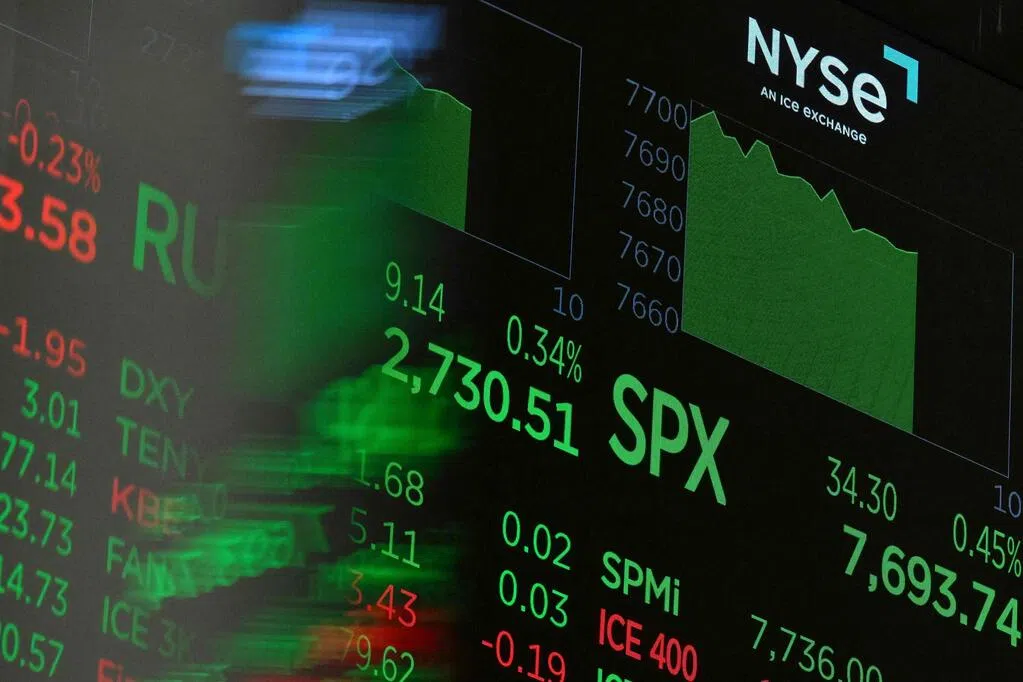
Global Tech Selloff Sweeps Asia; Shanghai Index Slips Below 3,600 as Gold Falls Under $4,000
Disappointing US tech earnings deepened AI-bubble fears and the selloff swept Asia: the KOSPI fell 3.48%, the Nikkei 2.12% and Taiwan's TAIEX 3.88%, while Hong Kong rose. The Shanghai Composite ended October below 3,600. Investors put RMB 13.8 billion into 30-year treasury ETFs in October. The Bank of Japan held rates at 1.25%, said inflation has reached 2% and will speed up ETF sales from January 2027. Gold fell below $4,000 an ounce and France's GDP unexpectedly shrank 0.1%.
Source: Lianhe Zaobao
📊 Asia Market Close
| Index | Close | Change | % Change |
|---|---|---|---|
| Shanghai Composite | 3,599.02 | -82.45 | -2.24% |
| Shenzhen Component | 10,833.78 | -639.42 | -5.57% |
| ChiNext | 2,413.63 | -103.96 | -4.13% |
| Hang Seng | 23,294.42 | +199.62 | +0.86% |
| Nikkei 225 | 63,290.11 | -1,369.36 | -2.12% |
| KOSPI | 5,730.74 | -206.92 | -3.48% |
| TAIEX | 45,211.83 | -1,823.77 | -3.88% |
Tech Giants Disappoint, Selloff Spreads Across Asia
US tech giants delivered a string of weaker-than-expected results, deepening fears of an artificial-intelligence investment bubble and dragging global technology shares lower. Major Asian markets closed broadly down on Friday, October 30. Amazon's latest quarterly profit and revenue both missed analyst estimates; Intel's profit outlook fell short on weak personal-computer processor demand and supply-chain problems; Google parent Alphabet reported slowing growth in advertising and search revenue while planning to raise capital spending further.
In US trading overnight, Alphabet plunged more than 12%, Amazon fell over 7% in after-hours trade, Intel tumbled 23%, and the Nasdaq closed more than 1% lower. The selloff quickly spread to Asia: South Korean chipmaker SK Hynix dropped more than 7% and Samsung Electronics fell 3%; Japan's Kioxia lost over 7%, with Advantest and SoftBank Group each down nearly 6%; Taiwan's TSMC slipped 1.9%.
Among regional benchmarks, South Korea's KOSPI closed 3.5% lower and Japan's Nikkei fell 2.1%, while Hong Kong's Hang Seng Index bucked the trend and rose. Anna Wu, an analyst at Floodlines Research, said the market's concern is not that AI demand has already slowed, but that higher financing costs and credit risks could force big tech companies to scale back AI infrastructure spending. Notably, even after SK Hynix reported a 632% surge in operating profit this week, investors remain worried about when the massive AI spending will finally pay off.
Shanghai Composite Slips Below 3,600 as A-Shares End October Lower
Source: Sina Finance
October 30 was the last trading day of October for A-shares. The three main indices opened lower, briefly turned positive in the afternoon, then fell again. At the close, the Shanghai Composite slipped below 3,600, the ChiNext Index dropped 4.13% and the STAR 50 fell more than 5%.
Sector performance diverged sharply: shipping, liquor, oil and gas, airports, coal and banks gained, while telecom equipment, software, semiconductors, electronic components and aerospace and defense led the declines. Education, environmental protection, precious metals, building materials, autos and real estate also fell.
Investors Rush Into 30-Year Treasury ETFs as Stocks Slide
Source: Lianhe Zaobao
As Chinese equities kept falling, investors flocked into exchange-traded funds tracking long-dated government bonds, shifting to a strengthening bond market for shelter. Bloomberg-compiled data show that in October, two China-domiciled ETFs tracking 30-year government bonds drew a combined RMB 13.8 billion (S$2.6 billion) in net inflows, the highest since July 2025.
The inflows pushed both funds' market value to record highs. Since the second half of this year, the market value of Pengyang ChinaBond 30-Year Treasury ETF has grown 57%, while Boshi SSE 30-Year Treasury ETF has gained 68%. Liao Zhiming, an analyst at Huayuan Securities, said in a report this week that investors particularly favor long-dated bonds, which still have room to rise in the fourth quarter. He expects falling financing costs and reduced bond supply to push the 30-year yield down from about 2.05% to around 2% by year-end.
Cash and futures markets strengthened in tandem. ChinaBond data show five- and seven-year government bond yields closed at record lows on Thursday, October 29, while the 10-year yield stood at 1.62%, just a few basis points above the record low hit in early 2025. As hedge funds' interest picked up, open interest in 30-year government bond futures also hit a record high. Jeffrey Zhang, a strategist at Credit Agricole CIB in Hong Kong, said a relatively loose liquidity environment will continue to support bond demand.
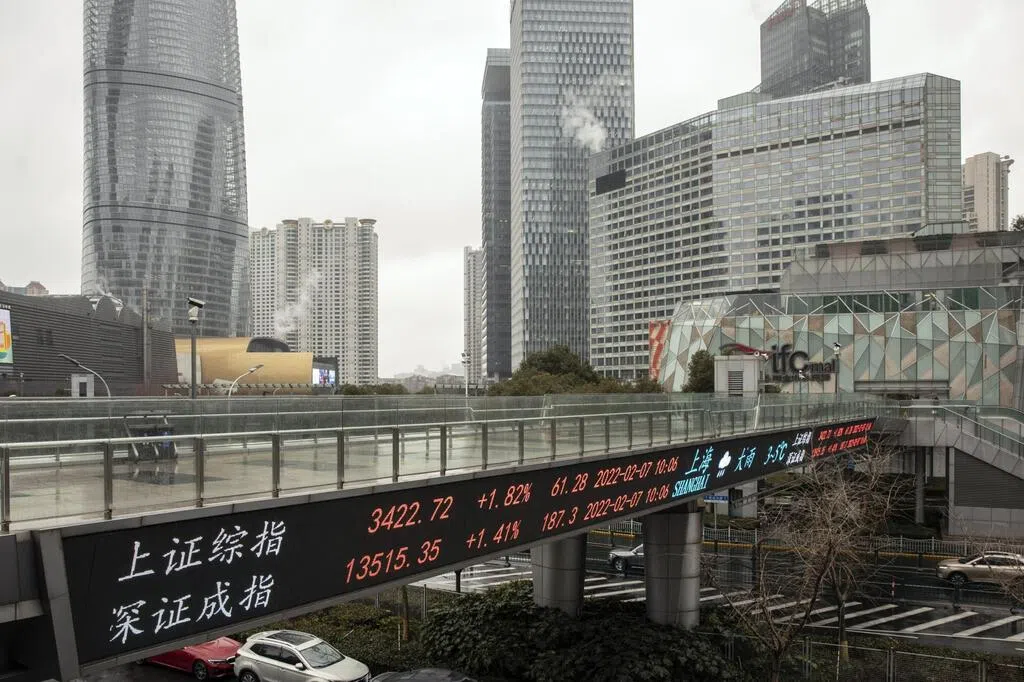
Fund Managers Line Up to Apologize After Tech Rout
Source: 21st Century Business Herald
A-shares have had a volatile 2026 and public mutual funds have struggled to make money for investors. In the first half, the tech sector ran hot, with the STAR 50 and ChiNext up 64.25% and 35.58% respectively. The market then reversed sharply: in the third quarter the STAR 50 pulled back 30.70% and ChiNext fell 27.80%, the biggest quarterly drops on record for both.
As third-quarter fund reports were fully disclosed, many managers reflected on their mistakes and apologized to investors. Xie Hongcai, manager of Guotai Jinma Steady Growth Mixed A, said in his October 27 report that the fund failed to respond in time and suffered a large drawdown, adding that the manager shares investors' pain and sincerely apologizes. The fund's net value fell 25.36% in the period, versus a benchmark decline of 5.78%. Zheng Xiaohui, manager of China AMC Advantage Growth Mixed, also apologized in his October 27 report, citing the dual hit of a record-high 10-year US Treasury yield and slowing ARR growth at AI leaders.
Some managers apologized while staying the course. Kaishi Lan Leading Economy One-Year Holding Mixed fell 28.90% in the third quarter, and Li Chen's team wrote more than 4,000 words of operating analysis, apologizing to holders while saying they remain firmly bullish on the tech industry over the medium and long term. CITIC Securities said on October 29 that electronics accounted for RMB 616.241 billion of mutual fund heavy holdings at end-September, down 60.91% quarter on quarter.
Three of 11 Asia-Pacific Indices Gain; Hong Kong Outperforms
Source: JRJ.com
On October 30, major Asia-Pacific markets closed with three of 11 benchmarks higher and eight lower, reflecting weak overall sentiment. The Hang Seng Index, the HSCEI (up 1.37%) and FTSE Malaysia (up 0.28%) led gains, while ChiNext and South Korea's KOSPI led declines. All A-share indices closed lower.
Amid the tech selloff, Hong Kong was one of the few markets in Asia to finish higher, with the Hang Seng Index bucking the regional trend.
BOJ Holds Rates at 1.25%, Says Inflation Has Reached 2%
Source: Sina Finance
The Bank of Japan ended its two-day policy meeting on October 30 and kept its policy rate at around 1.25%, while releasing its outlook report on the economy and prices. The report said Japan's underlying inflation has reached a level broadly consistent with its 2% price stability target, the first such judgment since the BOJ set the 2% target in 2013.
The BOJ raised its policy rate to 1.25% in September, the highest since 1995. The central bank said it will keep watching how the September hike affects the economy and prices, which is why it stood pat this time. The outlook raised the fiscal 2027 core CPI forecast by 0.2 percentage point to 2.6%, while cutting the fiscal 2027 real GDP growth forecast by 0.1 point to 0.7%.
The BOJ set its 2% inflation target in January 2013, and then-governor Haruhiko Kuroda launched massive monetary easing that spring. But prolonged deflation kept price growth slow and the target elusive. Recent price gains have been driven by external factors such as higher energy prices, and the BOJ believes the economy still faces risks of weak growth even with inflation at target.
BOJ Unexpectedly Speeds Up ETF Sales, December Hike Bets Rise
Source: Sina Finance
The BOJ raised its policy rate by 25 basis points to 1% in June and again to 1.25% in September, the highest in 31 years. Although it paused this time, the hawkish signal opened the door to a December hike. Governor Kazuo Ueda declined to set a timetable at his afternoon briefing, but said all board members agree underlying inflation is at 2% while stressing that a sustainable, stable achievement of the target has not yet been confirmed.
Ueda said Japan's financial conditions remain accommodative and the BOJ will adjust policy flexibly, actively guiding inflation toward 2% rather than waiting passively. He acknowledged upside risks that cannot be ignored but said they have not increased sharply versus a month ago. Invesco strategists said the BOJ's hawkish inflation assessment creates conditions for a potential December hike.
The BOJ also decided to nearly triple the pace of its ETF sales starting January 2027. Since sales began in January 2026, the pace was set at about 330 billion yen a year at book value, roughly 0.05% of market trading volume. It will now rise to about 0.1% of trading volume, or roughly 860 billion yen a year. Ueda said faster ETF sales will have a limited market impact. Hiroshi Namioka, chief strategist at T&D Asset Management, said almost no one expected the BOJ to accelerate ETF sales.
Korean Stocks Plunge at Open; Exchange Triggers Sidecar
Source: China Fund News
South Korean stocks dived in early trading on October 30, with the KOSPI's loss widening to 5%. The Korea Exchange triggered its sidecar mechanism, halting program selling on the KOSPI. Memory chip shares were sold again, with SK Hynix down nearly 9% and Samsung Electronics down more than 5%.
Under the selling pressure, the KOSPI closed at 5,730.74, down 3.48%, well off its intraday lows.
Gold Falls Below $4,000 an Ounce
Source: 21st Century Business Herald
Gold extended the previous session's decline on October 30, briefly breaking below $4,000 an ounce after the open and fluctuating around that level.
As of 14:35 Beijing time on October 30, spot gold in London traded at $3,988.69 an ounce, down 0.79%, while December gold futures on the New York Mercantile Exchange stood at $3,997.40 an ounce, down 0.84%.
French Economy Shrinks 0.1% in Q3, Missing Forecasts
Source: Sina Finance
Preliminary estimates released by France's statistics agency Insee on Friday showed gross domestic product fell 0.1% in the three months through September, missing expectations for 0.1% growth. It was the second quarterly contraction this year, after a 0.2% decline in the first quarter and stagnation in the second.
The contraction was driven mainly by a 0.6% drop in capital investment, which offset a 0.4% rise in household consumption. France is grappling with high energy prices and surging borrowing costs; French bonds have sold off in recent months, with long-term borrowing costs last week hitting 5% for the first time since 2002, while the extra yield investors demand to hold French rather than German debt widened to 1.7 percentage points.
Oxford Economics analysts said earlier this week that France's fiscal crisis may worsen before it improves.

More News
- Global Express | October 30, 2026: Israel Election Leaves Netanyahu Bloc Short of Majority
- Tech Express | October 30, 2026 — Apple Acknowledges iPhone Duo Screen Defect
- Sports Express | October 30, 2026 — Court lifts Russia hockey ban as Brewers celebrate first title
- Maple Express | October 30, 2026 — Toronto Woman Injured by Getaway Driver Gets a $40,000 City Bill Two Years Later
- Finance Evening: Nasdaq Falls 1.38% as Alphabet Sinks 12%; September PCE Hits 3.6%, Q3 GDP Grows 3.4%
Comments (0)
View More
 -23%
Whirlpool 24" 51dB Dishwasher with Third Rack — 14 Place Settings and Sani-Rinse at 155°F! $699.99 CAD (22% Off)
 -61%
LEGO Minecraft The Coral Reef 21164 — 92 Pieces, 3 Figures! $13.99 CAD (60% Off)
 -46%
Ring Wired Doorbell 2K — Half Price for a Doorbell You Can Talk To! $59.99 CAD (45% Off)
 -12%
WD-40 Specialist Electrical Contact Cleaner 155g — Fix Stick Drift and Dirty Contacts! $11.47 CAD (12% Off)
 Finance Evening
: Nasdaq Falls 1.38% as Alphabet Sinks 12%; September PCE Hits 3.6%, Q3 GDP Grows 3.4%
 Sports Express
 | October 30, 2026 — Court lifts Russia hockey ban as Brewers celebrate first title
-23%Whirlpool 24" 51dB Dishwasher with Third Rack — 14 Place Settings and Sani-Rinse at 155°F! $699.99 CAD (22% Off)
Best Buy
-61%LEGO Minecraft The Coral Reef 21164 — 92 Pieces, 3 Figures! $13.99 CAD (60% Off)
Amazon
-46%Ring Wired Doorbell 2K — Half Price for a Doorbell You Can Talk To! $59.99 CAD (45% Off)
Amazon
-12%WD-40 Specialist Electrical Contact Cleaner 155g — Fix Stick Drift and Dirty Contacts! $11.47 CAD (12% Off)
Amazon
Finance EveningFinance Evening: Nasdaq Falls 1.38% as Alphabet Sinks 12%; September PCE Hits 3.6%, Q3 GDP Grows 3.4%
Sports Express