
Finance Evening | November 6, 2026 — October Payrolls Rise 165,000, Jobless Rate Falls to 4.1%
U.S. October payrolls rose 165,000, far above the 59,000 estimate, and the jobless rate fell to 4.1%, lifting December hike odds to 76.8%. Tech steadied after Thursday's rout: Nasdaq 100 +1.1%, Dow -0.46%, while Asia sold off and KOSPI briefly halted. The VIX jumped 70% in a day, the eighth such move since 1991. Fox closed its $22 billion Roku deal; OpenAI keeps building data centers; CBS polls show data centers lost at the ballot; gold fell below $4,000; IRS issued 2027 brackets.
Source: CNBC, NBC News, Fox Business, Yahoo Finance, CBS News, Gizmodo, NPR, WBAL-TV
📊 Today's North American Markets
| Index | Close | Change | % Change |
|---|---|---|---|
| S&P 500 | 7,376.86 | +23.13 | +0.31% |
| Nasdaq | 24,579.42 | +264.43 | +1.09% |
| Dow Jones | 51,285.73 | -237.33 | -0.46% |
| TSX (Toronto) | 35,789.09 | +183.82 | +0.52% |
| CAD/USD | 1.4128 | +0.0128 | +0.81% |
| WTI Crude | 90.34 | -0.18 | -0.20% |
| Gold | 4,079.50 | -34.00 | -0.83% |
Payrolls Surge 165,000 in October, Jobless Rate Falls to 4.1%
The U.S. economy added jobs at a much stronger pace than expected in October. Nonfarm payrolls rose by a seasonally adjusted 165,000, against a Dow Jones estimate of 59,000, the Bureau of Labor Statistics reported Friday. The unemployment rate slipped to 4.1%, versus a forecast of 4.2%. A broader measure that includes discouraged workers and those in part-time jobs for economic reasons rose to 7.9%, up 0.3 percentage point, as the civilian labor force grew by 421,000.
Prior months were revised up substantially: August moved to 186,000, an upward revision of 53,000, while September shifted to 60,000 after a 31,000 upward revision. Average hourly earnings rose 0.4% on the month and 3.1% from a year earlier, beating estimates of 0.3% and 2.9%. The average workweek was unchanged at 34.4 hours.
Job gains were also broad-based. Professional and business services added 70,000 to lead all sectors, followed by healthcare at 42,000, transportation and warehousing at 25,000 and manufacturing at 19,000. "You have to look pretty hard to find something to dislike in there," said Dan North, senior economist at Allianz Trade North America, calling it "the best one in a while."
The soft spot was long-term unemployment. The average duration of unemployment jumped to 27.1 weeks, up 2.3 weeks to the highest since September 2021, and those jobless for more than 27 weeks rose to 1.96 million, the most since December 2021. Traders raised the probability of a quarter-point rate hike at the Dec. 8-9 meeting to 76.8%, according to CME Group's FedWatch tool.
Tech Stocks Steady After Rout; Nasdaq 100 Closes Up 1.1%
Tech stocks in the U.S. steadied Friday after suffering one of their worst routs in years. The tech-focused Nasdaq 100 closed up 1.1%, having plunged 6.3% on Thursday in its worst single-day performance since the Covid-19 pandemic. The broader S&P 500 finished 0.3% higher, after tanking 4.4% Thursday, a drop that wiped out $2.8 trillion worth of wealth on paper.
A strong October jobs report Friday morning increased the odds that the Federal Reserve will raise interest rates at its December meeting, and the prospect of higher borrowing costs pushed stocks down from their highs earlier in the day. Investors are still digesting Tuesday's midterm results, which elected a crop of Democratic candidates who had pledged to rein in AI and data centers — including Gov.-elect Gina Hinojosa of Texas, one of the nation's largest data center markets.
"Markets are being punished according to their dependence on the U.S. AI infrastructure cycle," Charu Chanana, chief investment strategist at Singapore-based SAXO Markets, told NBC News. Economist and investor Ed Yardeni called the recent declines "just speed bumps" that could ultimately help keep the AI bubble from overheating.
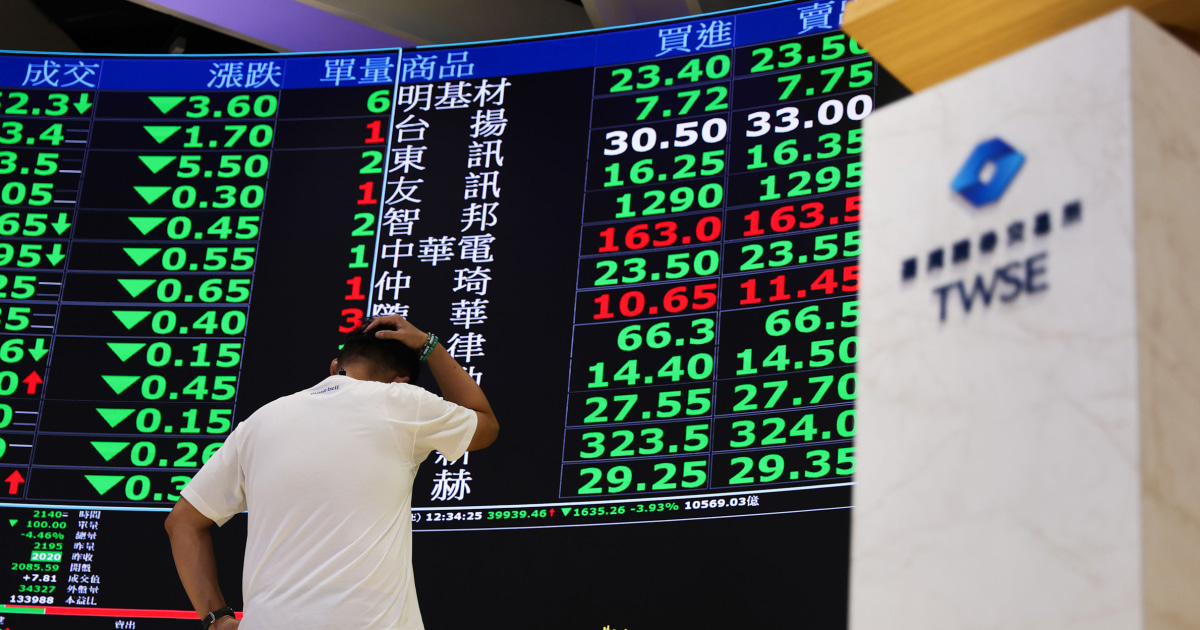
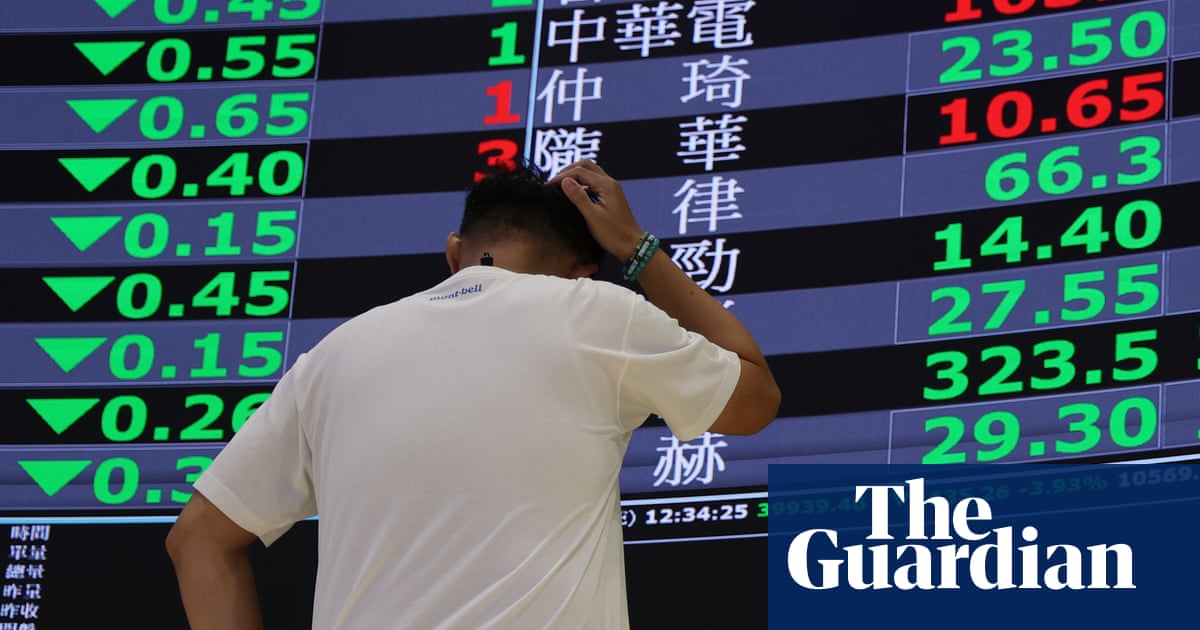
Asia sold off first. Japan's Nikkei suffered its worst week since 2020, falling as much as 6% and more than 20% from its recent high to enter bear-market territory. South Korea's Kospi tumbled more than 8%, triggering a temporary market-wide trading halt, and Taiwan's TAIEX dropped 9%. Tai Hui, J.P. Morgan's APAC chief market strategist, said those markets are tied to the global AI spending cycle, so "the magnitude of correction today" after the U.S. sell-off was no surprise.
Asian Markets Plunge; KOSPI Briefly Halts Trading
Asian stock markets plunged Friday as a massive Wall Street sell-off spread overseas. South Korea's benchmark KOSPI index fell more than 8%, triggering a temporary trading halt, and was still down about 7% when trading resumed. Japan's tech-heavy Nikkei fell roughly 6%, on track for its worst day in eight months, while Taiwan's benchmark index dropped more than 8%.
Chipmakers and AI-linked names took the heaviest losses: Samsung Electronics fell nearly 10%, memory chipmaker SK Hynix dropped 11.7%, TSMC declined 8.5% and SoftBank Group sank about 11%.
The losses followed Thursday's U.S. rout, when the Dow Jones Industrial Average fell 1,833 points, or 3.44%, the S&P 500 declined 4.36% and the Nasdaq Composite plunged 5.52%, entering correction territory after falling more than 10% from its October record high. U.S. stock futures were mixed Friday, with Nasdaq futures up about 1.3% and Dow futures down 0.71%.
Investors are weighing the impact of Democrats' midterm sweep, which handed the party control of both chambers of Congress and raised concerns about tighter AI regulation and restrictions on data center development. President Donald Trump blamed the Democrats' victories for Thursday's plunge, writing on Truth Social that the market "suffered one of the Worst Days in History," while saying the country would soon be "BIGGER AND STRONGER THAN EVER BEFORE."

Fear Gauge Spikes 70% in a Day; What History Says Next
The VIX volatility index, better known as Wall Street's fear gauge, jumped as much as 70% on Thursday. A move that large has happened only eight times since 1991, according to CBOE data.
After the eight prior extreme moves, the S&P 500 averaged a 3.0% gain one month later (positive in 7 of 8 cases), 7.1% after three months (6 of 8), 10.4% after six months (8 of 8) and 14.7% after a year (7 of 8). On Friday the VIX fell 9.01% to 25.64.
Thursday's damage was severe: the S&P 500 lost 4.4% of its market value, with total capitalization falling from $68.9 trillion to $65.9 trillion — the largest one-day dollar loss in the index's history. The Dow plunged 1,830 points in its worst single-day rout since 2020, and the tech-heavy Nasdaq cratered 5.5%, dragged down by Micron and Sandisk. "We are now seeing something of a buyers' strike in tech," said Truist chief markets strategist Keith Lerner.

Fox Completes $22 Billion Acquisition of Roku
Fox Corp. said Friday it completed its acquisition of Roku, a deal first announced in June 2026 at $22 billion, expanding a streaming presence that already includes Tubi and FOX One. The company said combining FOX's live sports, news and local programming with Roku's open connected TV platform, which reaches more than 100 million households, will create "new opportunities" to serve viewers, advertisers and partners.
FOX expects to achieve about $400 million of run-rate cost synergies within two years of the close, with additional potential revenue upside, and said the deal will be accretive to free cash flow per share by the second full year after closing.
Executive Chair and CEO Lachlan Murdoch said the closing "advances the long-term strategy of FOX," with the combined company's top priority being to keep serving audiences and partners while reinforcing the openness and choice at the heart of the Roku platform. Roku founder Anthony Wood will join the FOX board and serve as co-chair of FOX Digital Platforms, a newly formed division that includes Roku, Tubi, FOX One and Red Seat Ventures; Paul Cheesbrough becomes co-chair and CEO of the division.

OpenAI Will Keep Building Data Centers Despite Election Results, CFO Says
OpenAI CFO Sarah Friar said Friday the company will continue to invest in AI infrastructure even after voters strongly opposed data centers in Tuesday's midterm elections. "When I think about the midterms, I need to keep thinking about how do we keep investing to meet that customer demand," Friar told CNBC's Sara Eisen at the Citi TMT Leadership Summit in Pebble Beach, California.
Out of 41 local ballot measures across 10 states, voters backed restrictions or rejected pro-development measures in all but one, according to an analysis by Ballotpedia and additional results gathered by CNBC. Friar said she doesn't think the election results dramatically changed anything for the company; OpenAI published a policy blueprint on Thursday with commitments it pledged to apply to company-owned and -operated data centers.
A listing is also moving forward. OpenAI confidentially filed its prospectus with the SEC in June, and Friar said the company would continue to look into a 2027 debut. Rival Anthropic is trying to go public first, aiming for the Nasdaq in mid-November; its prospectus shows revenue jumped roughly 1,200% to $33.2 billion in the first nine months of the year, with purchase commitments and lease agreements totaling about $895.4 billion, "substantially all of which is related to compute and infrastructure."
On funding, OpenAI has closed an initial $11 billion portion of its current round and could raise up to an additional $9 billion in the coming weeks. "The demand for AI is real," Friar said. "I don't think anyone's arguing with that, or if they are, I think it's a losing argument."

CBS Exit Polls: Data Centers Were Election Losers
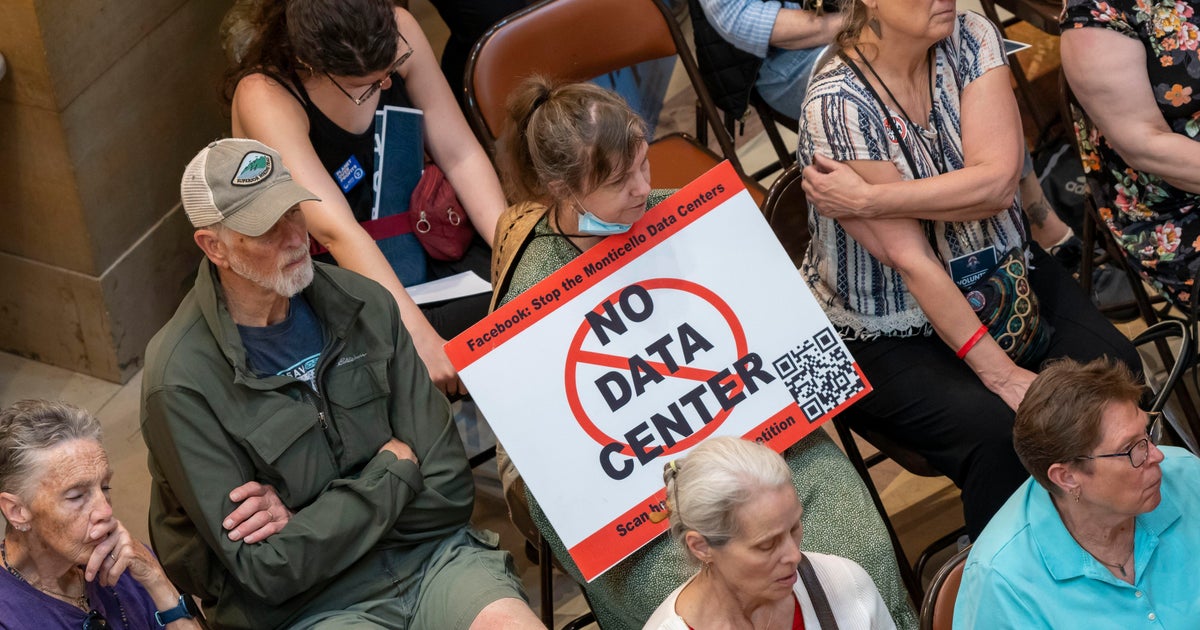
AI data centers were a major factor for over half of voters in the 2026 midterm elections, CBS News exit polls found. While not the most crucial issue, voters made their opinions clear: big majorities nationally and in all the Senate battlegrounds opposed having one built in their community.
That opposition benefited Democratic candidates — most who opposed data centers backed Democrats. But most self-identified Republicans also expressed resistance to a new data center in their area, even as they predominantly voted for Republican candidates.
Views on data centers track broader views on AI: those who see AI doing more harm than good, which is most voters, are opposed, while voters who think AI will help society are more open. Candidates such as Democratic Sen.-elect Sherrod Brown in Ohio and Gov.-elect Gina Hinojosa in Texas made data centers a central part of their campaigns. In the selected states CBS examined, majority opposition spanned urban, suburban and rural areas.
Krispy Kreme Is Beating Nvidia: A Mirror of the AI Trade
Just how badly is the tech sector getting hammered in this post-midterm reckoning? Put it this way: if you had bought Krispy Kreme at the start of the year, you would be doing better than someone who piled into Nvidia at the same time.
As of Friday afternoon, Nvidia sat at about $187 per share, well off the 52-week high of $243.37 it hit on October 6. The donut maker, by contrast, jumped nearly 31% on Thursday to $5.03 before giving back some of those gains Friday — apparently because the company is expanding its franchising model and reported better-than-expected quarterly earnings.
Nvidia has other problems. Bloomberg reported Friday that as Democrats prepare to take over the House and Senate, they are staking out big targets for investigations and potential regulatory crackdowns, and Nvidia is on the list; the incoming majority is particularly interested in whether the company has done enough to keep advanced AI chips out of the hands of U.S. adversaries. More broadly, the market expects Big Tech to be under a microscope come January.

Gold Slips Below $4,000: Why the Haven Stopped Working
Gold fell below $4,000 an ounce this week, after hitting nearly $5,600 in January. The metal tends to rise when there is uncertainty in the economy, and for a while the price reflected that — which is why the drop is puzzling while the war with Iran rages on.
Jeff Guo, co-host of NPR's Planet Money, points to rising Treasury yields as the story. Gold is seen as a safe asset and an inflation hedge, but it does not earn any income or interest on its own, while a 10-year TIPS bond bought now does earn income above and beyond inflation.
The Iran war is a source of political instability that might drive investors toward gold, but so far its main effect seems to be raising the price of oil — and higher oil prices are one of the factors pushing interest rates up, making bonds more attractive relative to gold.

IRS Announces 2027 Federal Income Tax Brackets
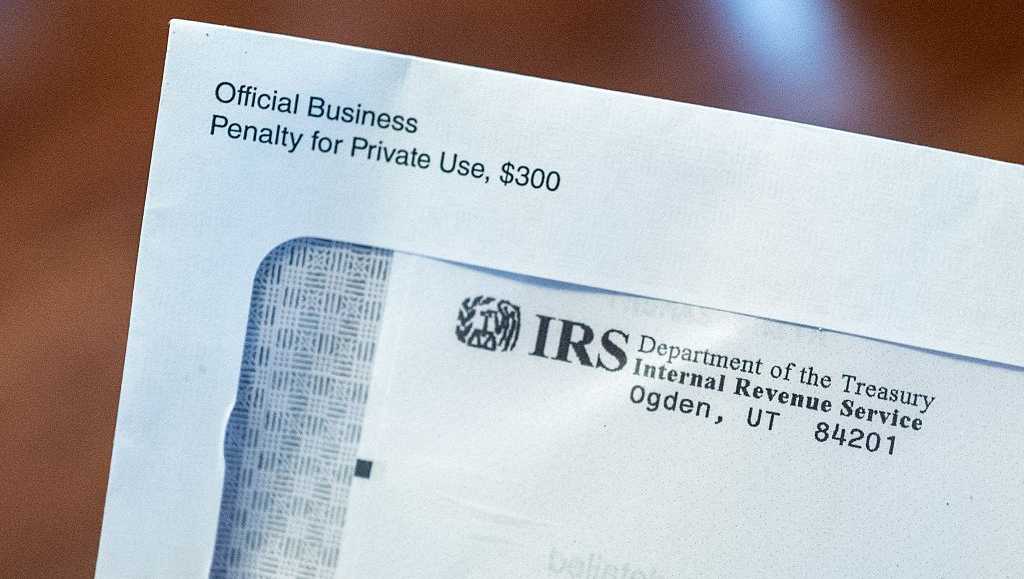
The IRS on Thursday announced new federal income tax brackets for 2027, with the higher income thresholds adjusted for inflation.
The standard deduction, which is applied by about 9 of 10 taxpayers, is also rising. For 2027 it will increase to $33,200 for married couples filing jointly, up $1,000 from 2026, to $16,600 for single taxpayers and married individuals filing separately, and to $24,925 for heads of households.
The child tax credit will increase by $100 to $2,300 in 2027, with the refundable portion at $1,800, also up $100 from last year. The annual exclusion for gifts will rise to $20,000, up from $19,000 in 2026.
More News
- Maple Express | November 6, 2026: Toronto freezes hiring amid $1.1B shortfall
- Maple Express | November 6, 2026: Two-alarm fire at luxury North York home under construction leaves five displaced
- Global Express | November 6, 2026: Trump Says 'Big, Beautiful' Russia-Ukraine Deal in the Works
- AI Selloff Wipes Global Markets: Nikkei Loses 60,000, KOSPI Halts Trading, Taiwan Breaks 40,000 as China Vows Market Support
- Tech Express | November 6, 2026: OpenAI Launches GPT-6 Cyber With Out-of-Bounds Rate Under 1%
Comments (0)
View More
 -45%
eufy Omni C20 Robot Vacuum & Mop — 7,000 Pa, Self-Washing & Self-Emptying! $499.99 CAD (44% Off)
 -46%
Sony BRAVIA 7 II 65" XR70M2 4K TV — True RGB LED Backlight With Dolby Vision! $1999.99 CAD (46% Off)
 -26%
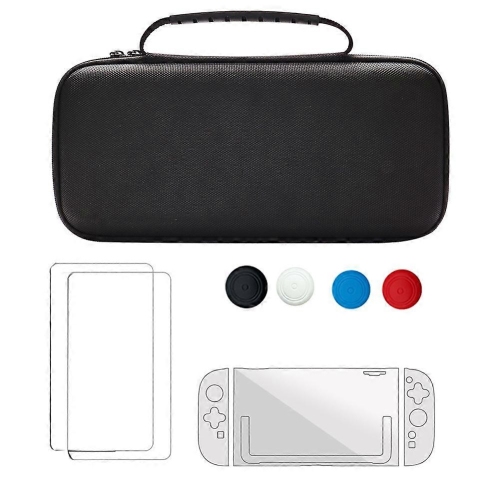
SLOWMOOSE Switch 2 Accessory Kit — Case, Screen Protector and Thumb Grips in One Box! $31.99 CAD (26% Off)
 0
"Worth Buying" Apple AirPods Pro 3 — 2x the Noise Cancelling, Plus Heart Rate! $298.99 CAD
 Maple Express
 | November 6, 2026 — Four pedestrians struck by SUV in Richmond Hill, children aged 7 and 1 injured
 Finance Morning
AI Selloff Wipes Global Markets: Nikkei Loses 60,000, KOSPI Halts Trading, Taiwan Breaks 40,000 as China Vows Market Support
-45%eufy Omni C20 Robot Vacuum & Mop — 7,000 Pa, Self-Washing & Self-Emptying! $499.99 CAD (44% Off)
Amazon
-46%Sony BRAVIA 7 II 65" XR70M2 4K TV — True RGB LED Backlight With Dolby Vision! $1999.99 CAD (46% Off)
Best Buy
-26%SLOWMOOSE Switch 2 Accessory Kit — Case, Screen Protector and Thumb Grips in One Box! $31.99 CAD (26% Off)
Best Buy
0"Worth Buying" Apple AirPods Pro 3 — 2x the Noise Cancelling, Plus Heart Rate! $298.99 CAD
Amazon
Maple ExpressMaple Express | November 6, 2026 — Four pedestrians struck by SUV in Richmond Hill, children aged 7 and 1 injured
Finance Morning