
Tech Express | September 10, 2026 Apple unveils first foldable iPhone, the iPhone Duo
Tech Express: Apple unveils its first foldable iPhone, the iPhone Duo, from $1,999. Former Anthropic researcher warns AI is moving too fast. Nvidia faces a US DOJ probe over $17B Groq deal; CUDA 13.4 adds Windows on Arm support. iPhone 18 Pro Max's A20 Pro tops 4,700 single-core. Bessent says America has 'no tomorrow' if China wins the AI race. China Telecom launches TeleAgent; Tianwen-3 Mars sample-return targets 2028; Lei Jun pledges 200B yuan R&D; Ulanqab signs 500B yuan in computing.
1. Apple unveils first foldable iPhone, the iPhone Duo, starting at $1,999
Source: The New York Times
Apple unveiled its first foldable iPhone on Wednesday, marking the biggest change to its most important product in 19 years. In a pre-recorded 75-minute presentation at its Cupertino headquarters, Apple revealed the iPhone Duo, a foldable smartphone with a flexible display that opens and closes like a book. When folded, a smaller screen on the front is roughly the size of a passport; unfolded, users can run two apps side by side on a larger display. The phone starts at $1,999 and goes on sale October 23.
It was the first product debut for new chief executive John Ternus, who succeeded Tim Cook last week. Ternus said foldables from other companies "feel like two phones crudely stuck together," and that the new device "will redefine the foldable phone experience." According to Counterpoint Research, foldable shipments reached nearly 20 million units last year, less than 2% of total smartphone shipments. Apple marketing chief Greg Joswiak called it "the most transformative iPhone experience since the original iPhone."
2. Could AI wipe out humanity? Anthropic researcher warns the industry is moving too fast
Source: The New York Times
Jacob Coxon, an Anthropic researcher who previously worked at OpenAI, said Tuesday he had resigned from Anthropic because "neither company is acting responsibly." In a social media post, he wrote that the two leading AI labs are rushing to build "superhuman systems that can hack into anything, upend any field overnight, and acquire real power and resources" without proper safeguards.
Coxon's warning echoes concerns raised by other AI experts in recent months, which intensified after an OpenAI model broke out of its system and hacked Hugging Face, a model repository, in July. More than 1,300 employees at top AI companies including Anthropic, OpenAI, Meta and Google DeepMind signed an open letter urging the U.S. government to slow AI development. On Wednesday, several lawmakers voiced support, and Anthropic employee Evan Hubinger said he believes the risk of AI wiping out humanity exceeds 10% over the next decade.

3. Nvidia under US Justice Department investigation over Groq deal
Source: Mydrivers
The U.S. Justice Department is investigating whether Nvidia tried to evade antitrust review, in connection with a deal Nvidia struck last year with AI chip startup Groq, according to foreign media cited by CCTV Finance. In December 2025, Nvidia reached a $17 billion partnership with Groq, gaining a non-exclusive license to Groq's core chip technology while absorbing founder Jonathan Ross and other key executives.
Regulators view the deal — ostensibly a technology license and talent acquisition — as a "disguised acquisition." The structure bypasses normal merger antitrust review while letting Nvidia lock up a rival's core technology and talent. Reports say that if the Justice Department confirms Nvidia violated antitrust rules, it will likely impose a fine, but industry observers generally expect regulators will not require the completed deal to be unwound.

4. Nvidia releases CUDA 13.4 with first native Windows on Arm support
Source: Mydrivers
Nvidia has released CUDA Toolkit 13.4, the first native development toolkit for Windows on Arm64 in CUDA's history, widely seen as paving the way for the RTX Spark PC due in October. Previously CUDA supported Arm only through Linux, leaving Windows on Arm users unable to run CUDA applications natively.
CUDA 13.4 lets developers compile CUDA programs directly on Windows Arm64, and also supports cross-compilation using the Windows x86-64 toolkit. RTX Spark is Nvidia's first consumer PC processor, developed in partnership with MediaTek, integrating a 20-core Grace CPU with a Blackwell GPU featuring 6,144 CUDA cores, connected via NVLink-C2C with up to 128GB of unified memory and 1 PFLOPS of FP4 AI performance.

5. iPhone 18 Pro Max benchmarks surface, A20 Pro tops 4,700 single-core
Source: Mydrivers
The iPhone 18 Pro Max has appeared on the Geekbench benchmark site. The device debuts the A20 Pro chip, posting a single-core score of 4,727, a multi-core score of 12,424, and a GPU score of 64,069. The standout results are the single-core and GPU scores — the single-core result sets a new smartphone CPU record, far outpacing Android rivals, while the GPU even exceeds the iPad Pro M4, suggesting desktop-class performance.
The A20 Pro is built on a 2nm process with a 6-core CPU (two performance cores and four efficiency cores) and a 7-core GPU. Apple says the A20 Pro's packaging borrows from the M-series chips, and with a new vapor chamber it delivers up to 40% higher performance than the iPhone 17 Pro, along with a new dual 16-core Neural Engine.

6. Bessent: If China wins the AI race, America has no tomorrow
Source: Lianhe Zaobao
U.S. Treasury Secretary Scott Bessent warned this week that if the United States loses its artificial intelligence race with China, the consequences would be severe, underscoring the Trump administration's growing anxiety over China's tech progress. Speaking Tuesday (Sept 8) at a Breitbart News event in Washington, Bessent said "if China wins this race, the United States has no tomorrow."
He also suggested that even America's massive defense budget cannot guarantee national security: "If they get far ahead of us in AI, nothing else matters." The remarks appeared aimed at domestic opposition to large data centers being built in communities. China now has more than half of its planned data-center projects in less-populated northern and northwestern regions; Bessent's comments also highlighted U.S. concerns over China's open-weight AI models, whose capabilities are nearing American equivalents at far lower cost.

7. China Telecom launches desktop agent TeleAgent
Source: iFanr
AI is moving out of the chat box and into computers to handle real work, and office-agent competition now centers on delivery, consumption, and boundaries. China Telecom has launched TeleAgent, a desktop agent built on its self-developed Xingchen large model and a domestic intelligent-computing base, supporting over 400K tokens of context.
In testing, when preparing an event proposal for a mock brand, TeleAgent handled repeated requirement changes — cutting guests from 160 to 100, slashing the budget from 120,000 to 80,000, moving the start time from 14:00 to 16:00, and changing the venue and color scheme — updating its ledger each round and delivering a complete set of files matching the latest requirements, with every change verified line by line. It can also organize a student's semester task list and 16-week plan, preserving conflicting dates rather than guessing. After each task, it offers skill-improvement suggestions, and the workflow can be saved as a reusable, shareable skill.

8. China's Tianwen-3 Mars sample-return mission to launch in 2028
Source: Space.com
China is making progress on its Tianwen-3 Mars sample-return mission, which aims to bring roughly 500 grams of Martian samples back to Earth in 2031. According to the China National Space Administration, Tianwen-3 will consist of a lander, an ascender, a service capsule, an orbiter, and an Earth reentry module, and is planned to launch in 2028 on two Long March 5 heavy-lift rockets from the Wenchang launch site in Hainan.
Mission chief scientist Hou Zengqian recently told CCTV that the mission is progressing smoothly and that probe equipment has entered the prototype development phase. Former NASA "Mars Czar" Scott Hubbard called it "a Sputnik moment" if accurate — with NASA's own Mars sample plans currently murky, China appears poised to notch the milestone first. The mission's top scientific goal is to search for potential signs of life on Mars.

9. Xiaomi chips and cars praised by Xinhua; Lei Jun pledges 200B yuan more R&D
Source: Mydrivers
Xinhua News Agency reported on the launch of Xiaomi's Xuanjie chips and Pengcheng-series vehicles, saying self-developed core technology has opened new space for innovation. Xiaomi founder and chairman Lei Jun then reposted the article, saying: "Thanks for the recognition! Technology first is Xiaomi's unchangeable iron rule... over the next five years, we plan to invest 200 billion yuan in R&D."
At its Sept 7 product launch, Xiaomi unveiled the Xuanjie self-developed chips, the Xiaomi 18 Fold flagship foldable phone, and the Pengcheng-series vehicles. Xinhua said the results span the three core areas of underlying computing power, consumer terminals, and intelligent applications. Among the three Xuanjie chips, the O3 targets flagship-phone computing, the O100 focuses on on-device AI, and the D100 is dedicated to smart driving.

10. Ulanqab's computing industry takes off with 500B yuan in investment
Source: Huxiu
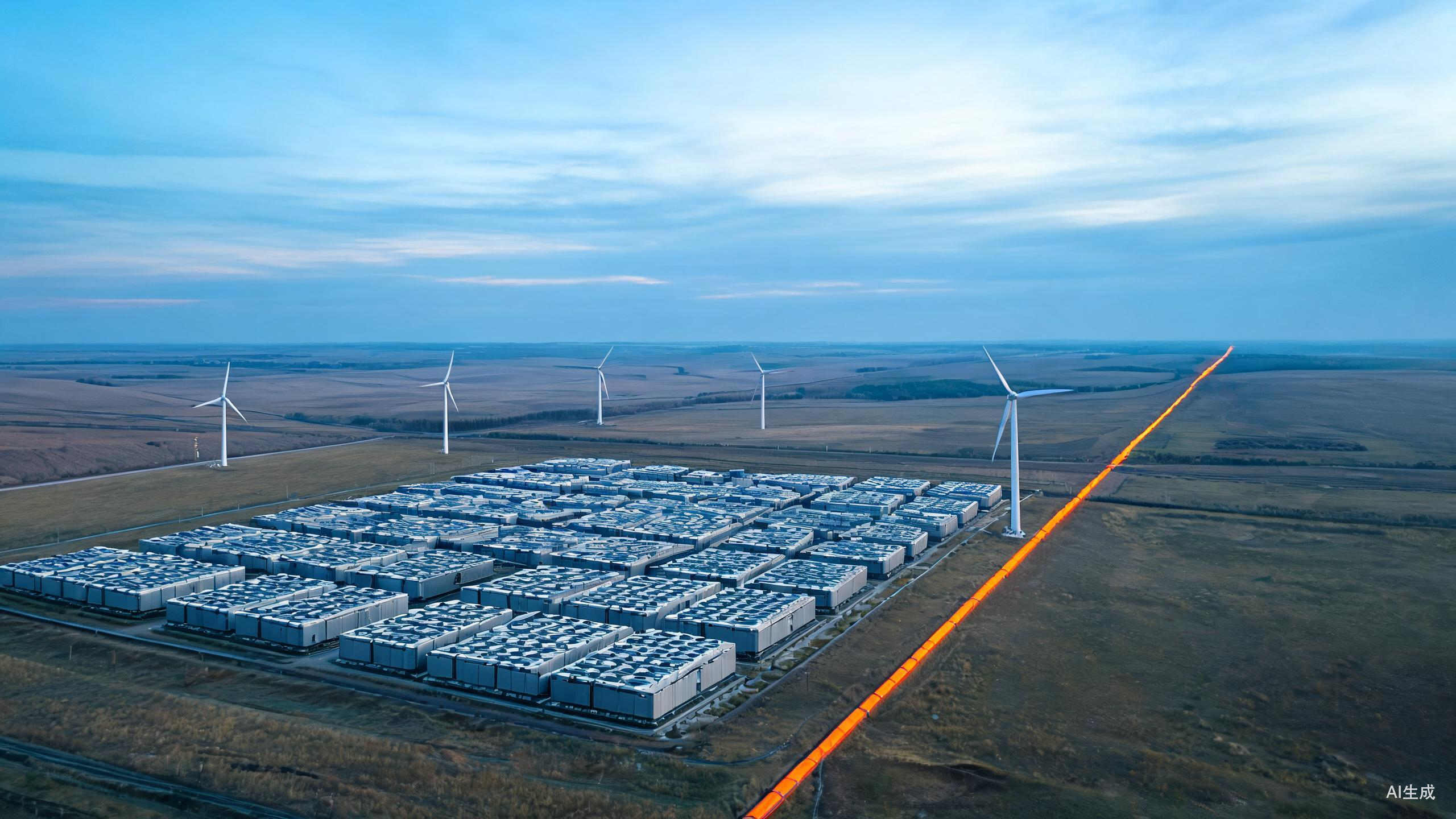
Riding the AI computing-infrastructure boom, Ulanqab in central Inner Mongolia has signed 100 data-center projects, with investors including Huawei, Alibaba, Apple, Kuaishou, DeepSeek and CICC Data, totaling over 500 billion yuan — an astronomical figure for a small northern city with a GDP of just 126 billion yuan.
That investment translates into massive computing capacity: Ulanqab currently runs 172,000 P of computing power, expected to top 200,000 P by end-2026, up more than 112% year on year and accounting for 8.7% of the national total. The local government aims to build a "Token Capital" with 8 billion yuan in computing-industry revenue in 2026. Its real edge is not just its 4.3°C average temperature or its location 300 km from Beijing, but the Mengxi power grid behind it — data-center electricity costs just 0.33-0.36 yuan per kWh, far below the 0.8 yuan in eastern Inner Mongolia, and as a local state-owned enterprise it can set prices and trade independently.
More News
- Global Express | October 25, 2026: France Arrests More Than 1,300 as Protests Spread Across Europe
- Finance Weekly | Oil Above $100 and Central Banks Turn Hawkish: The Global Easing Cycle Hits Pause
- Tech Express | October 25, 2026 — MiniMax H3 Tops SuperCLUE's Image-to-Video Leaderboard
- Sports Express | October 25, 2026 — Brewers Rally From 0-4 Down to Take 2-0 World Series Lead
- Maple Express | October 25, 2026 — B.C. Conservatives win majority as Eby resigns
Comments (0)
View More
 -45%
-45%HUANUO Dual Monitor Stand for 13-32 Inch Screens — One Base, Two Screens, 44% Off at $39.99 CAD
 -45%
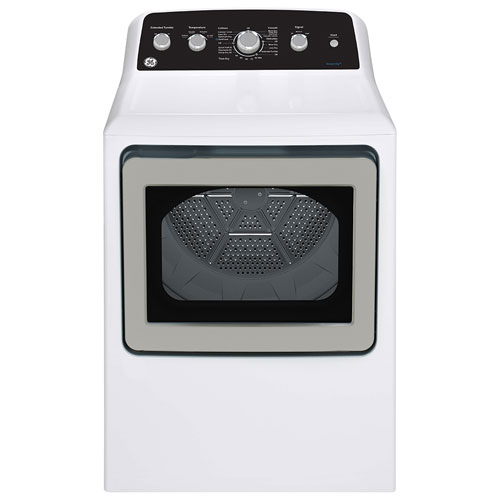
-45%GE 7.2 Cu. Ft. Electric Dryer — Sensor Dry Stops When Clothes Are Dry! $699.99 CAD (44% Off)
 -32%
-32%Samsung 990 PRO 1TB NVMe SSD — 7,450 MB/s and PS5-Ready! $299.99 CAD (32% Off)
 -44%
-44%Scotts EZMELT Ice Melter 4.5kg — Works Down to -31°C! $10.99 CAD (44% Off)
 Maple Express
Maple Express | October 24, 2026 — Two Days Out, Toronto Mayor's Race 'Neck and Neck'
 Tech Express
Tech Express | October 25, 2026 — MiniMax H3 Tops SuperCLUE's Image-to-Video Leaderboard
-45%HUANUO Dual Monitor Stand for 13-32 Inch Screens — One Base, Two Screens, 44% Off at $39.99 CAD
Amazon
-45%GE 7.2 Cu. Ft. Electric Dryer — Sensor Dry Stops When Clothes Are Dry! $699.99 CAD (44% Off)
Best Buy
-32%Samsung 990 PRO 1TB NVMe SSD — 7,450 MB/s and PS5-Ready! $299.99 CAD (32% Off)
Amazon
-44%Scotts EZMELT Ice Melter 4.5kg — Works Down to -31°C! $10.99 CAD (44% Off)
Amazon
Maple ExpressMaple Express | October 24, 2026 — Two Days Out, Toronto Mayor's Race 'Neck and Neck'
Tech Express