Tech Express | September 11, 2026 Anthropic Alleges Chinese AI Firms Distilled Claude
Today's Tech Express covers ten stories: Anthropic's report accusing Chinese AI firms of distilling Claude; OpenAI's new flagship GPT-6 Astra; DeepSeek's V4.1 Flash model; the US DOJ probe into Nvidia's $20 billion Groq deal; TSMC accelerating 1.4nm chips; Apple's first foldable iPhone Duo; LG denying smart-TV surveillance claims; physicists finding time may hold a tiny uncertainty; China's AI+Software action plan; and Apple's foldable strategy shaped by Huawei and Samsung.
1. Anthropic Alleges Chinese AI Firms Distilled Claude
Source: Lianhe Zaobao
US AI company Anthropic released its most detailed threat-intelligence report to date on September 11, accusing Chinese AI firms including Moonshot AI and DeepSeek of "distilling" its Claude model on a large scale. The report says these companies did not use their own models to handle customer requests, but quietly rerouted user queries to Claude—users believed they were using Kimi, when they were actually receiving Claude's replies.
The report says Moonshot AI used a proxy network of 5,380 fraudulent accounts to carry out more than 23 million distillation interactions between May and July this year. DeepSeek launched over 12.1 million distillation attacks over 14 days in July, while Alibaba's distillation volume exceeded 151 million between May and July—the largest Anthropic has monitored to date.
Anthropic said the rerouted queries contained sensitive information, including surveillance activities linked to the People's Liberation Army and internal code and credentials leaked by engineers at state-owned enterprises. The report adds that these sessions contained the names, email addresses and other data of hundreds of end users across at least a dozen languages, likely violating privacy laws and service terms.
2. OpenAI Unveils Flagship GPT-6 Astra Model
Source: OpenAI
OpenAI officially unveiled its next-generation flagship model, GPT-6 Astra, on September 11, calling it "the most intelligent and intent-aligned model in the world." The company says Astra leads in computer use, web browsing, software engineering, cybersecurity and science.
In benchmarks, Astra scored 98% on FrontierMath Tier 4—hitting the tier's ceiling—99.9% on ARC-AGI 3, and a perfect 100% on ExploitBench. Compared with the previous GPT-5.6 Sol, Astra completes computer-use tasks in about 47% less time each.
Astra is rolling out to select organizations starting today and will open to all ChatGPT Plus, Pro, Business and Enterprise users in the coming days, as well as through the OpenAI API, Microsoft Azure and AWS Bedrock.
3. DeepSeek Releases Multimodal V4.1 Flash Model
Source: GeekPark
DeepSeek officially released its V4.1 Flash model on September 10, the smallest model in its new architecture family, with native multimodal vision understanding.
The model is a 552B-parameter MoE model built on a new Causal-Encoder-Decoder architecture, with only 8B input activations and 16B output activations, making it significantly cheaper than models of similar size. It sharply compresses KV Cache, cutting HBM requirements to one-quarter and SSD requirements to one-eighth of the previous generation.
V4.1 Flash is now available on the DeepSeek API—rename the model to "deepseek-flash" to use it. The older V4 Flash and V4 Flash Vision Exp have been retired.
4. US DOJ Probes Nvidia's $20 Billion Groq Deal
Source: Bloomberg
The US Justice Department is investigating Nvidia's $20 billion licensing agreement with AI chip startup Groq, focusing on whether the deal was deliberately structured to avoid antitrust review, Bloomberg reported.
The $20 billion non-exclusive agreement, struck at the end of 2025, is Nvidia's largest-ever deal. The report, citing people familiar with the matter, says the Justice Department is assessing whether the arrangement weakens competition in the AI chip market.
5. TSMC Accelerates 1.4-Nanometer Chip Production
Source: QNC News
TSMC is racing to begin mass production of 1.4-nanometer chips ahead of its original schedule, according to the Economic Daily News, signaling intensifying competition in the global chip-manufacturing race.
The acceleration is driven by demand pressure from international clients and rivals closing in, the report said. TSMC dominates the global foundry market, and an earlier move into 1.4-nanometer production would further cement its lead.
6. Apple Unveils Its First Foldable iPhone, the iPhone Duo
Source: The New York Times
Apple introduced its first foldable iPhone, the iPhone Duo, on September 9—the most significant change to its most important product in 19 years. During a prerecorded 75-minute presentation at its Cupertino headquarters, Apple revealed a foldable smartphone with a bendable display that opens and closes like a book.
When folded, the phone has a smaller outer screen about the size of a passport; opened, users can run two apps at once on a larger display. The phone starts at $1,999 and goes on sale on October 23.
The event was also the first since new CEO John Ternus took over last week, succeeding Tim Cook. Ternus said the new phone "will redefine the foldable phone experience."

7. LG Denies Smart-TV Audio Surveillance Allegations
Source: Al Jazeera
South Korean company LG has denied that its smart TVs record ambient conversations, listen while on standby and store recordings. LG said voice data is recorded only when a user presses and holds the voice button on the remote or activates the "Hi LG" wake word after enabling Far-Field voice recognition.
The statement follows a 135-minute investigative report released Monday by Gamers Nexus, which claimed researchers found LG TVs could record audio even in hibernation—amounting to "216,000,000 spy TVs" in the US alone.
Researchers also said the TVs scan home networks for other devices and collect internal IP addresses, nearby Wi-Fi networks and location data. LG said scanning for nearby devices is a "standard" smart-TV function.

8. Physicists Find Time May Hold a Tiny Uncertainty
Source: ScienceDaily
An international team of physicists found that if quantum collapse models are correct, time itself may contain a very small amount of intrinsic uncertainty—meaning there could be a fundamental limit to how precisely time can ever be measured.
The study, published in Physical Review Research, establishes for the first time a quantitative link between Continuous Spontaneous Localization and gravitational fluctuations in spacetime. The researchers stress the effect is far below the precision of today's atomic clocks, with no practical impact on everyday timekeeping.
The team believes the finding may offer a clue to reconciling quantum mechanics with gravity—one of physics' biggest unsolved problems.

9. China Issues "AI + Software" Action Plan
Source: Cailian Press
China's Ministry of Industry and Information Technology issued an "AI + Software" special action plan on September 11, aiming to significantly raise the intelligence level of the software and IT services industry by 2028 and cultivate a group of high-level intelligent programming tools and development platforms.
The plan calls for covering 20,000 large-scale software enterprises by 2028, carrying out 100 intelligent technical-upgrade projects, building 100 benchmark agent-software applications in key industries, and incubating more than five quality open-source projects.
By 2030, key software will be fully upgraded with intelligence, with intelligent programming, agent software and intelligent services becoming new growth engines, pushing China's software and IT services industry to the top of the global value chain.
10. Apple's Foldable Strategy Reportedly Shaped by Huawei and Samsung
Source: MyDrivers
According to a report by Mark Gurman, Apple's foldable strategy was ultimately decided by then-CEO Tim Cook, who pushed Apple into foldables under the influence of Huawei and Samsung. The report says Apple had secretly begun foldable R&D long before, with the project's real acceleration coming around 2020.
At the time, Cook returned from an Asia trip having seen large numbers of consumers using Huawei and Samsung foldables in markets like China, and moved to speed up the project. Public records show Apple filed foldable-related patents as early as 2016.
Apple held its fall event in the early hours of September 10, Beijing time, where its long-awaited first foldable was unveiled. The iPhone Duo comes in 256GB to 2TB storage options, starting at 15,999 yuan in China, with preorders on October 16 and sales beginning October 23.

More News
- Maple Express | October 26, 2026: Ford says trade war is hurting both countries
- Immigration | October 26, 2026 Express Entry's new scoring takes effect November 3: high-wage job offers worth up to 100 points
- Global Express | October 26, 2026 - Serbia's Vucic Concedes Defeat, Ending 14 Years in Power
- Finance Morning | October 26, 2026 — Shanghai Edges Up 0.19% as Banks and Oil Lead, Asia Mostly Lower
- Tech Express | October 26, 2026 - Huawei's Kirin Chips Return to Public View as Mate 90 Lights Up Landmarks
Comments (0)
View More
 -37%
-37%🎉 史新低!Lenovo ThinkPad Hybrid Dock — Two Displays and Ethernet on One Cable! $220.79 CAD (36% Off)
 -41%
-41%🎉 史新低!Pipishell Full Motion TV Wall Mount (13–43") — Single-Stud Install, 44 lb Capacity! $22.76 CAD (40% Off)
 -31%
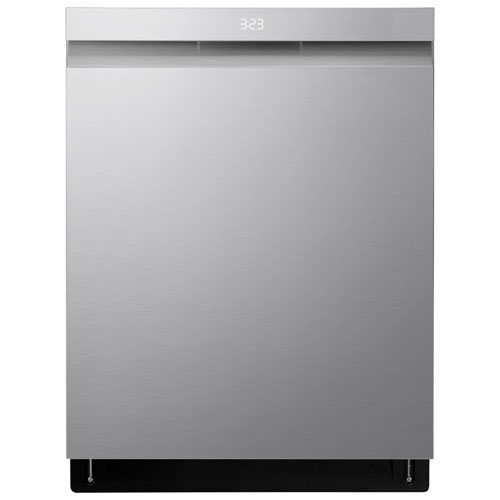
-31%LG 24" QuadWash Smart Dishwasher (LDPM6762S, Smudge Resistant Stainless) — 44 dB Quiet with a Third Rack, $350 Off! $799.99 CAD (30% Off)
 -31%
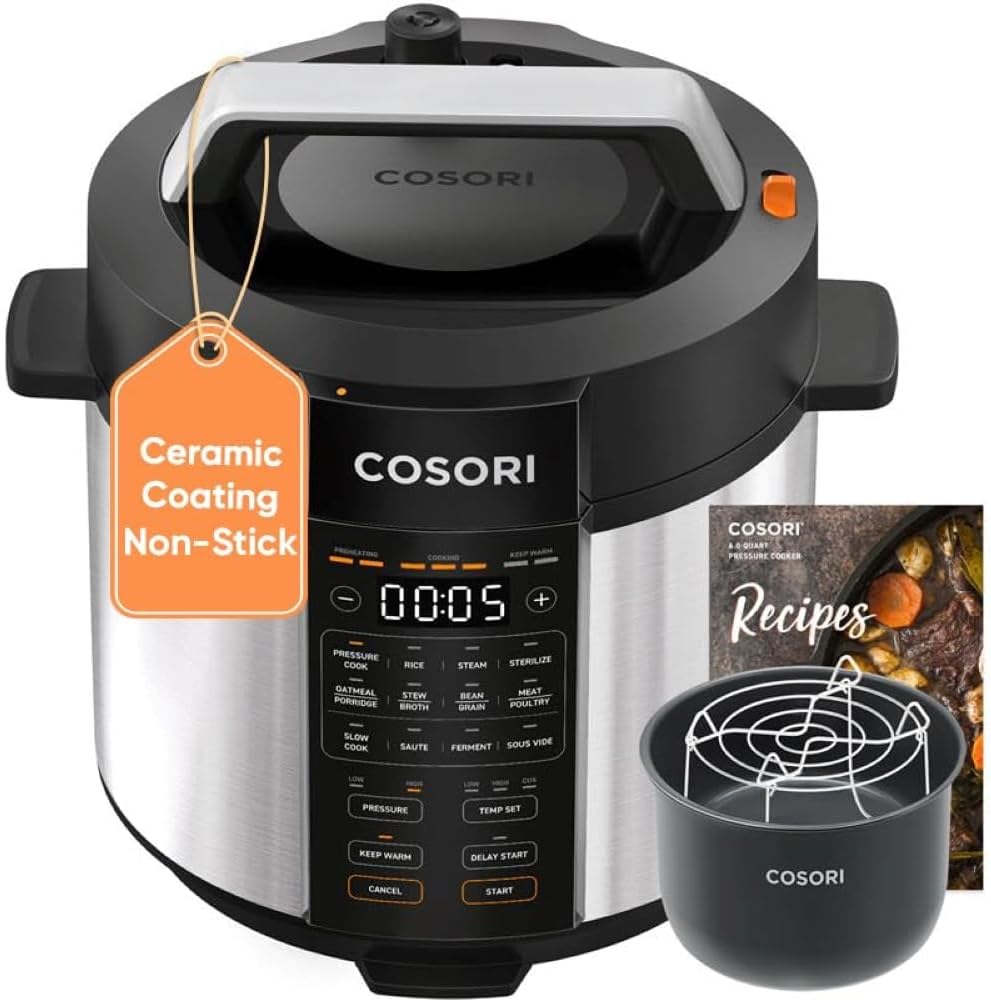
-31%COSORI 6-Quart 9-in-1 Electric Pressure Cooker — 13 Presets, Ceramic Nonstick Pot! $132.04 CAD (30% Off)
 Maple Express
Maple Express | Oct. 25, 2026: Chow and Bradford make final pitch on eve of Toronto mayoral vote
 Finance Morning
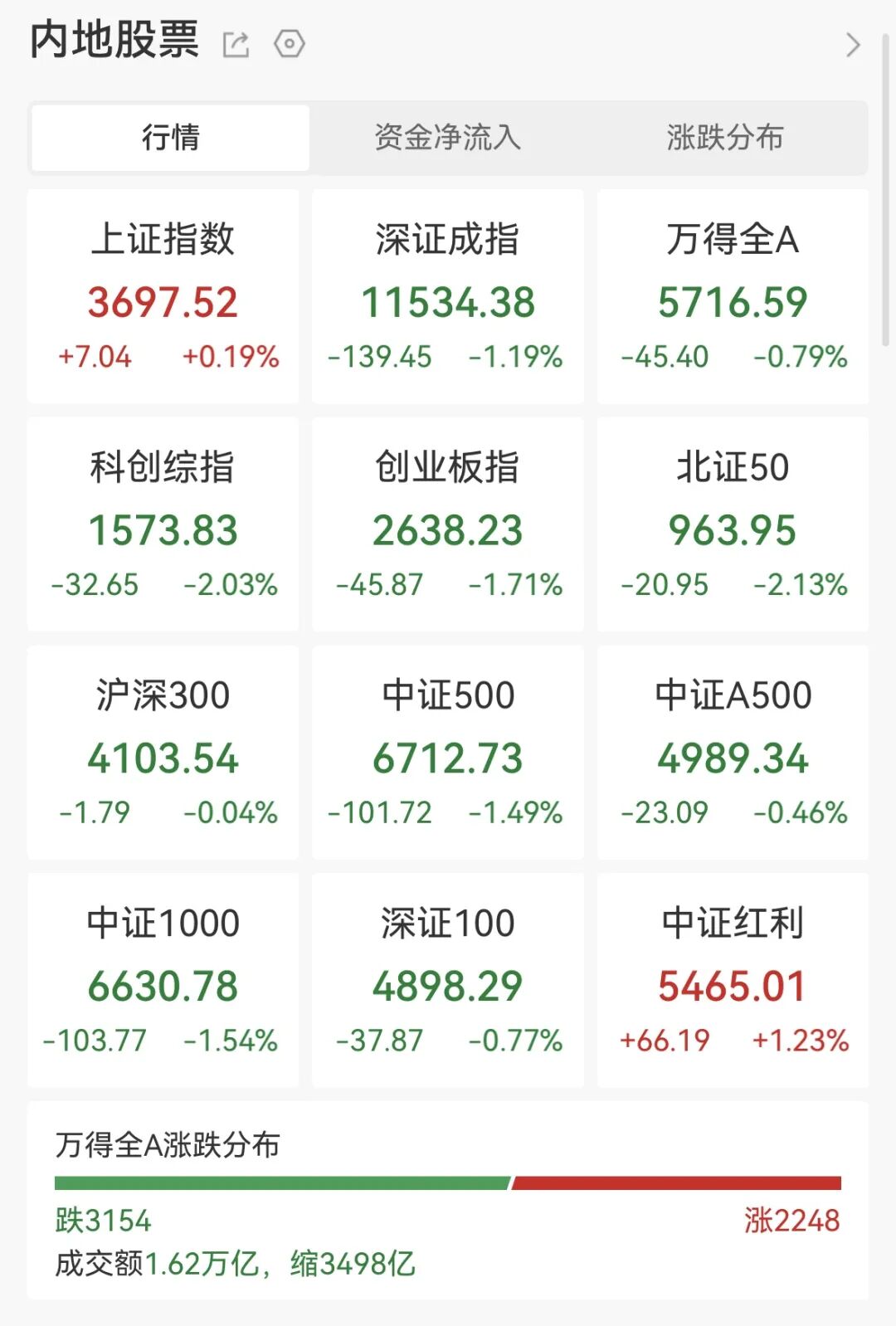
Finance Morning | October 26, 2026 — Shanghai Edges Up 0.19% as Banks and Oil Lead, Asia Mostly Lower
-37%🎉 史新低!Lenovo ThinkPad Hybrid Dock — Two Displays and Ethernet on One Cable! $220.79 CAD (36% Off)
Amazon
-41%🎉 史新低!Pipishell Full Motion TV Wall Mount (13–43") — Single-Stud Install, 44 lb Capacity! $22.76 CAD (40% Off)
Amazon
-31%LG 24" QuadWash Smart Dishwasher (LDPM6762S, Smudge Resistant Stainless) — 44 dB Quiet with a Third Rack, $350 Off! $799.99 CAD (30% Off)
Best Buy
-31%COSORI 6-Quart 9-in-1 Electric Pressure Cooker — 13 Presets, Ceramic Nonstick Pot! $132.04 CAD (30% Off)
Amazon
Maple ExpressMaple Express | Oct. 25, 2026: Chow and Bradford make final pitch on eve of Toronto mayoral vote
Finance Morning