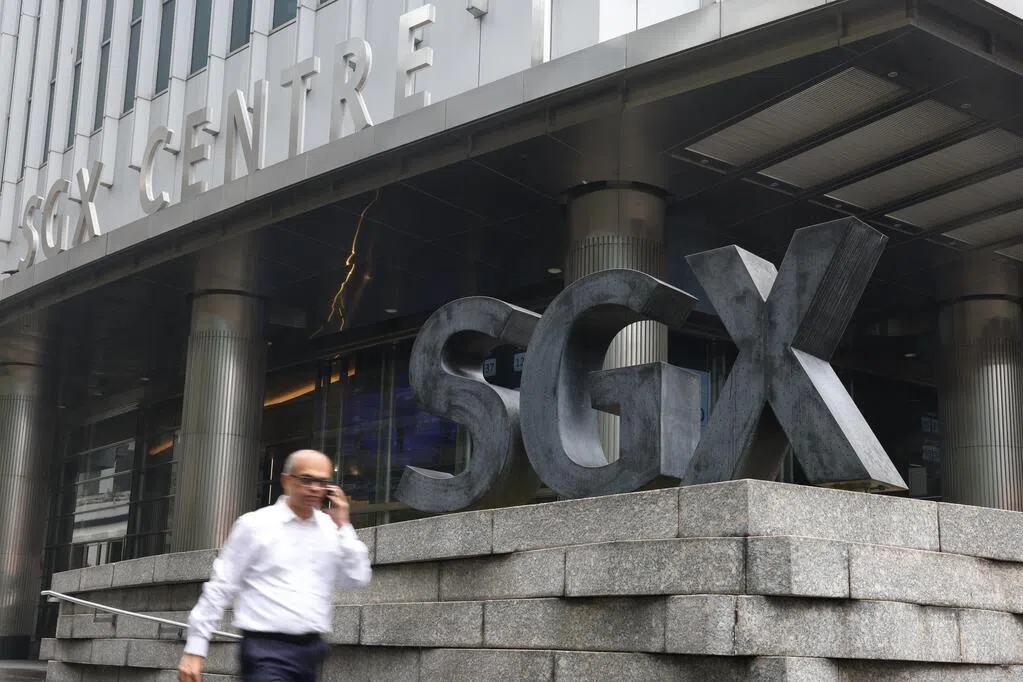
Alphabet and Samsung Earnings Miss Weigh on Asia-Pacific Markets as ChiNext Slides 4.45%
On Oct 29, disappointing Alphabet and Samsung results weighed on most Asia-Pacific markets, with ChiNext down 4.45% while the Nikkei rose 1.10% to reclaim 64,000. The PBOC reported outstanding loans of 283.44 trillion yuan, up 4.8% year on year. UBS sees Chinese equities as attractive on valuation. The Fed held rates at 3.75-4% and the dollar stayed above 102, while about 75 trillion yuan of household time deposits mature in 2026.
📊 Asian Markets Today
| Index | Close | Change | % Change |
|---|---|---|---|
| Shanghai Composite | 3651.43 | +3.13 | +0.09% |
| Shenzhen Component | 11138.20 | -107.50 | -0.96% |
| ChiNext | 2517.59 | -117.17 | -4.45% |
| Hang Seng | 22958.65 | -82.65 | -0.36% |
| Nikkei 225 | 64659.47 | +705.28 | +1.10% |
| KOSPI | 5937.66 | -74.78 | -1.24% |
| TAIEX | 46368.33 | +272.13 | +0.59% |
1. Alphabet and Samsung earnings disappoint, most Asia-Pacific markets under pressure
Source: Zaobao
After Alphabet, Google's parent company, and Samsung Electronics both reported results that fell short of expectations, most Asia-Pacific markets came under selling pressure on Thursday (Oct 29). Singapore was not spared: the Straits Times Index slipped 0.03 per cent, or 1.88 points, to 5,396.03.
Turnover on the Singapore exchange was 1.11 billion shares worth S$1.77 billion, with 250 counters up and 304 down. Among STI constituents, 15 fell, with Wilmar International under the heaviest pressure, down 4.89 per cent to S$3.11, followed by Yangzijiang Shipbuilding, down 3.55 per cent to S$4.62. Twelve rose, with Genting Singapore the most sought after, up 1.70 per cent to S$0.60.
Phillip Securities research senior investment analyst Hu Yuxuan said the STI is likely to stay range-bound over the coming week as investors await results from the three local banks next week. He also flagged the upcoming US personal consumption expenditures (PCE) price index and non-farm payrolls data, which will shape the Federal Reserve's policy path. Brent crude stood at US$113.34 a barrel as of 5pm on Thursday, down 1.72 per cent, but up nearly 18 per cent over the past month.
2. Two gainers, nine losers among 11 major Asia-Pacific indices; ChiNext leads declines
Source: JRJ
Asia-Pacific markets closed on Oct 29 with two of the 11 tracked indices higher and nine lower, reflecting a weak overall tone. The Nikkei 225 (+1.10%) and Singapore's Straits Times Index (+0.05%) led gains, while the FTSE Malaysia index slipped 0.17 per cent.
ChiNext and Indonesia's Jakarta Composite led the declines, falling 4.45 per cent and 3.49 per cent respectively. Only the Nikkei and the Straits Times Index finished higher, pointing to caution as major technology earnings are released.
3. PBOC loan report: outstanding loans at 283.44 trillion yuan as structure improves
Source: Sina Finance
The People's Bank of China on Oct 28 released its statistical report on financial institution loan flows for the third quarter of 2026. Outstanding RMB loans stood at 283.44 trillion yuan at end-September, up 4.8 per cent year on year, with new RMB loans of 11.52 trillion yuan in the first three quarters. Green loans, loans to small and medium-sized technology enterprises and inclusive small and micro loans all grew faster than total loans, while property loans fell 5.2 per cent year on year.
New lending in the first three quarters was mainly driven by corporate loans. Outstanding domestic and foreign currency corporate loans reached 198.95 trillion yuan, up 8.0 per cent year on year, 3.3 percentage points faster than total loans. Operating loans rose 11.2 per cent to 84.07 trillion yuan, while fixed-asset loans rose 2.4 per cent to 79.40 trillion yuan. Household loans stood at 82.25 trillion yuan, down 2.0 per cent year on year and down 1.03 trillion yuan in the first three quarters; consumer loans excluding mortgages fell 2.8 per cent to 20.69 trillion yuan, a decline of 473.6 billion yuan.
Green loans were among the steadiest categories, reaching 49.22 trillion yuan, up 13.0 per cent, an increase of 4.41 trillion yuan in the first three quarters. Technology lending grew faster still: loans to small and medium-sized technology enterprises reached 4.27 trillion yuan, up 20.1 per cent, with a loan access rate of 51.1 per cent; loans to high-tech enterprises reached 22.09 trillion yuan, up 17.2 per cent, with an access rate of 58.2 per cent. Inclusive small and micro loans rose 6.7 per cent to 38.50 trillion yuan. Fu Yifu, a special researcher at Suning Bank, told reporters that the main thread in the third-quarter credit data is a shift from scale expansion to structural optimisation.
4. UBS: Chinese equities more attractive on valuation, favours AI hardware and banks
Source: JW View
UBS China equity strategy head Wang Zonghao said on Oct 29 that Chinese equities look more attractive on valuation and that the broker favours AI technology hardware and bank stocks. Global tech shares have led a broad sell-off recently, and A-shares have also kept swinging lower. Wang said UBS's gauge of AI-related technology hardware stocks is up only 9 per cent year to date.
UBS tracking of positioning crowding scores, margin balances and other short-term flow data shows net positioning has returned to start-of-year levels; short positions in Hong Kong AI tech names have also risen recently. Tracking of overseas long-only funds, however, shows their holdings remain above historical levels. Earnings growth in the technology hardware sector remains strong, with earnings forecasts for most AI tech stocks revised up 12 to 15 per cent over the past three months.
Wang noted that the MSCI China index trades at 9.5 times forward 12-month earnings, 1.2 standard deviations below its historical average and in the 8th percentile. UBS believes concerns over AI fundamentals are overdone: historically, after valuations fell to similar levels, these stocks gained more than 50 per cent on average over the following 12 months. He cautioned, however, that Chinese earnings growth and momentum are weaker than in other markets and near-term upside is limited, with the broker favouring a barbell strategy.
5. Brainco-Guangdong spin-off BrainCo surges then slumps in Hong Kong
Source: Sina Finance
Hong Kong-listed BrainCo-B (06681.HK) spiked then reversed on Oct 29, rising nearly 20 per cent to HK$2.23 before tumbling 16 per cent to HK$1.515, a swing of more than 40 per cent, with HK$1.3 billion traded.
On the news front, an international standard for brain-computer interfaces led by China was officially released, and the company's depression cognitive assessment software obtained a Class II medical device registration certificate. The stock is still up more than 150 per cent from its HK$0.60 low seven trading days ago.
6. Nikkei rises 1.10 per cent as semiconductor stocks lead
Source: Kyodo News
The Nikkei Stock Average extended gains on the Tokyo Stock Exchange on Oct 29, closing at 64,659.47, recovering the 64,000 mark for the first time in about a week. The index rose 705.28 points, or 1.10 per cent, from the previous session. Semiconductor shares with strong earnings led the advance, helped by gains on Wall Street overnight.
The broader TOPIX index added 11.57 points to close at 4,003.28, up 0.29 per cent, with 4.148 billion shares traded. Chip-testing equipment maker Advantest, which raised its full-year earnings forecast the previous day, attracted heavy buying, and other AI and semiconductor shares followed, lifting the broader market.
The Federal Reserve's decision to keep its policy rate unchanged, as expected, also reassured investors. But Samsung Electronics' weaker-than-expected earnings, released during Tokyo trading hours, triggered a round of selling that trimmed the Nikkei's gains and briefly pushed the index into negative territory.

7. Samsung's third-quarter net profit misses, KOSPI falls more than 3 per cent intraday
Source: JRJ
The KOSPI's decline widened to 3 per cent on Oct 29, trading at 5,831.37, while Samsung Electronics reversed from a gain of nearly 3 per cent to a drop of more than 4 per cent after its third-quarter chip profit missed expectations.
Samsung reported its official third-quarter 2026 results that morning: revenue of 195.3 trillion won, slightly above the preliminary 195 trillion won; operating profit of 107.4 trillion won, of which the chip division accounted for 106.5 trillion won while the mobile business posted a 60 billion won loss. Net profit came in at 75.2 trillion won, below the market expectation of 83.6 trillion won. Samsung expects 2026 capital expenditure of 84.4 trillion won, versus 52.7 trillion won in 2025.
Semiconductors remained the core earnings engine, with foundry revenue rising sharply and the company guiding for double-digit revenue growth in the fourth quarter; the display business posted an operating profit of 1.1 trillion won. On shareholder returns, Samsung declared a third-quarter dividend of 4,601 won per share, totalling 30 trillion won, and will announce its shareholder return plan at the end of January. Management expects memory demand to keep expanding in the fourth quarter and warned that chip supply shortages will worsen next year.
8. Fed holds rates steady; all three major US indices gain
Source: 21st Century Business Herald
With the Federal Reserve holding rates as expected, the three major US stock indices opened mixed on Oct 28, traded in a narrow range in the morning, then firmed in the afternoon and closed higher. The Dow Jones Industrial Average rose 97.53 points to 52,475.1, up 0.19 per cent; the S&P 500 gained 21.38 points to 7,743.98, up 0.28 per cent; and the Nasdaq Composite added 72.04 points to 26,549.851, up 0.27 per cent.
Eight of the S&P 500's 11 sectors rose. Technology and energy led with gains of 0.48 per cent and 0.41 per cent, while utilities and real estate lagged, falling 0.88 per cent and 0.65 per cent.
The Fed concluded its two-day policy meeting on Oct 28 and kept the federal funds target range at 3.75 per cent to 4 per cent, in line with broad expectations. The Federal Open Market Committee voted 10-2, with Fed Governor Lisa D. Cook and Cleveland Fed President Beth Hammack favouring a 25 basis point hike. On individual stocks, Oracle said at its investor day that revenue would reach US$225 billion by fiscal 2030, implying an average annual growth rate of 35 per cent, and that it would limit additional financing over the next four years; its shares jumped 10.73 per cent.
9. Dollar index stays elevated after Fed decision
Source: Sina Finance
In early Asian trading on Thursday, the dollar index traded between 102.10 and 102.20, off Wednesday's intraday high of 102.49 but holding above 102.00. The level matters because the Fed voted 10-2 on Wednesday to keep rates at 3.75-4.00 per cent, while upgrading its economic assessment from "moderate" to "strong" expansion and dropping September's language that the move would support a more timely return of inflation to 2 per cent, replacing it with a line that accumulating information will help the committee determine the appropriate policy stance. Markets read the wording shift as a hawkish pause.
The core tension is between Fed Chair Warsh's cautious language and market pricing for a hike. Warsh declined to offer forward guidance at his press conference, stressing that ensuring price stability is not tied to a fixed date on the calendar and reiterating that the 2 per cent PCE target is non-negotiable. He also announced that from 2027 some FOMC meetings will become strategy discussions rather than rate votes. The vote itself exposed internal divisions: Governor Cook and Cleveland Fed President Hammack dissented in favour of an immediate 25 basis point hike. CME FedWatch shows markets pricing roughly a 78-85 per cent chance of a December hike.
Across assets, the dollar's move reflects several drivers: rate differential support from high odds of a year-end hike; safe-haven flows and oil-price pass-through from Middle East tensions; structural changes in the Treasury curve; and passive strength from weak non-US currencies. Analysts argue the dollar's rise is more likely to be stair-stepped than a sustained trend.
10. About 75 trillion yuan of household time deposits mature in 2026, with 90 per cent rolling over
Source: Huxiu
The volume of household time deposits maturing in 2026 is large enough to fuel speculation: will tens of trillions of yuan flood out of banks into stocks and funds, driving asset prices higher? CICC, Guotai Haitong Securities and other institutions estimate that 75 trillion to 77 trillion yuan of household time deposits will mature in 2026; Tianfeng Securities puts maturities across the industry at 107 trillion to 114 trillion yuan, including 73 trillion to 77 trillion yuan for households.
Brokerage estimates put the rollover rate for maturing private-sector time deposits at around 90 per cent in recent years. On that basis, only about 7.5 trillion yuan would in theory leave bank balance sheets. Several large banks have said at half-year results briefings that retention rates after maturity remain around 90 per cent or higher.
On the receiving side, the money has not rushed into risk. By the end of the third quarter of 2026, the wealth management market stood at 35.37 trillion yuan, up about 2.08 trillion yuan from end-2025, with fixed-income products accounting for more than 96 per cent; bond and money market funds added 2.47 trillion yuan during the year, while the industry's total assets grew only 1.61 trillion yuan. In the first half of 2026, household RMB deposits rose about 7.58 trillion yuan, a marked slowdown year on year, while deposits at non-bank financial institutions rose about 4.65 trillion yuan, a marked increase. In the third quarter, however, non-bank deposits edged lower: in the first three quarters household deposits rose 9.39 trillion yuan and non-bank deposits rose 4.41 trillion yuan.

More News
- Global Express | Oct 29, 2026: Spain Train Crash Kills 69 as Three Days of Mourning Begin
- Tech Express | October 29, 2026: Gemini 4 Carbon Tops Benchmark as Alphabet Sheds $300 Billion
- Sports Express | October 29, 2026 — Brewers Win Their First World Series
- Maple Express | October 29, 2026: Four in hospital after shooting at Bridle Path home
- Finance Evening: Alphabet Misses Revenue Estimates as Fed Holds Rates Steady
Comments (0)
View More
 -22%
TCL 65" F7D 4K QLED Fire TV — Quantum Dot, Dolby Vision, Built-in Fire TV! $549.99 CAD (21% Off)
 -33%
LEGO Harry Potter Knight Bus Adventure 76446 — 499 Pieces, 5 Minifigures! $40.58 CAD (32% Off)
 -50%
Dreame RGB IC LED Strip 5m — 4-in-1 Chip, 50 DIY Segments, Matter Support! $55.99 CAD (49% Off)
 -39%
🎉 史新低!GoveeLife Smart Water Leak Detector 4-Pack + Gateway — 1968ft Range, SMS Alerts! $79.98 CAD (38% Off)
 Finance Evening
: Alphabet Misses Revenue Estimates as Fed Holds Rates Steady
 Maple Express
 | October 28, 2026 - Bank of Canada Hikes Rate to 2.5%, Ford Calls It 'a Massive Mistake'
-22%TCL 65" F7D 4K QLED Fire TV — Quantum Dot, Dolby Vision, Built-in Fire TV! $549.99 CAD (21% Off)
Amazon
-33%LEGO Harry Potter Knight Bus Adventure 76446 — 499 Pieces, 5 Minifigures! $40.58 CAD (32% Off)
Amazon
-50%Dreame RGB IC LED Strip 5m — 4-in-1 Chip, 50 DIY Segments, Matter Support! $55.99 CAD (49% Off)
Amazon
-39%🎉 史新低!GoveeLife Smart Water Leak Detector 4-Pack + Gateway — 1968ft Range, SMS Alerts! $79.98 CAD (38% Off)
Amazon
Finance EveningFinance Evening: Alphabet Misses Revenue Estimates as Fed Holds Rates Steady
Maple Express