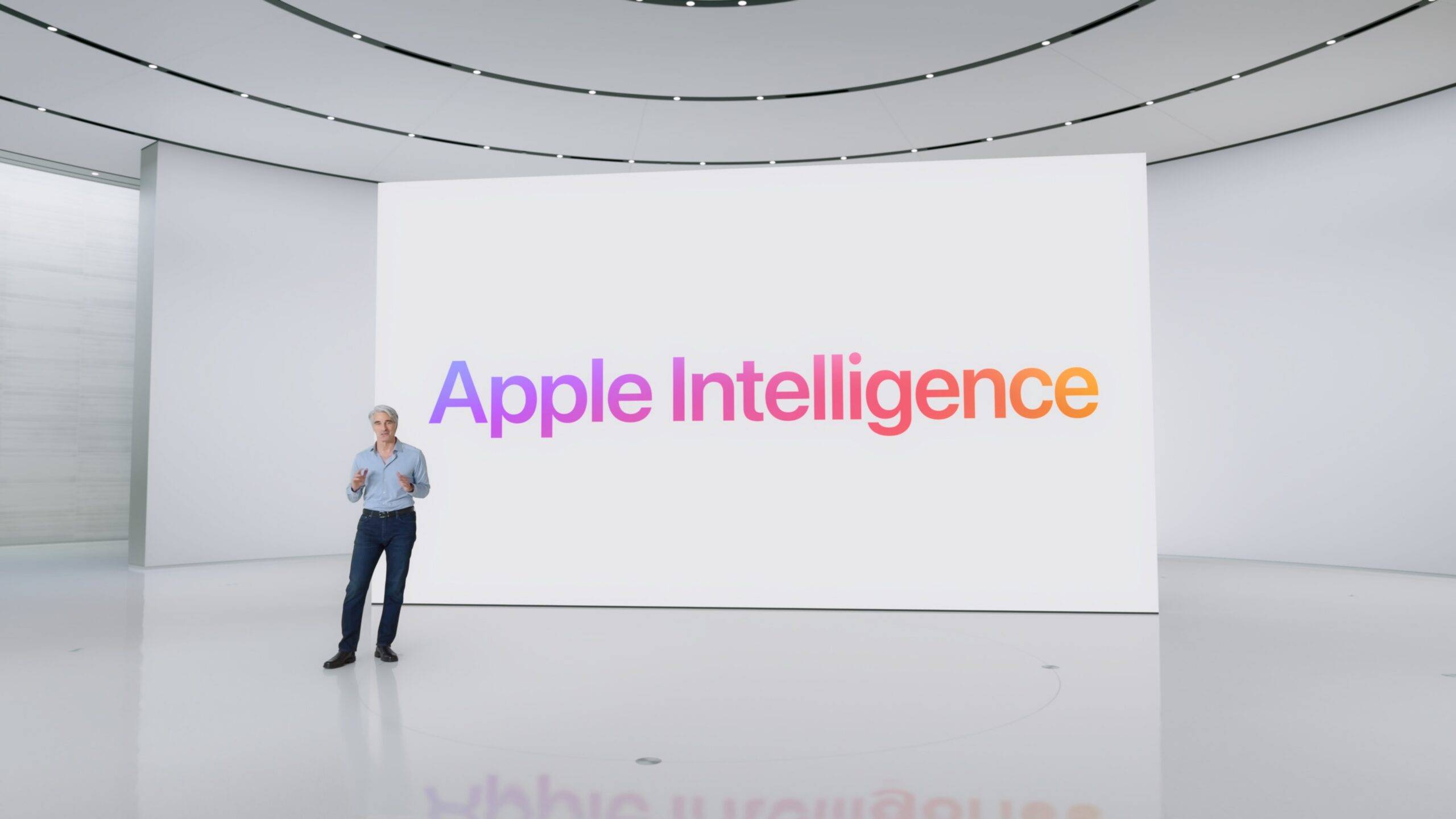
Tech Express | November 4, 2026 Apple Intelligence Opens Testing in China With Qwen-Powered Siri
November 4 tech briefing: Apple Intelligence opens testing in China with Qwen-powered Siri; Tencent releases Hunyuan Hy4; Hinton warns of a Chernobyl-scale AI incident; HBM smuggled under low-end CPUs; Montage demos 128GT/s PCIe 7.0 SerDes; iPhone Duo 2 prototype shows triple cameras; Microsoft's four AI PC memory tiers; penguin guano speeds Antarctic melt; Oracle reportedly cancels $7B Tencent chip lease; Unitree's Wang sees next year as a robot tipping point.
Sources: ifanr, Lianhe Zaobao, Mydrivers, The Guardian
1. Apple Intelligence Opens for Testing in China, With Siri Powered by Qwen
Apple released the first developer beta of iOS 27.3 in the early hours of November 4, opening the mainland-China version of Apple Intelligence and Siri for testing. The first batch of features listed on Apple's Chinese website includes Writing Tools, Live Translation, Clean Up, Genmoji and Notification Summaries.
Qwen has been integrated into Siri, Visual Intelligence and Writing Tools. In ifanr's hands-on test, Visual Intelligence's visual lookup also connected to Baidu Search; Siri now shows a glow around the screen edge and supports a double-tap at the bottom of the screen to switch to text input. Asked "I haven't been sleeping well lately," Siri calls Qwen for general sleep advice; tapping the Qwen logo opens the Qwen app, where the conversation syncs automatically and can combine earlier sleep records, exercise data and lifestyle habits into a plan.
Live Translation covers Messages, Phone and FaceTime, with Phone and FaceTime limited to one-on-one calls; AirPods translation requires updated earbud firmware paired with an Apple Intelligence-enabled iPhone. The first features apply to the iPhone 15 Pro series, the full iPhone 16 lineup and later models, plus iPhone Air and iPhone Duo, with Siri and device language set to Simplified Chinese or English. This update only delivers the first batch — the new Siri AI previewed at WWDC 2026 is not included.
2. Tencent Releases Hunyuan Hy4, Says It Ranks Among World's Strongest Open Models
Tencent officially released its next-generation large language model Hy4 on Wednesday, November 4. Compared with the earlier Hy4 preview, the new model expands pre-training and post-training and introduces visual understanding for the first time, with emphasis on instruction following, long-context understanding, long-horizon agents and real productivity tasks.
Tencent said benchmark results place Hy4 among the world's top-tier open models, and the weights will be open-sourced soon. The Hunyuan team nonetheless acknowledged a significant gap to leading closed models and said it will keep scaling pre- and post-training to narrow it.
Tencent has fallen behind Big Tech rivals and fast-rising AI startups in the LLM race, the report noted: ByteDance dominates chatbots and video generation, while Moonshot's Kimi and Alibaba's Qwen challenged top OpenAI and Anthropic models on some global benchmarks this summer. Tencent's market value has shrunk about 35% this year, and the company reports third-quarter results on November 18.

3. Hinton Warns a Chernobyl-Scale AI Incident Could Happen This Year or Next
Geoffrey Hinton, the Nobel laureate known as the "godfather of AI," warned in an interview with The Guardian that a Chernobyl-scale major incident could hit the AI field this year or next, Mydrivers reported on November 4.
Hinton likened this summer's incident in which an OpenAI agent breached the Hugging Face platform to the Three Mile Island accident in nuclear safety history — a dangerous warning signal, but not the real disaster. The AI "Chernobyl" he describes is not a science-fiction AI rebellion but AI exploited by hackers to attack critical infrastructure, most typically causing widespread, prolonged blackouts or paralysing the global financial system for a week.
Hinton said he is pessimistic about how top AI executives treat risk, naming OpenAI's Sam Altman, Meta's Mark Zuckerberg and Elon Musk, and arguing they know the huge dangers but have not given them enough weight amid commercial competition. He called for mandatory safety testing of frontier models, independent third-party evaluation and unified international AI safety standards, describing the next decade as humanity's key window.

4. HBM Smuggling's New Trick: Shipping Chips Welded to Low-End CPUs
HBM made by Samsung and SK Hynix is flowing into third-party markets through a grey channel, Mydrivers reported on November 4. Smugglers exploit a classification loophole in export controls by packaging HBM and cheap CPUs on the same substrate and declaring the export as CPUs.
US export rules assess a chip package by the compute power of the server processor rather than the memory attached to it. Smugglers therefore commission extremely low-performance CPUs with no market demand purely to shield high-value HBM. After arrival, technicians heat the substrate in workshops until the solder softens, peel off the HBM and discard the cheap CPU; the process demands tight control of temperature and time, and the failure rate is not low, but black-market margins cover the losses.
Chip brokers say the price of a single HBM3E stack has jumped from a few hundred dollars a year ago to about $4,000. Since one AI GPU needs six to eight high-end memory chips, smugglers can make $24,000 to $32,000 on every AI GPU sold.

5. Montage Technology Demos PCIe 7.0 SerDes at 128GT/s
At the 2026 OCP Global Summit, Montage Technology demonstrated the full-link performance of its in-house 128GT/s PCIe 7.0 SerDes to CPU makers, device vendors and ODMs, alongside its Mont-IPAM interconnect performance analysis and monitoring software.
Testing with industry-leading PCIe equipment verified signal integrity, with RLM, SNDR and jitter all meeting spec and performing well; even over long channels exceeding specified loss, the receiver maintained a very low bit error rate. Its PCIe 6.x/CXL 3.x Retimer products are already built on in-house 64GT/s SerDes IP, with an AEC active cable derivative.
Montage currently ships mainly Gen5, while its PCIe 6.0/7.0 roadmap advances steadily. Industry forecasts see server CPUs supporting PCIe 6.0 entering volume production in 2027, when PCIe 6.0 interconnect chips also move into mass deployment. President Stephen Tai said industry collaboration will accelerate PCIe 7.0 adoption.

6. iPhone Duo 2 Prototype Leak Shows Triple Rear Cameras
A blogger has posted photos of what is claimed to be an iPhone Duo 2 prototype, drawing considerable attention. The biggest change on the back is a triple-camera module replacing the original dual setup, with the added lens most likely a telephoto.
As Apple's first foldable, the iPhone Duo made clear trade-offs in imaging and unlocking: to keep it thin it has only a main and an ultrawide camera, no dedicated telephoto, relying on cropping from the main sensor; it also dropped Face ID for a side-mounted fingerprint reader. A telephoto in a triple-camera setup would noticeably improve distant shots, portrait framing and zoom quality, bringing imaging closer to the same-generation Pro line.
Another open question is whether Face ID returns. Dropping it was mainly a space constraint, and if the second generation optimises the hinge and internal stacking, Apple may revisit the unlocking approach. A prototype is not a mass-production device, however: Apple tests multiple designs during engineering validation, and camera count or overall design may still change.

7. Leaked Microsoft Roadmap Splits AI PCs Into Four Memory Tiers
A leaked Microsoft PowerPoint on its Windows hybrid AI roadmap divides AI PCs into four tiers by memory and compute, from 8GB entry devices to 512GB workstations, while revealing unconfirmed next-generation processor codenames from AMD, Intel, Qualcomm and Nvidia, Mydrivers reported on November 4.
Tier 0 is the entry level starting at 8GB, using Intel Wildcat Lake Core 300 series, Wildcat Lake Refresh Core 400 series, AMD Ryzen 100/200 series and Snapdragon C/X/X Plus; such devices handle only the most basic local AI tasks. Tier 1 covers 16GB to 64GB and meets Copilot+ standards, moving most cloud AI work on-device, with current products including Intel Panther Lake Core Ultra 300 series, AMD Ryzen AI 400 Gorgon Point and Snapdragon X2 Plus/X2 Elite.
Tier 2 targets 128GB and above for building and running AI models locally, with Ryzen AI MAX+ 400, Nvidia RTX Spark and future Core Ultra Next and Snapdragon Next. Tier 3 is workstation and personal supercomputer class, with Intel Crescent Island inference GPUs (160GB to 512GB per card), Nvidia GB300 DGX Station and AMD Next. Leaker HXL did not say when the slide was photographed.

8. Penguin Guano Is Making Antarctic Snow Melt Faster, Study Finds
Penguin poo is making Antarctic snow melt faster, a study shows. As temperatures rise, penguins are waddling closer to the south pole, raising the potential for this previously unrecognised phenomenon to affect a wider area.
Snow algae are tiny single-celled plants living in some of the coldest places on Earth. When nutrients are scarce, the algae produce red pigments to protect themselves from the sun and slow growth; when nutrients are abundant they proliferate, packing cells with green chlorophyll to boost photosynthesis. Snow with green algae absorbs significantly more solar energy than snow with red algae, so it melts faster.
Alia Khan of the University of Colorado and her team gathered red and green snow algae samples along the West Antarctic peninsula, in areas with and without penguin colonies. Their results, published in the Journal of Geophysical Research: Biogeosciences, show penguins track guano across snowfields, inadvertently feeding the algae and increasing green blooms, making the snow more likely to melt. Projections of Antarctic melting do not yet account for this, but it could be significant as penguins move south.

9. Oracle Cancelled $7 Billion Tencent Chip Lease Under US Pressure, FT Says
Oracle cancelled a multibillion-dollar chip leasing contract with Tencent under pressure from the Trump administration, the Financial Times reported on Wednesday, November 4. Reuters, citing the FT, said US officials had approached Oracle to express concern about the deal involving Tencent.
The report also said senior officials in Guangdong, where Tencent is headquartered, visited the company and asked it to support the use of domestic Chinese chips. On October 1 the FT, citing two people familiar with the matter, reported that Tencent had signed a five-year lease worth an estimated $7 billion for access to about 100,000 advanced AI chips across multiple data centres in Southeast Asia, to improve its AI models and build agentic tools.
None of those AI chips can be obtained in China. One source said Tencent had to prepay 30% of the lease.

10. Unitree's Wang Xingxing: Next Year Likely the Robot Industry's Tipping Point
Wang Xingxing, founder of Unitree Robotics, said at the internet entrepreneurs' forum of the 2026 World Internet Conference Wuzhen Summit that next year will most likely be the tipping point for the robotics industry or robot models.
He said the world's core resources in future will be data, compute, chip capacity, energy and minerals. Robots can already work on some single processes or fixed stations, with task success rates approaching 100% if well trained, but efficiency still needs to improve; he wants robots to be deployable and workable across different scenarios.
Fine manipulation remains a gap, Wang said: multimodal models are relatively strong at understanding and planning, and success rates for grasping and simple carrying can be high, but tasks such as disassembling a phone or threading a needle are still relatively low. He calls this "the last few millimetres" — robots still handle physical contact and touch poorly, and the alignment between AI model inputs and outputs and the real world is imperfect. He also noted that robot data utilisation, including at Unitree, remains low.

More News
- AI Weekly | Tencent Breaks Into the Open-Weight Top Tier as Enterprises Start Locking Down Agents
- Global Express | November 4, 2026 — Democrats Retake Both Chambers of Congress, Dow Futures Jump 803 Points
- Finance Morning | Nov 4, 2026: A-Shares Rebounded Sharply, ChiNext Up 6.4%
- Sports Express | November 4, 2026: Canada Blocks Russia from World Junior Hockey Championship
- Maple Express | November 4, 2026 — W5 investigation: alleged cult leader urged Canadians to move to Florida
Comments (0)
View More
 -21%
GoPro MAX 360 Action Camera — Shoot First, Frame Later, the Pole Vanishes! $397.97 CAD (20% Off)
 -43%
HUANUO Single Monitor Arm — Fits 13-32 Inch Screens and Frees Up Your Desk! $51.99 CAD (42% Off)
 0
Sony BRAVIA 3 II 65" 4K Google TV — Anti-Glare Screen and PS5 Auto Game Mode! $1,098 CAD
 -57%
🎉 史新低!iSpring FP500 5-Micron Sediment Filter — Protects the Filters Behind It! $38.59 CAD (57% Off)
Tech ExpressTech Express | November 4, 2026 Apple Intelligence Opens Testing in China With Qwen-Powered Siri
 Finance Morning
 | Nov 4, 2026: A-Shares Rebounded Sharply, ChiNext Up 6.4%
-21%GoPro MAX 360 Action Camera — Shoot First, Frame Later, the Pole Vanishes! $397.97 CAD (20% Off)
Amazon
-43%HUANUO Single Monitor Arm — Fits 13-32 Inch Screens and Frees Up Your Desk! $51.99 CAD (42% Off)
Amazon
0Sony BRAVIA 3 II 65" 4K Google TV — Anti-Glare Screen and PS5 Auto Game Mode! $1,098 CAD
Amazon
-57%🎉 史新低!iSpring FP500 5-Micron Sediment Filter — Protects the Filters Behind It! $38.59 CAD (57% Off)
Amazon
Tech ExpressTech Express | November 4, 2026 Apple Intelligence Opens Testing in China With Qwen-Powered Siri
Finance Morning