How to Choose Among UofT's Three Campuses: St. George vs UTM vs UTSC
The differences among UofT's three campuses — St. George, Mississauga (UTM), and Scarborough (UTSC) — and advice on how to choose among them.
📘 This is one of the installments of the "University of Toronto Complete Guide." We organize public, verifiable basic information to help you form your own judgment. We do not promise admission, we do not provide insider information, and we do not recommend any agents.
Three campuses, one diploma
The University of Toronto operates in three places: St. George downtown, Mississauga (UTM) to the west, and Scarborough (UTSC) to the east. They are the same university — graduates receive the same University of Toronto diploma, and the certificate reflects university-level information (the university's name, coat of arms, seal, and the degree conferred), without distinguishing by "campus" (Registrar's Office explanation); students on all three campuses share the same course-selection and learning systems (ACORN, Quercus) and belong to the same alumni network.
The real differences come down to four things: location and commuting, campus size and atmosphere, which campus your program belongs to, and housing and campus life. So "choosing a campus" is never the first step — the more common order is choose your program first, then your campus: some programs are offered only at St. George, while some distinctive programs exist only at the other two campuses, and the program itself often makes the choice for you.
The three campuses at a glance
| Item | St. George | Mississauga UTM | Scarborough UTSC |
|---|---|---|---|
| Location | Downtown Toronto | ~27 km west of Toronto | ~22 km east of Toronto |
| Founded | 1827 | 1967 | 1964 |
| Students | ~69,900 | ~17,200 | ~15,100 |
| Undergraduate programs | 400+ | 180+ | 250+ |
| Campus area | ~138 acres | ~225 acres (including greenbelt) | ~300 acres of parkland |
| First-year entry faculties | Engineering, Architecture, Arts & Science, Kinesiology, Music | Arts & Science (incl. distinctive programs such as Forensic Science and CCIT) | Arts & Science + established co-op |
| One-line summary | Most complete program offerings, most city resources | Best environment, most housing options | Deepest co-op tradition |
Sources: official introduction to the three campuses, St. George campus page, UTM campus page, UTSC campus page. Student figures are official statistics for the 2025-26 academic year, including undergraduate and graduate students.
St. George: the main campus downtown
St. George is UofT's oldest and largest campus, located in downtown Toronto, covering about 138 acres, with about 69,900 students in 2025-26 and 400-plus undergraduate programs — the most complete program offerings of the three (campus page).
It is also the only campus that offers the full set of "direct first-year entry" faculties, including the Faculty of Applied Science & Engineering, the John H. Daniels Faculty of Architecture, Landscape, and Design, the Faculty of Arts & Science, the Faculty of Kinesiology & Physical Education, and the Faculty of Music (official introduction). In other words, if you want to study engineering, architecture, music, or kinesiology, at the undergraduate level you're essentially locked to this campus — all of the University of Toronto's engineering courses are offered on the St. George campus, with the faculty's offices and laboratories concentrated on the south side of the downtown campus (Faculty of Engineering).
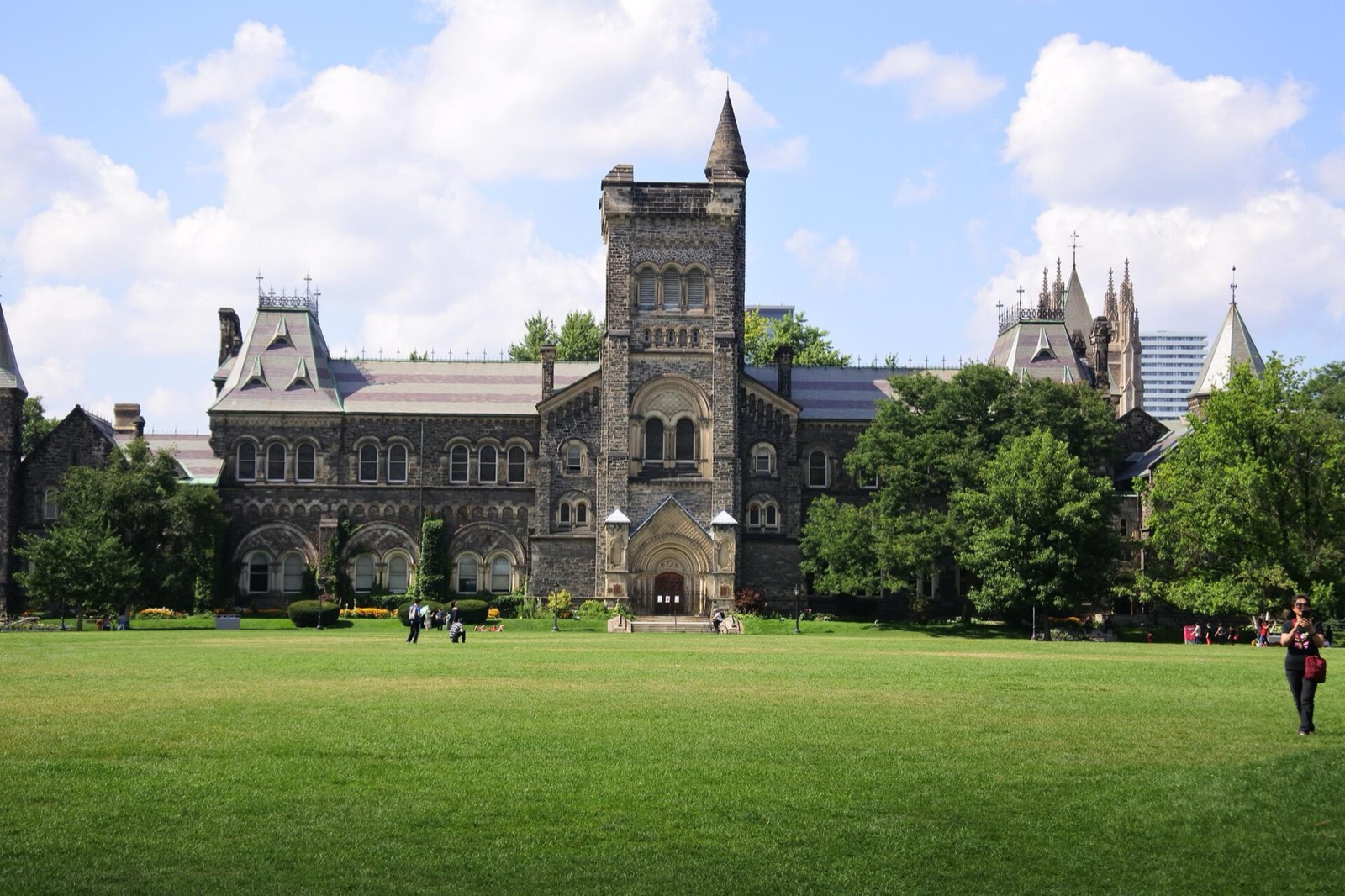
The campus has both century-old historic buildings (such as University College and Convocation Hall) and modern laboratories and libraries; step outside and you're in Toronto's financial district, museums, theatres, and globalized communities. The price is that downtown housing and living costs run high, and commuting and parking are no easy matter — but that is exactly why many people choose it: four years of university directly tied to a global metropolis.
Mississauga UTM: the greenest campus
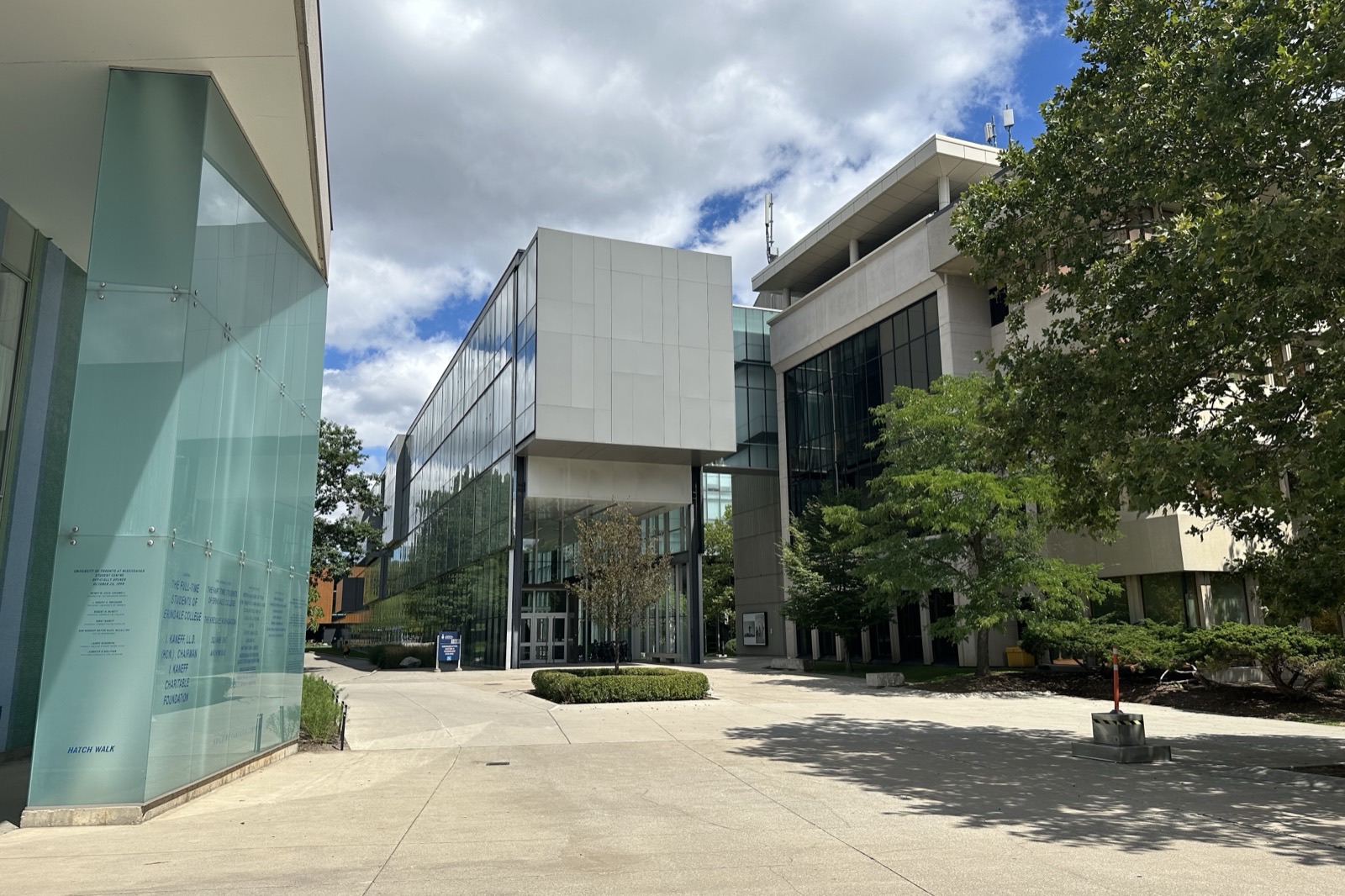
The Mississauga campus (U of T Mississauga, UTM) was founded in 1967 and is UofT's second-largest campus, with more than 17,200 students in 2025-26 (campus page; founding information). It sits in Mississauga west of Toronto, about 27 km west of downtown, covering about 225 acres next to the Credit River and keeping large areas of protected green space and wooded trails — officially described as a "campus in the forest" (official introduction).
UTM has 15 academic departments and an Institute of Communication, Culture, Information and Technology (ICCIT), offering more than 180 programs and 13 admission categories (campus page; programs and departments). Its distinctive strengths lie in a few things rarely found elsewhere: Forensic Science, Communication, Culture, Information and Technology (CCIT), and the most diverse housing options of UofT's three campuses (official introduction). In addition, UTM has offered its own paid internship program (UTMCIP) since 2024 (program page). The city of Mississauga is also one of Canada's major business cities, home to the Canadian headquarters of 75 Fortune 500 companies (official introduction).
Scarborough UTSC: where co-op started
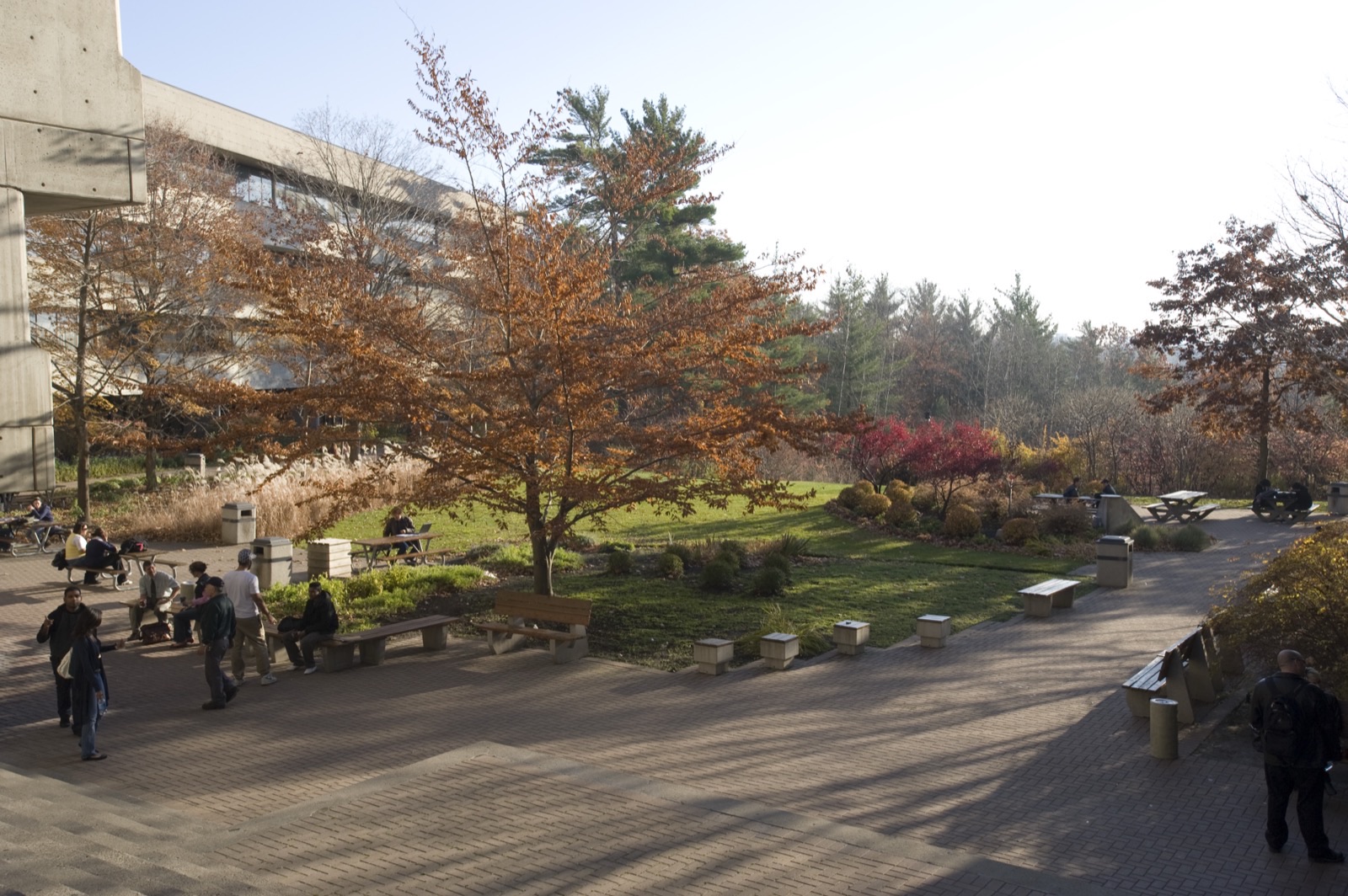
The Scarborough campus (U of T Scarborough, UTSC) was established in 1964 as a constituent college of the Faculty of Arts & Science and welcomed its first students in 1965 (UTSC history). In 2025-26 it had more than 15,100 students and offers 250-plus programs; the campus is located at Highland Creek in eastern Toronto, surrounded by about 300 acres of park-like green space (campus page; official introduction).
UTSC's most distinctive label is co-op (paid internships): it was the first University of Toronto campus to offer co-op, with more than 50 years of history, partnering with 700-plus employers each year, where students in arts, science, and management can complete 8 to 16 months of full-time paid internships (co-op introduction). This is also its fastest-growing part — in the official introduction, 50-plus co-op programs are placed in the most prominent position. In addition, UTSC has established a Health Sciences Stream for some science students and is building its own medical school, SAMIH (Scarborough Academy of Medicine and Integrated Health) (official introduction; SAMIH). The campus has Olympic-standard sports facilities and 200-plus student clubs, with a lively atmosphere.
Campuses by subject: choose your program first, then your campus
The biggest misunderstanding about the three campuses is that "you can just pick any one." In reality, your program and faculty often already determine which campus you can attend.
UofT's structure can be understood this way: Arts & Science subjects are offered on all three campuses, each with its own departments and courses — math, physics, chemistry, biology, economics, psychology, computer science, and the humanities and social sciences can all be studied on any of the three campuses. But several "direct first-year entry" professional faculties are only at St. George:
- Engineering (Applied Science & Engineering) — undergraduate courses are offered only on the downtown campus;
- Architecture, Landscape, and Design (John H. Daniels Faculty);
- Music (Faculty of Music);
- Kinesiology & Physical Education.
That is to say, if your goal is engineering or music, you basically don't need to agonize over the three campuses. Conversely, distinctive programs like Forensic Science and CCIT are mainly at UTM, while the most established co-op resources are at UTSC.
Using business as an example: the same subject, three independent programs at three campuses
Business is the best example for understanding this difference. It is officially stated that "business programs are offered at all three campuses" (official introduction), but that doesn't mean the three are the same program — they are three programs that recruit separately and award degrees separately, and you must choose one of the three when applying:
| Campus | Undergraduate business program | Degree | Admission category when applying |
|---|---|---|---|
| St. George | Rotman Commerce (Faculty of Arts & Science × Rotman School of Management) | BCom | Choose St. George Faculty of Arts & Science → then choose Rotman Commerce |
| Mississauga UTM | Department of Management Studies — Commerce / Management | BCom | Choose Commerce & Management |
| Scarborough UTSC | Management (incl. co-op) | BBA | Choose Management (there is a co-op version) |
(Rotman Commerce (BCom); UTM business; UTSC management (BBA))
Two points are worth noting. First, the "Rotman" name is attached only to the undergraduate business program at St. George, and it is not an independent "business school" — Rotman Commerce is jointly offered by the Faculty of Arts & Science and the Rotman School of Management; the "Rotman School of Management" people often refer to is itself a graduate business school, located only downtown. The business programs at UTM and UTSC are offered by their respective departments of management studies. Second, all three programs are limited-enrollment, highly competitive programs, especially Rotman Commerce and UTSC's Management Co-op — they are locked in at the time of admission, unlike ordinary Arts & Science programs where you can enter the school first and choose a direction in second year.
In other words: the same subject, at different campuses, may be a different program, a different application portal, and a different degree name. So the correct approach to "choosing a campus" is always to first look clearly at the specific program.
The practical approach: lock in the program you want to study (or at least lock in the faculty direction) first, then see which campus it's offered at — rather than picking a campus first and then thinking about the program. Those who truly need to choose among the three campuses mostly fall within the broad category of "Arts & Science subjects" — and at that point, it's not too late to compare environment, commuting, housing, and co-op.
Common misconceptions
Misconception 1: UTM and UTSC are "branch campuses," and their diplomas are not the same as downtown's. The three campuses belong to one university, not independent schools. Graduates receive a degree issued uniformly by the University of Toronto; the certificate bears the university's name, coat of arms, seal, and the degree conferred, without distinguishing by "campus" (Registrar's Office explanation). When job-hunting or applying to graduate school, students from all three campuses write "University of Toronto."
Misconception 2: The campuses differ by a "tier," and rankings are calculated separately. The three campuses belong to one university; world rankings such as QS rank the entire University of Toronto — in the QS 2027 rankings, UofT placed 32nd globally and 2nd in Canada (QS ranking). This placing belongs to the whole university and does not change by campus. It should be noted that, for specific programs, the admission requirements and competitiveness of each campus are not the same; you cannot simply assume that "downtown is the hardest and the other two are safety options."
Misconception 3: Once you enter UTM or UTSC, you can't transfer out. You can. There are formal internal transfer channels among the three campuses, requiring an application and meeting the relevant grade requirements: UTSC's internal applications usually open in mid-October each year and require an application fee (UTSC internal transfer); UTM also has a corresponding transfer-in process (UTM internal transfer). But transferring campuses does not guarantee success; places in popular programs are limited, so if you can choose correctly before enrolling, don't count on "getting in first and transferring later."
Misconception 4: The campuses are completely isolated, and you can't take courses across campuses. Within the same university, students can take courses at other campuses according to the rules, simply by selecting them in the ACORN system (UTSC course-selection explanation). However, there are caps and rules — for example, UTSC stipulates that a student may take at most 10.0 credits from other Arts & Science faculties and must complete at least 10.0 credits at UTSC (UTSC course regulations). The Faculty of Engineering is the opposite: its courses are explicitly offered only at St. George (Faculty of Engineering).
Misconception 5: The three campuses "only differ in location; everything else is the same." Size, number of programs, housing, co-op resources, and campus atmosphere all differ: St. George has the most complete programs and the most city resources; UTM has the best environment and the most housing options; UTSC has the deepest co-op tradition. These differences genuinely affect the four years of study and life, and are worth comparing item by item before you apply.
← Back to the hub "University of Toronto Complete Guide" | Next: How to get in: the application system and four application pathways →
Image credits
- St. George campus: University College lawn, Wikimedia Commons, CC BY-SA 4.0
- Mississauga campus: Mississauga Campus, University of Toronto, Kevin Miller, public domain (Wikimedia Commons)
- Scarborough campus: University of Toronto Scarborough Campus, City of Toronto, CC BY 2.0 (Wikimedia Commons)
We are rolling out a series of features on Canadian universities, high schools, and elementary schools, explaining the local education system in the same way to help you avoid detours. Please scan the QR code below to follow us on WeChat — new features will be pushed to you as soon as they're published; we also suggest adding https://dealcanada.ca to your browser bookmarks so you can come back anytime.
Last updated: 2026-09-23
More News
- Maple Express | September 23, 2026 — Sentencing hearing begins for Kenneth Law
- AI Weekly | OpenAI and Anthropic Launch a Price War as Trump Rebrands AI 'Super Intelligence'
- Global Express | September 23, 2026 Trump Meets Venezuela's Interim President in First Face-to-Face Since Maduro Seized
- Finance Morning: Musk Calls Shanghai Gigafactory a 'Gem'; Chinese Property Stocks Rally
- Tech Express | September 23, 2026 — Anthropic Releases Claude Opus 5.5, Cutting Typical Task Costs by 40%
Comments (0)
View More
 -23%
-23%Electrolux Washer & Dryer Set (3.1 cu.ft Steam Washer + 4.4 cu.ft Heat Pump Dryer) — White! $2399.98 CAD (23% Off)
 -22%
-22%Rust-Oleum Decorative Color Chips (Glacier Gray, 1 lb) — Hide Flaws, Get a Showroom Finish! $39.22 CAD (22% Off)
 -26%
-26%Dreame A10 Smart Lock — Fingerprint, Wi-Fi & Matter, 7 Ways to Unlock! Now $149 CAD (25% Off)
 -37%
-37%Callaway Supersoft Max Golf Balls (12-Pack) — A Dozen Under $25! Now $24.99 CAD (36% Off)
 Finance Evening
Finance Evening | September 22, 2026 AMD Tops $1 Trillion; Toronto Stocks Hit Two-Week High
 Tech Express
Tech Express | September 23, 2026 — Anthropic Releases Claude Opus 5.5, Cutting Typical Task Costs by 40%
-23%Electrolux Washer & Dryer Set (3.1 cu.ft Steam Washer + 4.4 cu.ft Heat Pump Dryer) — White! $2399.98 CAD (23% Off)
Best Buy
-22%Rust-Oleum Decorative Color Chips (Glacier Gray, 1 lb) — Hide Flaws, Get a Showroom Finish! $39.22 CAD (22% Off)
Amazon
-26%Dreame A10 Smart Lock — Fingerprint, Wi-Fi & Matter, 7 Ways to Unlock! Now $149 CAD (25% Off)
Amazon
-37%Callaway Supersoft Max Golf Balls (12-Pack) — A Dozen Under $25! Now $24.99 CAD (36% Off)
Amazon
Finance EveningFinance Evening | September 22, 2026 AMD Tops $1 Trillion; Toronto Stocks Hit Two-Week High
Tech Express