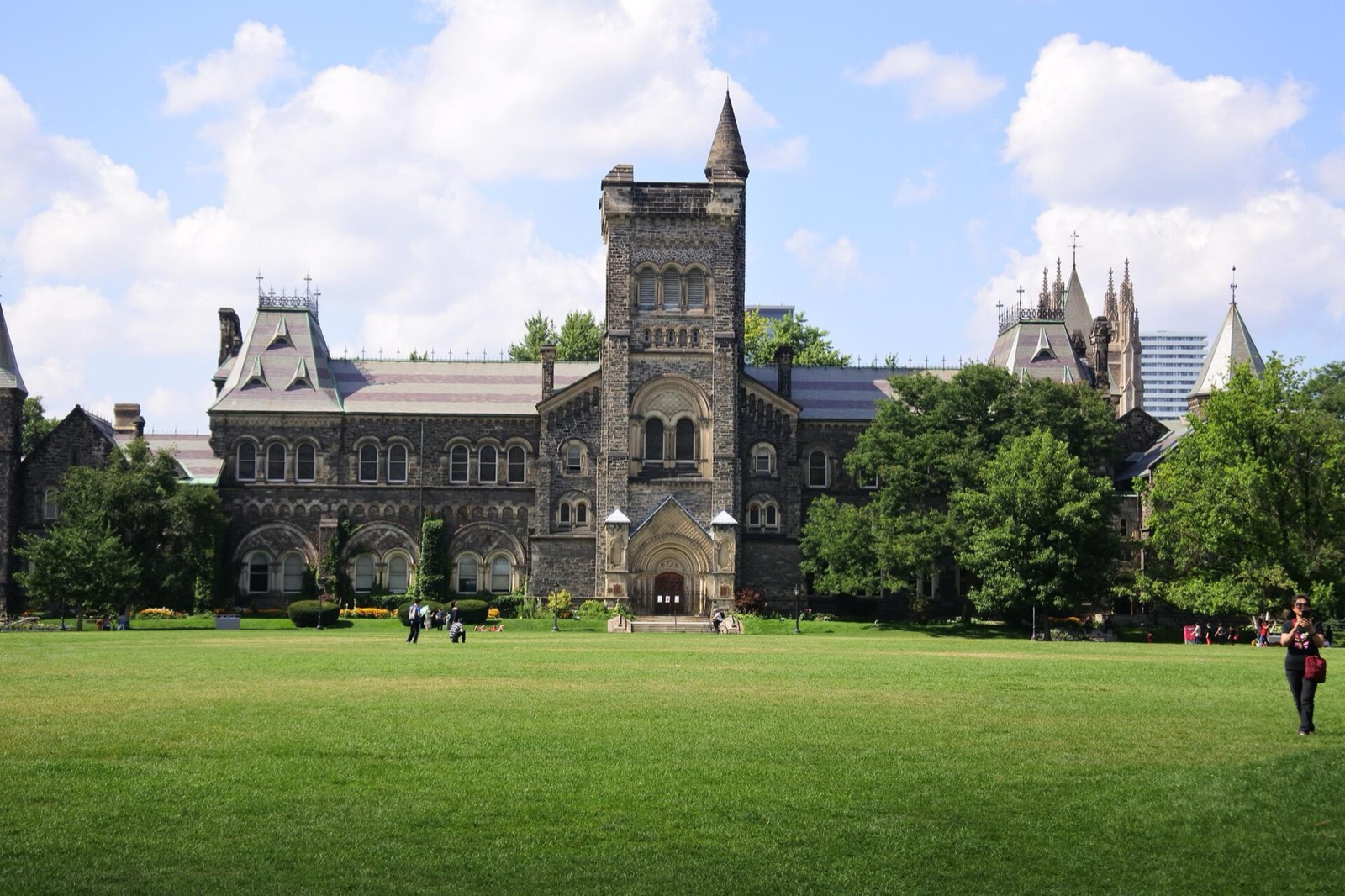
University of Toronto (UofT) Complete Guide (2027)
A complete guide to the University of Toronto (UofT), 2nd in Canada in QS 2027. A quick-facts card plus six installments covering campus choice, application pathways, costs, programs, employment, and value for money.
📘 This series is reference-style explainer content: we organize public, verifiable basic information to help you form your own judgment. We do not promise admission, we do not provide insider information, and we do not recommend any agents.
The University of Toronto (UofT) was founded in 1827 and is the largest university in Canada, and one of the Canadian institutions most discussed by Chinese families. In the QS World University Rankings 2027, UofT ranked 32nd globally and 2nd in Canada.
There is a great deal of Chinese-language information about UofT, but most of it comes from study-abroad agents: strongly admissions-oriented, poorly updated, and with numbers that are hard to verify. This series aims to do the opposite — to lay out the basic information that can be publicly verified so that you can make your own judgment.
Quick Facts Card
| Item | Details |
|---|---|
| Chinese name / English name | 多伦多大学 / University of Toronto (UofT) |
| QS 2027 ranking | 32nd globally · 2nd in Canada |
| Founded | 1827 |
| Campuses | St. George (downtown) · Mississauga · Scarborough |
| Student body | ~103,000 (81,412 undergraduate · 21,728 graduate) |
| International students | ~27%, from 176 countries and regions |
| Students from mainland China | 14,050 (the largest source of international students) |
| Tuition | Large gap between domestic and international students; see Section 3 (per official current-year rates) |
| Undergraduate application deadlines | Engineering Jan 15; Arts & Science and Rotman Commerce Feb 1 (2027 entry) |
Figures such as the student body and international students are official statistics for the 2025-26 academic year (source).
The story begins with a church figure. In March 1826, John Strachan, an Anglican priest in the town of York — today's Toronto — traveled to London to seek a university for what was then Upper Canada. On March 15, 1827, King George IV issued a royal charter establishing "King's College," the first institution of higher education in Upper Canada; the school was controlled by the Church of England and formally opened in 1843. Over the following years, disputes between religion and politics over the church's control continued, until finally in 1849 the provincial legislature passed an act abolishing King's College and establishing the non-denominational University of Toronto, which was formally renamed on January 1, 1850. In 1853 University College was established to handle teaching, and the university itself for a time was responsible only for examinations and the awarding of degrees. Later, several colleges joined one after another through a "federation" arrangement, forming today's structure of seven colleges under the Faculty of Arts & Science. (Original charter and university history)
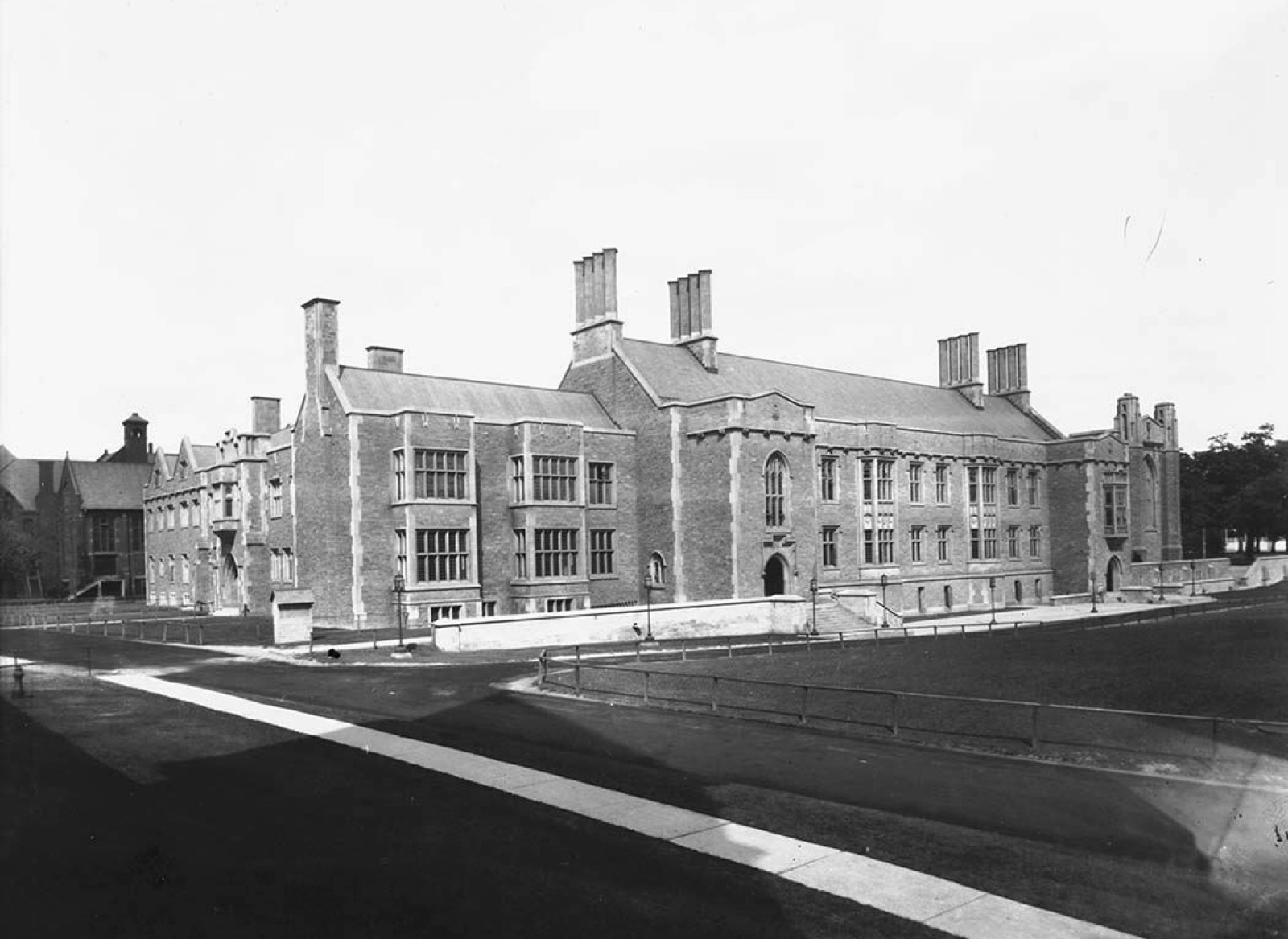
In the 2025-26 academic year, the three campuses together had 103,140 students — 81,412 undergraduates and 21,728 graduate students — making it the largest university in Canada. International students numbered 27,897, from 176 countries and regions, of whom 14,050 came from mainland China, the largest source of international students. Teaching is organized by "faculty and division": the Faculty of Arts & Science is the largest, alongside the Faculty of Applied Science & Engineering, the Temerty Faculty of Medicine, and the Rotman School of Management, as well as a group of professional faculties including law, dentistry, pharmacy, nursing, public health, information, education, architecture, and music. (Official data; list of academic units)
UofT alumni include 5 Canadian prime ministers, among them the longest-serving William Lyon Mackenzie King and the 14th prime minister Lester B. Pearson, who won the 1957 Nobel Peace Prize for his peacekeeping efforts during the 1956 Suez Crisis. A total of 11 Nobel laureates are associated with UofT, most famously Frederick Banting and J.J.R. Macleod, who won the 1923 Nobel Prize in Physiology or Medicine for the extraction of insulin, and Geoffrey Hinton, who won the 2024 Nobel Prize in Physics. In addition, UofT has produced 6 Turing Award winners, 100 Rhodes Scholars, and 1 Fields Medalist; the writer Margaret Atwood and the actor Donald Sutherland also graduated from here. (List of notable alumni; Hinton wins the Nobel Prize in Physics)
In the QS World University Rankings by Subject 2026, UofT ranked first in Canada across all five broad subject areas, and entered the global top 17 in each: Life Sciences & Medicine 12th, Arts & Humanities 14th, Social Sciences & Management 15th, Natural Sciences 16th, and Engineering & Technology 17th. Among individual subjects, six entered the global top ten — Nursing 4th, Sports-related Subjects 6th, Psychology 8th, Education & Training 10th, English Language & Literature 10th, and Philosophy 10th. Even more noteworthy: as many as 48 UofT subjects entered the global top 50, the most of any university in the world. (Official QS subject ranking report)
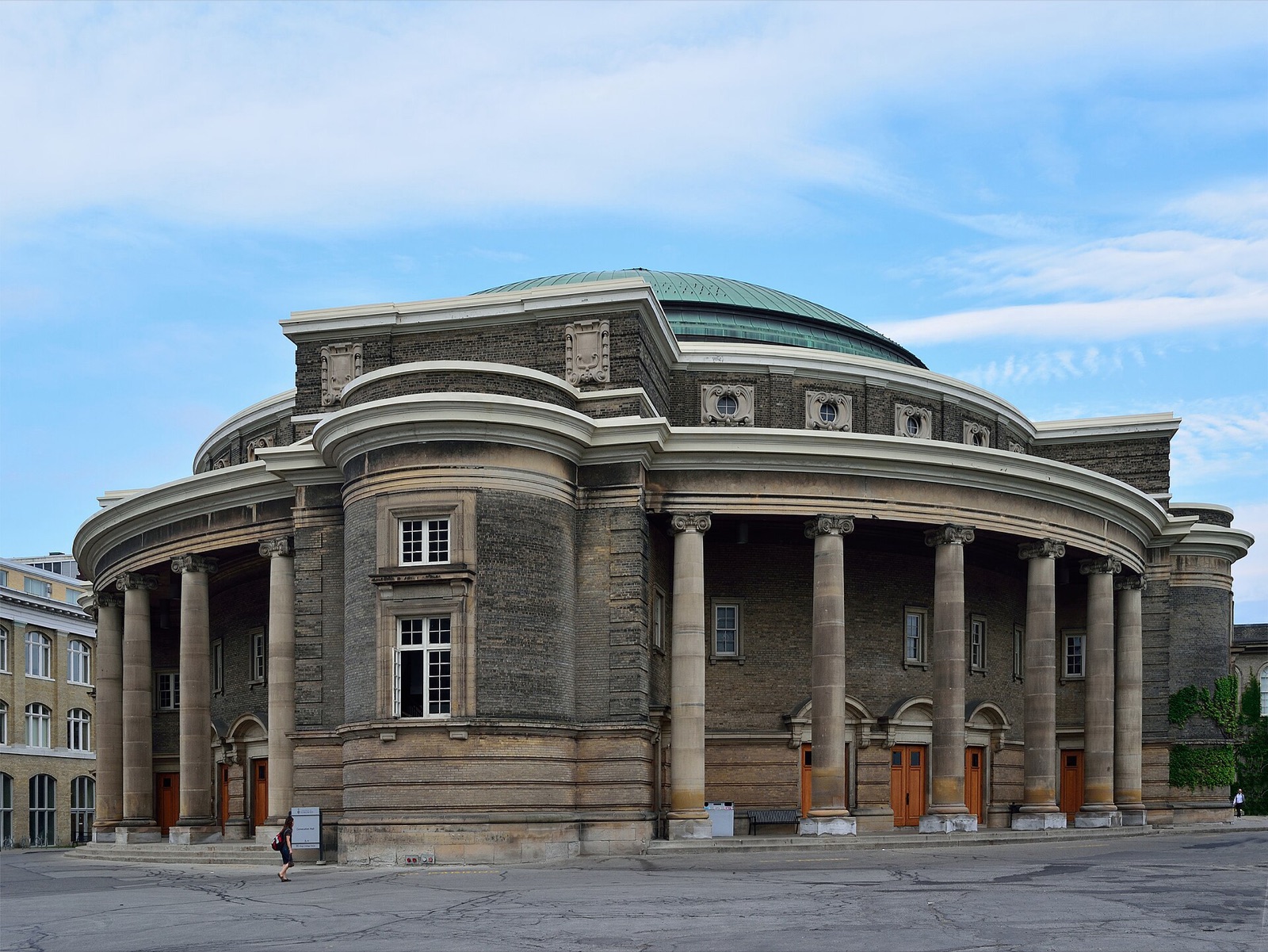
Laid out, a few signature directions stand out clearly. In medicine and life sciences, insulin was successfully extracted here between 1921 and 1923, widely regarded as one of Canada's most important medical achievements; in artificial intelligence, Geoffrey Hinton, known as the "godfather of AI," taught at UofT for many years, and most of the key breakthroughs in deep learning are connected to this place — Toronto remains a global hub of artificial intelligence research today.
Choosing your entry point based on your situation
- Your child is already in a Canadian high school (including as an international student) → Section 1 (how to choose a campus), Section 2 (how to get in)
- Your child is in high school in China and preparing to come to Canada → Section 2 (application pathways), Section 3 (costs)
- You've just arrived in Canada and aren't yet familiar with the local education system → the "Application System Explained" at the start of Section 2
- You mainly care about "is it worth it" and how it compares with other schools → Section 6 (is it worth it)
- How to choose among the three campuses: St. George vs UTM vs UTSC
- How to get in: the application system explained and four application pathways
- How much does it cost: tuition, housing, and scholarships
- What to study: strong subjects and the tiers of admission difficulty
- After graduation: co-op, employment, and immigration pathways
- Is it worth it: pros, cons, who it suits, and a comparison with McGill/UBC
Data notes and our boundaries
- All data in this series comes from official sources (the University of Toronto website, the QS website, etc.) and notes the reference year; tuition and application deadlines change every year, so please defer to the official figures published in the year you apply.
- We do only three things: organize basic information, cite sources, and provide a framework for judgment. We do not provide admission predictions, we do not file applications on anyone's behalf, and we do not recommend any agents.
We are rolling out a series of features on Canadian universities, high schools, and elementary schools, explaining the local education system in the same way to help you avoid detours. Please scan the QR code below to follow us on WeChat — new features will be pushed to you as soon as they're published; we also suggest adding https://dealcanada.ca to your browser bookmarks so you can come back anytime.
Last updated: 2026-09-16
More News
- Maple Express | September 23, 2026 — Sentencing hearing begins for Kenneth Law
- AI Weekly | OpenAI and Anthropic Launch a Price War as Trump Rebrands AI 'Super Intelligence'
- Global Express | September 23, 2026 Trump Meets Venezuela's Interim President in First Face-to-Face Since Maduro Seized
- Finance Morning: Musk Calls Shanghai Gigafactory a 'Gem'; Chinese Property Stocks Rally
- Tech Express | September 23, 2026 — Anthropic Releases Claude Opus 5.5, Cutting Typical Task Costs by 40%
Comments (0)
View More
 -22%
-22%Breville Barista Express Impress Semi-Automatic Espresso Machine (Brushed Stainless Steel) — Built-In Grinder & Steam Wand! $899.99 CAD (22% Off)
 -16%
-16%Dreame Aero Ultra Steam Vacuum & Mop — 392℉ Steam + 30kPa Suction! $849.99 CAD (15% Off)
 -17%
-17%Rust-Oleum Rust Reformer 8 oz — Converts Rust to a Paintable Finish, No Sanding! $31.49 CAD (16% Off)
 -47%
-47%Ring Wi-Fi Video Doorbell Pro 2 + Floodlight Cam Wired Plus — 1080p HD Outdoor Security Bundle! $314.94 CAD (47% Off)
 Finance Morning
Finance Morning: Musk Calls Shanghai Gigafactory a 'Gem'; Chinese Property Stocks Rally
 University Guide
What to Study at UofT: Strong Subjects and the Tiers of Admission Difficulty
-22%Breville Barista Express Impress Semi-Automatic Espresso Machine (Brushed Stainless Steel) — Built-In Grinder & Steam Wand! $899.99 CAD (22% Off)
Best Buy
-16%Dreame Aero Ultra Steam Vacuum & Mop — 392℉ Steam + 30kPa Suction! $849.99 CAD (15% Off)
Amazon
-17%Rust-Oleum Rust Reformer 8 oz — Converts Rust to a Paintable Finish, No Sanding! $31.49 CAD (16% Off)
Amazon
-47%Ring Wi-Fi Video Doorbell Pro 2 + Floodlight Cam Wired Plus — 1080p HD Outdoor Security Bundle! $314.94 CAD (47% Off)
Best Buy
Finance MorningFinance Morning: Musk Calls Shanghai Gigafactory a 'Gem'; Chinese Property Stocks Rally
University Guide