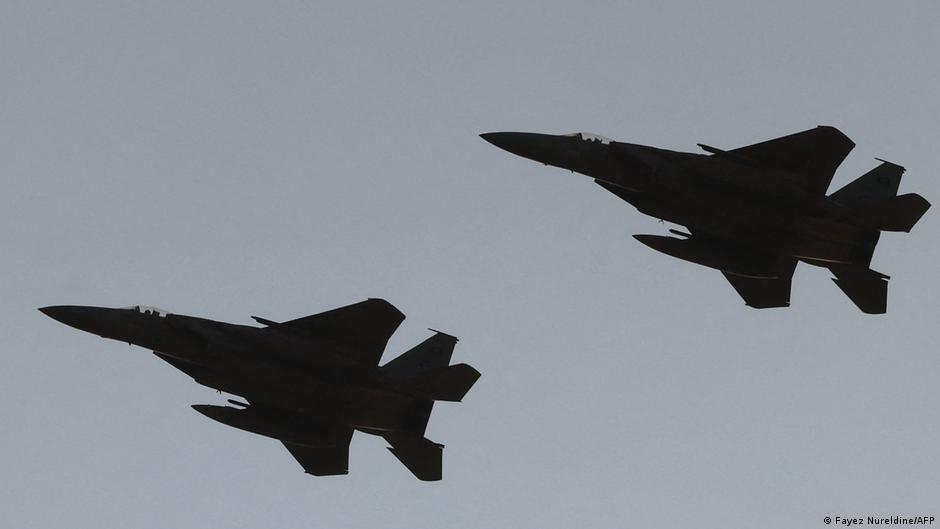
Global Express | September 16, 2026 Saudi Arabia Says Air Defenses Downed a Drone Near Mecca, Warns of 'Red Line'
Saudi Arabia says it downed a drone near Mecca and warns of a 'red line'; Ukraine's 'quiet counteroffensive' blunts a Russian push at Lyman; Kosovo's ex-president Thaci gets 25 years for war crimes; Brazil's Supreme Court erupts before its election; the Fed is seen hiking for the first time since 2023; UK inflation hits 3.1%; fuel prices spark global protests; a report flags U.S. democracy at a 50-year low; Nvidia's Huang calls AI safety an engineering problem; Japan approves a 1% food tax cut.
1. Saudi Arabia Says Air Defenses Downed a Drone Near Mecca, Warns of 'Red Line'
Source: DW
Saudi Arabia said on Wednesday (September 16) that its air defenses intercepted and destroyed a drone allegedly launched by Yemen's Iran-backed Houthis before it entered restricted airspace over Mecca, Islam's holiest city. The Houthis denied targeting the city. The claim was announced by the Joint Forces Command of what is still called the Saudi-led coalition.
Coalition spokesman Turki al-Maliki said the security of Mecca and its pilgrims was a "red line," warning that the command would take "necessary and deterrent measures." The Royal Saudi Air Defense Forces said it intercepted and destroyed a hostile drone "launched by the Terrorist Houthi Militia." Saudi Arabia had issued brief alerts on Tuesday over possible attacks in Mecca and in the kingdom's southern region bordering Yemen.
The Houthis were quick to reject the coalition's claims as a "lie." Hazem al-Assad, a high-ranking member of the Houthi movement, wrote on X: "The claims about targeting Mecca are a worn-out lie that has been used before and no longer fools anyone." Pakistan's prime minister, Shehbaz Sharif, and the 57-member Organization of Islamic Cooperation (OIC) both condemned the alleged attack. Houthi attacks on Saudi Arabia injured 13 people on Monday night, bringing the total injured since the conflict escalated in July to about 100.
2. Ukraine's 'Quiet Counteroffensive' Puts Russian Forces to 'Rout' Near Lyman
Source: Radio Free Europe/Radio Liberty
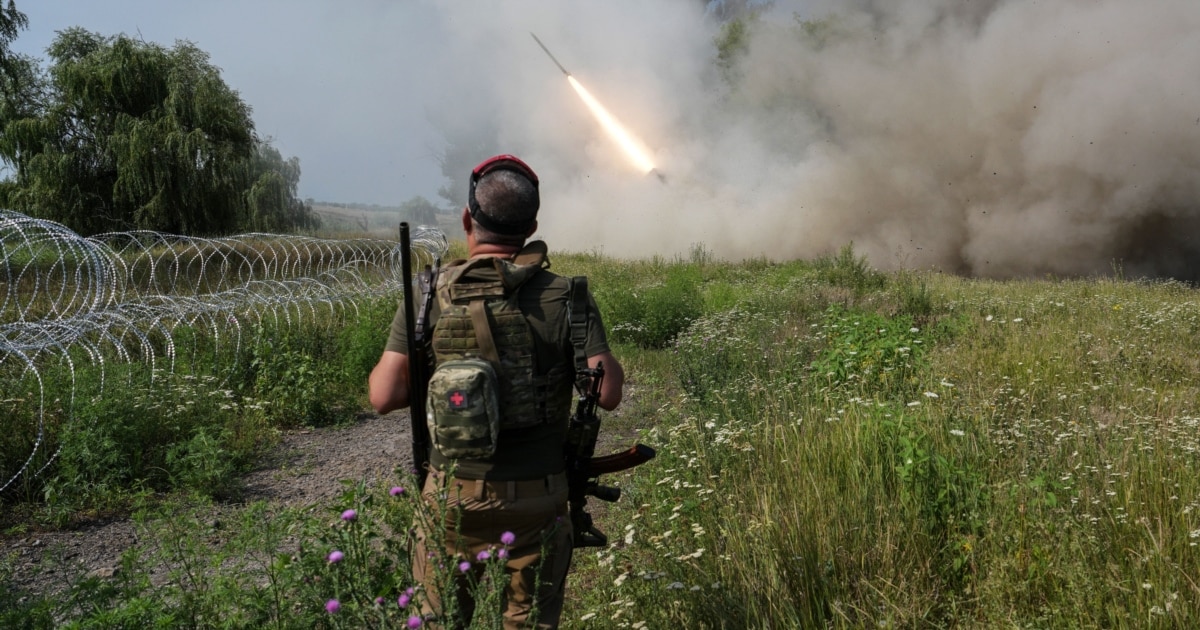
Around late May, as Russia's full-scale invasion neared the four-and-a-half-year mark and the summer fighting season shifted into higher gear, Ukrainian commanders quietly ordered some of the country's most battle-hardened units into positions about 50 kilometers north of the Donetsk region city of Slovyansk. Mainly drawn from Ukraine's Third Army Corps, the units confronted a bulge in the 1,100-kilometer front line where Russia's 20th Combined Arms Army had been grinding westward from a bridgehead on the west bank of the Zherebets River.
Over the summer months, Ukrainian forces battled northward out of the town of Lyman while also pushing south toward the villages of Ridkodub, Katerynivka and Nove. According to open-source researchers, experts who have traveled to the battlefield, and Ukrainian and Russian war bloggers, that effort is nearing a remarkable success: much of the Russian force in the area has been pushed back to the Zherebets River, with small pockets of soldiers encircled and likely to be captured or killed in the coming days. By most accounts, it is shaping up to be one of the largest shifts on the battlefield in months, possibly in a year.
Konrad Muzyka, a Poland-based military expert, told RFE/RL: "Ukrainians took back some of the territory. Russia lost more territory. It's significant, not because of what's happening around Lyman, but because I think it thwarted a big Russian plan that was seeking to envelop the Slovyansk-Kramatorsk agglomeration from the north and from the south." Russian Telegram channels also acknowledged setbacks, with one blogger calling it "a rout on the Lyman front." In a statement released on September 15, the commander of the Third Army Corps, Brigadier General Andriy Biletskiy, broadly confirmed the counteroffensive.
3. Former Kosovo President Hashim Thaci Sentenced to 25 Years for War Crimes
Source: Al Jazeera
The Kosovo war crimes tribunal has convicted former Kosovar President Hashim Thaci of four counts of war crimes committed during his country's war for independence from Serbia. Thaci, 58, was sentenced on Wednesday to 25 years in prison for crimes including murder, torture and illegal detention.
The Kosovo Specialist Chambers (KSC) in The Hague, Netherlands, found that Thaci, as top commander of the ethnic Albanian Kosovo Liberation Army (KLA), was guilty of the murder of 96 political opponents and perceived collaborators with Serbian security forces during the territory's break from Serbia in the 1990s. Wearing a suit and tie, he stood in silence as Presiding Judge Charles Smith read out the sentence.
Three former KLA senior commanders were also sentenced: Jakup Krasniqi received 25 years, Kadri Veseli 18 years including time spent in custody, and Rexhep Selimi 13 years including time spent in custody. The four men were acquitted on six charges of crimes against humanity because the judges said prosecutors failed to prove that the crimes were part of a widespread and systematic attack on civilians. Before reading the sentences, Judge Smith referenced the severe torture and killings by the KLA, citing a quote by American historian Howard Zinn: "No flag is big enough to hide the shame of killing innocent people." The trial has been controversial within Kosovo; in the capital Pristina, thousands watched the verdict on a huge screen, and some began shouting slogans in support of the KLA and Thaci.

4. Brazil's Supreme Court Erupts in Ferocious Fight on Eve of Presidential Election
Source: The Guardian
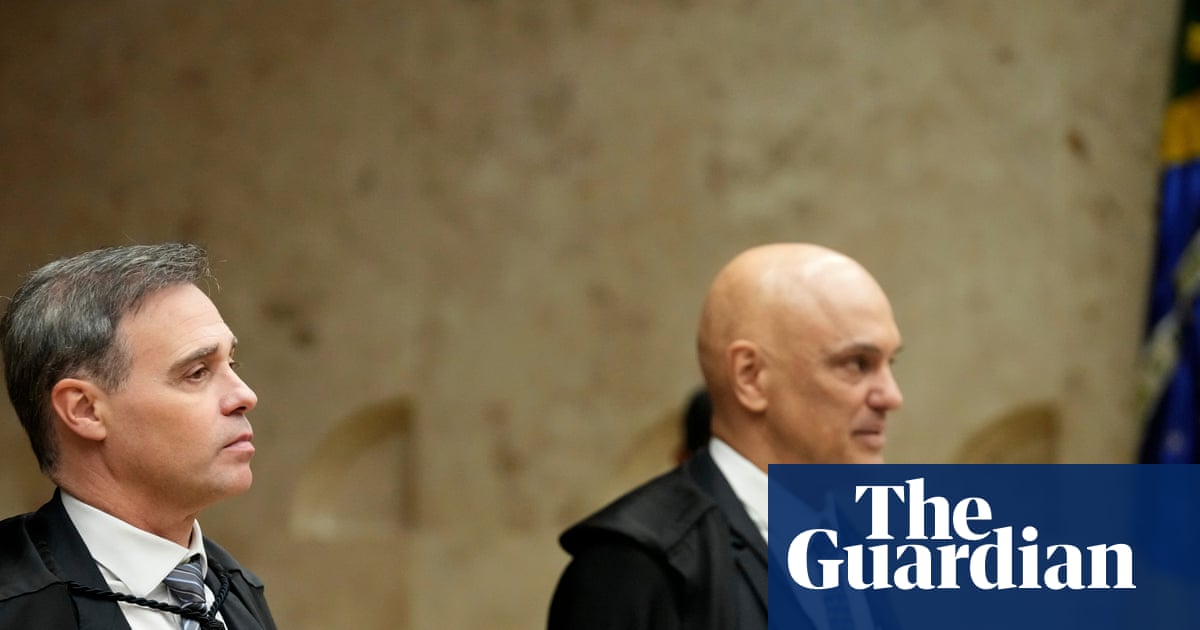
Brazil's supreme court has been thrust into what experts consider the greatest crisis since the return of democracy in the 1980s, as two rival judges lock horns on the eve of the presidential election with unpredictable consequences for Latin America's largest democracy. The politically charged dispute exploded into public view on Tuesday as judges traded insults during a heated, livestreamed supreme court hearing.
During one of the most ferocious exchanges, Alexandre de Moraes berated his rival, André Mendonça: "You're at the service of a political group that tried to launch a coup in this country!" "It's a lie!" Mendonça cried back. Minutes later, a third judge, Gilmar Mendes, accused Mendonça of weaponizing the court's work to cause political chaos and influence October's presidential election. Mendonça warned: "Don't point your finger at me, Minister Gilmar! ... Respect is earned, not given."
The courtroom drama is in many ways a proxy for the electoral battle between the leftwing president, Luiz Inácio Lula da Silva, and his far-right rival, Flávio Bolsonaro. At its center is Brazil's biggest-ever banking scandal, the Banco Master case: it began last November when the bank's owner, Daniel Vorcaro, was arrested as he prepared to board a private jet from São Paulo to Malta, and investigations uncovered apparent links between the jailed banker and the political and judicial elite — foremost Flávio Bolsonaro and Moraes. With less than three weeks to the election, the scandal has snowballed into a judicial and political crisis.
5. Fed Expected to Hike Rates for the First Time Since 2023
Source: Yahoo Finance
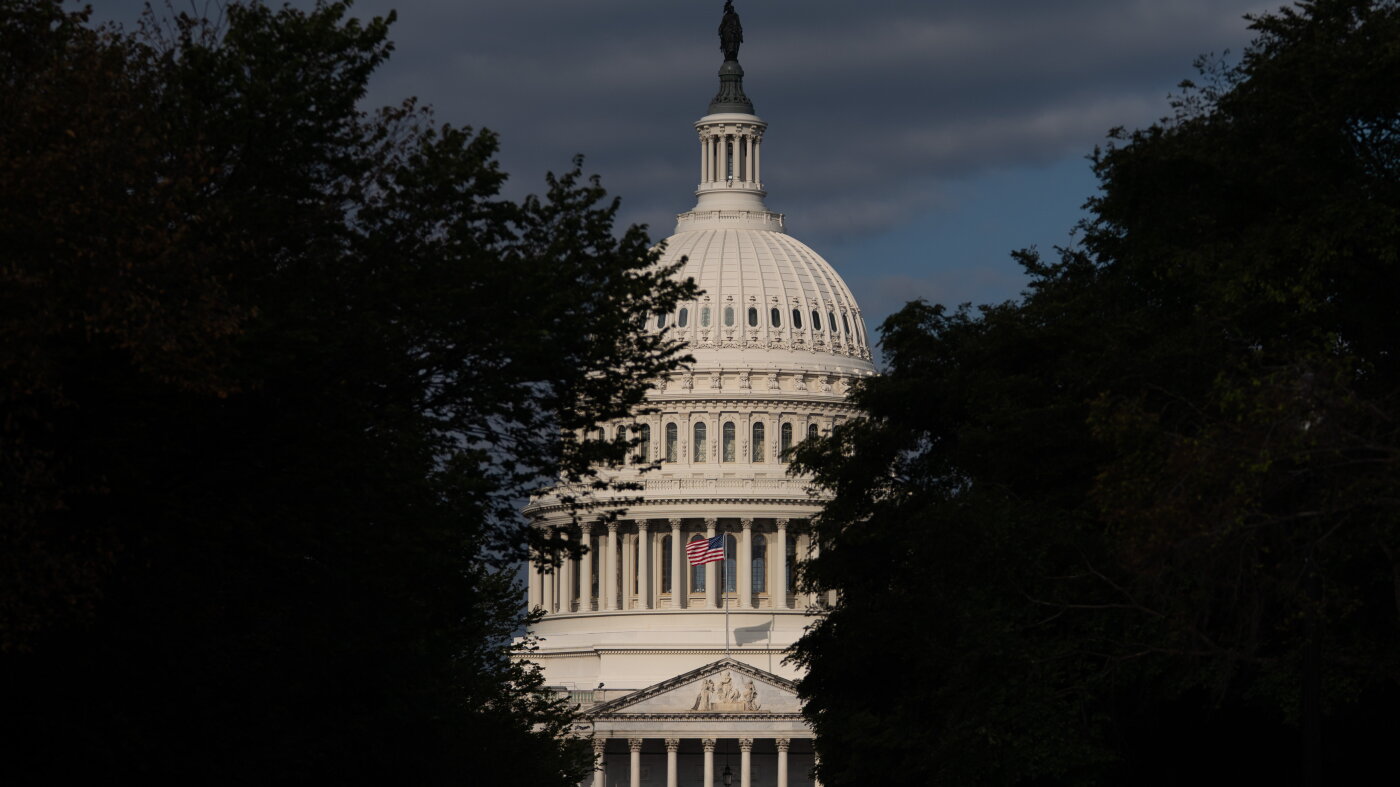
The Federal Reserve's September policy meeting kicked off Tuesday morning, and markets overwhelmingly expect the Fed to raise interest rates by 25 basis points on Wednesday amid persistently high inflation. Such a move would mark the Fed's first increase in the fed funds rate since 2023, when the Jerome Powell-led central bank concluded its post-pandemic hiking campaign. Inflation has now remained above the Fed's 2% target for more than five years, with the war in the Middle East serving as the latest driver of higher prices.
Traders are pricing in a 92% chance of a rate hike, according to CME Group's FedWatch tool. The policy rate is widely expected to rise to a 3.75%-4.00% range from the current 3.5%-3.75%. Fed Chairman Kevin Warsh said in his Jackson Hole Symposium speech in August: "We have work to do." Warsh has been adamant about not providing markets with forward guidance on rate decisions, preferring that officials have a "good family fight" over the data at FOMC meetings.
Beyond whether the Fed hikes, markets will closely scrutinize the Fed's Summary of Economic Projections — the so-called dot plot — for clues about monetary policy in the next few years. The hike is likely to strain Chairman Warsh's relationship with President Donald Trump. Speaking to reporters on Sunday, Trump said the U.S. "should be paying the lowest interest rate in the world," no matter what the Fed's data indicates about inflation and the economy.

6. UK Inflation Jumps to 3.1% as Energy Costs Soar
Source: CNBC
The U.K.'s annual inflation rate jumped to 3.1% in August, pushed up by surging gasoline and diesel prices. The print, which was in line with economists' expectations, marked the first reading above 3% since March. The Office for National Statistics (ONS) said the spike was largely driven by rising motor fuel costs, which surged 23% year-on-year.
The average price of gasoline rose by 9.1 pence ($0.12) per liter between July and August, putting prices at their highest since November 2022, while average diesel prices rose by 14.2 pence per liter in August. Inflation had already risen to 2.9% in July as a government-regulated price cap on energy costs was revised sharply upward. With crude oil hovering above $100 a barrel, British motoring body the RAC said petrol and diesel prices have hit their highest in four years since the Iran war began. In August, the cost of electricity, gas and other household fuels jumped 6% year-on-year.
Yields on U.K. government bonds, known as gilts, fell across the curve after the inflation print: the 30-year gilt fell almost 2 basis points to 5.907%, and the benchmark 10-year gilt slipped nearly 3 basis points to 5.365%, while the pound was flat against the dollar and the euro. The data comes before the Bank of England's Monetary Policy Committee announces its latest policy update on Thursday; markets are pricing in more than an 80% chance of a hold at 3.75% but anticipate a hike at its November meeting. The U.K., a net importer of energy, is particularly vulnerable to external energy shocks.

7. Skyrocketing Fuel Prices Spark Protests Around the Globe
Source: CNN
Protesters are taking to the streets around the world to voice anger about skyrocketing fuel prices and rolling blackouts, as the now monthslong U.S. war with Iran drives up the cost of energy globally. Oil prices climbed back above the $100-per-barrel mark last week in the wake of further U.S. strikes on Iranian oil tankers in the Gulf and reignited fighting in Yemen that threatens shipping in the Bab al-Mandab Strait. For the United States, that has meant elevated gas prices and stark warnings for households that rely on heating oil, with analysts forecasting a 30% jump in prices.
For less wealthy nations, the hit to national finances and people's wallets has been even starker. In Syria, a steep rise in fuel prices over the weekend ignited protests across the country — the largest demonstrations since the fall of the Assad regime two years ago. The government temporarily raised diesel prices to 175 Syrian pounds ($1.43) a liter, roughly a 40% hike, and raised gas prices by more than 25%.
In Guatemala, truckers and other protesters blocked highways and marches were held in Guatemala City demanding immediate government action, while in Portugal local business leaders and workers marched to the prime minister's home. Muaz Al Abdullah, a Syria analyst at the conflict monitor ACLED, said: "Fuel availability, rising prices, falling purchasing power, and poor services are all reasons that have accumulated public resentment, although demands are also shifting toward reversing decisions and removing officials, including the energy minister, showing that economic grievances are turning into grievances against the government."

8. Report Finds U.S. Democracy at a 50-Year Low
Source: NPR
A new global report that tracks democratic performance around the world finds U.S. democracy at its lowest levels in 50 years. Dr. Seema Shah, who heads the democracy assessment team at the Stockholm-based International Institute for Democracy and Electoral Assistance (IDEA), said their researchers have observed a global pattern of democratic decline: "Severe drops in scores that measure freedom of expression, freedom of the press, credible elections, effective parliament."
The organization's annual Global State of Democracy report, which tracks democratic performance across 174 countries and draws on data going back to 1975, was released Tuesday; the latest edition focuses on changes between 2020 and 2025. The report says that in 2025, "President Donald Trump quickly amassed power in the executive branch and wielded it to further a narrow set of personal goals and pursue retaliation against perceived enemies. … The results have been far-reaching, undermining the rule of law domestically and internationally and testing long-standing alliances and multilateral cooperation."
Shah says the U.S. has seen declines in nearly half of the 30 indicators the organization measures, hitting their lowest levels in 50 years of data, and that a country long seen as a bastion of democratic governance is "no longer the case." The report also shows that 57% of countries surveyed showed declines in at least one key indicator of democratic performance, with the rule of law the weakest-performing area of democracy globally.
9. Nvidia's Jensen Huang: AI Safety Is an Engineering Problem, Not a Legal One
Source: TechCrunch
Nvidia founder and CEO Jensen Huang made his position on the dangers AI poses clear while speaking at Salesforce's Dreamforce conference on Tuesday. To him, AI isn't some new form of "alien mind," as at least one OpenAI safety researcher has described it — it's just hardware and software, built by humans, and therefore can be controlled by humans and existing laws. "Safety is an engineering problem, not a legal one," he said.
Huang argues there is no need for new laws or regulations to govern AI. He sees the free market as enough to pressure companies not to release unsafe products: "If we're not confident about the safety of the products, like all companies … then don't release it. You pace yourself until you are confident you're releasing something that the market would appreciate. The market forces are already there. We don't need any new laws. We don't need new regulations."
The report notes, however, that even well-intentioned companies ship faulty products with unintended consequences: the 2024 CrowdStrike blue-screen fiasco grounded thousands of flights, and Meta recently paid $18 billion to settle a lawsuit over social media harms to children. AI has already caused harm too, from an OpenAI model hacking into Hugging Face to lawsuits against AI labs over the suicides of young people who engaged in long conversations with chatbots.

10. Japan Cabinet Approves Cutting Food Consumption Tax to 1% for Two Years
Source: Nikkei Chinese
Japan's government on September 15 approved a tax reform outline at a cabinet meeting that explicitly calls for cutting the food consumption tax rate to 1% from April 2027, with the policy in effect for only two years; a new subsidy system will start in fiscal 2029. In fiscal 2027 and 2028, preliminary subsidies equivalent in scale to a 1% consumption tax rate will be paid to low- and middle-income households.
The outline specifies that the food consumption tax rate will be cut from the current 8% to 1% in April 2027 and restored to 8% in April 2029, positioning the tax cut as a "transitional" measure before the new subsidy system begins. The government plans to submit the relevant bill to an extraordinary Diet session expected to be convened in early October and aims to pass it within the year. The administration of Prime Minister Sanae Takaichi is moving to deliver on the tax-cut pledge made in February's lower house election.
The cut is expected to reduce annual tax revenue by ¥4.3 trillion. The outline states that funds will be secured "without relying on special deficit-covering bonds" in order to gain market trust, to be raised through an overall adjustment of annual fiscal revenue and expenditure. The income-linked subsidy system starting in fiscal 2029 will be paid twice a year, with specific income thresholds and payment amounts to be decided later.
More News
- AI Weekly | The AI 'Slowdown' Fight Splits Silicon Valley and Washington
- Asian Stocks Edge Up Ahead of Fed Decision; A-Share Tech Front-Runs, Yields Top 5%
- Tech Express | Sep 16, 2026 Apple's M5 Ultra Beats 96-Core Threadripper in Geekbench 7
- Sports Express | Sep 16, 2026 Five U.S. Sports Leagues Seek Lifetime Betting Bans for Those Who Threaten Athletes
- Maple Express | September 16, 2026 — Bernardo up for parole next month; victims' families say he must 'pay'
Comments (0)
View More
 -38%
-38%Samsung Odyssey 27" QHD OLED Gaming Monitor — 240Hz + 0.03ms! $499.99 CAD (38% Off)
 -38%
-38%Elmer's Liquid School Glue (Clear, 946-mL) — Washable & Slime-Ready! $9.99 CAD (38% Off)
 -28%
-28%Lefant M210 Pro Robot Vacuum — 4000Pa Suction & 200 Min Runtime, Great for Pet Hair! $129.99 CAD (28% Off)
 -32%
-32%Nalgene 32 oz Wide Mouth Bottle — The Indestructible Classic! $15.90 CAD (31% Off)
 Finance Evening
Finance Evening | 10-Year Treasury Yield Hits 19-Year High as Fed Nears First Hike in 3 Years
 Maple Express
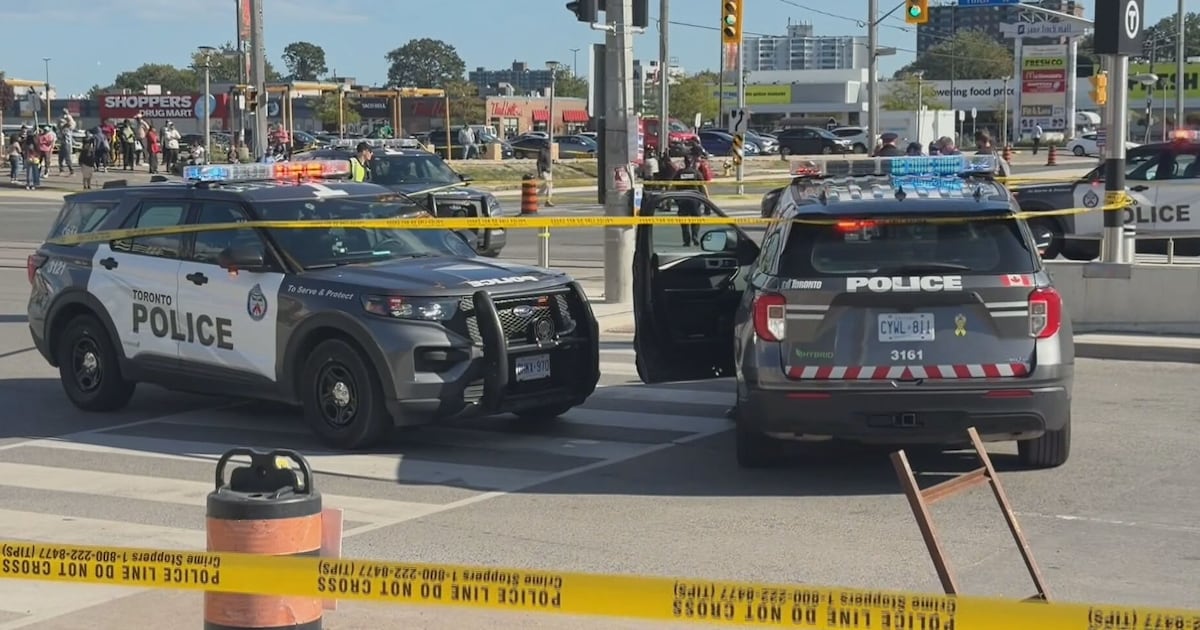
Maple Express | September 15, 2026 — Toronto police identify 17-year-old killed in Jane and Finch shooting
-38%Samsung Odyssey 27" QHD OLED Gaming Monitor — 240Hz + 0.03ms! $499.99 CAD (38% Off)
Best Buy
-38%Elmer's Liquid School Glue (Clear, 946-mL) — Washable & Slime-Ready! $9.99 CAD (38% Off)
Amazon
-28%Lefant M210 Pro Robot Vacuum — 4000Pa Suction & 200 Min Runtime, Great for Pet Hair! $129.99 CAD (28% Off)
Amazon
-32%Nalgene 32 oz Wide Mouth Bottle — The Indestructible Classic! $15.90 CAD (31% Off)
Amazon
Finance EveningFinance Evening | 10-Year Treasury Yield Hits 19-Year High as Fed Nears First Hike in 3 Years
Maple Express